Bhutanese Aesthetics | Manifestations of Spiritual Philosophy
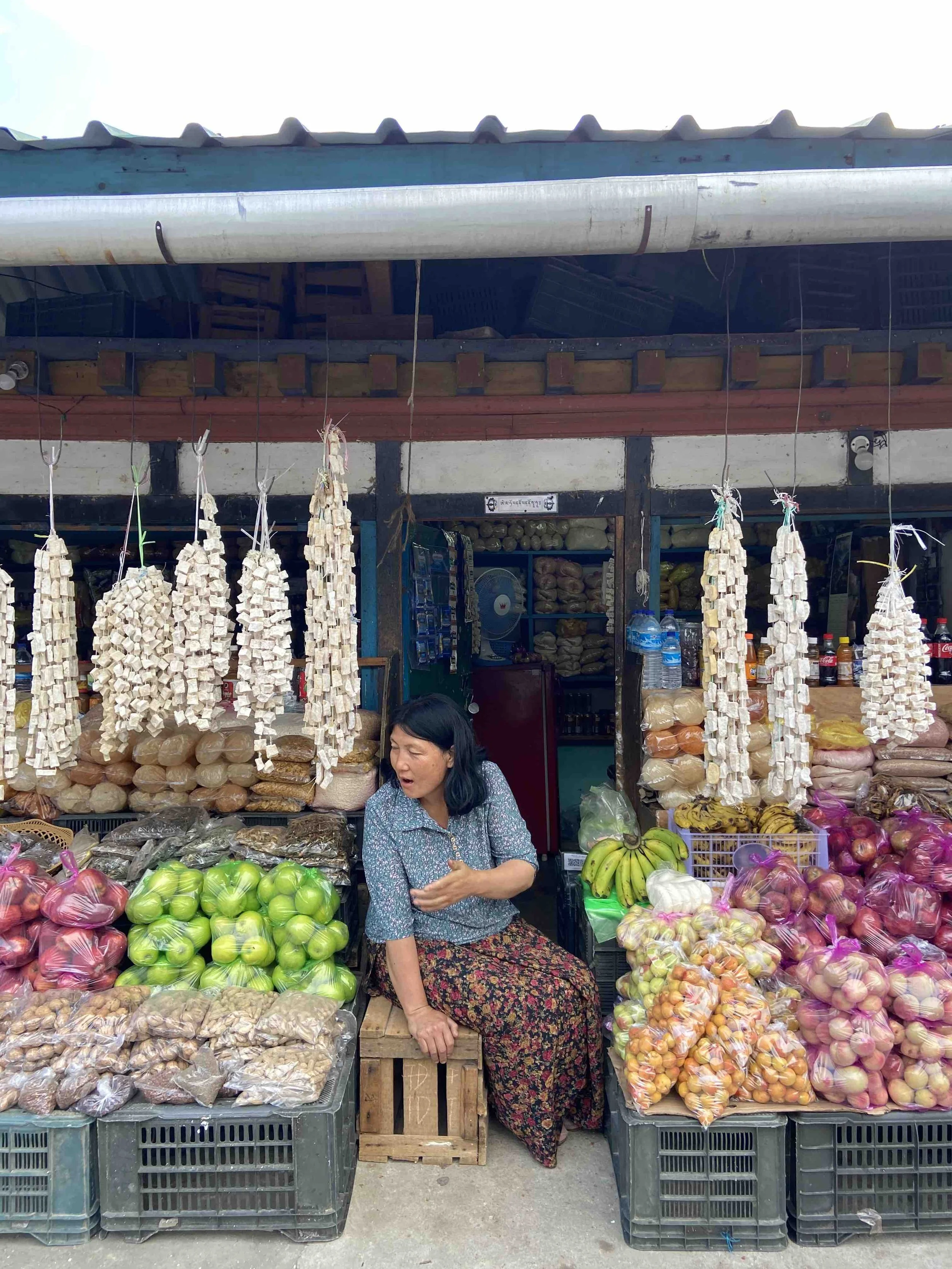
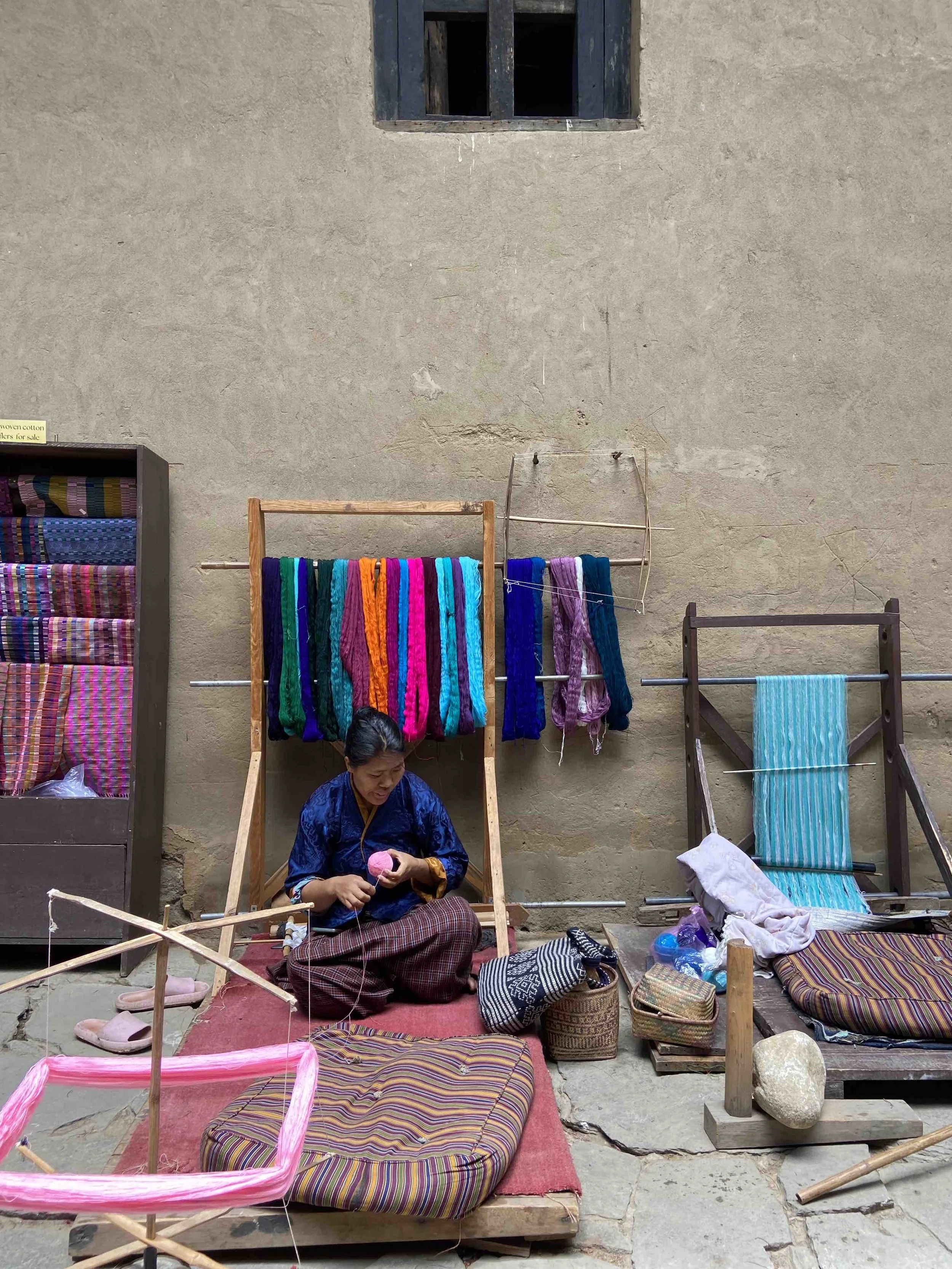
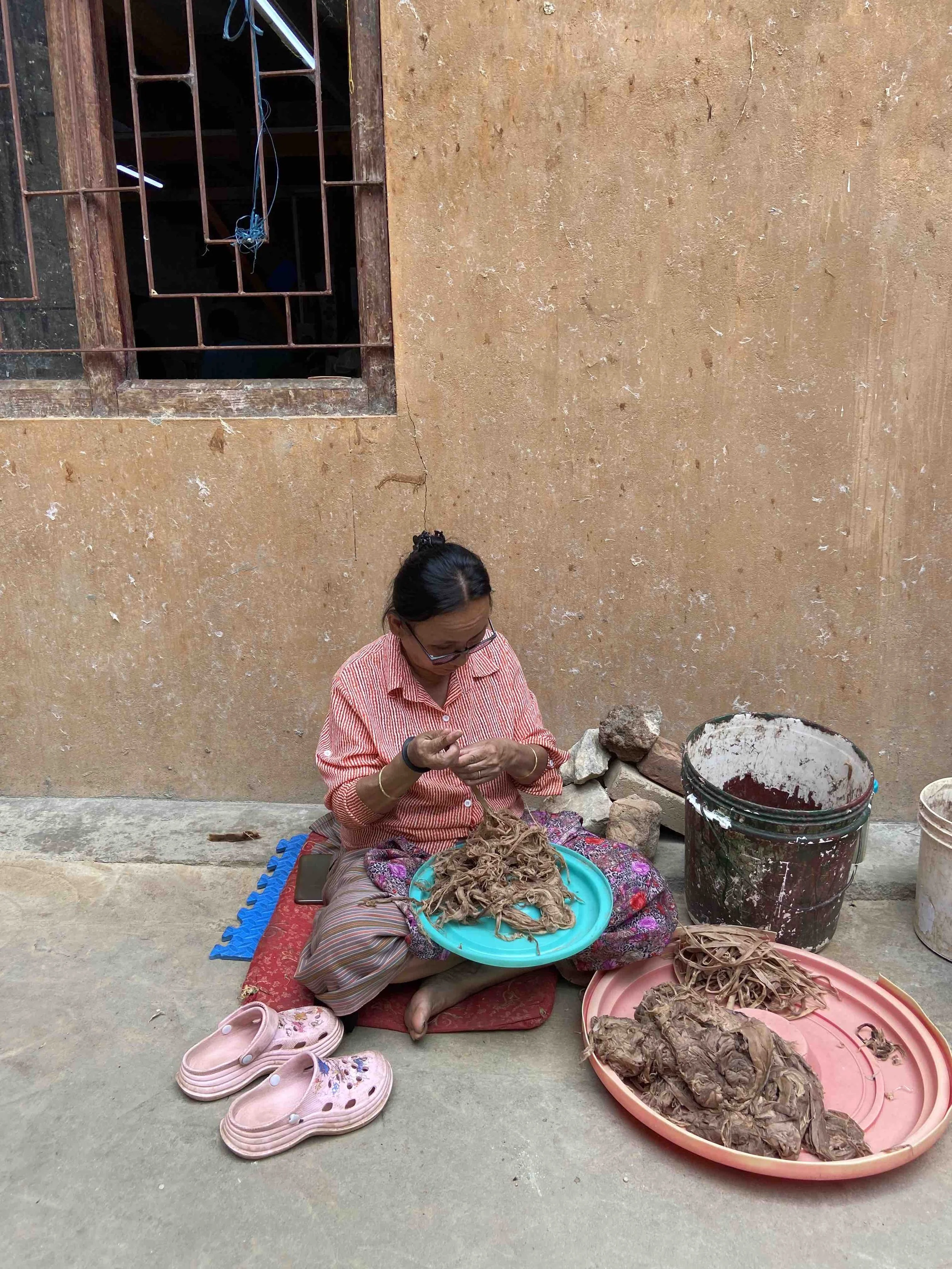
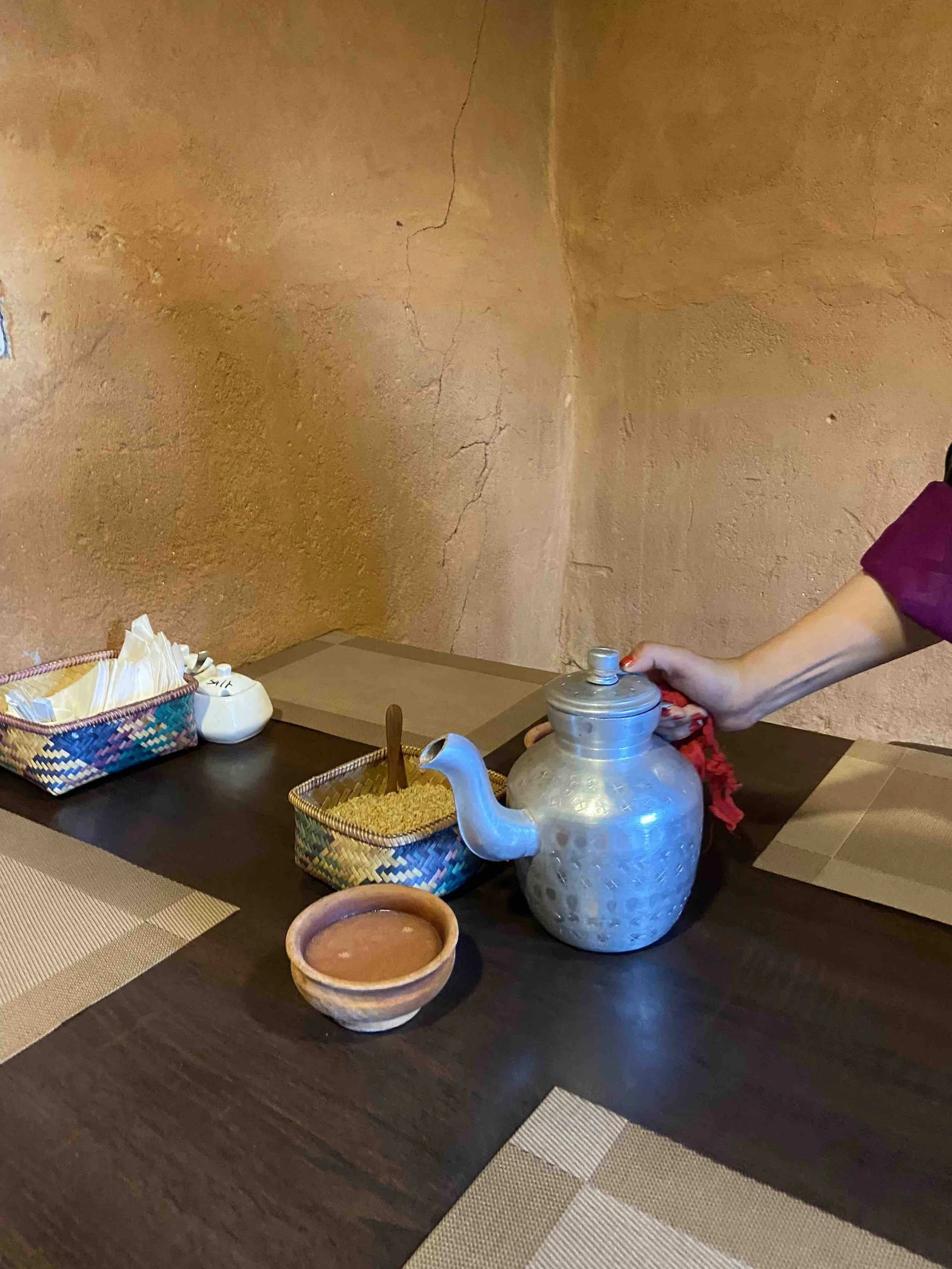
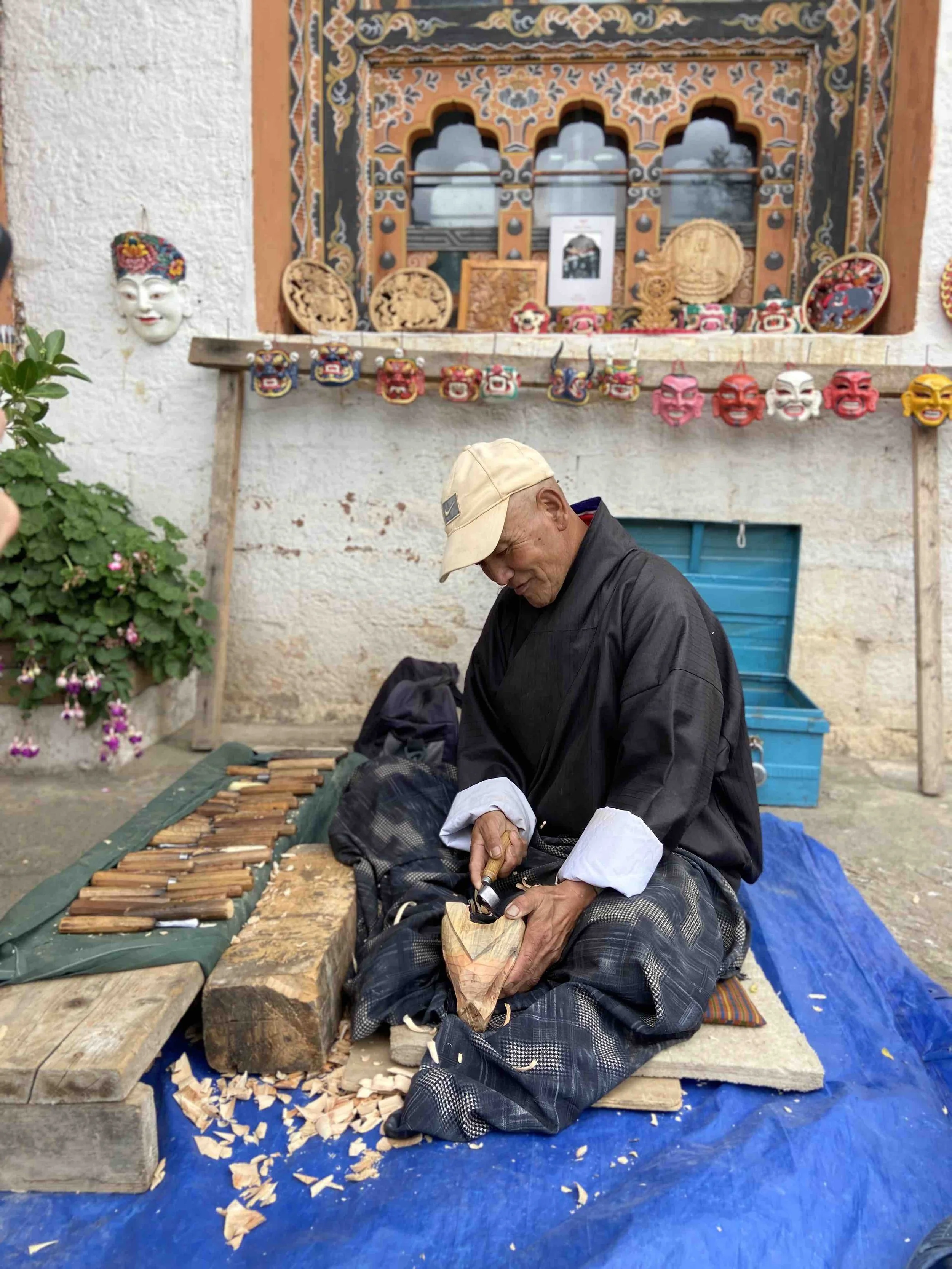
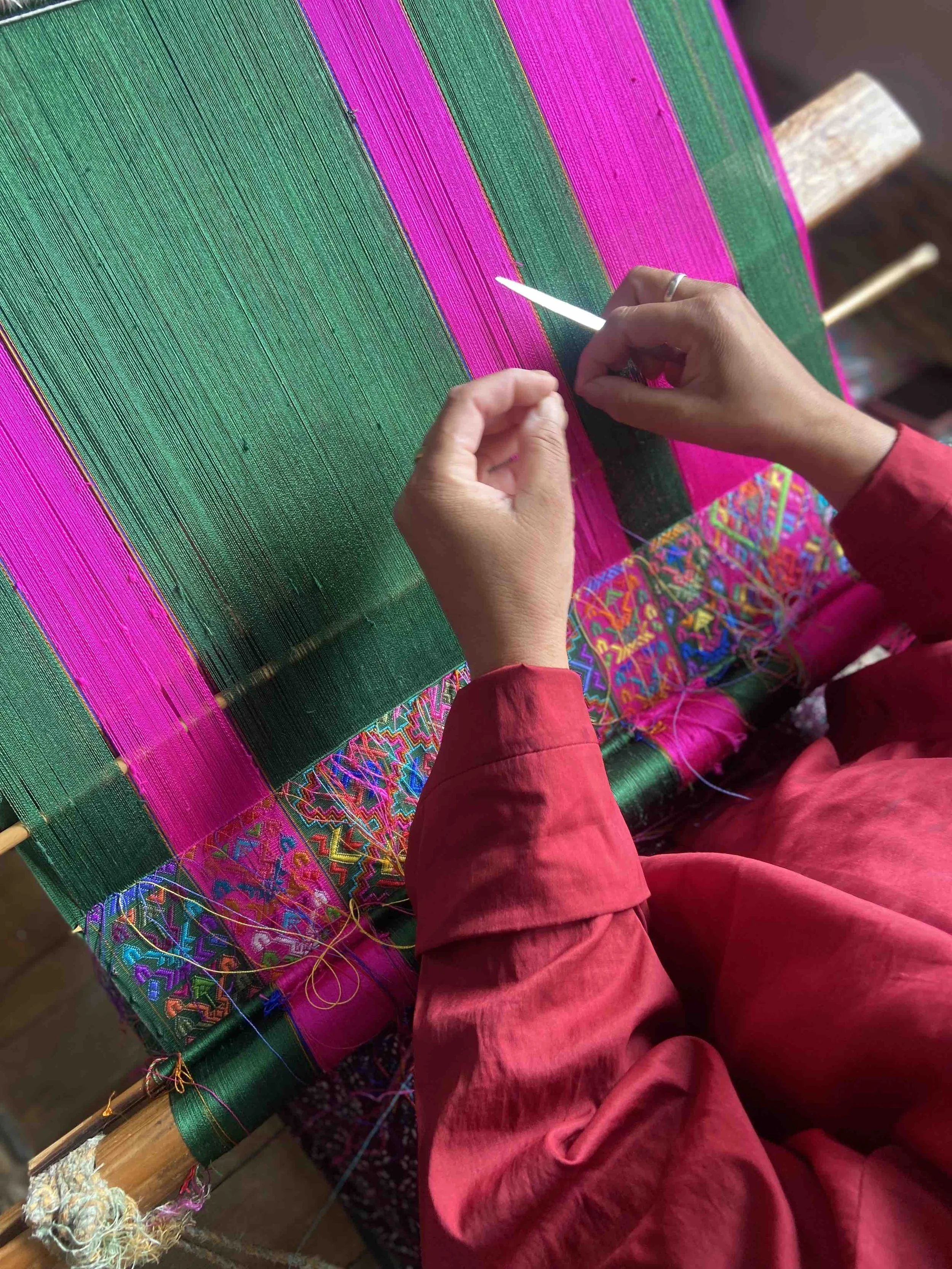
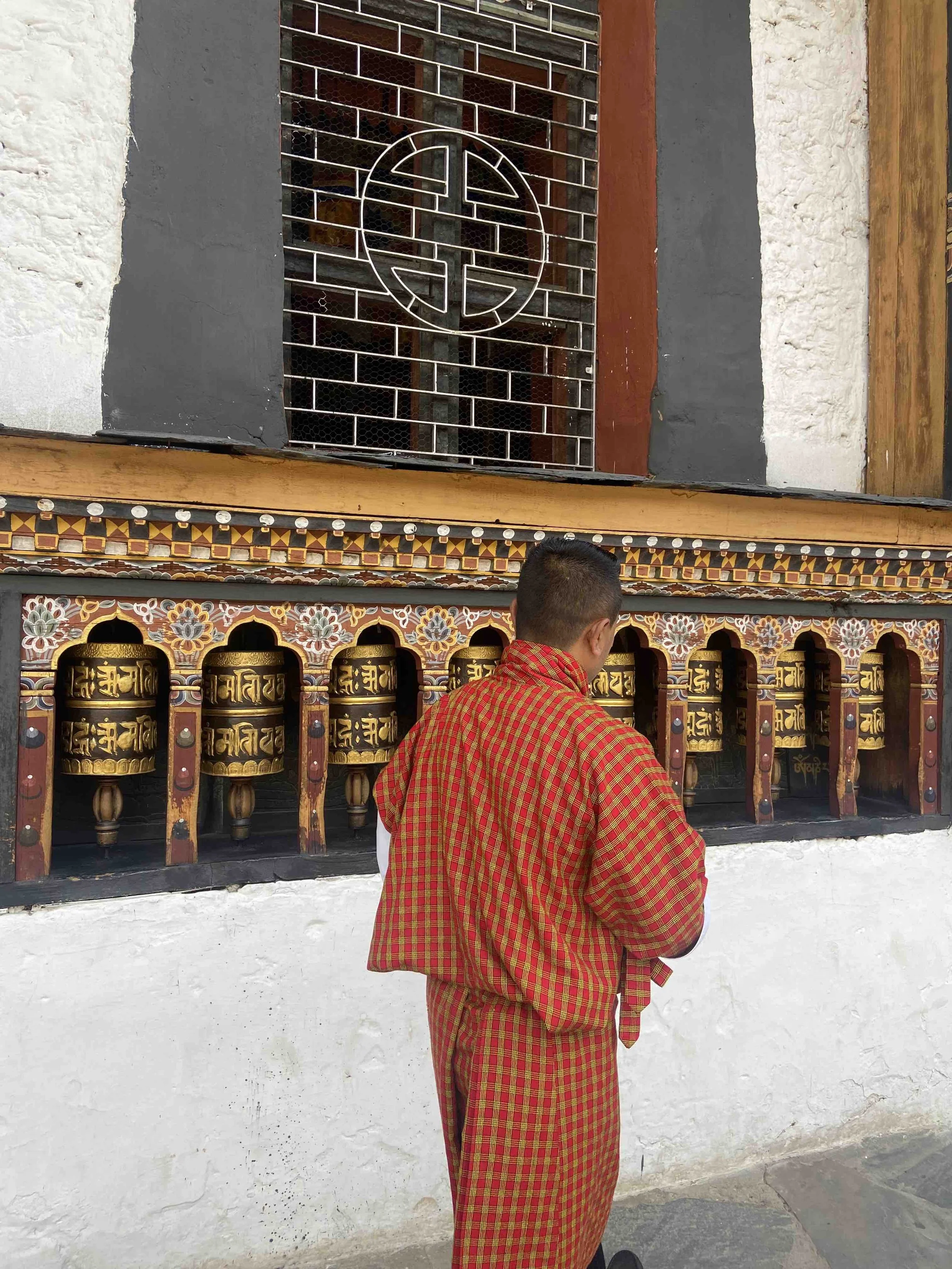
Bhutan’s present is deeply rooted in its past. In its architecture and everyday life, the earthly sense of space and time seamlessly converges with a divine aura, suggesting how the spatial, philosophical, spiritual, symbolic and ecological blend, creating a harmony rare for this scale. Its discovery merits a slow engagement of the senses - felt in the soulful chants, the colours and patterns in textiles, ema datshi (a local delicacy made with cheese and chillies), white stupas and colourful homes. The calming sounds of flowing chus (rivers) and the mani (prayer) wheels being turned along pilgrimage paths reinforce the healing character of Bhutan and a journey through it summarises the teachings of Gautam Buddha, the founder of Buddhism. His core philosophy that happiness is defined by simplicity and freedom is reflected in the visual and material cultures prevalent here.
Bridging The Past, Present And The Future
Bhutan’s architecture has steadily evolved as a symbol of identity and community, serving as a bridge between the past, present and future. Buddhism’s emphasis on awareness, impermanence, mindfulness of one's surroundings and the potential of wonder and beauty to generate happiness, peace and joy for those suffering are explicitly visible in its architecture. Walking past hand-painted homes reveals how residential neighbourhoods, monasteries, temples, Dzongs and Stupas are all held together by philosophical and spiritual Buddhist teachings. Most of the built forms respond to nature as directed by Buddha instead of controlling it. The pragmatism embedded in the use of local materials, coupled with religious beliefs has resulted in a harmonious union of the terrestrial and cosmic. The reciprocal relationship between architecture and living beings - the power of the former to liberate the latter, and shape their lifestyles, behavioural choices and purposes becomes plausible as one wanders further.
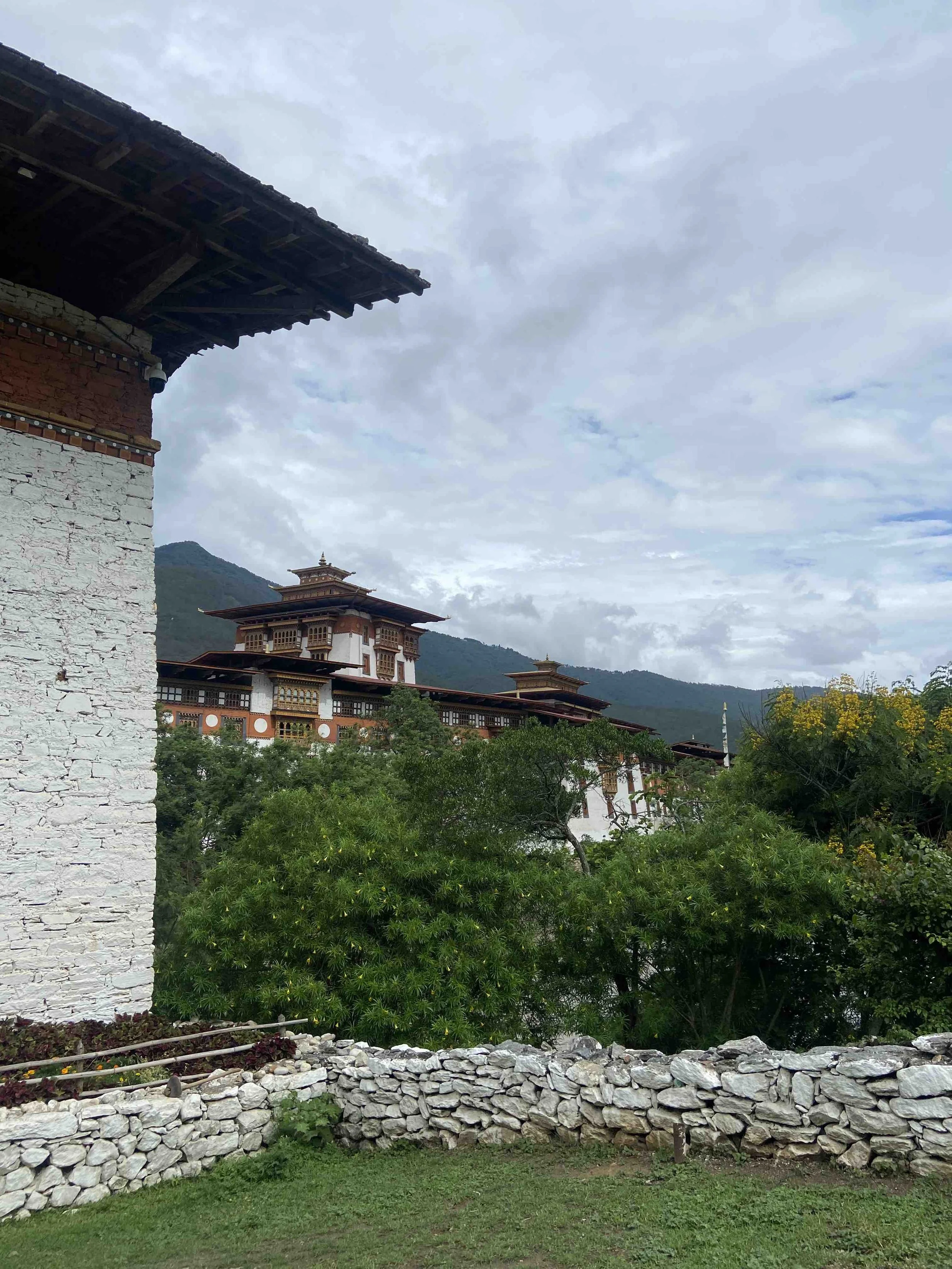
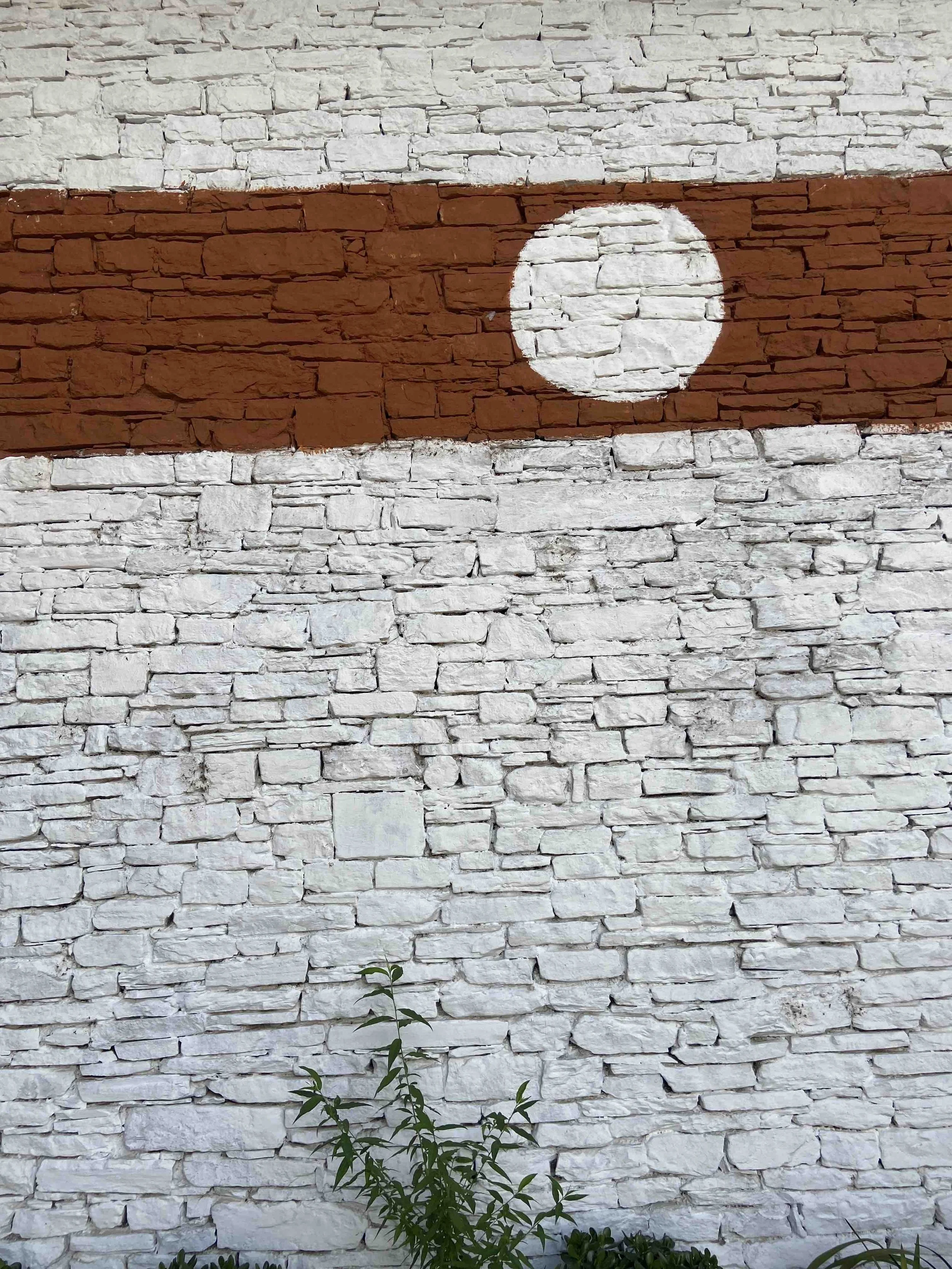
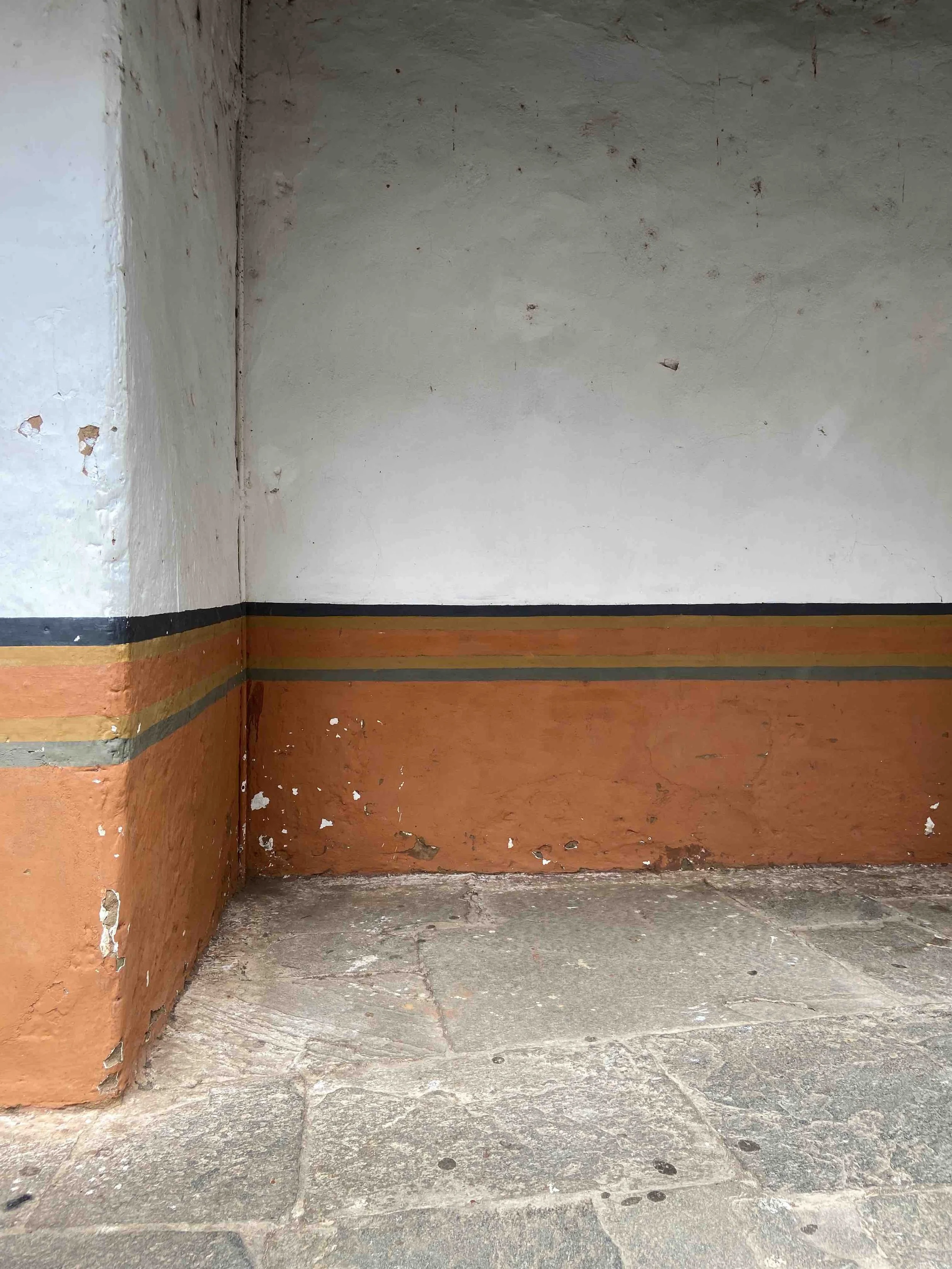
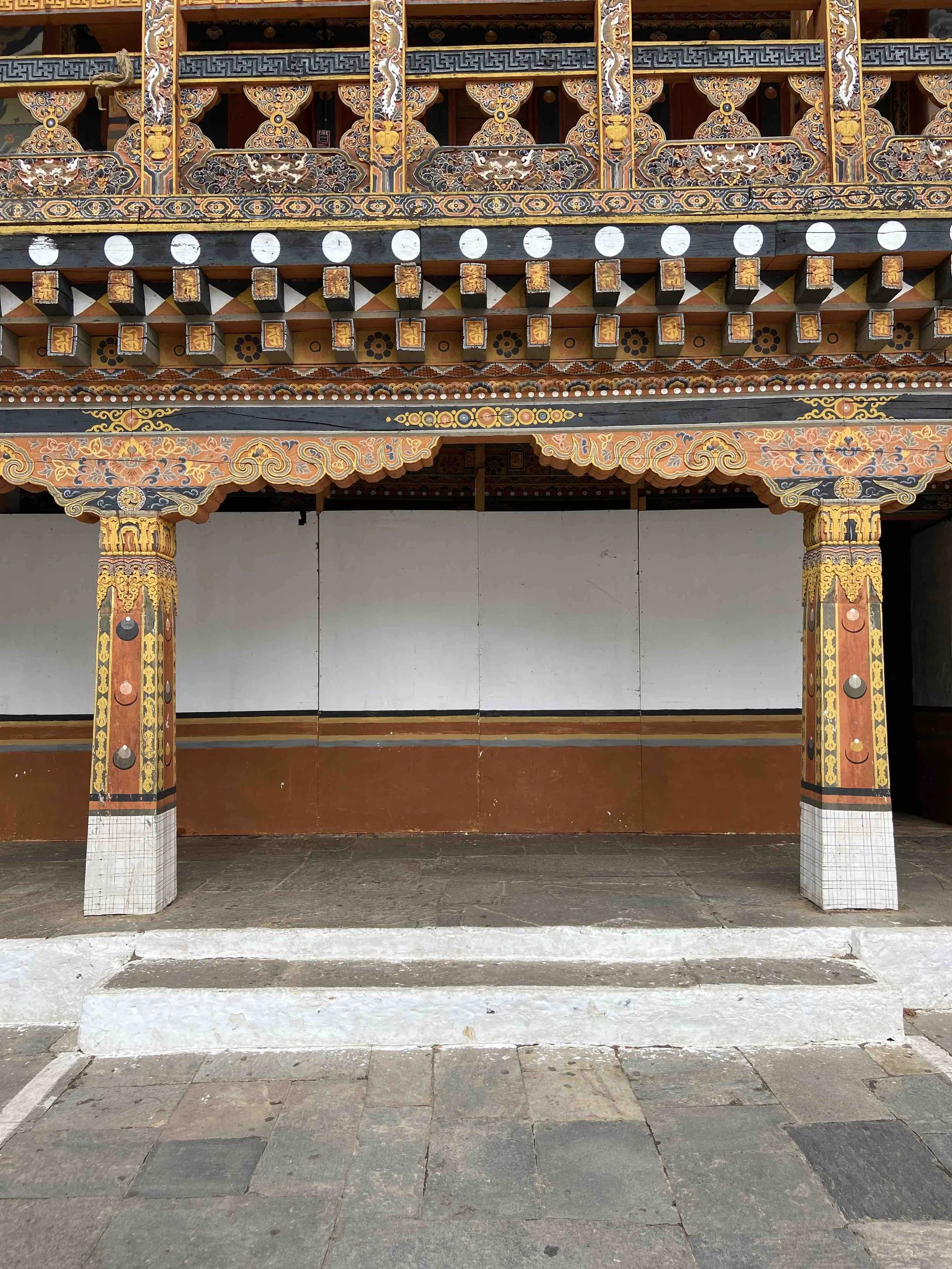
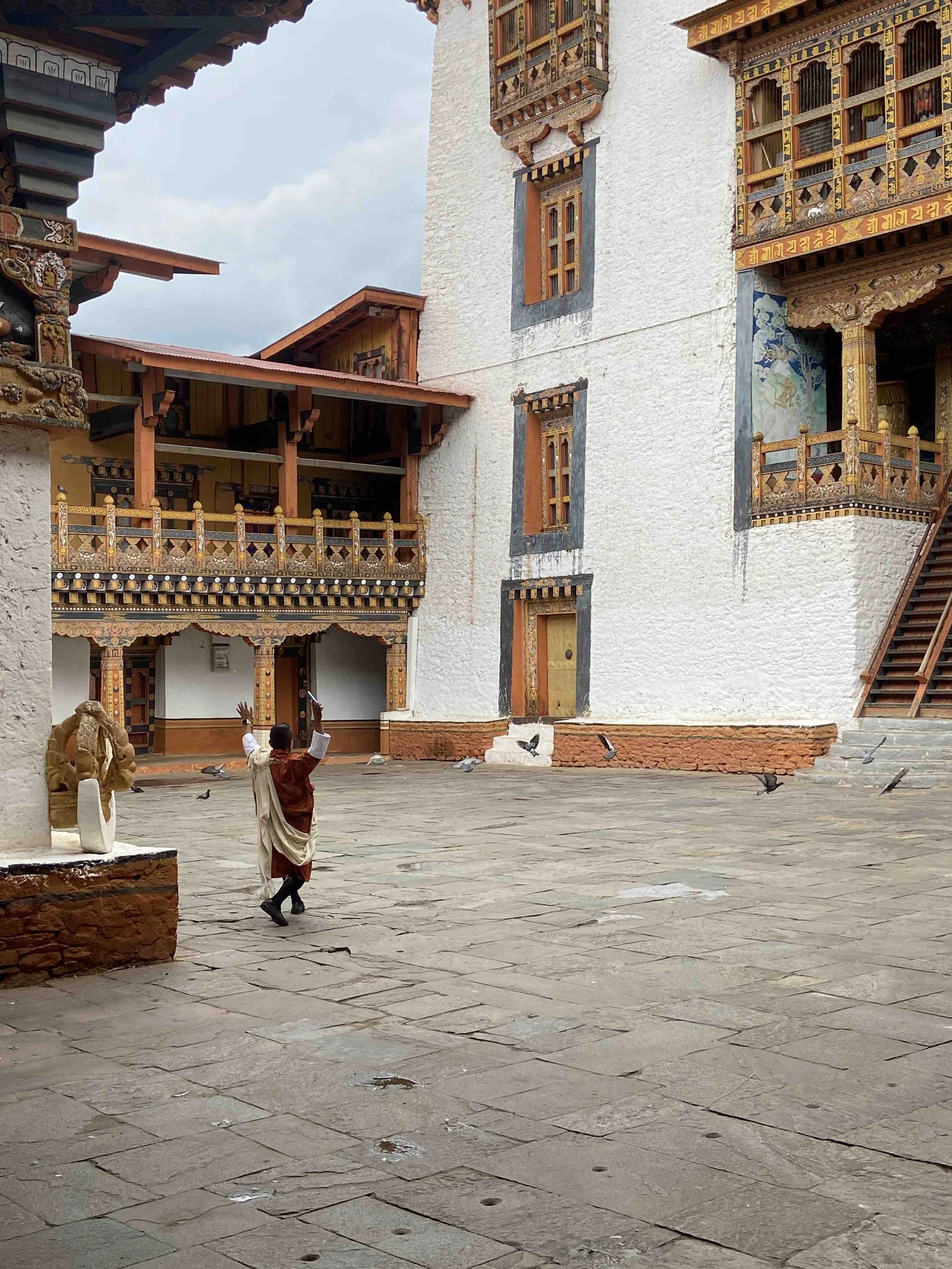
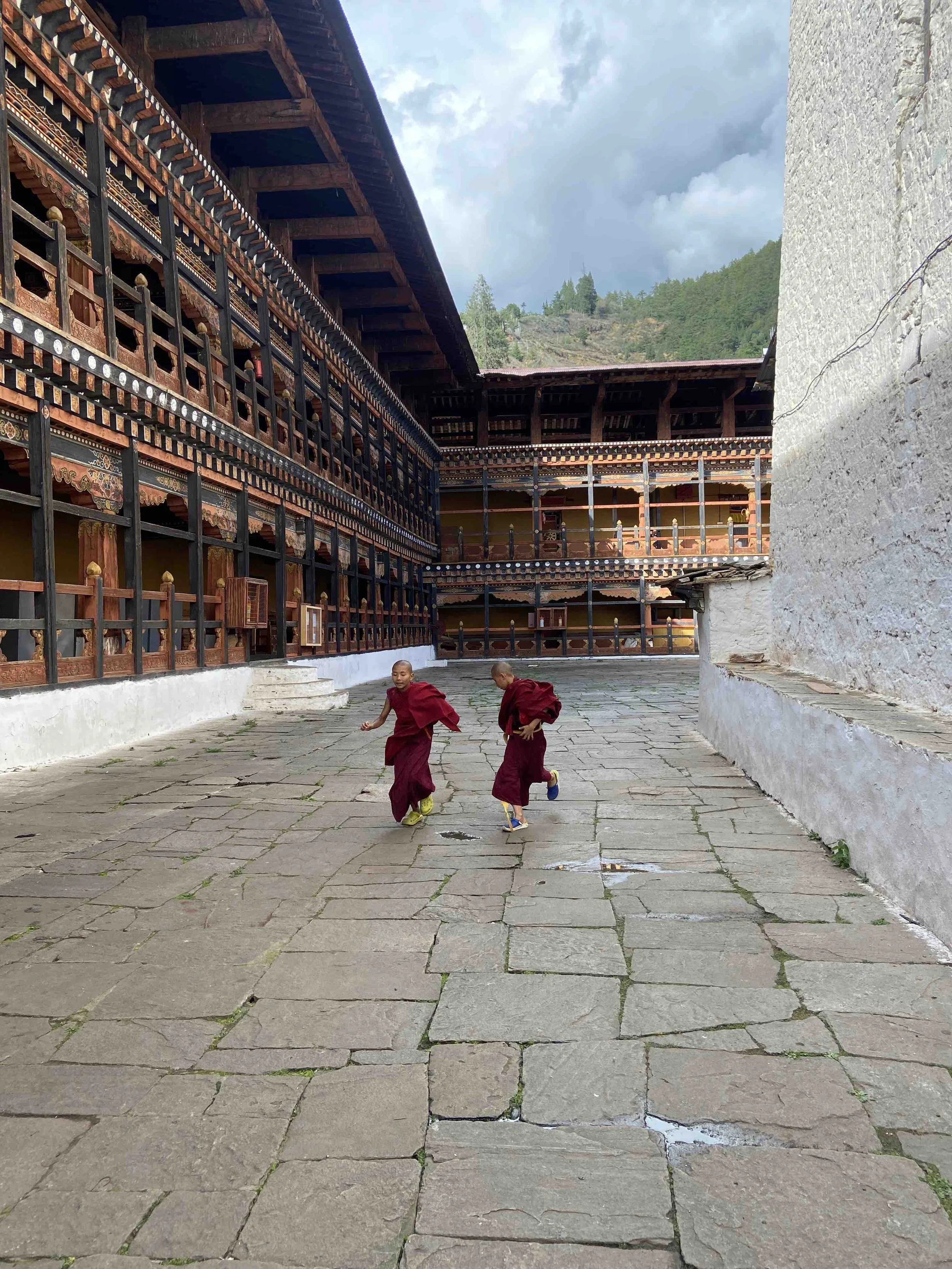
The Dzongs, defensive fortresses used by all sections of society are easily recognisable from their complex woodwork and surface decoration. Evolving gradually to serve religious and administrative purposes, the Dzongs’ architectural features, particularly their monumentality, spacious courtyards, large rammed earth bases, and sloping white facades bordered by red and ochre stripes at the top, occasionally interspersed with gold circles - make them stand out.
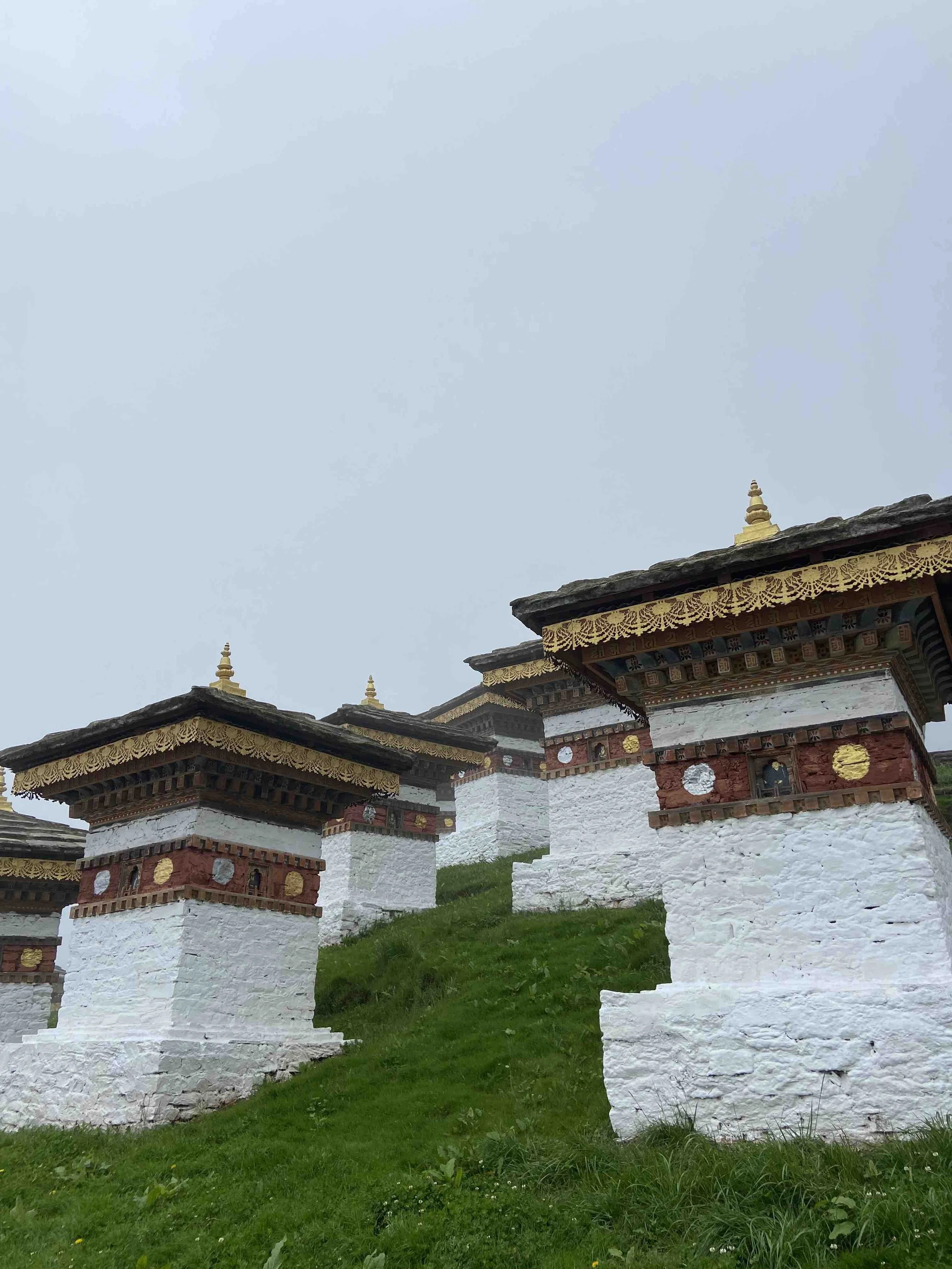
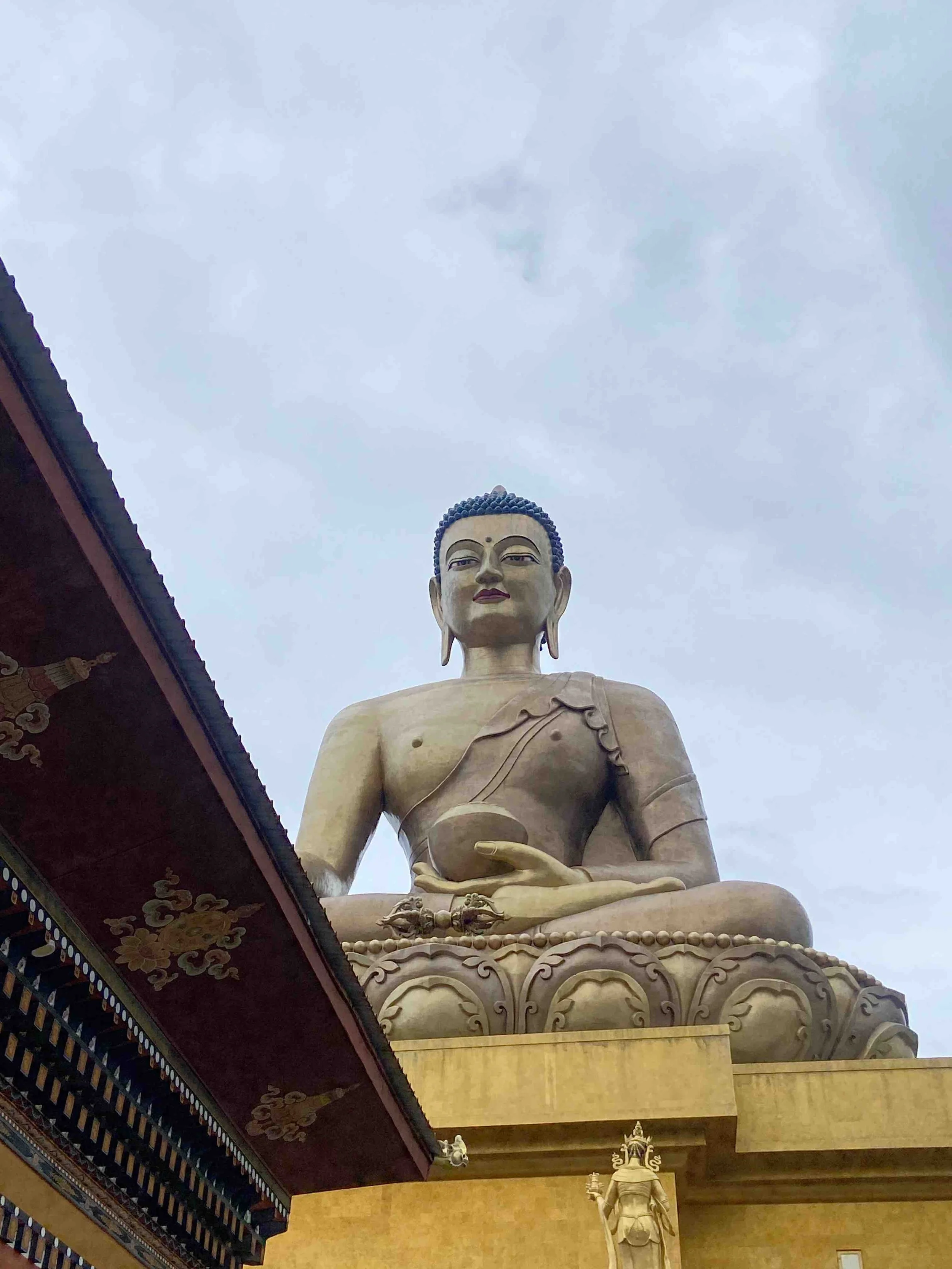
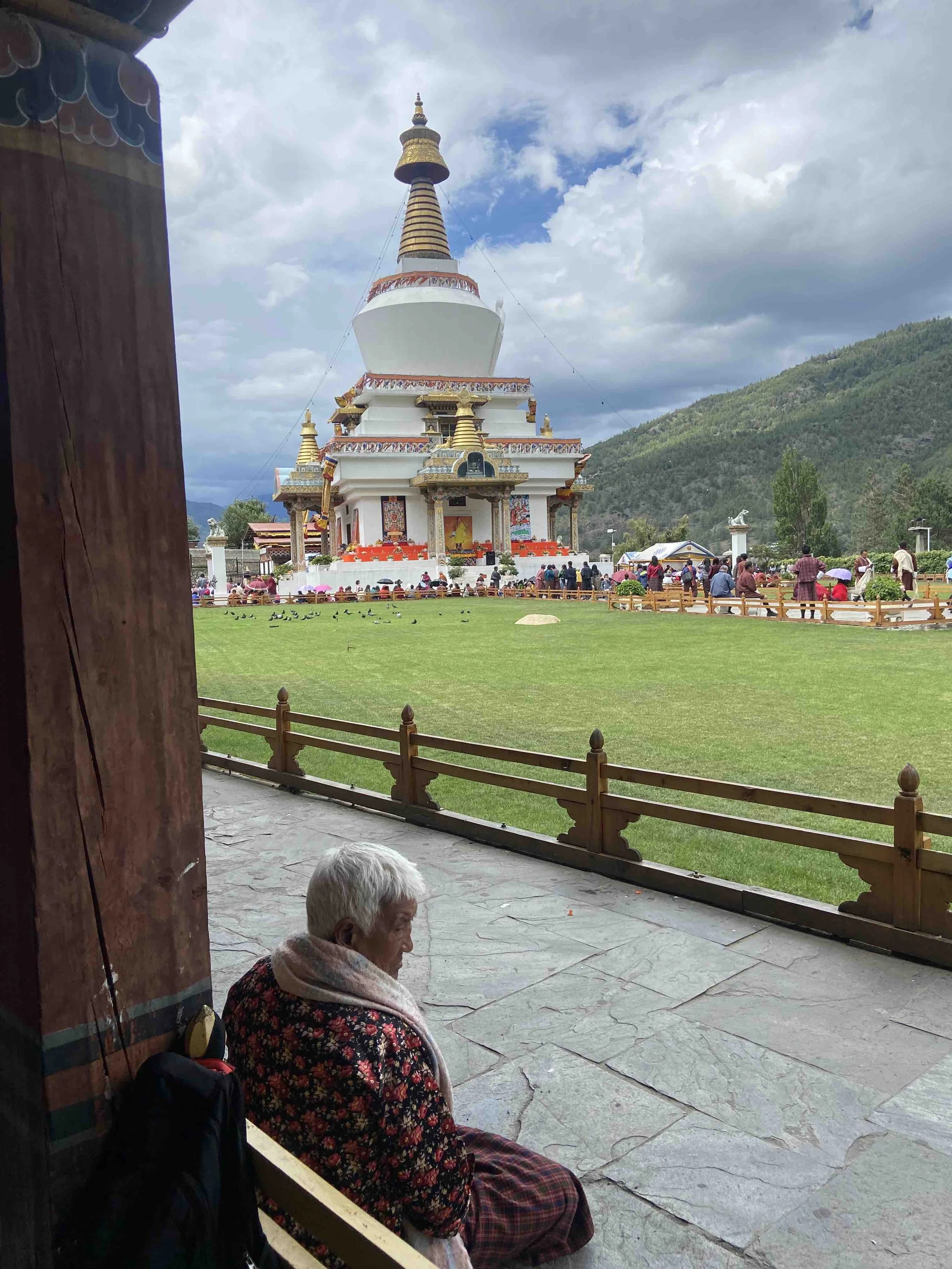
In the Chortens (Stupas) like the Thimphu Chorten and the Khamsum Yueley Namgyal Chorten built by the Queen of Bhutan, overlooking the Punakha Valley - identifiable from their golden spires, one can offer prayers and meditate. Their form comprises five geometric shapes corresponding to the five universal elements – earth, water, fire, air, and space. Fostering peace, well-being, and inclusiveness, some of them have Buddha’s golden-coloured statue in an enlightened state, with long curly hair, fingers, and sleepy eyes, compelling the visitor to value
his/her minuscule presence in the universe. Contrary to his disregard for idol or temple worship, the human need for creative expression and tactility in religious practices, perhaps led to such physical manifestations.
The 12th-century Changangkha Lhakhang, which is popular among parents seeking auspicious names and blessings for children, the Tachog Lhakhang Temple, located near the Chuzom river confluence, and the Druk Wangyel Lhakhang, with its 108 chortens, located on the crest of Dochula Pass - all located at higher altitudes, further elevate Bhutan’s sanctity with their proximity to the earth and sky.
Shared Iconography and Rituals
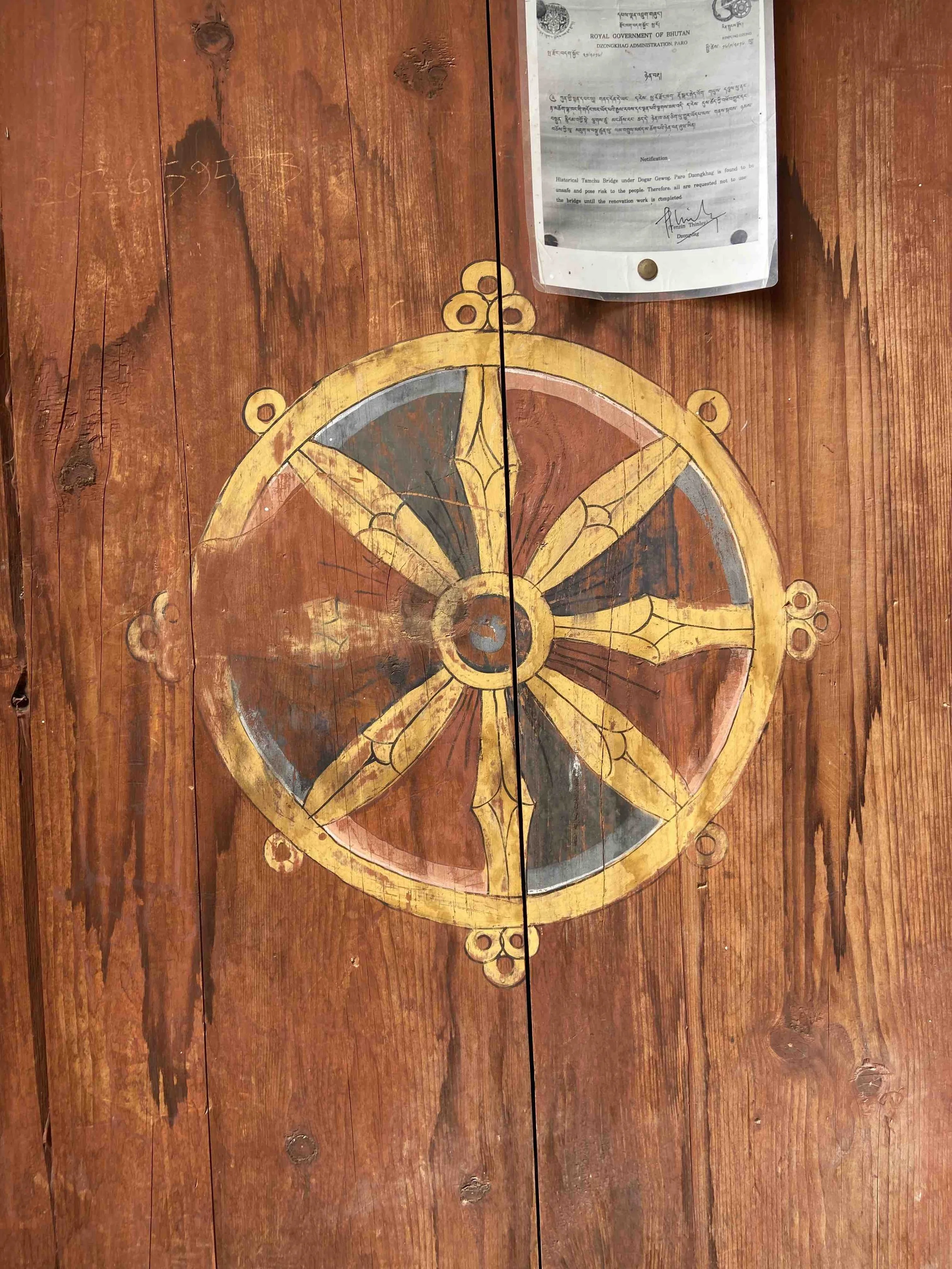
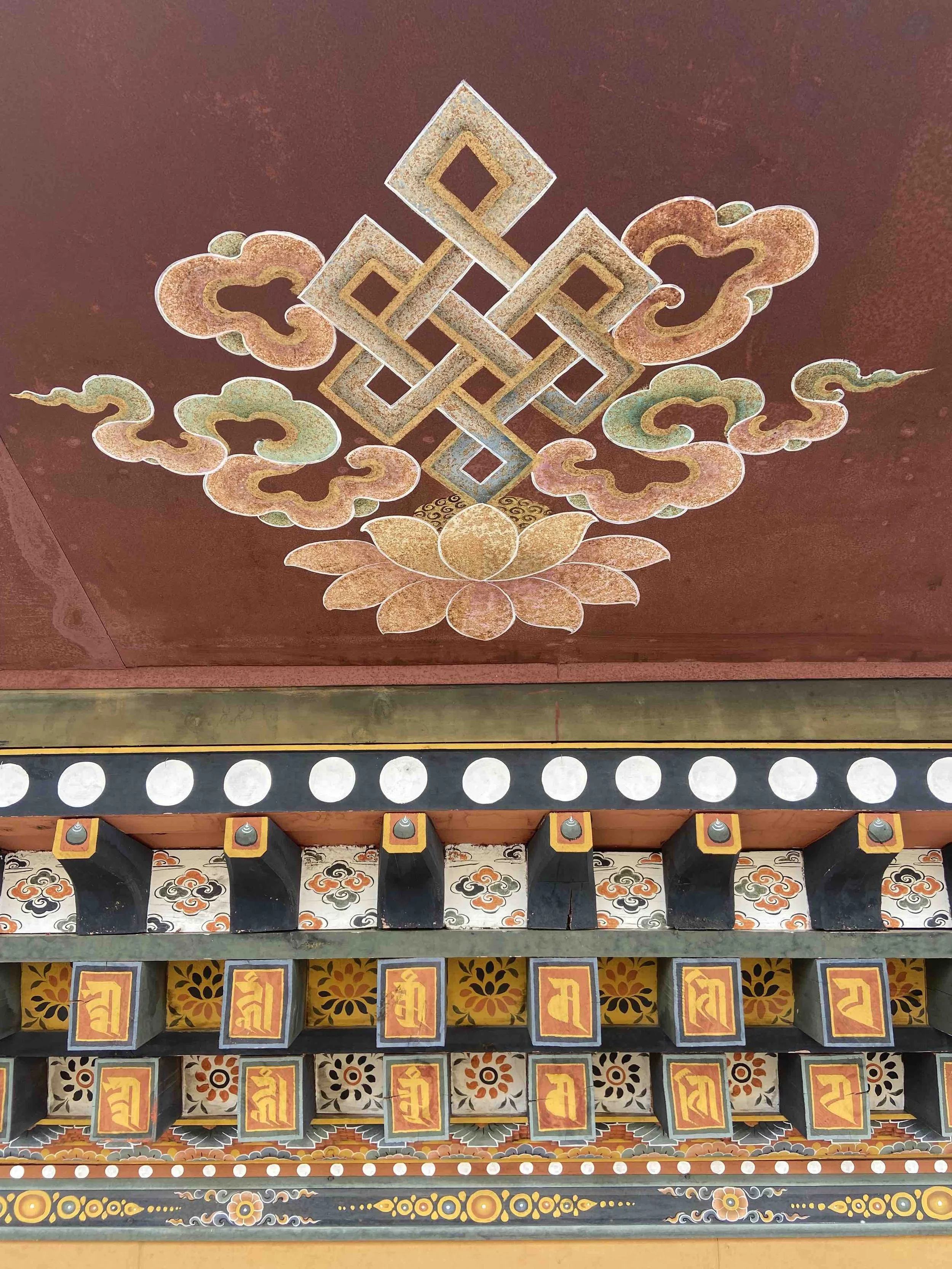
Bhutan’s proximity to India and Tibet is reflected in the similarities shared between the symbologies in Hinduism and Buddhism. The Eight Auspicious Signs seen in Bhutan’s monasteries and other local architectural elements - The Golden Fish, the Parasol, the Treasure Vase, the Wheel of Dharma, the Victory Banner, the Lotus, the Endless Knot and the Conch Shell – are believed to be the variants of the Ashtamangala, the suite of eight signs in Hinduism, embodying distinct meanings like abundance, fertility, protection, wealth, good, purity, interconnectedness, spiritual awakening and infinite wisdom.
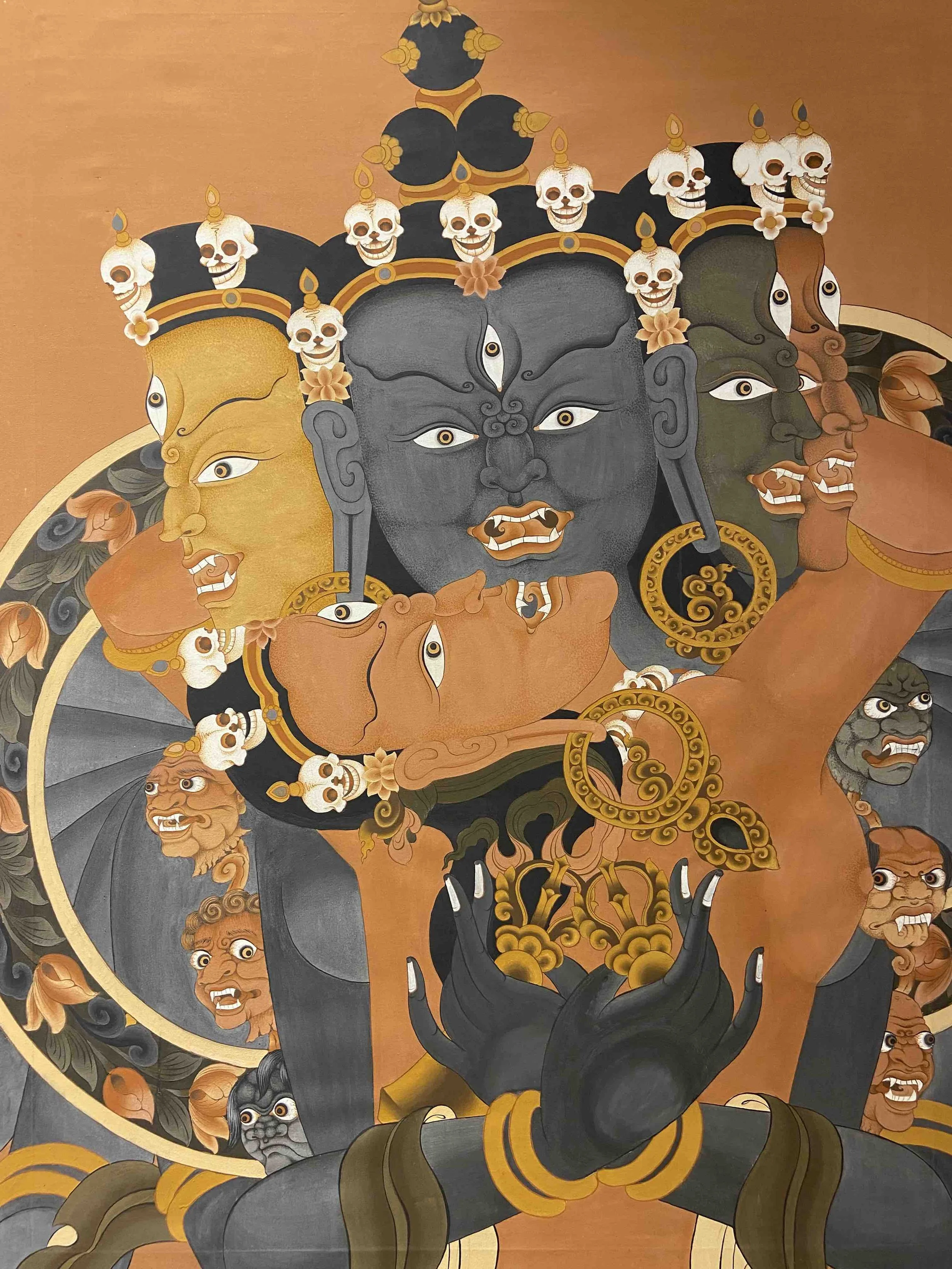
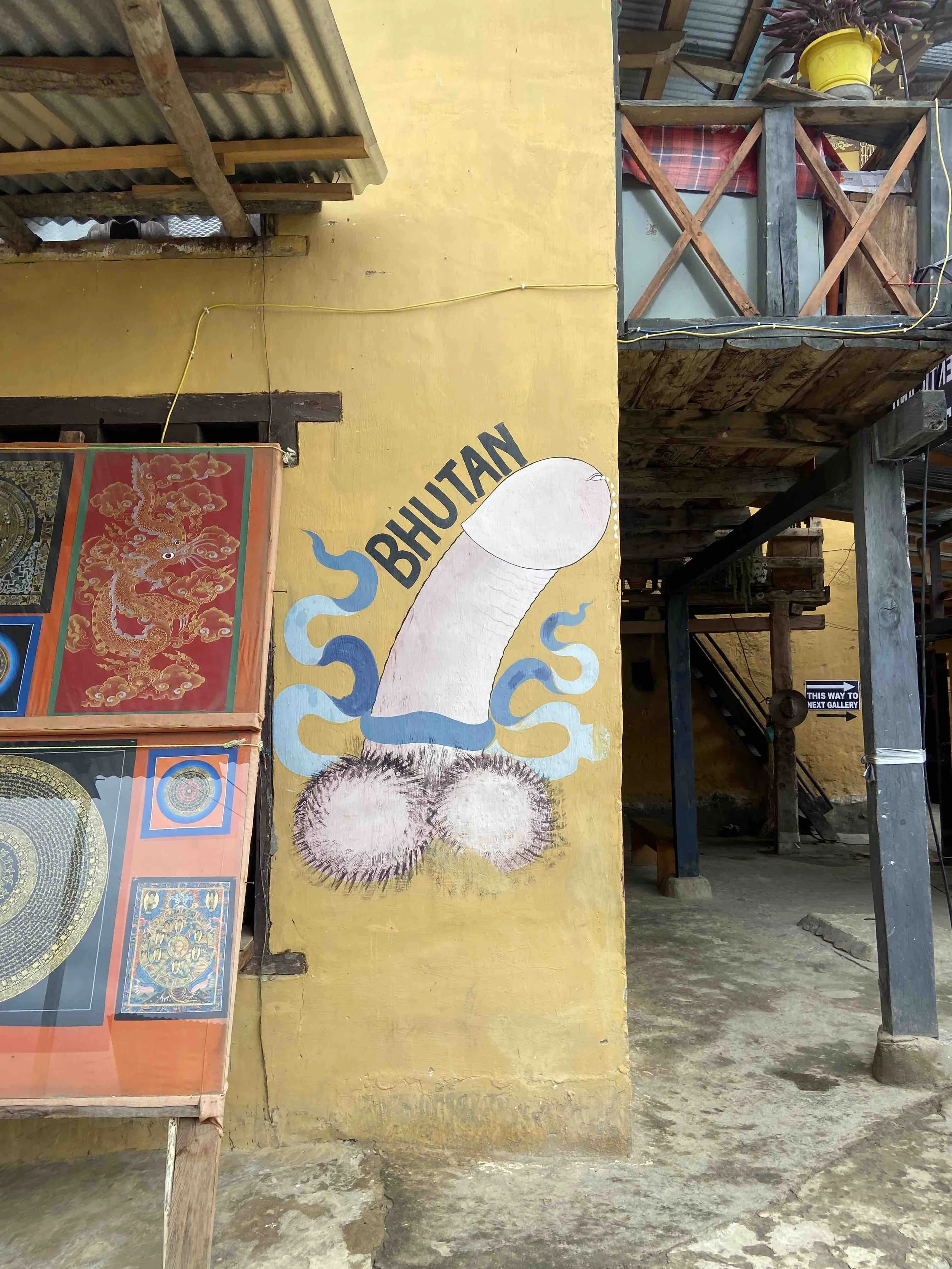
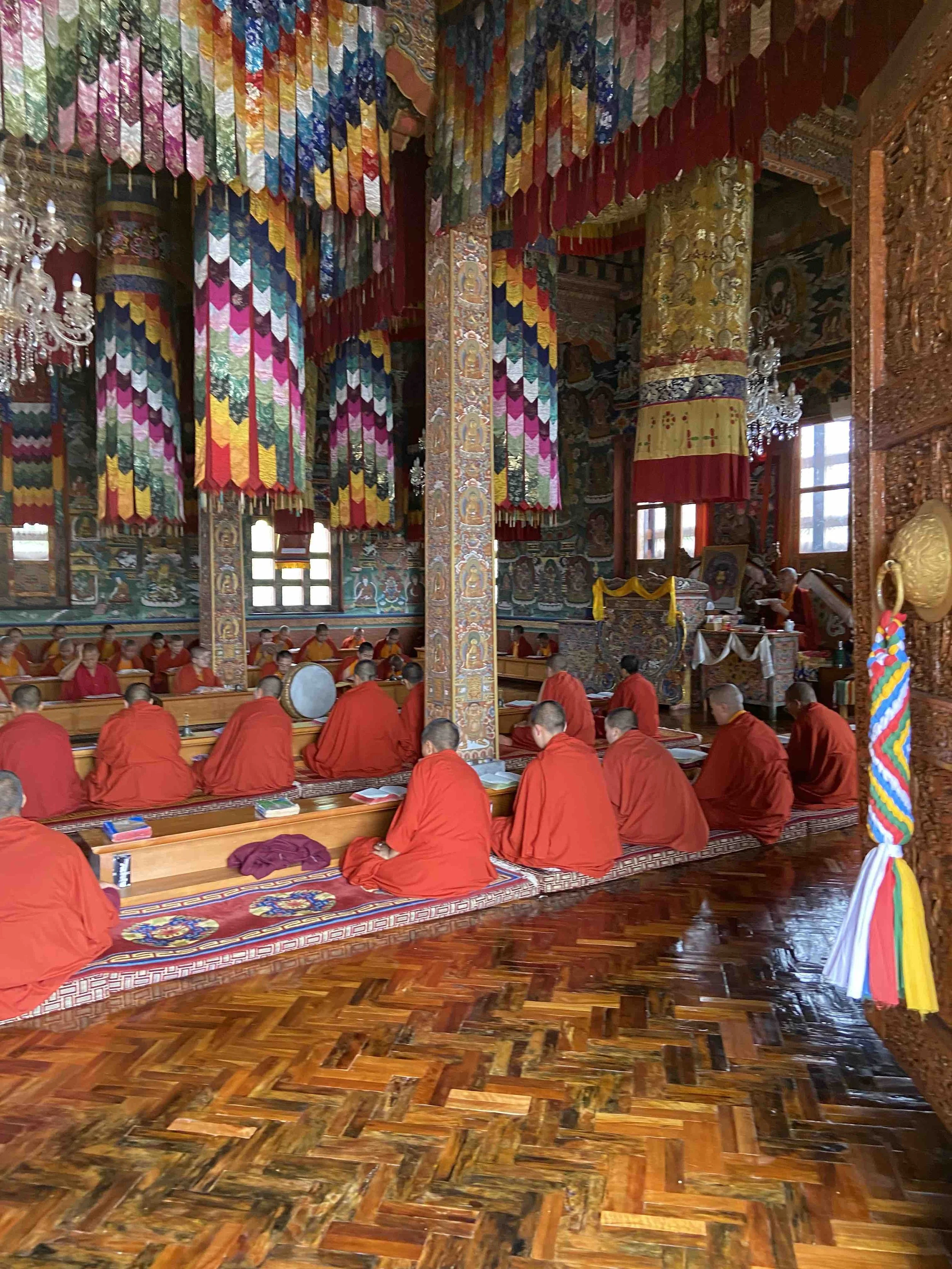
Other religious features and rituals include worshipping the Padmasambhava, an Indian Buddhist mystic who introduced Tantric Buddhism in Tibet, lighting the butter lamp, as a sign of eradicating darkness and ignorance to ignite the inner light of wisdom and knowledge, and praying at The Stupa of Vajrakilaya (also known as Dorje Phurba or Phurbu), a powerful and fierce protector deity in Tibetan Buddhism) with 108 deities, which borrows inspiration from Tantric Hindu mythology. The Phallus symbol, believed to ward off evil spirits and evoke fertility, traces its origins to the legends of Drukpa Kunley (The Divine Madman), one of Bhutan’s eminent spiritual leaders and patron saints, and is usually spotted painted on the walls of people’s homes, and on art souvenirs. White and gold circles that depict the fusion of masculine and feminine energies too, are seen on the walls of Dzongs, chortens and many other typologies.
The Mystical, Material and the Mundane
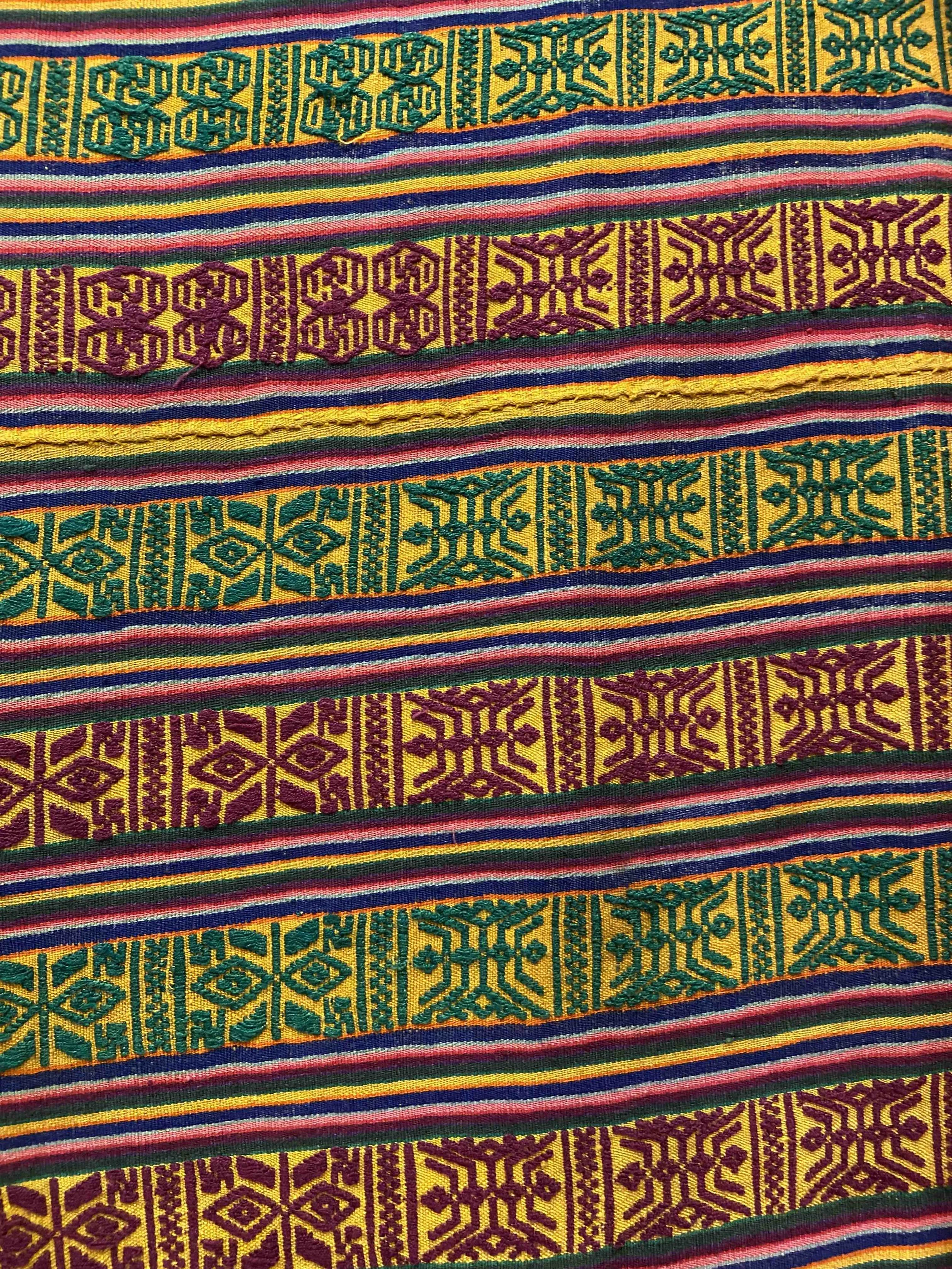
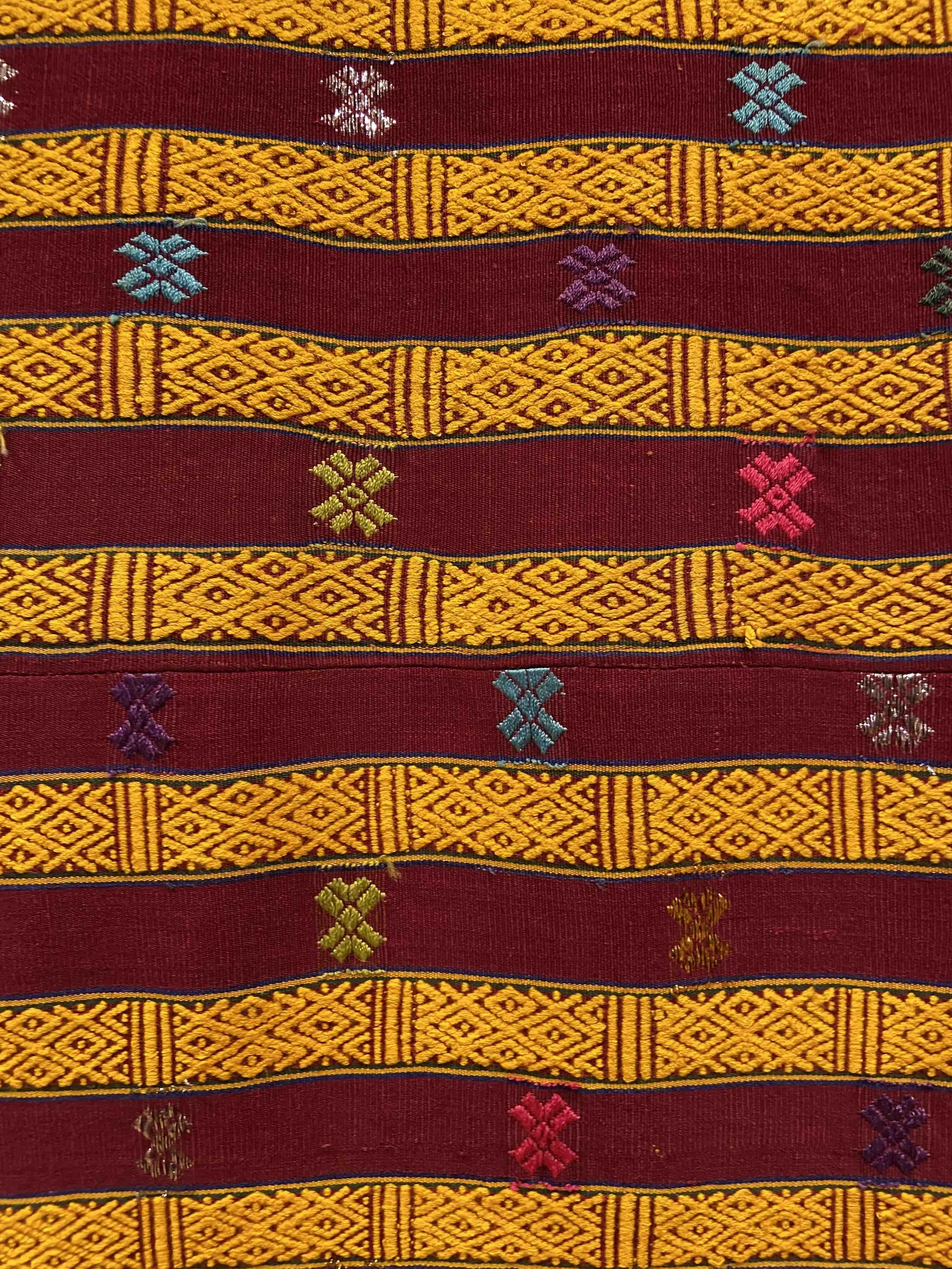
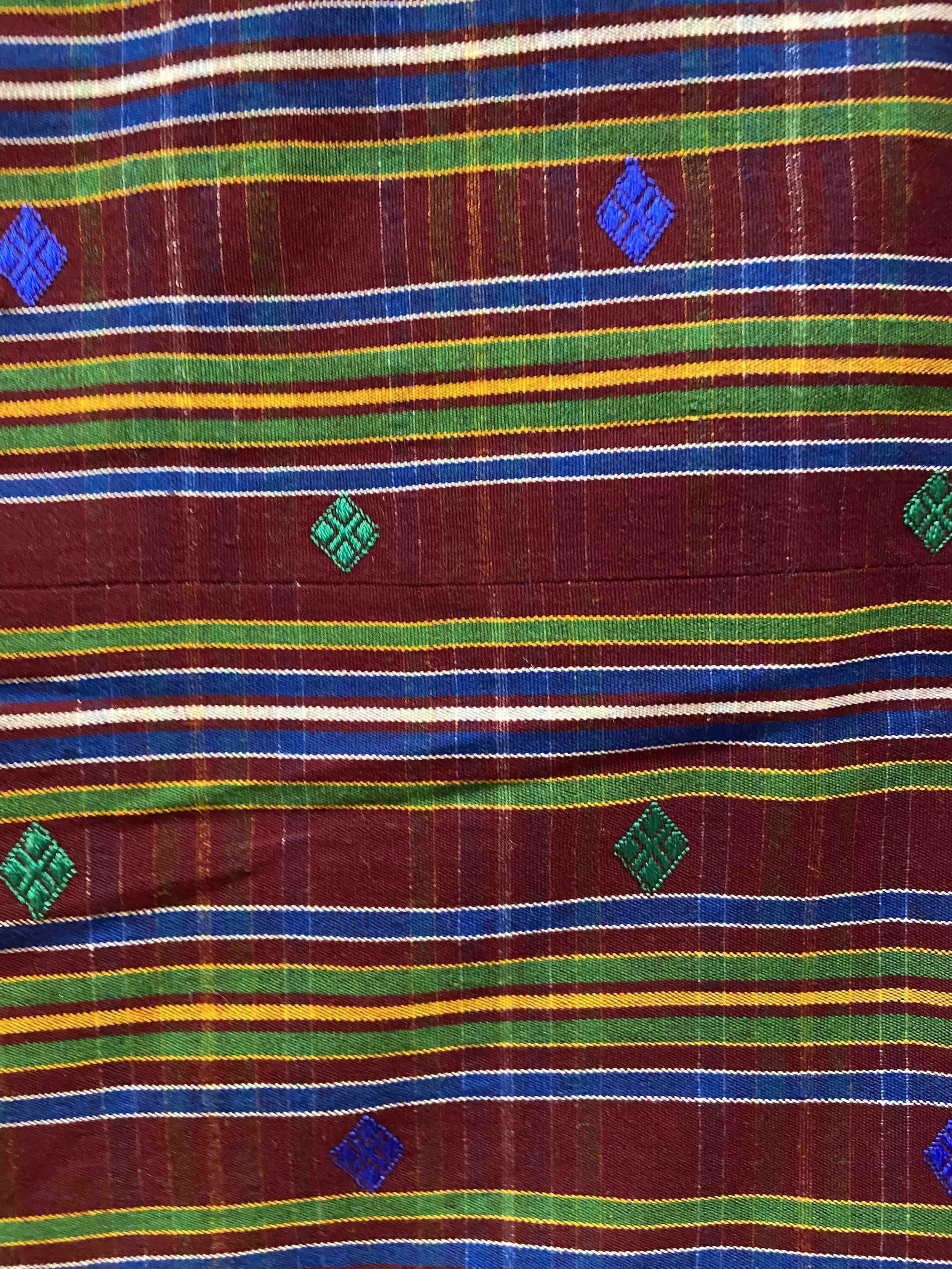
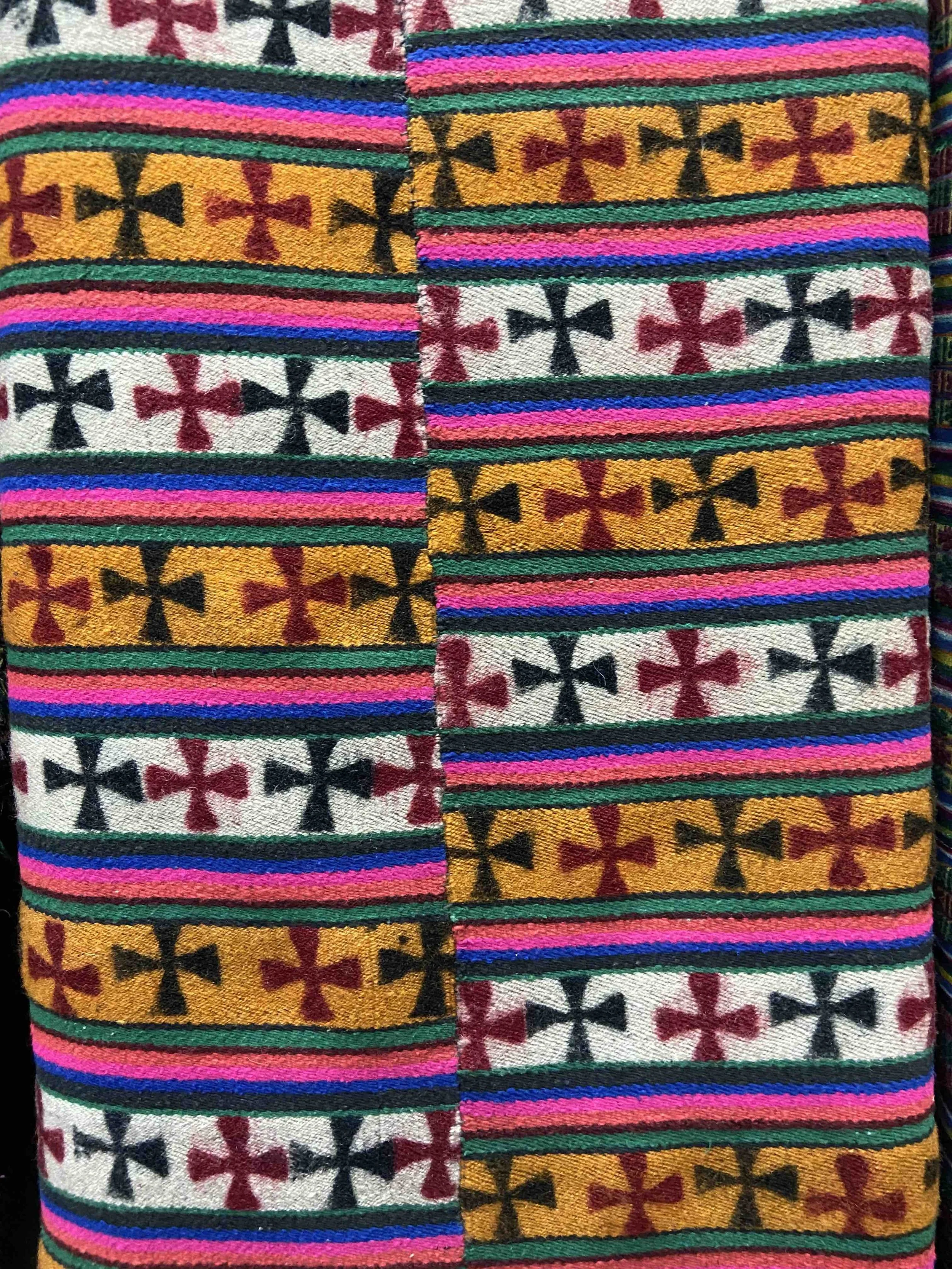
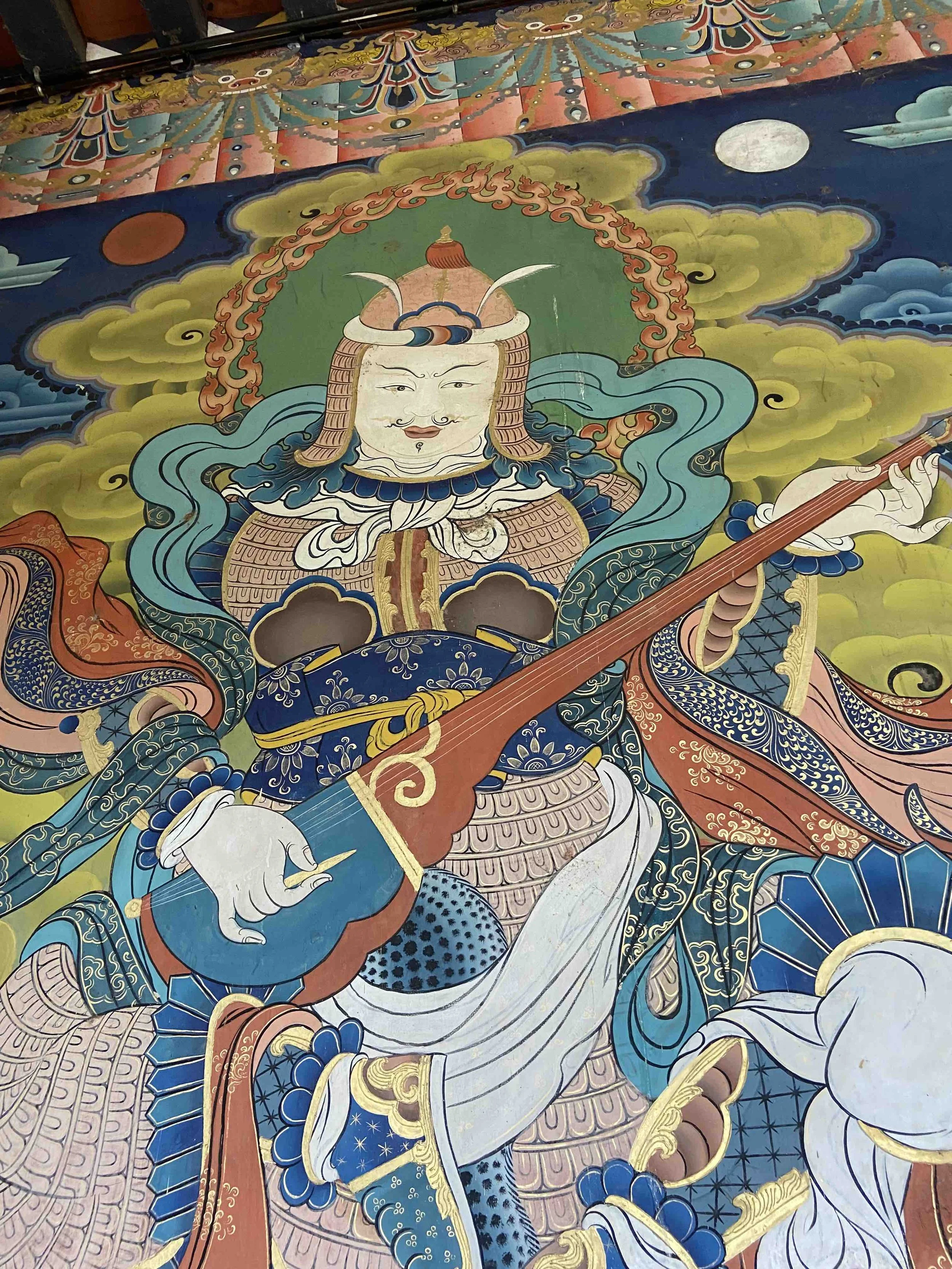
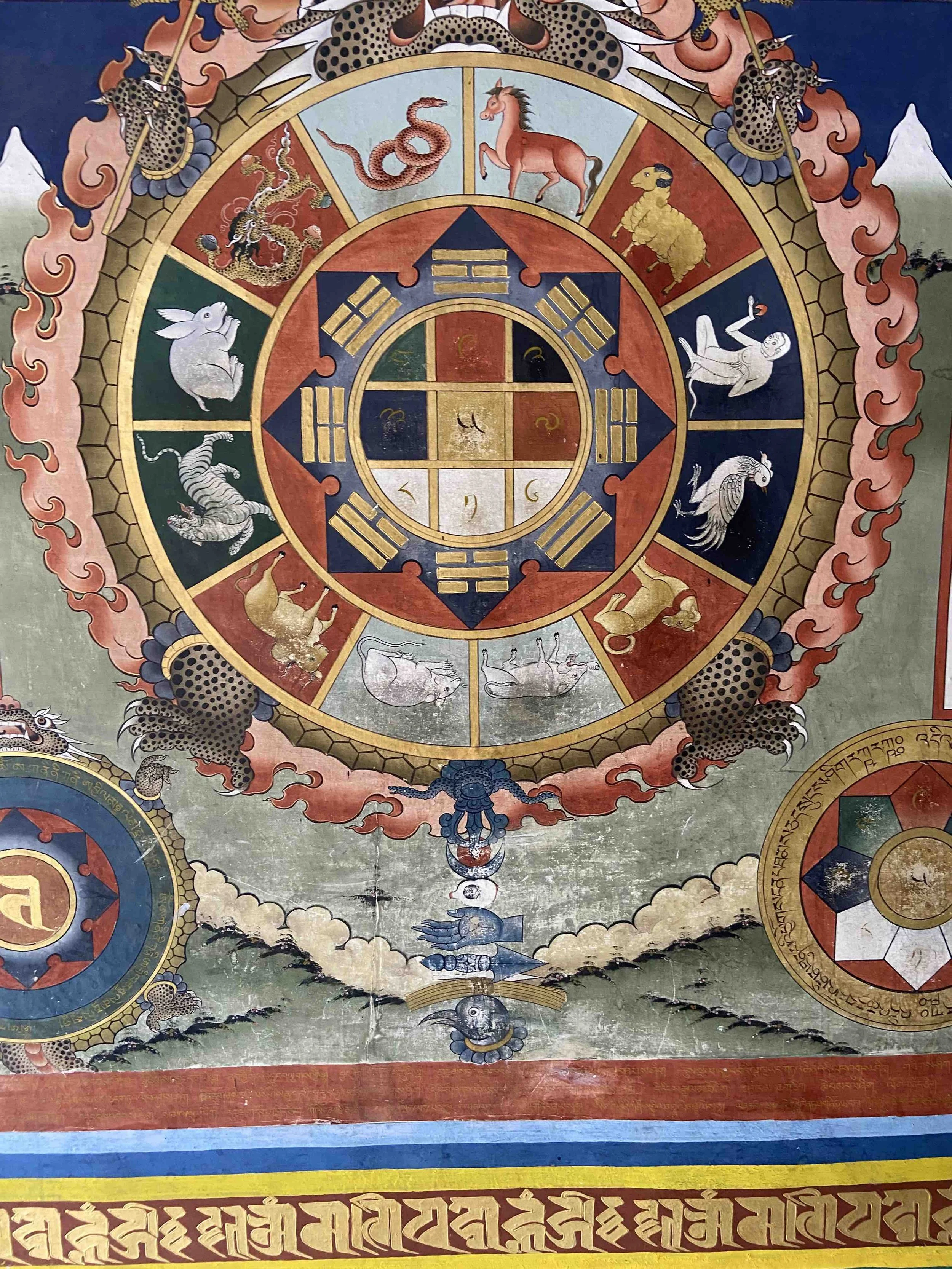
The visual and material cultures in Bhutan encapsulate a deep regard for the unification of the physical and the mystical, the seen and the unseen. Bhutan’s environment is dominated by red and ochre colours worn by monks and also seen on top of built facades alongside golden symbols and patterns. Here, one cannot evade the intricate designs and patterns in the handpainted furniture and clothes being hand-woven in homes, in the bazaars, and also those visible in Thangka paintings, i.e. Tibetan Buddhist artworks on cotton with silk applique depicting Buddhist deities or mandalas. Traditional Buddhist motifs include amulets, flowers, stupas, eternal knots, dragons, swastika and geometric shapes - all suggestive of landscape, history and mythology.
Textile production here dates back to the 16th-century when silk and wool backstrap weaving grew popular, and features broadly three types of textiles - nomadic (yak), royal silks and decorative religious fabrics. Ghos, multi-coloured, striped knee-length cloths, fastened at the waist with cloth belts, (like a bathrobe) are popular as men’s attire and cotton/silk kiras (wrap dresses) are worn by women, often with long-sleeved called wonjus (blouses) and toegos (short jackets). Bhutan has also preserved its understanding of traditional papermaking, and at the Jungshi Paper Factory, one can see Daphne plant fibre and hibiscus glue being used to make paper for scriptures. Bhutan’s cultural heritage is enriched through other cultural institutions too, like the National Institute for Zorig Chusum where students learn weaving, embroidery, casting, blacksmithing, painting, carving, sculpture, carpentry, bamboo work, gold and silversmithing, masonry, leather work, and paper-making. Exploring the Royal Textile Museum, the National Library, and the Folk Heritage Museum - and - seeing craftspersons meticulously engaged in their practices, helps in understanding how history, governance, education, crafts and design can be coherently organised to lend a country, a sense of cultural integrity.
Bhutan’s architecture and everyday aesthetics, being rooted in Buddhist wisdom, simplicity and an appreciation for nature, have kept the people here unified as a community. In this age when the boundaries between the artificial and the real are blurred and places are intensely commodified, Bhutan humbly portrays how contemporary built environments can be mindfully designed and inhabited, allowing nature and humanity to simultaneously and organically flourish.