
Craft and Design interventions Melina Finkelstein
From Iran, Turkey, Mexico and Nepal
Designer and painter melina Finkelstein shares her process of working with the crafts community globally and comments on the rise of an aesthetic in the Bay area, California.
Working with crafts oers an incredible opportunity for cultural exchange. My role as a designer is a link that I envision between ancient crafts and contemporary design. One of the projects that has contributed to my creative vision in a very meaningful way is the collaboration with master weaver, Alejandro Gonzalez of Teotítlan Del Valle. Oaxaca. Mexico. He is keeping a tradition alive that is central to his Zapotec ancestry. My artistic contributions to this tradition is a high honor that provides rewards that are intangible such as emotional and spiritual support of my creative mission.
Designing woven rugs has had an impact on my painting and tapestry practice as well. My paintings are actually rug designs and there is a very uid relationship between my rugs and paintings. Communication practices have indeed changed a lot since I rst started to work in 2002. Artisans have access to online markets through social media and websites. This provides a lot of opportunity for collaborations and co-branding partnerships that represent a more transparent business model. However, communicating digitally has limitations and there is still no comparison to face-to-face conversations and experiences. The most successful partnerships are still based on actual time spent working together.
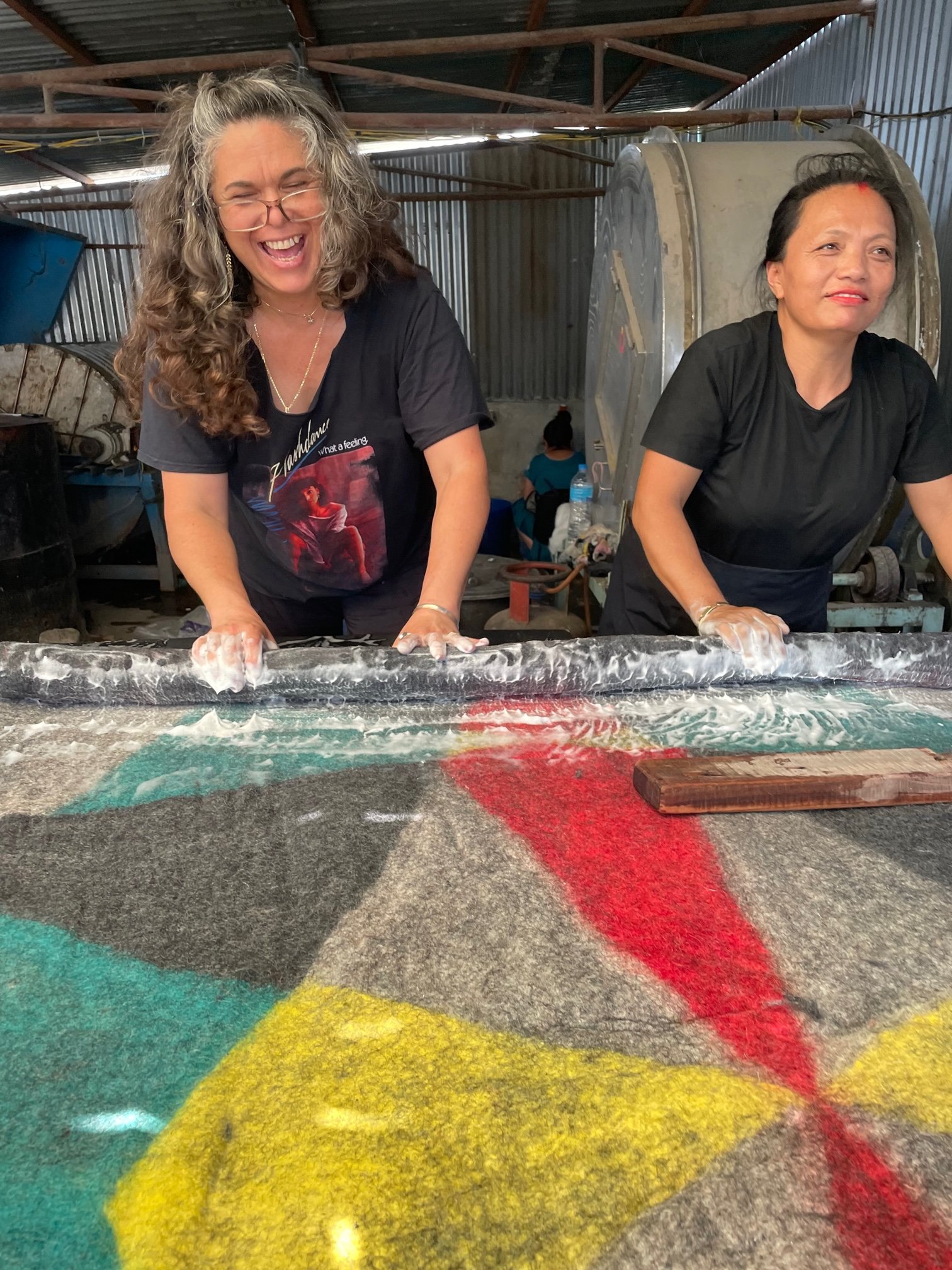
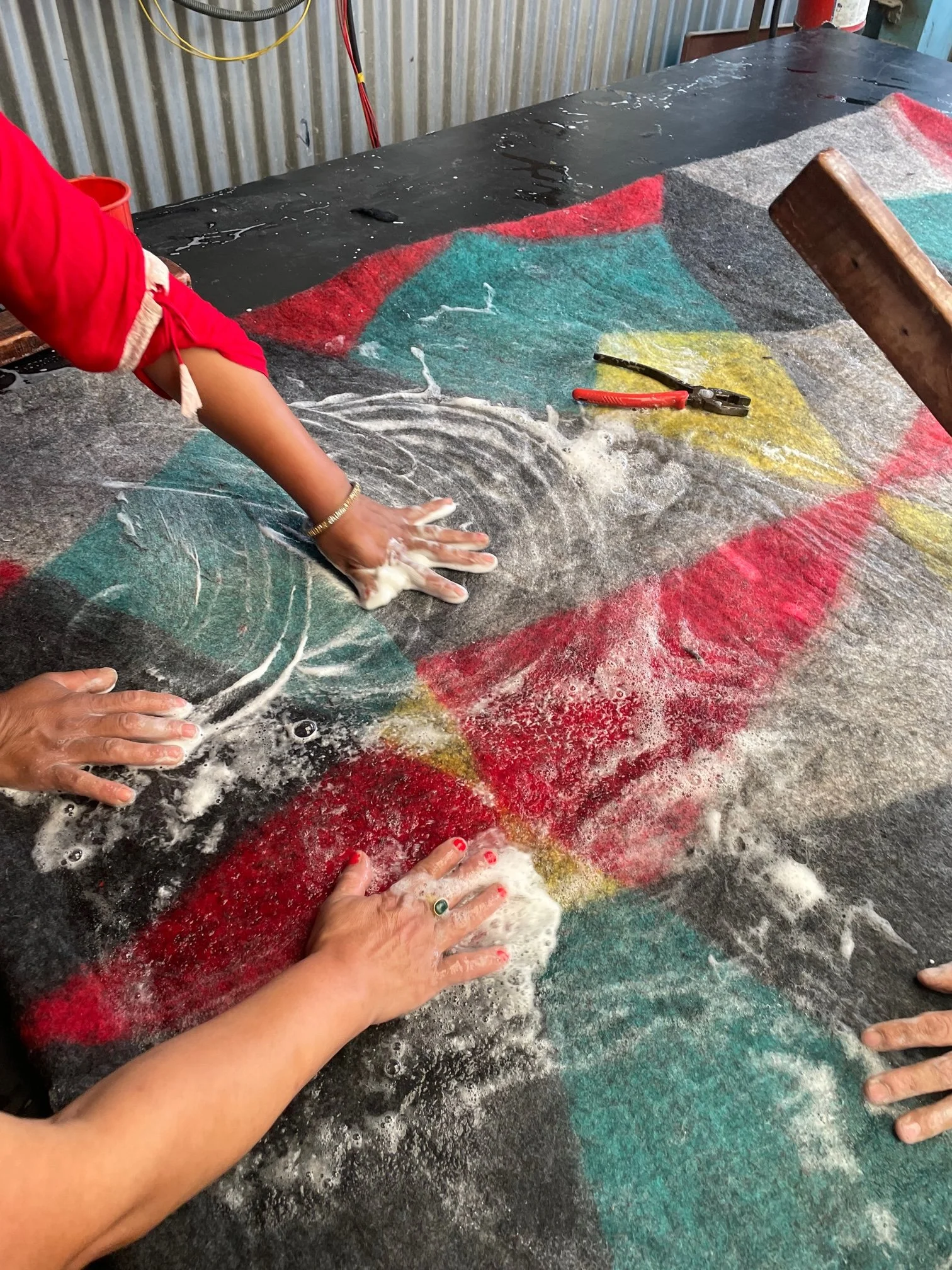
I have also started to re-initiate the design process for the peace Industry that is based on the techniques practiced by ancient felt rug makers from the Central Asian Steppes. During my role as lead designer for Peace Industry between 2002 and 2019, I reintroduced Iranian artisans to this little known, lost felt rug making practice. The wet felting techniques require a lot of hot water and integrating patterns into the foundation by beating pieces of colored wool onto the surface until it shrinks together. The techniques constrain the designs to simpler forms that are collaged and layered. My painting practice is a great experience for this kind of rug making which is very much about layering colors and subtle textures. I am currently working with artisans in Nepal and I am transferring all of the knowledge I gained in Iran and Turkey to a Nepalese women's felt artisan community.
As to the rise of the textile design and craft aesthetic in the bay area, I hope that the market for artisanal textiles does provide support for indigenous crafts to thrive. Natural dyes continue to gain popularity as an indicator of artisanal character and desire for a lesser impact on natural resources. Bay Area designers have embraced a leadership role in progressive environmental practices. We also have a large Asian-American community who is importing, designing, distributing and purchasing and is an important part of the California aesthetic- inspired by nature and a multi-cultural consciousness. I am also seeing textile art becoming very much elevated as art and I believe that speaks to the collective desire to touch ancient art forms again.My approach to community building is part of a larger vision that calls on artists to lead, curate and produce cultural movements to bring social discourse towards greater humanism. My new gallery space works on a collaborative model and an anecdote to a hierarchical and patriarchal system. The approach is peer-to-peer with an understanding that community support is critical to my own wellbeing as a creative person.