
Crafting a Design Language with Kunal Shah
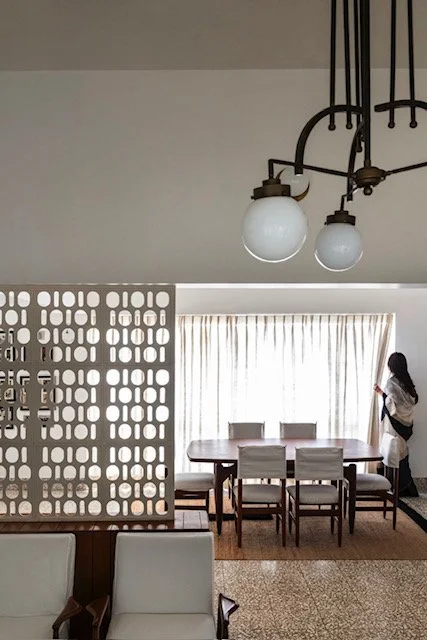
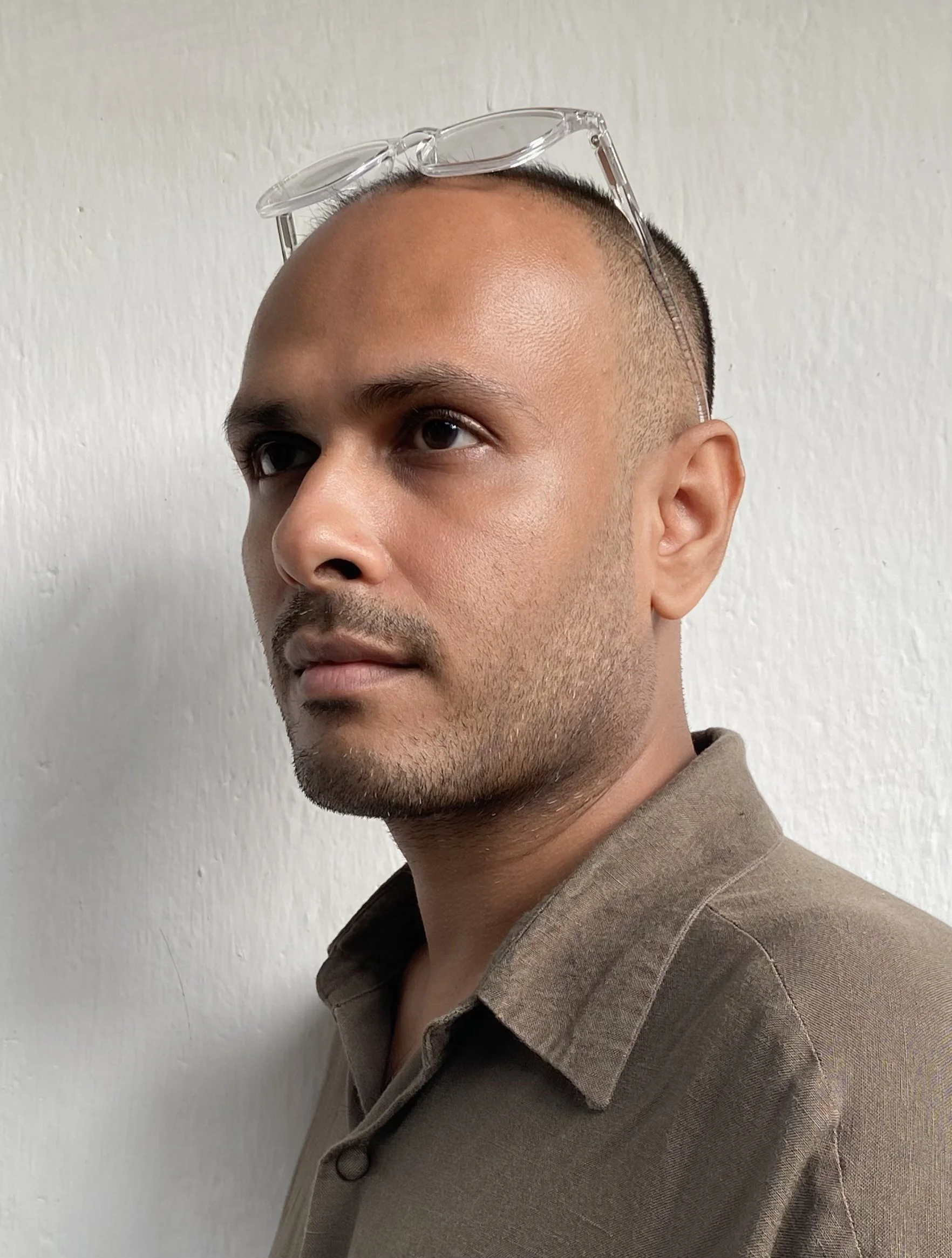
Kunal Shah shares about his passion for art, craft, interiors and architecture in this insightful discussion regarding the timelessness of regional Indian crafts, the culture of sustainability inherent to our living traditions, the lasting impact of material culture, and how authenticity continues to be his key value for artistic expression.
Experimenting within interiors, curation and architecture and creating a gallery style retail concept space in India
The boundaries between interiors, curation and architecture are false boundaries. I think they're blurred or I like to blur them to suit myself and what I want to do.
Claro was really something I would say was part of a bucket list to take an old Goan house in a Portuguese style, and restore it and set up a concept store, which worked with art, craft and design, largely local. We worked a lot with Goan people or people who've settled in Goa. And yeah that really was the idea behind it. The only constraint was that if I would live with those things, I would have them in the store. So that became the way to edit, edit and edit. Was it ahead of its time? I don't think so. I think people were ready by then. It's just that the pandemic hit when it did. A store which was really ahead of its time was actually Bungalow 8; what Maithili and Lulu did. If they were to do it again today, it would be such a big success.
About the curated gallery style retail concept space in India today - it is in a nascent stage. Some of it is very interesting, some very amateur or trying too hard. Strong, clear and authentic concepts are what we really need. Everything else just falls into place if one is able to have that clarity.
Evolution over the years
Often in my free time, I look back at old drawings, inspirations, images of projects, and so on to see if there is a pattern to the evolution. And while it's not conscious, it's definitely there. There is a constant reassessment, editing, distilling, rejecting. Less addition, and more of subtraction and simplification. Simplicity is what I really seek in
my own journey and my own practice - both in my personal life as well as in the practice, actually. And again, those are boundaries which are blurred. I live the way I design, I design the way I live. It's very hard to separate the two. Sometimes, it's exhausting; exhausting also for the people around me, but it's the only way I know. I cannot segregate the two and it's worked out for me so far.
Define personal style, inspiration and values as a designer
I see it not so much as “classic” but hopefully as timeless and effortless. My style is really about it not coming across as a style. And which is why, again, I would use the word “effortless' ' - something we don’t talk about enough in design and aesthetics in India, especially when everything looks like it's been “over designed” or thought through too much. It's like refined sugar. Yes, it's pure white. It's very clean. It is very sweet, but I don't think it's good for you. I mean, I'd rather have unrefined brown coarse sugar. It's as close to natural as possible, and organic and clean and good for me. So, you know, my style...there is no style per se. It's sort of what is timeless, what is comfortable, what is beautiful. It's definitely mixed in terms of time periods and design movements. I don't believe in matching, symmetric, classical symmetry and things like that. I like things to be just slight off the center, irreverent really; within the canons and yet playful. This is how I would really look at the kind of work I do or want to do.
As for architects, practitioners and artists who inspire me, there are so many. I think about the world of Carlos Carpa, the Italian architect and interior designer. He is a big inspiration. I think he's the best interior designer we've ever had. In current times, in India, I really admire the work of Rajiv Saini. The way he's able to draw from art and design history is quite unmatched. When it comes to architecture in India, I admire the work of Rahul Mehrotra. There is a certain self assuredness, a certain dignity and decency. Again, terms we don't use often while describing architectural practices and architecture, but I think it's very important.
Geoffrey Bawa has also always been the biggest inspiration for me. I go to Sri Lanka as often as I can. I don't necessarily look at his work to inspire me in terms of his style,
although “style” is such a horrible term for him. It's not the style, but his ability to think the way he did for when he did what he did, you know; to locate that in terms of context is very important. Would Bawa use any of those materials today? I don't think so. He did the best he could for that given time, given the constraints and so on. Very contextual, which I find very inspiring. He was ahead of his time. Then, I love the sort of conflation of person and practice when it comes to the Sri Lankan architect Anjalendran. There is playfulness, there is simplicity. Absolutely no minimalism and yet a very authentic, simple way of life which celebrates life. There is no renunciation unlike minimalism in the sort of Western or Jain thought. Anjalendran's work is something I reference very often. I read a lot about his life, his values, etc.
My key value as a designer and aesthete, I would say, is authenticity. Authenticity is beautiful, you know. Yeah, that's really how I would sum it up. It's not about good taste or bad taste. I've met people who are so original, so authentic, so true to themselves. And their fashion, their interiors really reflect that. To me, that is very admirable. Somebody else trying to do that is just tacky.
What aspirations do I have now? Oh, so many. I want to travel a lot more. That's something I haven't been doing as much as I used to. Travel informs my practice immensely. And in ways that I don't even realize while I'm traveling. So I don't really travel for design inspiration. I travel to just absorb different cultures, different ideas. They very unexpectedly sneak into my work over a period of time. And there's some rewiring that happens in my head, which I'm not aware of. And then when I look back, I'm like, Oh, this is where the seed was sown. Of course, I photograph buildings and spaces and things like that, but I rarely look at them once I'm back. But it could be about meeting somebody, an interesting meal, a piece of music. It could be anything at all, you know; travel is very important to me, both for personal and professional growth.
Craftsmanship, artisans and design
I live with a lot of craft. And a lot of regional Indian crafts speak to me, I connect with.
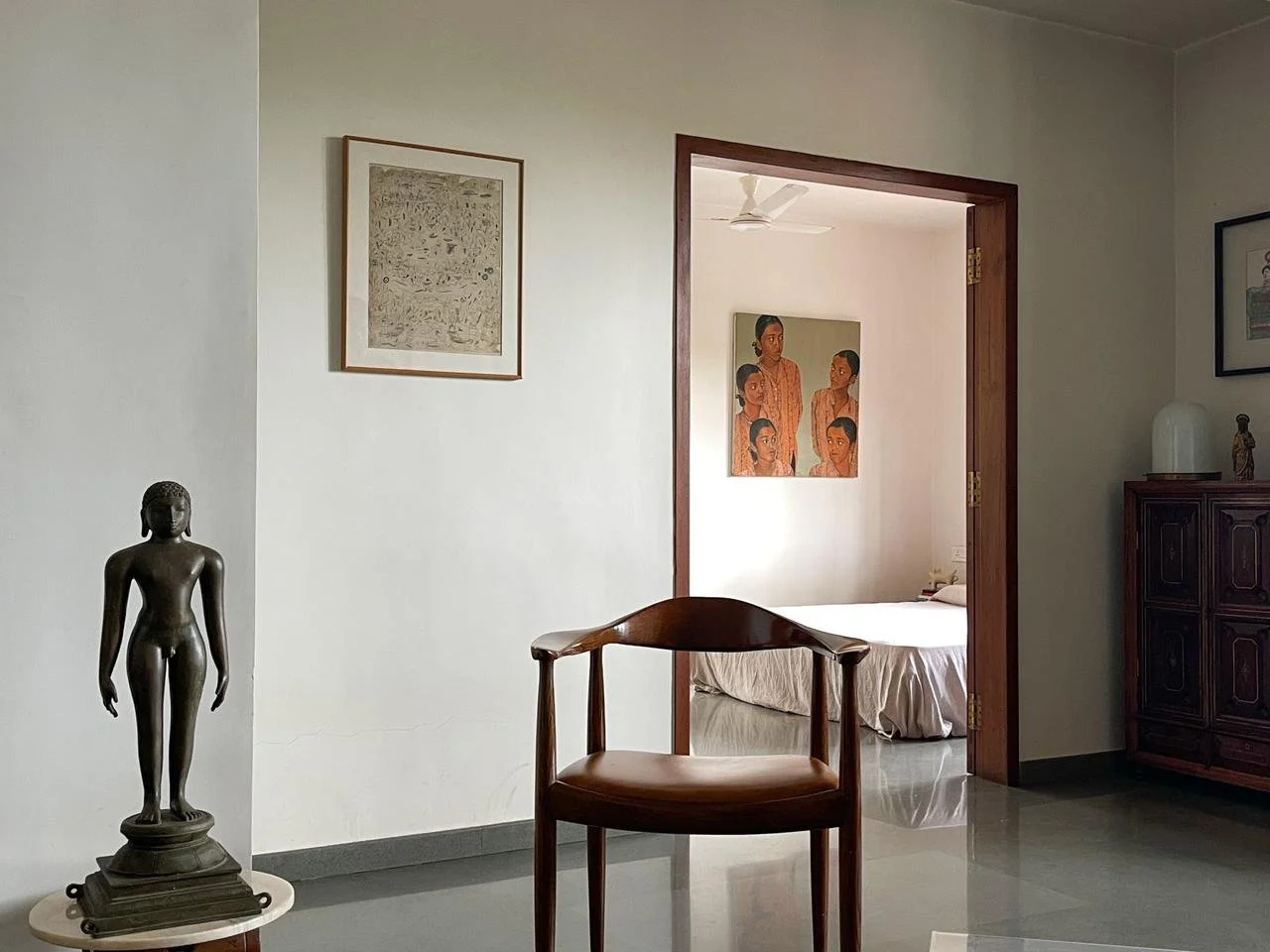
I particularly like bronze casting from Swami Malai in Tamil Nadu. Now, is it a craft? Is it art? I don't know. And I mean, again, like I said, these labels are a bit redundant. The bronze casting with the clay and wax technique is so sophisticated. It's so ancient. I mean, if you look at any of the Chola bronzes, just the ability to do those sensuous forms with metal is kind of poetic. It's just so humbling to know that it's possible. I like working with that craft very much, whether it is an object for the house, hardware, utility objects, or anything else.
I also like working a lot with textiles from Gujarat, Kachchh especially, and I have in the past collaborated with the Matani Pachedi painters. This was over 20 years ago in Ahmedabad; we worked on products without losing the essence of what the craft is. Terms like “revival of crafts'' and “design intervention” reek of a certain superiority on the part of English-speaking, “educated” designers like myself, who sweep in, parachute into these craft clusters thinking we're saviors. And that is just an undignified way of looking at it. It needs to be either an equal partnership or the hierarchy needs to be reversed to where we learn from them. And we educate patrons and collectors and buyers to understand and appreciate what they do as craftspeople, as opposed to telling the craftspeople what they should do so that they can survive. The change in the work needs to be done by us and patrons, not as much by the craftspeople. That's the narrative that I really hope changes.
You look at the Folk and Tribal Art Fair in Paris, for instance. Those works have no intervention. We're looking at those works for what they are. They're potent, they're powerful, they're extremely beautiful. We need to learn to train our eyes to identify those qualities.
As for where Indian crafts sit in the global design landscape, I don't know, really. I mean, we haven't been able to position anything except for textiles. In textiles, there is a great amount of work being done. But when it comes to woodwork like marquetry and inlay and pietra dura and marble and stone and all other media, I don't know if we are able to look at our own craft as “museum worthy”. Rather, they are, but we are unable to see it, unfortunately. Or maybe that's just the way it is in South Asia, we really believe in reusing. Sustainability is not just an “Asian concept” to
us. These crafts were meant to be used and then discarded and then you got another bunch and so on. What I'm trying to touch upon is the many different ways of looking at craft, and not necessarily just a western way of putting it into a white cube gallery or a museum.
We live with our craft, we still wear handloom, and we still use rattan work and terracotta objects like the matka, and handmade jewelry, so for us we're still kind of in that stage where the western world was a few hundred years ago and the crafts died and then they needed to kind of put it on display in vitrines.
We are not there yet.
Design process and balancing act
I like to work with a client's cultural background, their interests, maybe aspirations - who they really are and what they need. It's a process. It's a tough process where we find the right language to what you would call style, mood, vibe. I don't know what to call it.
I draw inspiration from across cultures - the cultures that I come from, the cultures that clients come from, because, you know, it's not just the region you belong to or the region you live in, or your ancestors’ culture; it’s far more richer. It's all that does come into play.
I don't borrow ideas from other cultures. One may bring in objects which have some meaning and resonance to the space, to the end user, to me. I resonate with Japanese craft very much, with their certain kind of restraint, impeccable quality, and things like that. So yes, I do bring these in literally or as inspiration into my projects.
Growing art - object collecting market and material cultures in shifting global identities
The current way of looking at object collecting is purely visual. Instagram or Pinterest
play a very big role. There isn't serious engagement with an object or a group of objects, you know, which I would now say is a bit out of fashion - the way people used to read a lot about a certain cluster or a certain object, engage, ask questions, meet dealers or museums. Now we see an image, we click on it, we find something like that, and it's at our doorstep. It's a bit too convenient, lazy, easy. But that's how things are right now. It will change because when we've accumulated things so easily and so quickly, the disenchantment will also come in very quickly.
There will be editing, there will be repurposing. Social media and online shopping have really been key in the growth of this market. That's really what I think. Young collectors are looking at images of spaces with objects and it becomes aspirational to acquire those. Galleries are catering to this, obviously.
Why I think material cultures are important in today's shifting global identities...this is possibly my personal opinion. They anchor me to a place. They make me feel grounded. They connect me to another time. They take me to another place. And I understand human behavior and human history or history and politics through material objects and material cultures. That another civilization at another time was making the same things, the same objects, using the same objects, or very similar objects as we are. It brings us to realize that there's a universality. That we are one people. We may have differences within the core, but it's one humanity. It's one mankind. And these are the kind of ideas which we need to remind ourselves of in this polarized world, where there is so much othering and wondering and deciding that we are so different from the past or so different from other cultures. But we are not. We are unique, but at a more base level. Material culture helps us understand ourselves better and become better people.
Art deco and show at 47A gallery
I love the 47A gallery space in Khotachiwadi. It is so Bombay. And my first show for Srila was on Art Deco, where the focus actually wasn't on the usual Art Deco, “Marine Drive” Art Deco, Oval Maidan Promenade. There was a mention or a nod to that, but I was frankly not interested in that; it had been documented and spoken about
enough. What I found more exciting was Suburban Bombay Art Deco, which one didn't really look at in the same way or in the same light. Like Matunga and Mahim and Bandra and in South Bombay, even Baikala is never looked at for its Art Deco.
We went all the way to Malad and Andheri and Vile Parle. These are the sort of Unsung Art Deco gems of Bombay. Ahmedabad has so much Art Deco. Tamil Nadu has Art Deco. Art Deco is everywhere. Goa has Art Deco. You know, it may not be the entire home. It could just be the grills in an otherwise sloping roof cottage.
But Art Deco was such a compelling style. If I were to pick one style as my favorite, it might have to be Art Deco. It's quite understandable why Art Deco had such a wide appeal across the country. Uh, there were many reasons, straightforward reasons, really. Brutalism and Modernism did not fulfill the sort of Indian need for ornamentation or shringar, you know; we consider the unornamented as inauspicious. A mother would tell her daughter to at least apply kajal or at least wear a pair of earrings or tie her hair nicely before stepping out of the house. Why? Because unadorned is in considered inauspicious. You see, it's a very unique cultural nuance, which is important to keep in mind. Coming back to architecture, modernism was unadorned, unornamented. Brutalism completely rejected ornamentation, which didn't sit very well with us, but we still wanted to be progressive. We didn't want to live in the colonial or the gothic style. So Art Deco came to our rescue. It was progressive. It was modern enough, but it was still soft, gentle, curvaceous, with lots of detail. And that's what really appealed to us, I feel, as a country, as a culture.
The other reason it was so widespread is because the use of concrete/RCC started around the same time and one could achieve ornamentation and build these beautiful buildings much faster than stone masonry and carving and woodworking. So across strata, even the middle class could have a piece of the pie, unlike very ornamented stone or wooden structures that would require very deep pockets. It was possible to bring in a bit of ornamentation and detail, even on lower budgets. That was another very important reason. And it also the anti-colonial sentiment, which India was really working towards 20s, 30s, 40s. And definitely after
Independence, we did not want anything British. Art Deco wasn't British necessarily. It was European. It was American. Therefore, it appealed to the nationalist sentiment as a more global style. And I think that's another reason why India took to it.