Frieze 91 as a response to the evolving art community with Aryana Khan
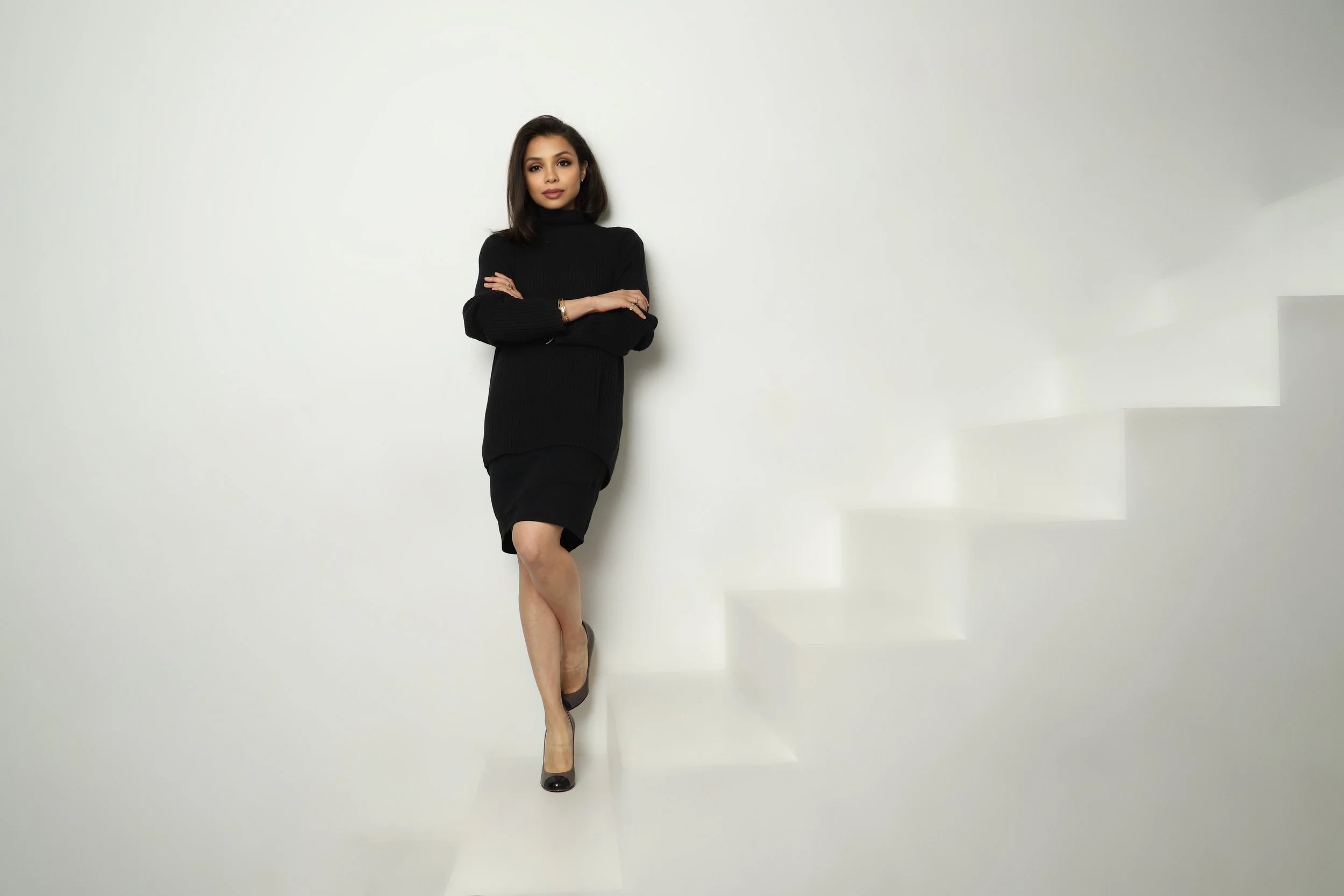
Frieze 91’s network is made up of art lovers and collectors, anchored by a globally curated cultural calendar across Los Angeles, London, New York and Seoul. While our members get fantastic access to our fairs, what we hope to do is build an empowered community who are able to connect meaningfully year-round to each other as well as the wider art ecosystem made up of galleries, artists, institutions and cultural leaders, all of whom are the lifeblood of the industry. Frieze was rst founded as a magazine in 1991 to champion artists and cutting-edge contemporary culture. Frieze 91 is informed by this vision. For the ecosystem to continue to thrive, we constantly need to be thinking about how we engage a new generation of collectors and supporters, it’s a nuanced approach and one that we take really seriously with Frieze 91.
Connecting online and oine experiences
Frieze 91 is an integrated approach. We launched a members-only app called Frieze Connect last year. While the market and ‘art world’ is of course largely centred on physical interactions and experiences - building relationships, bridging knowledge gaps as well as discovery at large, happens more readily in the digital and social realm. The two are totally interconnected. With an overabundance of information available, having a social network and digital space via our app, Frieze Connect allows members to share and connect directly in real time. That’s valuable, particularly in an industry that has traditionally felt closed-o and only for the purview of a privileged few. I would say that our audience are all savvy in general, but importantly, they’re curious and eager to discover new things – be it artists, galleries or new tech updates!
Inclusivity and diversity
The Frieze 91 programme rst and foremost keeps our members in mind and caters to what we see our members are interested in. With that said, almost hand in hand, we constantly think about how the programme can serve our wider network of galleries, institutions and artists and our members’ potential interests. Younger talent is a natural focus for us, but we’re not constrained by any one parameter. For us, it’s important to use our platform across the board, to support cultural projects in our community, highlight the incredible work of our institutions, connect our members directly with galleries and shine a light on talent that deserves to be seen, regardless of age, race or orientation.
Institutional experience
I am so grateful for the experiences and education I got from my time at Sotheby’s and education at Stanford. Beyond my formal education (a degree in Human Biology and Art History), my years there cultivated such a strong work ethic, a belief in excellence and continual self-development, as well as the importance of social impact and working toward something bigger than oneself. This ethos has framed my personal and professional life. My time at Stanford showed me that a multidisciplinary approach to most things is possible and the best holistic way forward. On a technical level, at Sotheby’s I was exposed rst-hand to a vast array of art from varied disciplines; it helped rene my eye and made me more condent in my aesthetic and artistic tastes. I loved every minute and feel very fortunate to have had that formative experience. I had a degree in Human Biology, but I likely learned more about people and human psychology at the auction house! Sotheby’s was a totally dierent world to Palo Alto/Silicon Valley. I had to adapt, but for me adapting came naturally, it was an expected part of life. I grew up in Kuwait, and then loved and took seamlessly to my life at Stanford and as a Californian. It was hard to leave, but the urge to explore other interests and the opportunity to pursue my love of art led me to London and ultimately to Sotheby’s. At each of these junctures, I’d like to believe that my varied background and perspective helped carry me forward and enabled me to try new ideas and seek out new possibilities.
The Middle East and its growing reputation in the art world
I grew up in the region – in the GCC, in Kuwait, ethnically half Iranian and half Pakistani. It’s an incredible part of the world, the pace of change has been extraordinary. It’s important to clarify that the market/art world we’re talking about now in the region, is really in the Gulf (the hub for art fairs, international galleries and institutions) – it’s incredible to see how it’s evolved over the last 20 years. We’re now seeing more and more local talent, many of whom are producing excellent work – artists, curators, writers and institutional leaders. That’s what excites me most. However, looking at the wider region – countries like Iran, Egypt, Lebanon for example, have historically been producing world-class artists, and building world-class collections for generations. With a developing infrastructure, increasing local talent, a new generation of collectors all within a wider context of rich, diverse cultural histories, I will always remain positive about the market in the region.