Saffron Pilgrimage

Following a flight, a car ride, a walk and then a chopper, we reached our destination. Jammu, a city mostly visited by spiritual travelers, is located in the western part of the northern most state of India, Jammu and Kashmir .A coolie whispers ‘ghode loge?’( “would you like a horse?”) in my ears and a most overpowering smell of horse poop fills my nose and then my face. I see sharp-jawed Himalayan men carrying people’s bags, taming horses and even lifting older men and women. There are many shops on both the sides of the road, all selling red netted fabric to offer to the goddess in a cave on top of the hill with coconuts and sweets in a jute bag.

Read More
travelsayali goyalindiaComment
Jaipur, the design capital of India

Jaipur, the City of Pink, resplendent with history and culture, never fails to charm you. Once the modus operandi of the Mughals and the Rajputs, this city is filled with archaic monuments that engrave the streets with remnants of the past while buzzing with art and craft forms that keep many a creative seeking for more. What used to be a slow paced charming city is today a creator’s sought after hub for experimenting with and delving into the world of craft and textiles rooted in tradition and indigeneity.

Read More
Via Qatar

When visiting Qatar, do not let preconceived notions or lazy assumptions stop you from visiting the souk. Souks across the Middle East are the oldest known marketplaces in the world and even today hold immense importance as a historical epicentre. Qatar is the eminent point of East-meets-West; with its map resembling the shape of a hand, it holds together both the worlds and transcends through time, melting the old and the new.

Read More
editsayali goyalworldComment
Visiting Frida

La Casa Azul or The Blue House was where Frida Kahlo was born, lived most of her life, and also died in. She stood by her home, her country all her life and chose to rest where she was born, which is an admirable trait. A person can be born at one place. However, s/he may die several times elsewhere; in heartbreak, in trauma, in oppression. Reading about Frida’s life, how difficult it was since the beginning and how it never came to be easy till her last breath, those words came to life while visiting her house.

Read More
editsayali goyalworldComment
An Afternoon at Emma Boomkamp’s Studio

Emma Boomkamp’s studio gives away a sense of curious juxtaposition in just a single glance. Even before you have started exploring, studying her wide range of craft work, it is a space that commands attention, demanding that the viewer follow the lines, patterns, and layout of her designs like a traveller hiking through a forest trails born out of human footfall.

Read More
editsayali goyalworldComment
Symbolism

The term ‘symbolism’ traces its origin from the poetry of Charles Baudelaire, prominently his Les Fleurs du mal. As a literary movement, it flourished in late 19th century Europe and was soon incorporated in painting, architecture, and other mediums. As an art movement, it followed a distinct pathway and revived a romantic tradition rooted in mysticism, metaphors, and mythology. The European symbolic art movement emerged as an interesting interplay between ambiguity and intuitions, imagery and metaphors.

Read More
editsayali goyalworldComment
Craft based design from Morocco

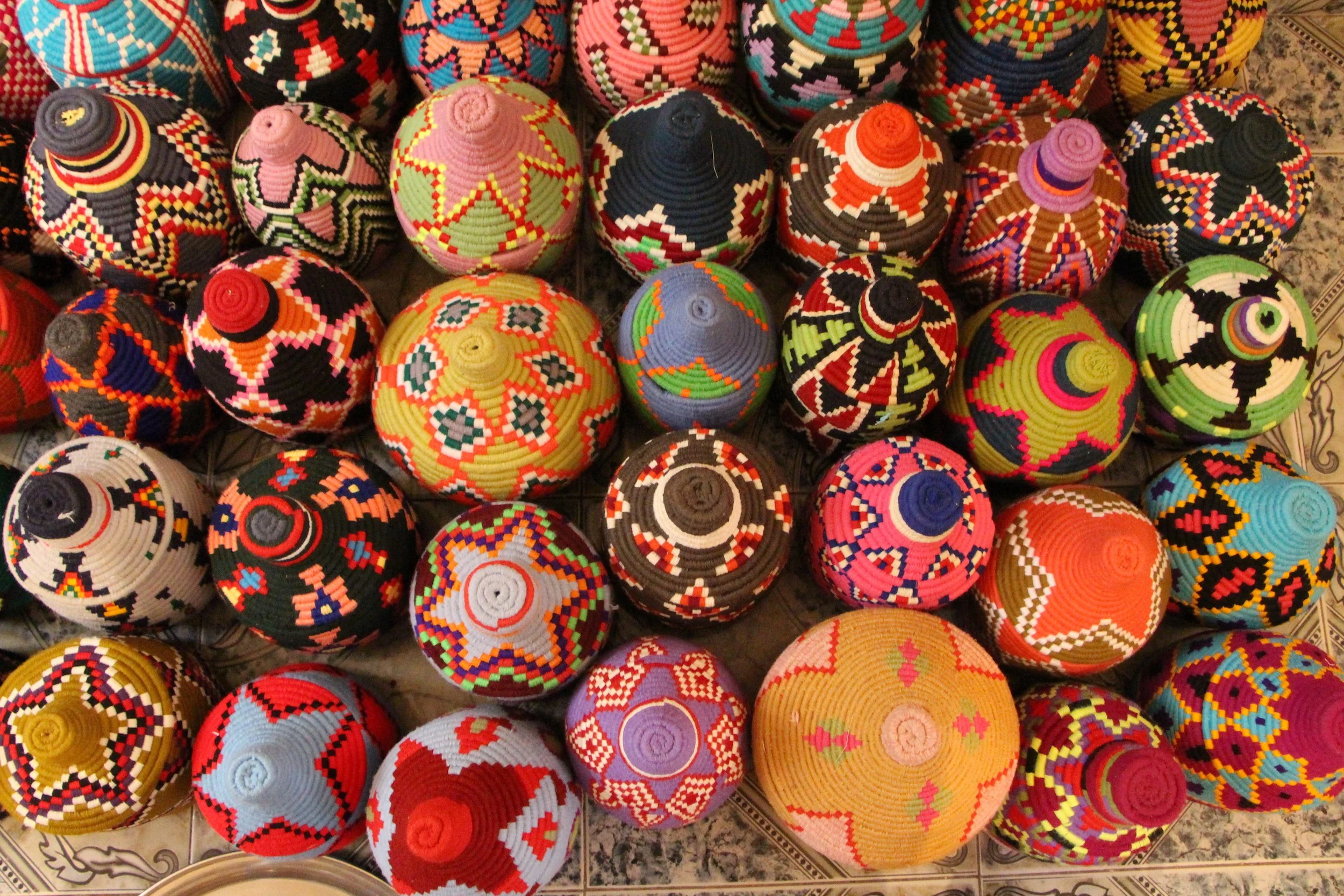
Craft is as old as human time, a practice which is deeply entwined in our daily lives and speaks for our unique place in the sentient world. There is a fundamental need in humankind to not only form functional objects using materials sourced from the local environment but to consciously create objects of decorative beauty. Archeologists have attributed finds of textile weaving to the Paleolithic Era as far back as 27,000 years ago, and pottery shards, stone tools, coins, jewellery and basketry unearthed at digs across the world reveal a great deal of information about these ancient civilisations.

Read More
Textile and Traditions of Mexico

One of the greatest allures of nature is its endless bequeathals that clothe our bodies and adorn our homes. In the rugged mountainous state of Oaxaca, the southern Mexican home to various indigenous groups of people, the craft of textile-making is an ode to nature and the intricate relationship of the indigenous communities with natural resources.

Read More
editsayali goyalworldComment
Living cultures in Oaxaca

In Oaxaca, food is an integral part of the community and grown entirely in the countryside. Like everything about the culture there, food evokes a sense of passion that transcends the immediate anthropological language it provides. Food is the very essence of transcendence, actually. If you visit the homes of the common people, like we did, you will see women of the households spending hours and hours in the kitchen, all in the name of preparing the daily meals.

Read More
edit, foodsayali goyalworldComment
444 | A collection of wearable art

Sayali’s collection interprets the world through energy and its transformation from thought to action, action to knowledge. The element-inspired art of this collection speaks a universal language through the visual manifestation of earthly and cosmic phenomena. It relays meaning through sacred geometry -- simple forms and lines that hold within them the meaning of life and cosmic truth. Art becomes a medium of interpreting the world, powerful enough to stir the consciousness.

Read More
Materials and World Trade | Then and Now

Textiles have been intertwined with the advancement of human civilization and everyday living for ages. From sacred rituals and surface decoration to daily attire – their usage has been widespread. Textiles and spices were the primary commodities forming part of international commerce in the pre-industrial period. In those days, India was renowned for its textile quality and efficient trade practices with Far and Southeast Asia. The unique status acquired by Indian textiles is evident in the fact that many words like calico, pajama, gingham, dungaree, chintz, and khaki entered the English language.

Read More
editsayali goyalindiaComment
What Colour is Jaipur?

When Sawai Jai Singh II founded Jaipur, he dreamt of creating a city emulating Delhi’s Red Fort. Pink, we are told, is the generic colour of Indian hospitality. The sandstone and terracotta havelis speak of a place saturated with tales of the past. If storytelling had a colour, it would resemble a prism breaking out into the colours of Jaipur’s shops and stalls and alleys and ateliers. A riot, and no less.

Read More
Havelis of Shekhawati with Neemrana

The Piramal Haveli in Baggar is a small but stunning Rajasthani-Italianate structure, approximately 40 kilometres closer from other hotels in Rajasthan. It was built in 1928 with a large open garden and two pillared courtyards painted with colourfully kitsch frescoes of flying angels, aeroplanes, and gods in motor cars. These unique characteristics of the restored Piramal Haveli, make it distinct from the other hotels in Shekhawati region.

Read More