
Art, Architecture & Aesthetics of Bundelkhand— Exploring Khajuraho and Orchha
‘Between the earth and sky,
Lie the colours and lights
Of a bygone world,
Where you hear the sun
Recall the tales of yore.
Come watch the moonlight
Caress carvings on temple wings.
Oh! How magnificent to see—
Things known and unknown,
Through symbols set on stone.
In the mystical land of Bundelkhand, located at the heart of present-day India, are the ancient towns of Khajuraho and Orchha. This region is an unrivalled art destination inspired by the everyday and esoteric. Amidst an ethereal landscape, surrounded by an abundance of flora and fauna, we stepped into a realm defined by Tantric aesthetics and syncretic architecture.
Tantra and Symbols
Tantra, from the Sanskrit word tan which means “to weave,” is a radical school of thought that emerged in Asia with a variety of forms and many interpretations. Traditionally renowned for its philosophical engagement with social inclusivity and spiritual freedom—in art, tantra symbolises a visual language of global modernism. It is believed to be the manifestation of the cosmos as elementary shapes, identified with a spiritual presence known as yantras.
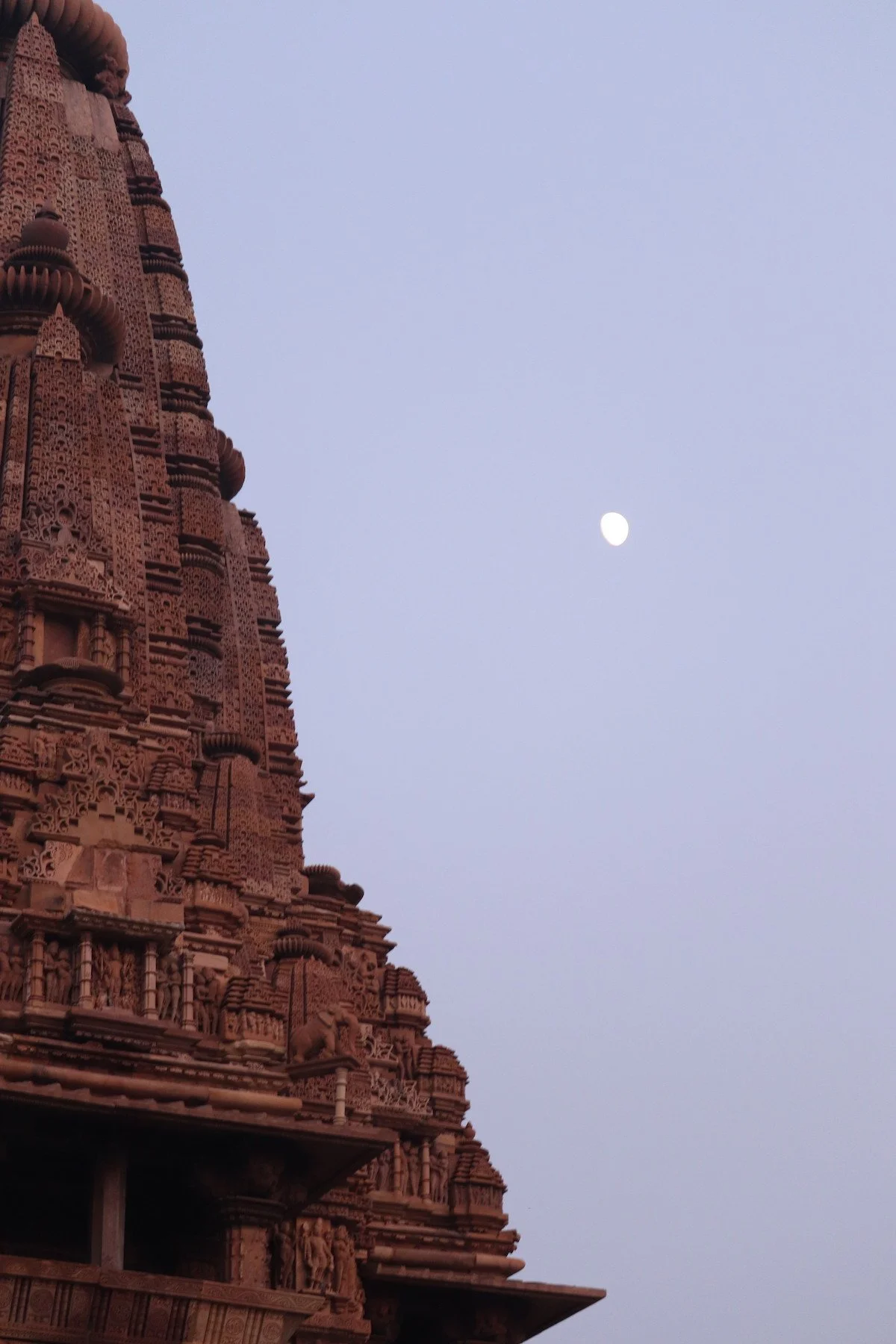
In the temples of Khajuraho, one can experience its ancient architecture as a translation of metaphysical yantra. Following a grid structure with fractal layers, these temples are an architectural homage to divine myths, belief systems and mathematical knowledge sculpted by exceptionally gifted sculptors.
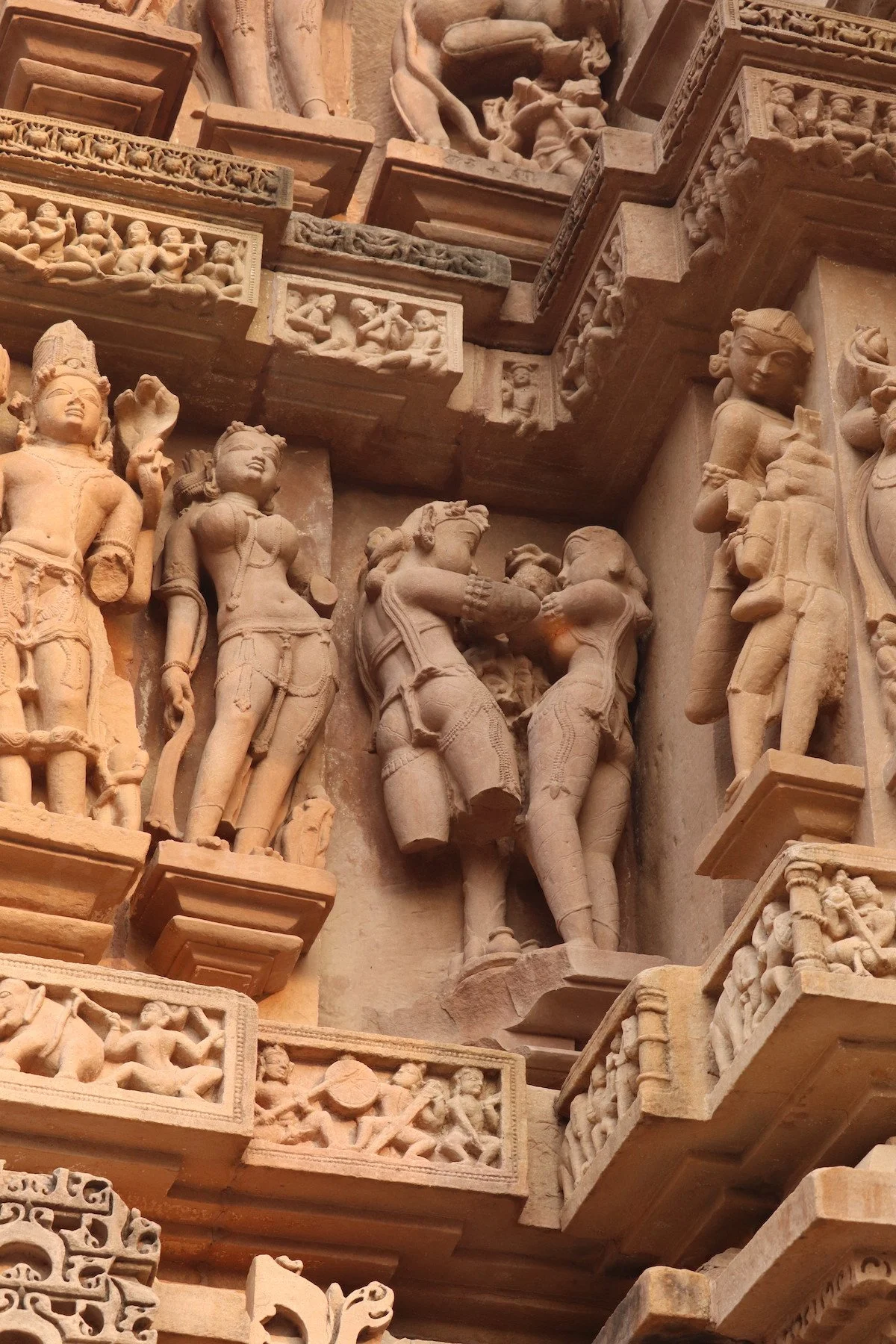
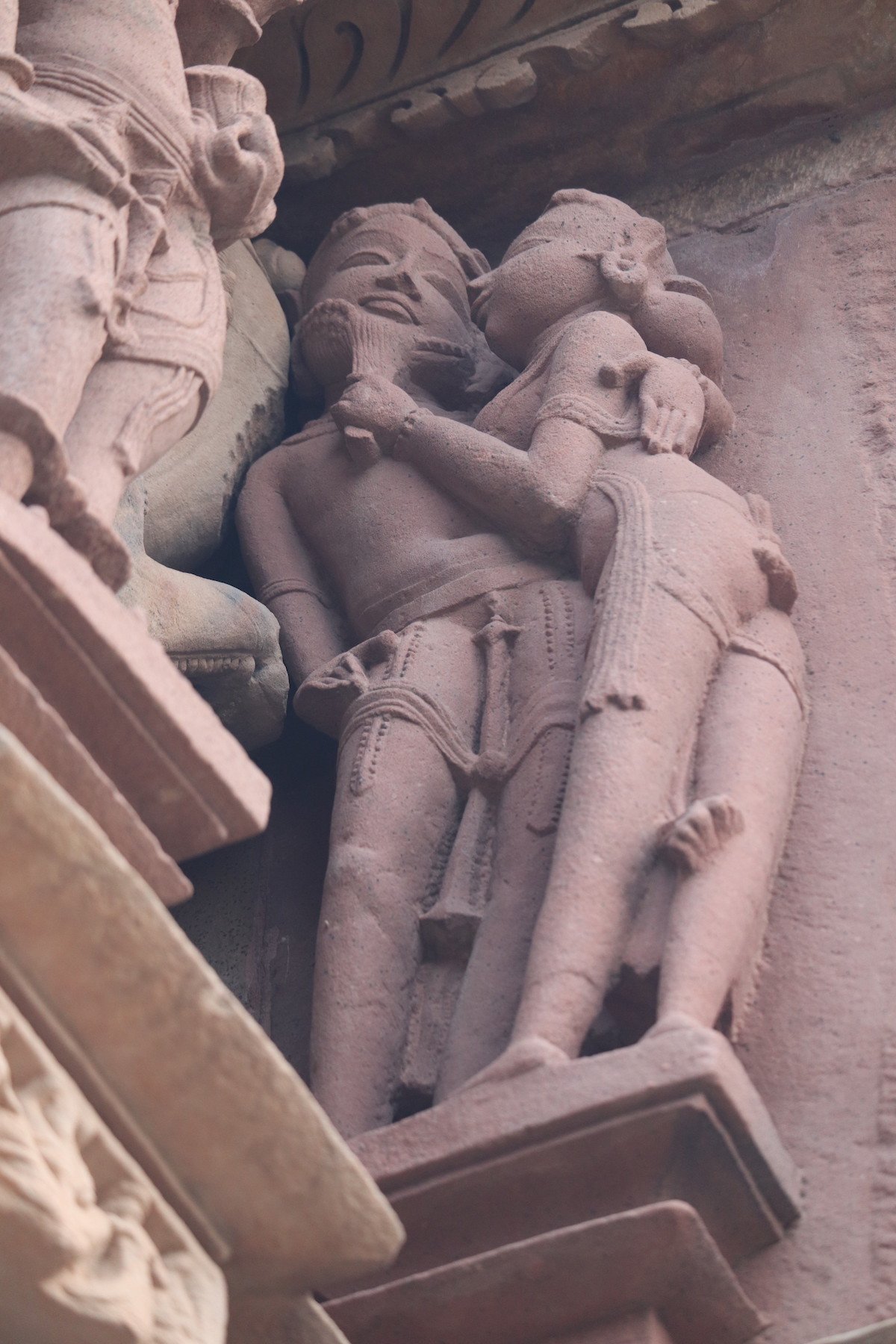
Another closer look and we can find the carvings on sandstones evoking tantric iconography. The sculptures and temple walls of Khajuraho are an ode to the tantric concept that considers the human body as a microcosmic metaphor for the universe.
The Khajuraho style of iconography merges the ordinary and the extraordinary, the body and the cosmos, the pure and the profane. In its sculptures, the erotic becomes the deepest of life forces.
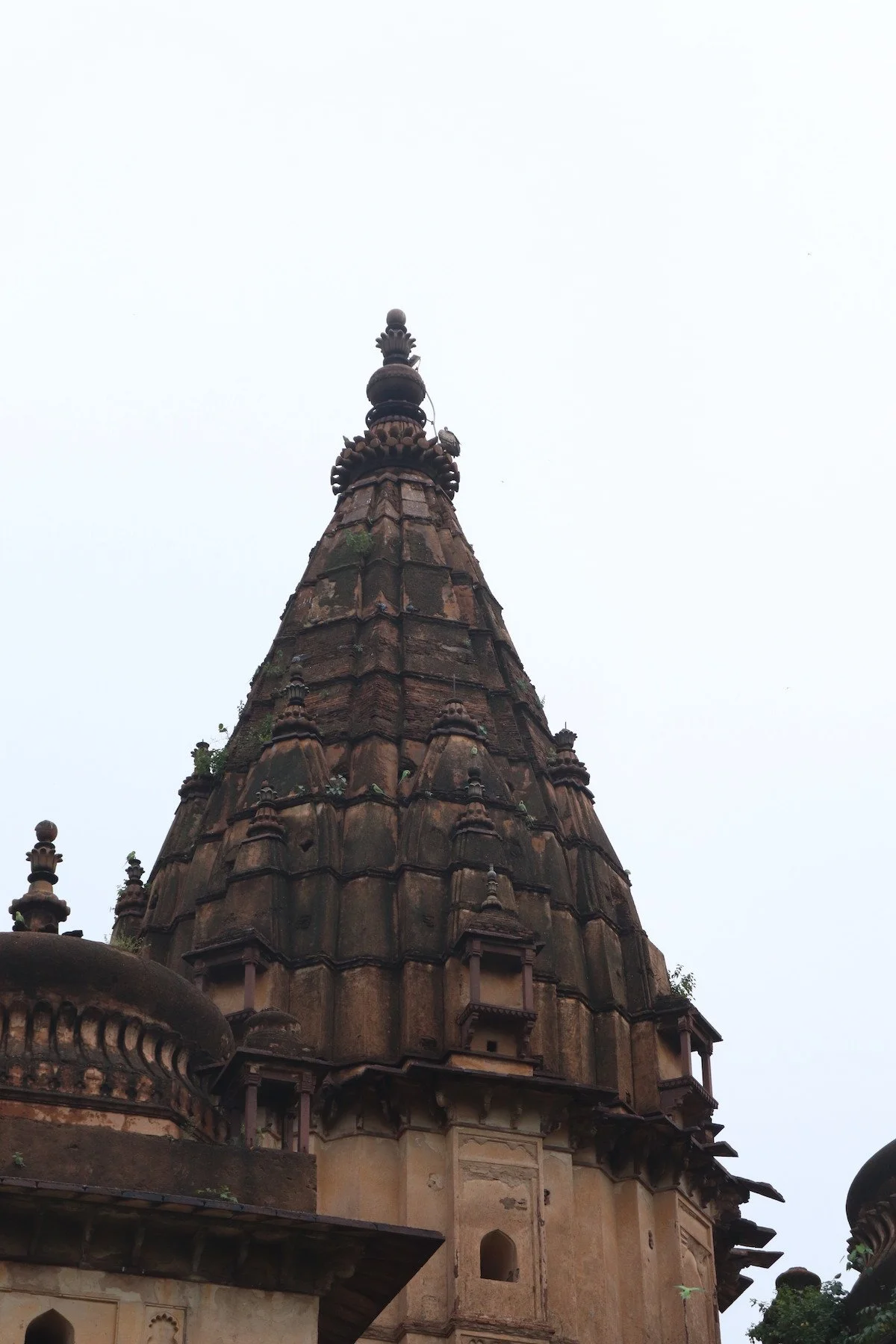
As our eyes travel from symbols to sculptures, an entire way of life unfolds before our eyes. Right there, on the pink, yellow and grey sandstone walls, one can see the spiritual emerge from the everyday activities of the people of that era. Above the temple core or garbhagriya, rises the shikhara or spire while the surrounding walls, pillars, and ceilings depict carvings that symbolize a celebration of the everyday.
The Scorpion Bearer
Local narratives claim that the name ‘Khajuraho’ is derived from the date tree or khajur. Some historical accounts mention ‘scorpion bearer’ derived from the original name ‘Kharjuravāhaka’ (‘kharjura’ meaning scorpion and ‘vāhaka’ meaning bearer)—the symbolic name for Lord Shiva.
From the 10th to 12th century CE, Khajuraho was the cultural capital of the Chandela kings who built the majestic temples that now adorn the place. As we walked from temple to temple, observing the densely packed sculptural motifs on each wall, we were fascinated by the sense of balance and rhythm in their layout. Seen from afar, the friezes look compact and the figures within them exude precision and perfection. To think each one of them had been crafted by hand, each consuming the time and attention of the craftsman, each adorned with elaborate clothing and jewellery, and each bearing facial expressions that convey the mood, ritual and activity of that character.
We were mesmerized by the sylvan landscape carved by the River Ken. One can spot wild birds flying high, kingfishers and lapwings perched on rocks, frolicking beneath the Jamun tree on the river banks. Remnants of a civilization that valued knowledge, artistry and nature is perceptible in every corner of this place that weaves the magical and mythical on its material culture.
Together, the natural landscape and the material history of Khajuraho offer a surreal combination of slow, immersive travel, best experienced without a formal rulebook. A topography and history as diverse as Bundelkhand’s, calls for a unique tête-à-tête with cultural heritage and natural beauty.
Boats and Betwa
On the banks of the Betwa, also known as Vetravati which means ‘one with reeds,’ is the erstwhile capital of Bundelkhand, Orchha. The name ‘Orchha’ is derived from the phrase ‘ondo chhe’, meaning low or hidden, and indicates its bowl-shaped topography. A boat ride on the Betwa offers glimpses of the surrounding landscape characterised by rocky terrain. Friendly boatmen will greet you with smiles and regale you with tales of the river, the people and the spiritual traditions of the place.
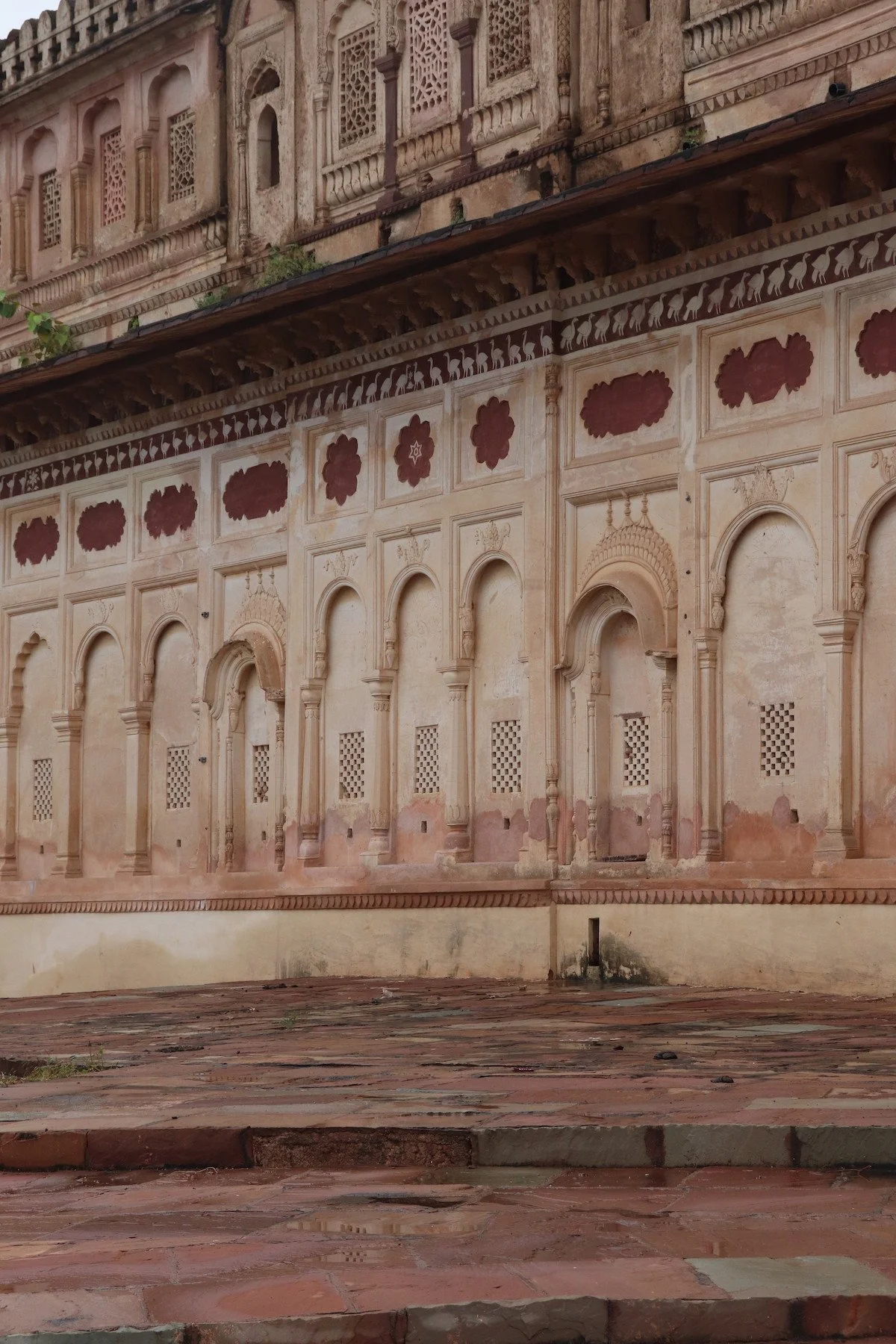
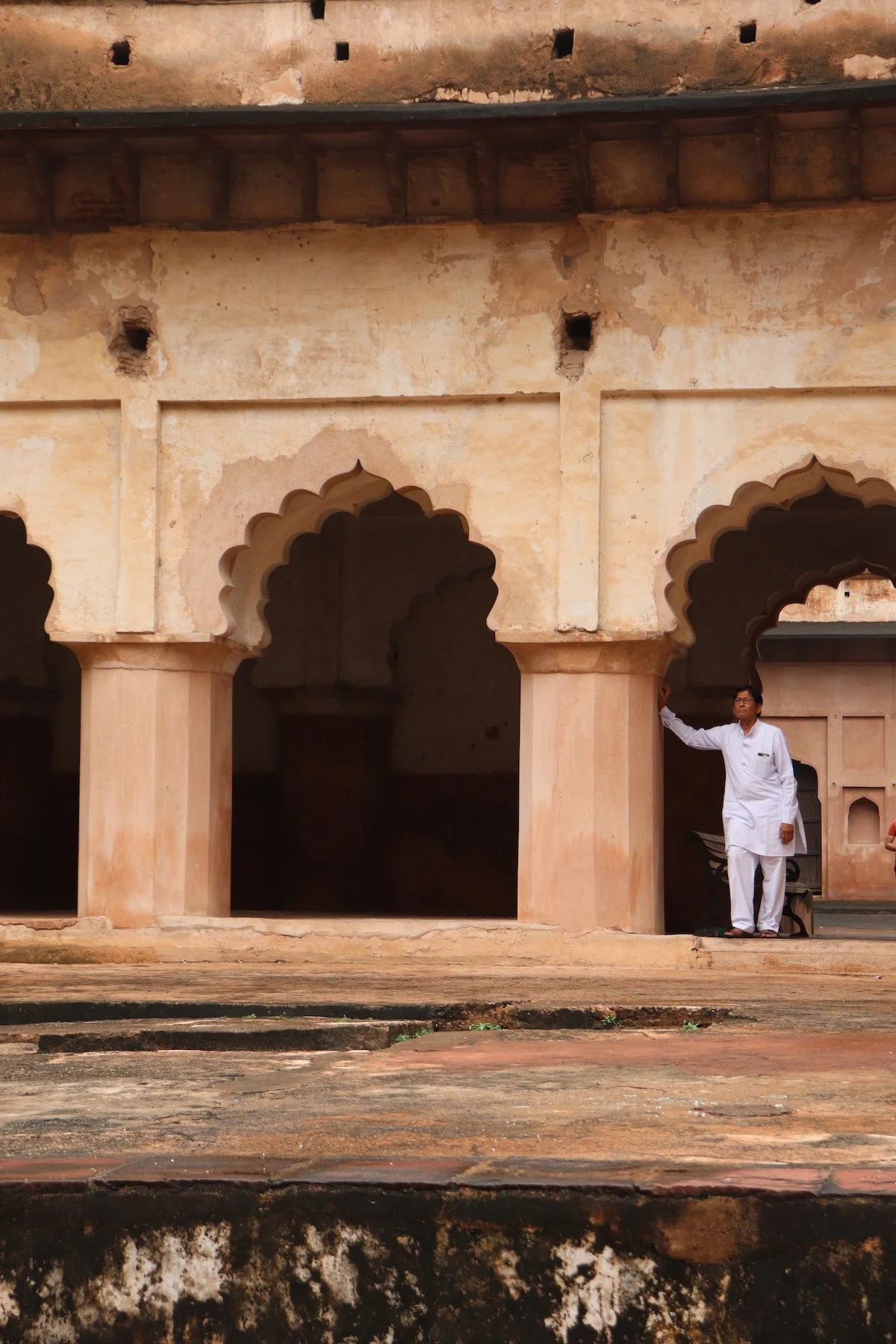
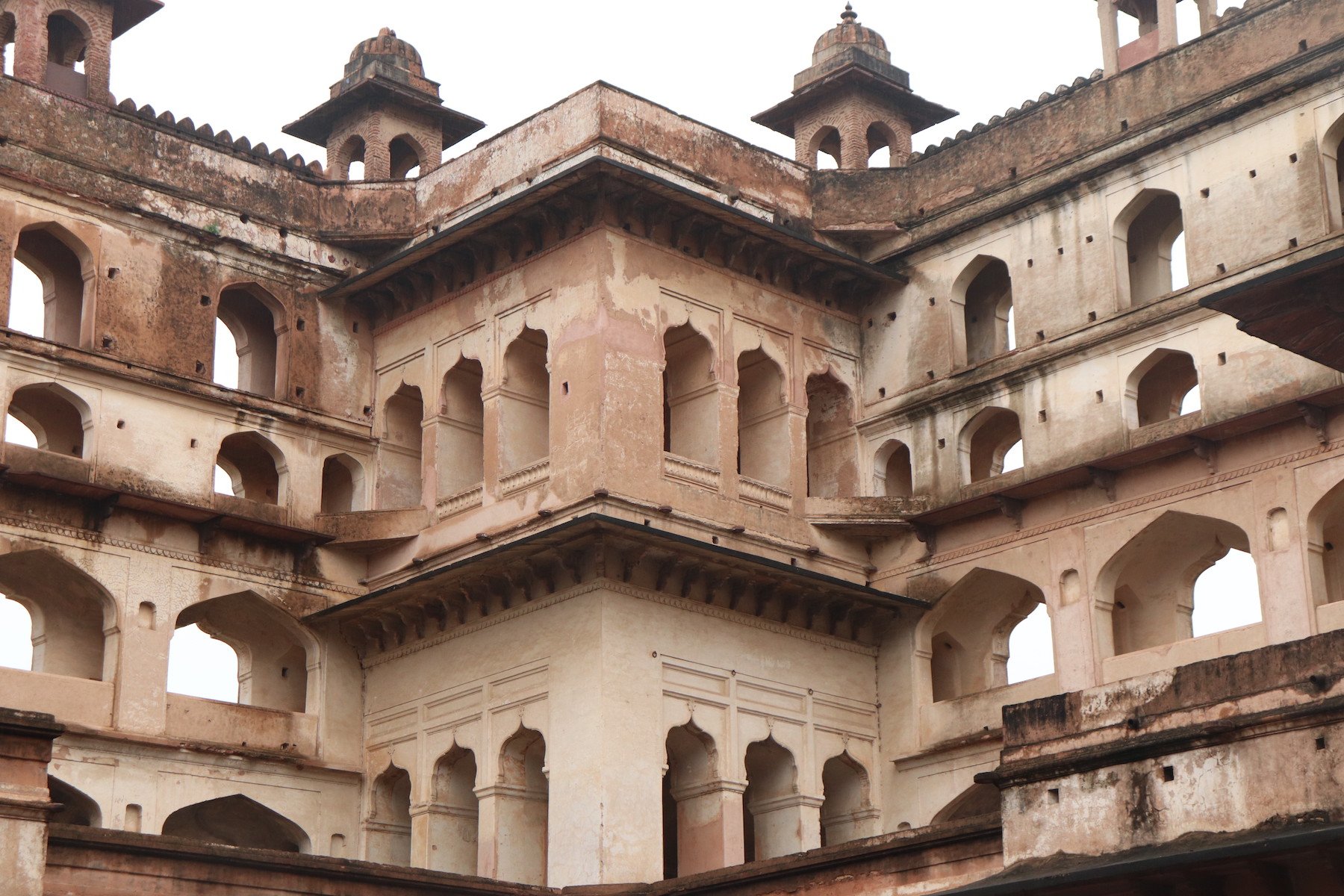
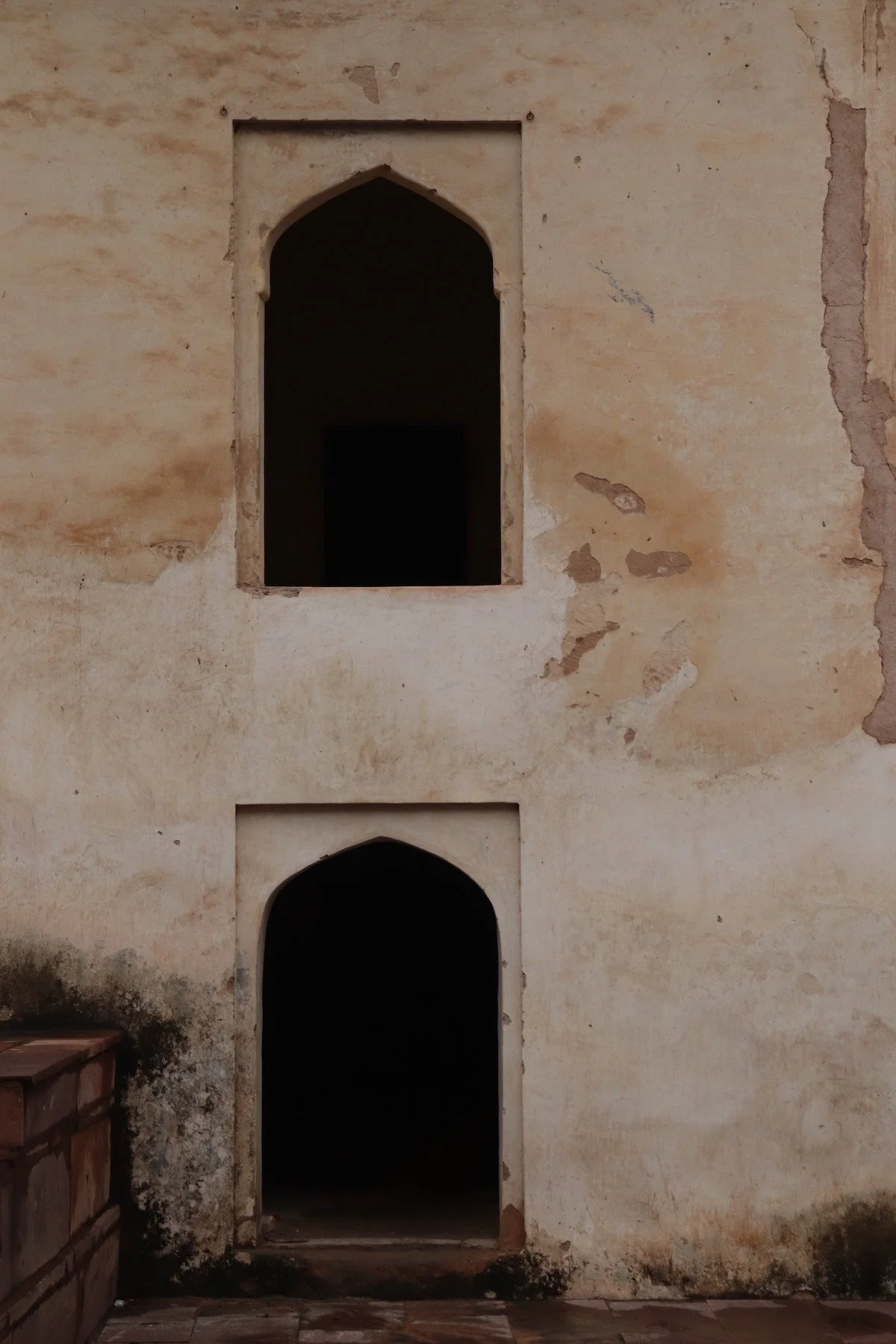
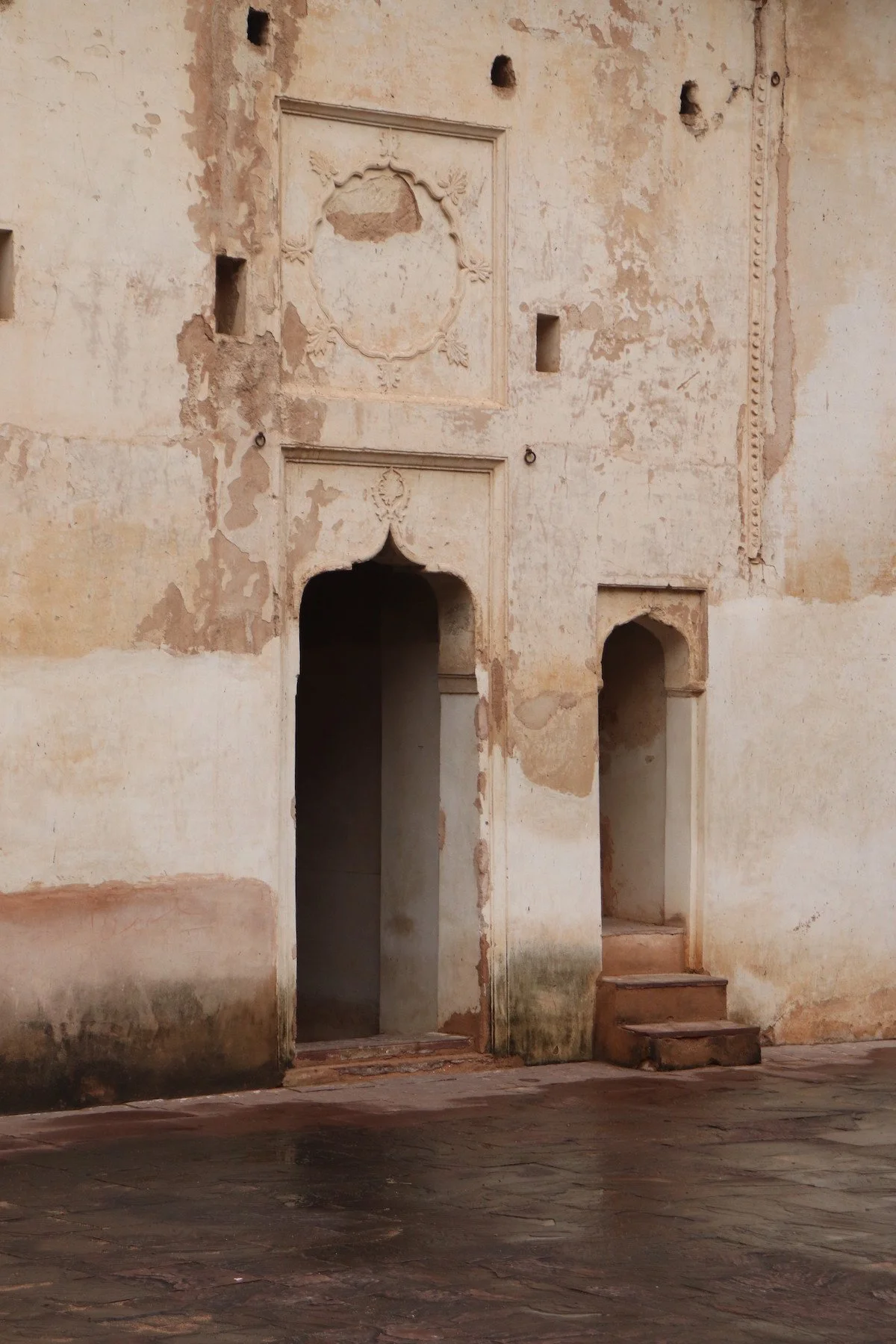
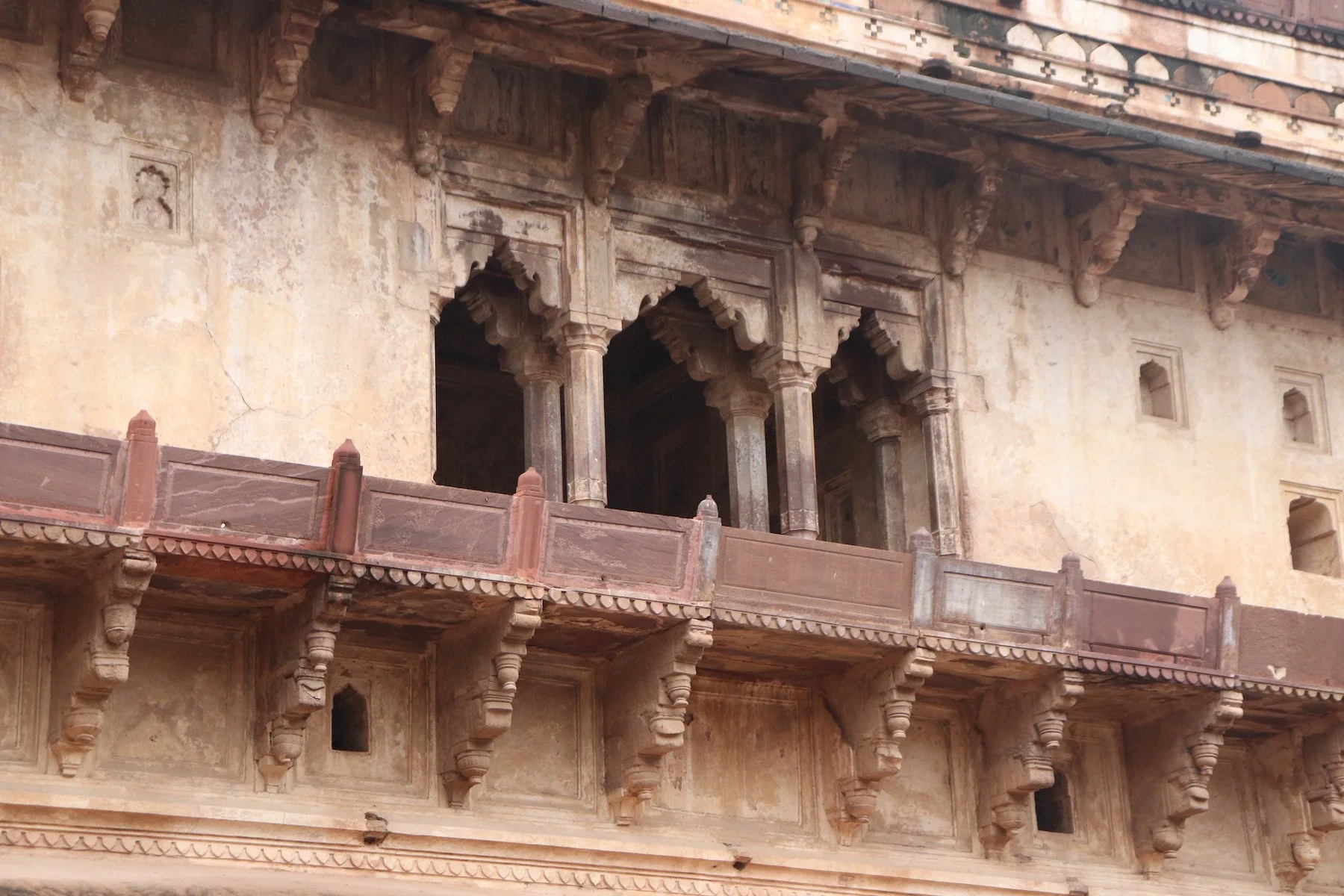
Orchha shows a syncretic architectural style that combines Rajput finesse with Mughals elements. The town continues to have a distinct medieval aura, with its skyline dominated by the domes and shikaras of its palaces, temples and mansions.
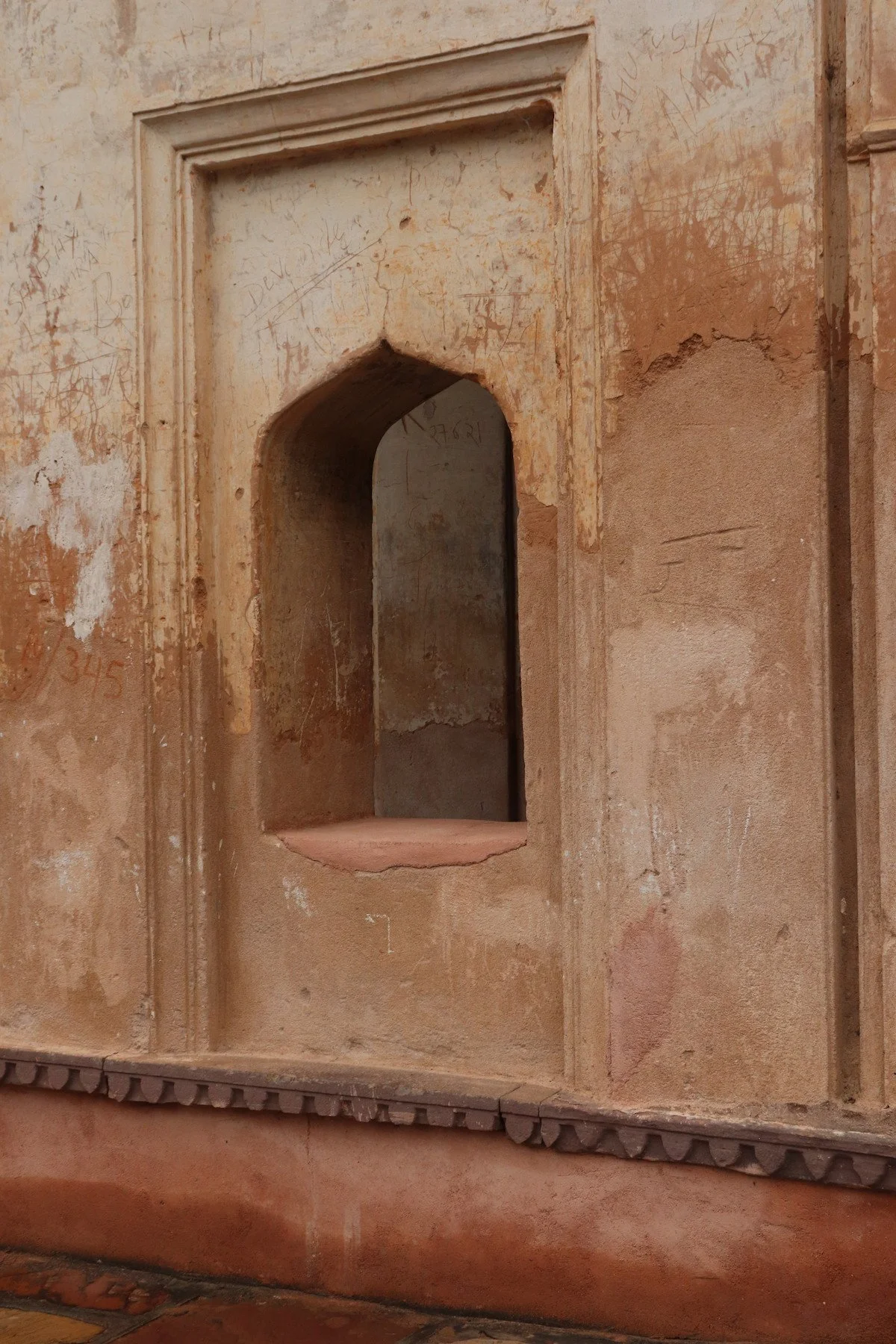
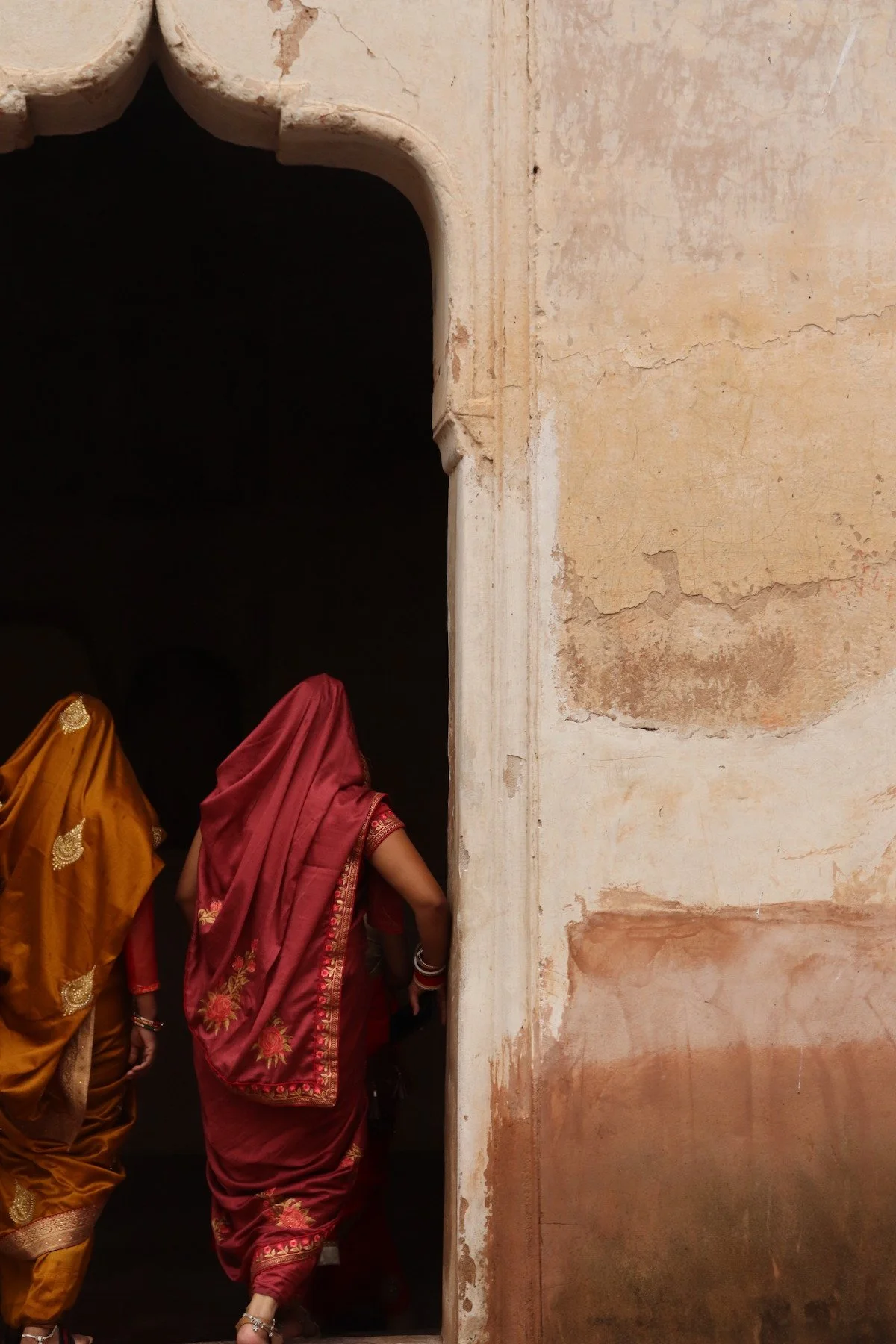
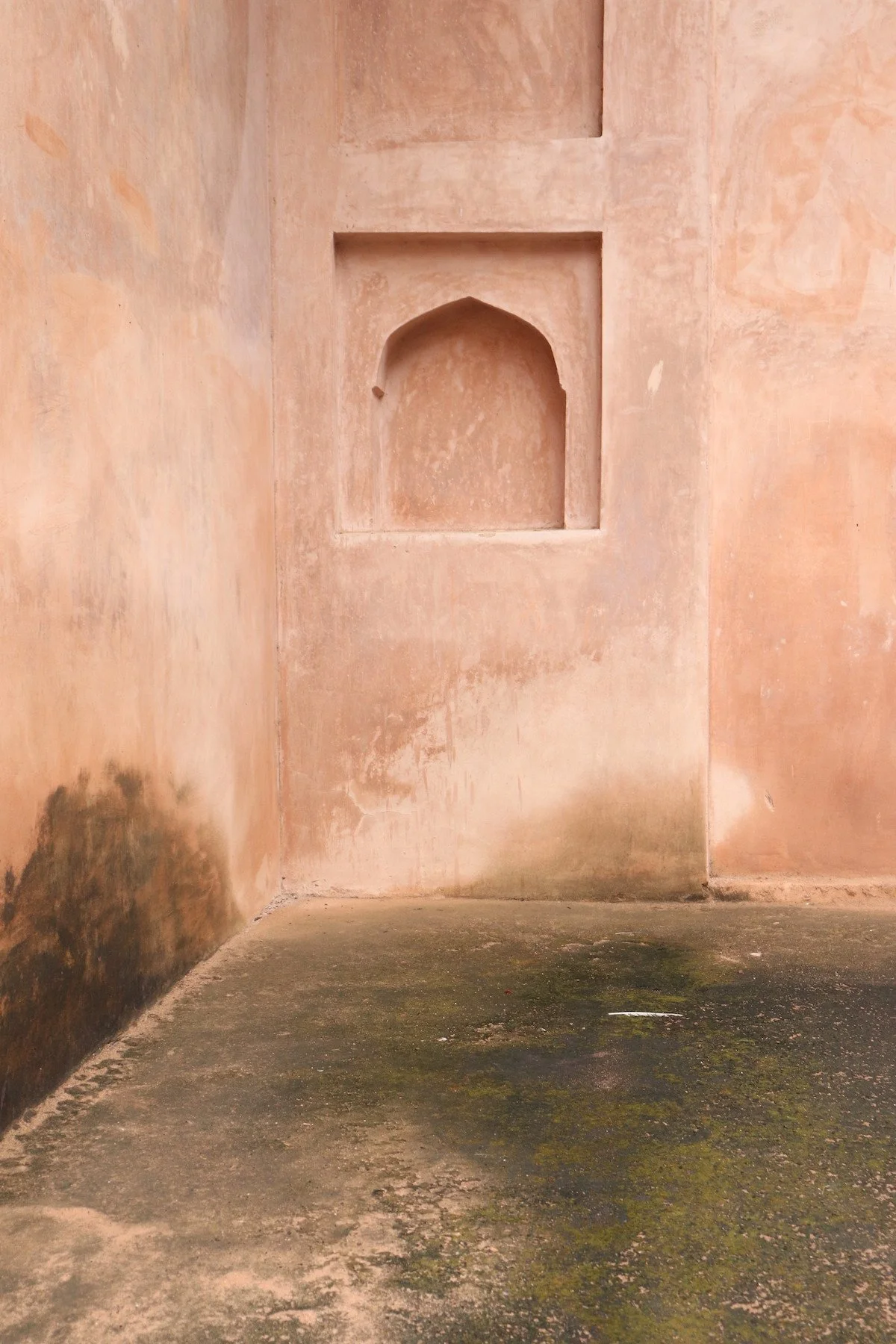
The traditional design and colour vocabulary of Orchha’s neighbourhoods depict how the social landscape and building traditions evolve as a response to the natural environment. Together, the historical and the vernacular create the everyday spaces of Orchha, lulled by the river Vetravati and her surrounding forests.
A prominent architectural feature on the banks of Betwa is a group of chattris or cenotaphs that serve as memorials to the Bundela kings and queens. Over time, gardens and ghats were built that now make for an excellent spot to watch the setting sun on the picturesque river. The rest of the town seems to have evolved organically around the forts and monuments. As a traveller, you get immersed with the changing landscape in the course of your walk. It is like enjoying a kaleidoscopic scenery of housing settlements and city wall gates, heritage stores and street shops, ghats and manicured gardens.
Art for posterity
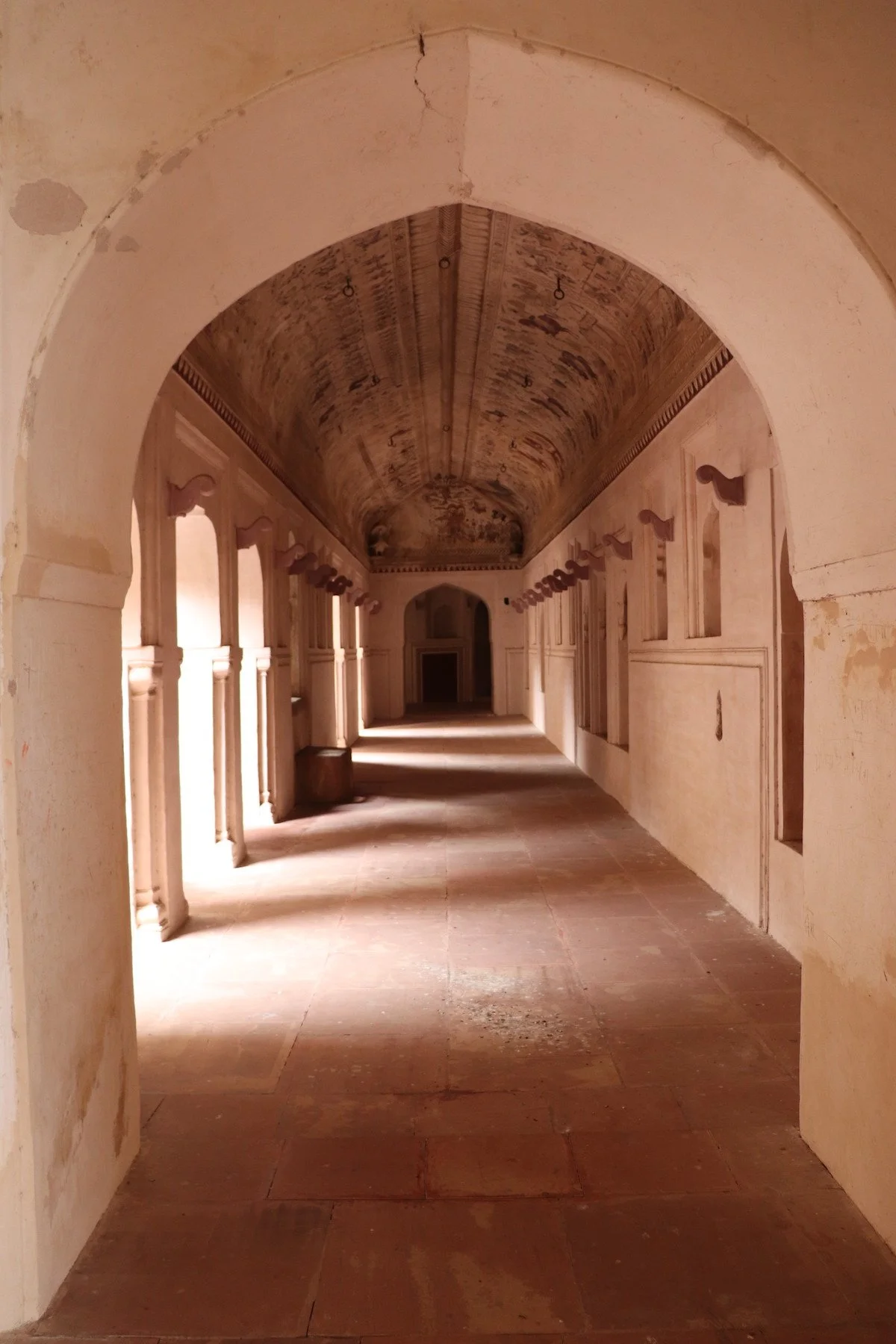
Throughout Orchha, you will be greeted with walls covered in frescos and other murals, making the town resemble an outdoor museum. The artistic heritage is quite prominent in the palace walls, especially in the Raja Mahal and the Jehangir Mahal, both of which comprise beautiful murals in earthy tones and black.
Coming from Khajuraho, we noticed the change of tone in both the subjects of art created on the palace walls as well as the stylistic transformation—there is noticeable Islamic influence in the meticulous jaali screens (latticework), domed kiosks and the use of contrasting colours. The intricate outer wall of the Jehangir Mahal still contains traces of lapis lazuli and turquoise that add spots of bright colours against the muted background of the walls. Murals comprise scenes from mythological stories, day-to-day life, royal hunting episodes, and the diverse flora and fauna of the region.
The Sarai at Toria
Our travels were made possible by South Asia Uncovered, who curated an off-beat Bundelkhand experience for us. With over a decade of experience, they curate memorable journeys based on their expansive knowledge and expertise, enabling travellers to explore at their desired pace.
The Sarai at Toria is the vision of a husband-and-wife partnership with a passion for wildlife and conservation. Dr Raghu S Chundawat is a conservation biologist whose pioneering ten-year research on tigers took place in the Panna Tiger Reserve. Joanna Van Gruisen is a wildlife photographer, writer and conservationist.
Their interiors boast a colour palette that soothes the soul, wood and glass work that brings daylight streaming inside, and terracotta sculptures that excite a creative mind. This tranquil riverside repose offers traditional village-style cottages with sustainable design to indulge their visitors with luxury and comfort while protecting the surrounding natural and cultural environment.