
Crafts, Colours and Creativities of Kutch

Much has been written about Kutch—the land of white desert in Western India that captures the imagination of all its visitors. While its topography is dominated by succulents, open grasslands and salt deserts, its customs are dotted with the craft heritage of its many communities. The Kutchi identity is a mosaic of ethnic and cultural diversity, tracing its origin as an important centre for trade and commerce, a melting point of people and cultures. Material and living traditions exist in this area in the form of leather work, metal craft, organic rain-fed cotton, indigenous wool, pottery and clay art, woodwork, weaving, embroidery and printing techniques.
Our visit to Kutch started with an encounter with the time-worn art of tie and dye Bandhej or Bandhani. A flourishing textile practice of creating intricate patterns by folding fabric and using resist dyeing technique, this folk art is a part of this region’s pastoral identity and a source of ancestral pride. While the tie and dye style of textile printing is found in other cultures such as the Japanese shibori fabrics and various African textiles, the Bandhani of Kutch has distinct patterns created from tiny pinched dots. The resultant textures and layouts are rife with experimentation by the local communities who have adopted their own unique colour and design patterns. From saris and dupattas to pagdis, the Kutchi bandhani is an essential aspect of the local aesthetics visible in their everyday clothing.
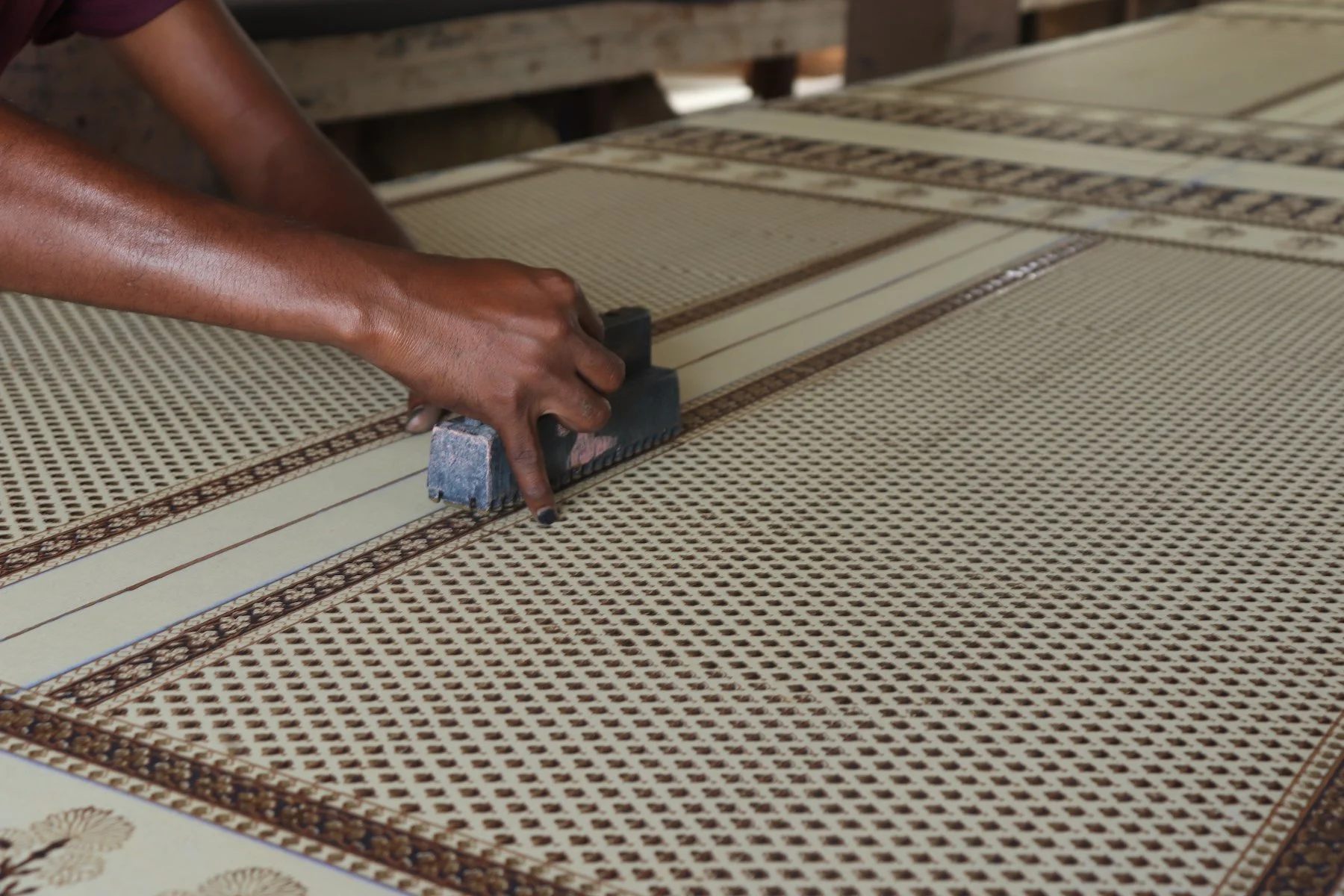
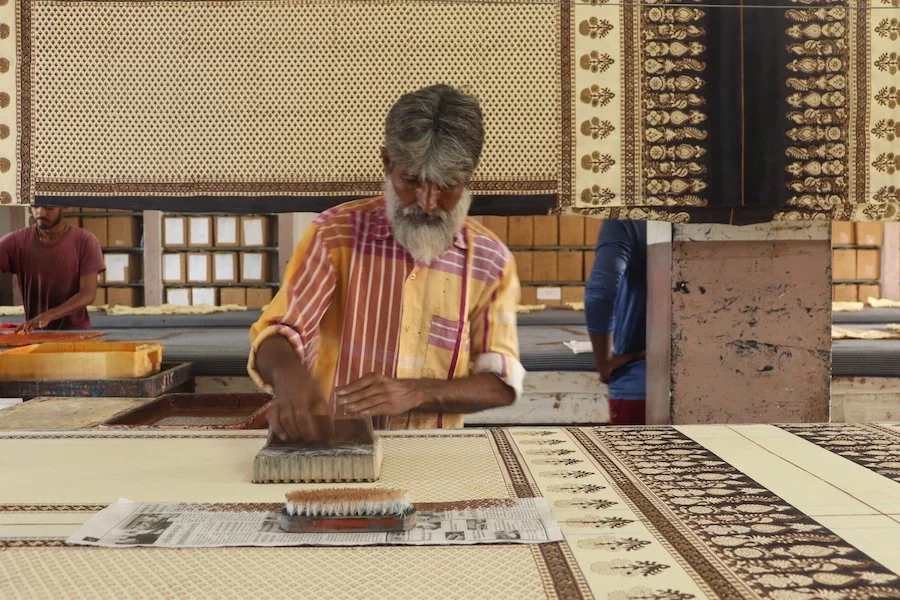
The village Ajrakhpur, near Bhuj, is the land of the art of Ajrakh, a wooden block printing technique unique to this region that has been kept alive by the Khatri community. This Kutchi artisanal legacy is a 3,000-year-old tradition that takes several steps to create. The word ‘ajrakh’ has many meanings: one being ‘aaj rakh’ or ‘keep today’ referring to the slow process of colouring the fabric, another derives from the Persian Arabic term "Azarak" meaning blue hinting to the usual indigo blue background of the cloth. Their geometric and floral patterns are reminiscent of their Sindhi legacy. A common motif in Ajrakh is the trefoil made of three overlapping discs thought to symbolize the union of earth, water and sun.
Ajrakh is an artisanal testament to this liminal borderland that has been a refuge to communities who have travelled from distant lands and made Kutch their home.
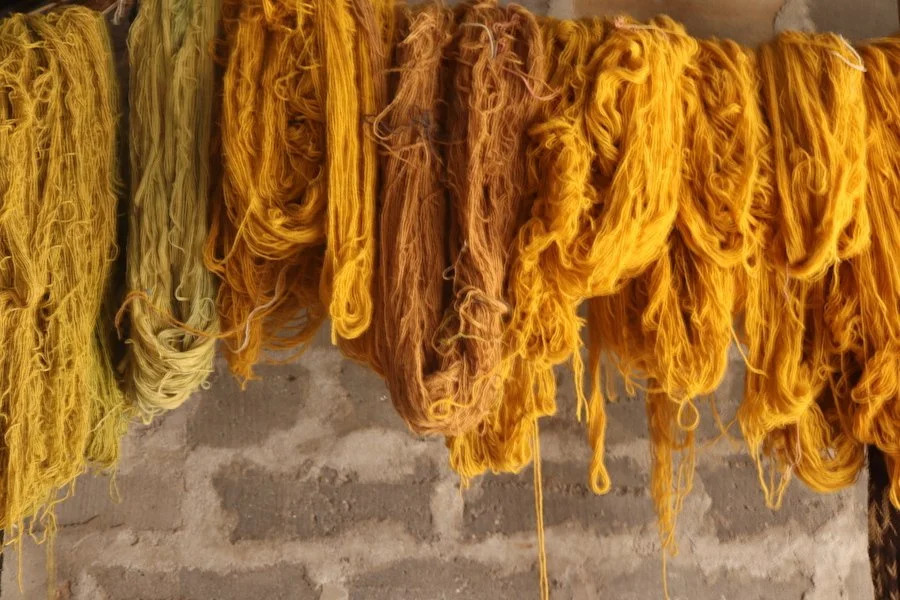
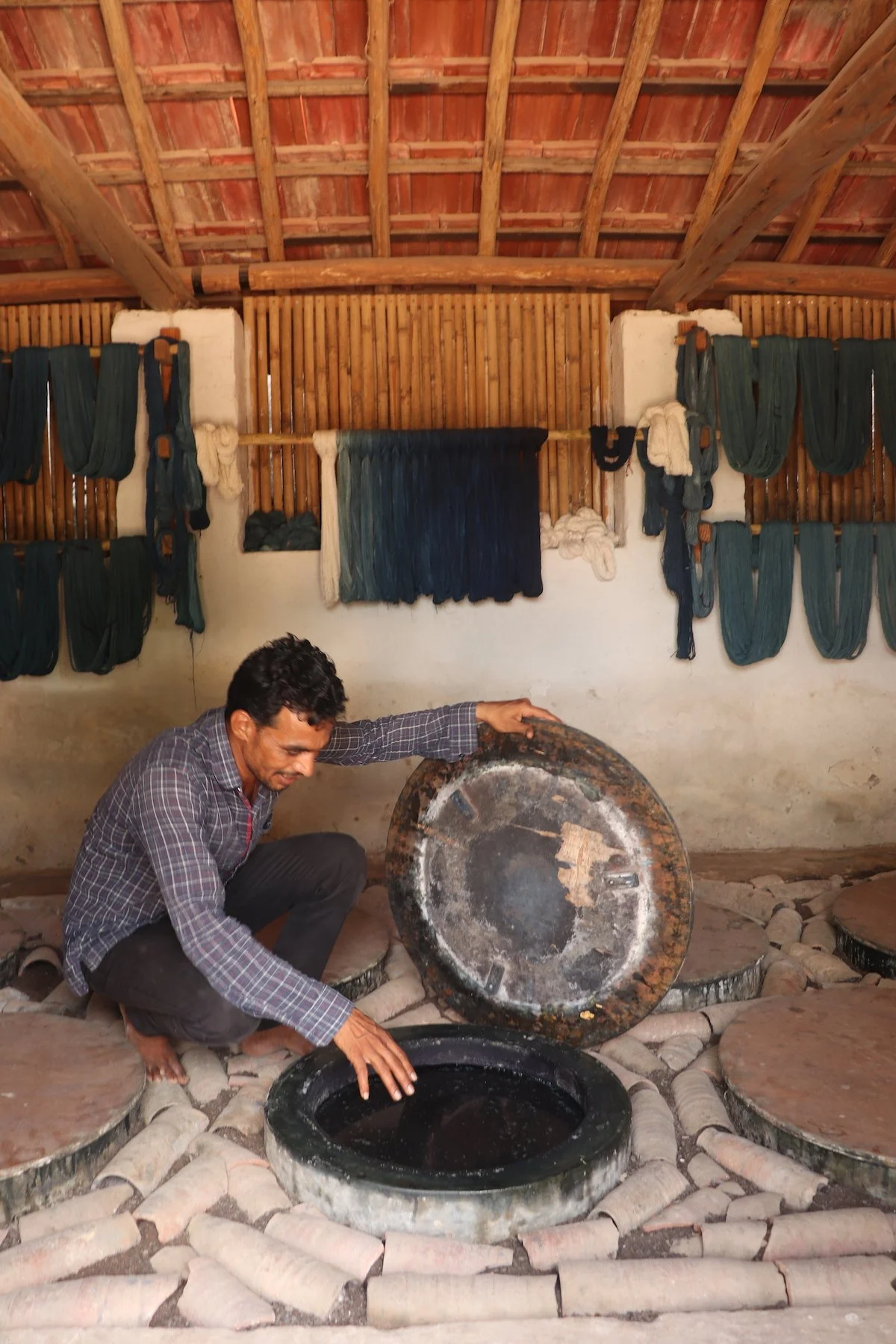
This textile tradition is deeply influenced by nature. It is believed by historians to have originated at the banks of the river Indus around 3000 BC. The use of natural substances in its dyeing process feels like an alchemist’s activity. It is almost magical as it involves cauldrons for making colours from various minerals, elements, and natural ingredients such as soda ash, castor oil, waste iron, myrobalan, madder, indigo, pomegranate, turmeric, rhubarb and even camel dung. Just like a magician chants their spells repeatedly so does the ajrakh maker uses a recurring process involving several steps until the rich, vibrant final print is achieved.
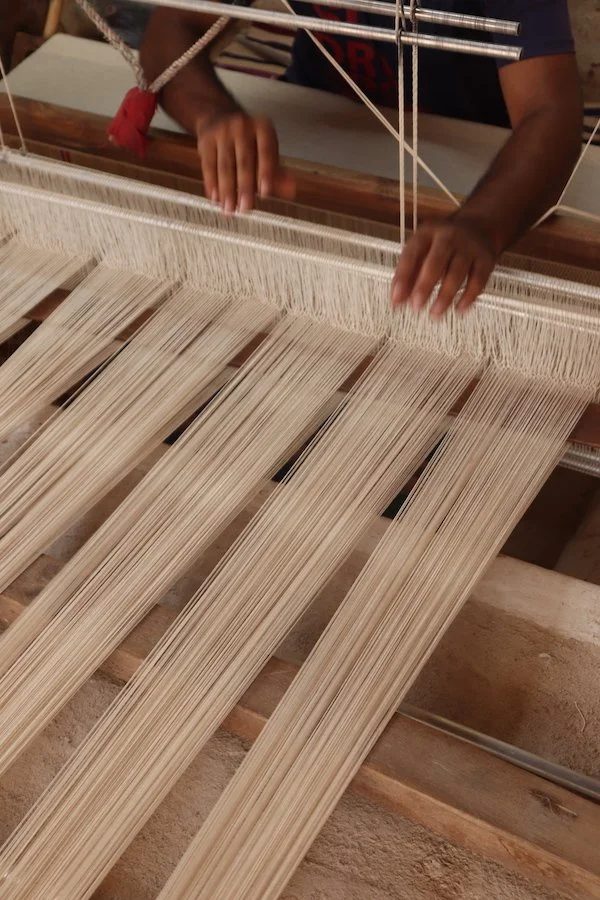
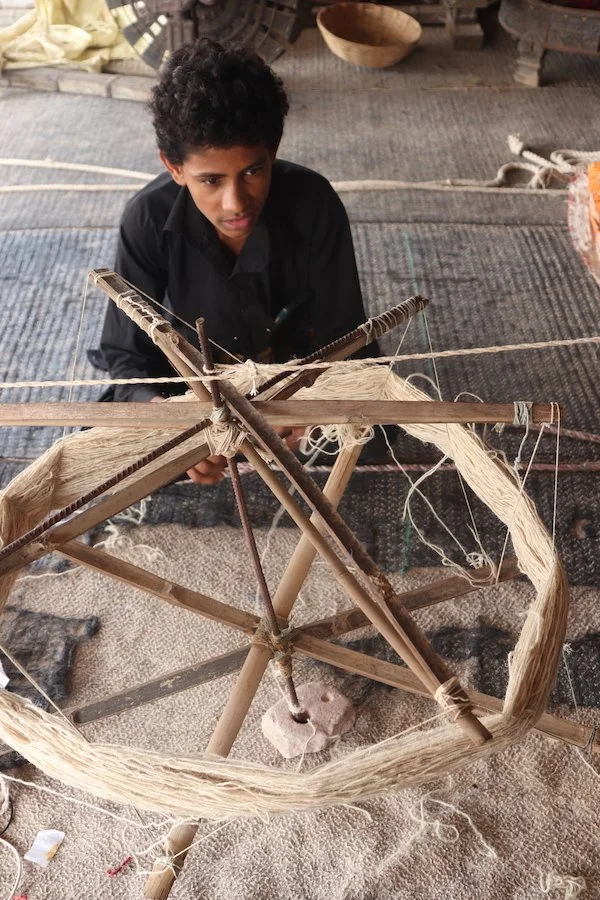
The imaginative creativity that flows in every alleyway and homestead of Kutch had an effect on us akin to psychedelic sensations. Our journey took us to discover the 500-year-old craft tradition of the vankars or weavers of Bhujodi who were famed for weaving woollen and cotton shawls, veils and blankets. Their repertoire includes multi-hued textiles for the Ahirs and black and white fabric for the Rabaris.
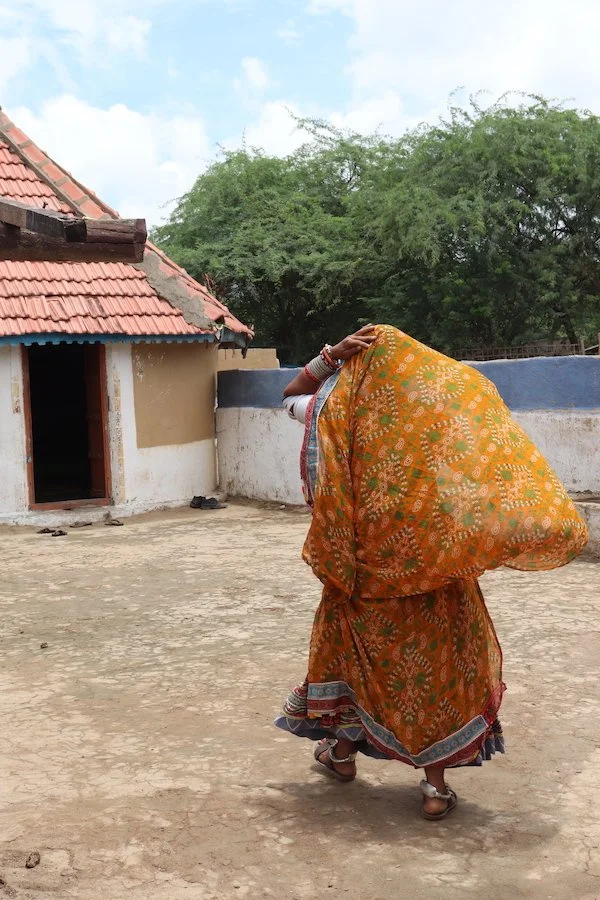
There is a tale from the Rabari community that narrates the story of Jaisalmer’s Muslim ruler who fell in love with a young Rabari girl and coerced the community to surrender their daughter to him. This caused alarm within the community who followed the Hindu faith. They ultimately decided to flee the region in the dead of night and migrated to Kutch, ruled by a benevolent king. Such was their sadness and shame for having escaped and faced a situation such as this, the people of the community renounced all colours from their attires and took to wearing only white and black! To this day, the Rabaris are seen wearing characteristic textiles in only these two colours.
People’s history is often encoded in works of art, craft, mythology, folklore, oral lore and poetry. Stories of migration and communities moving from place to place have been sung or recited by their descendants, conveying just how powerful storytelling is. People’s history also shows us that identity is based on ancestral memory and performative rituals.
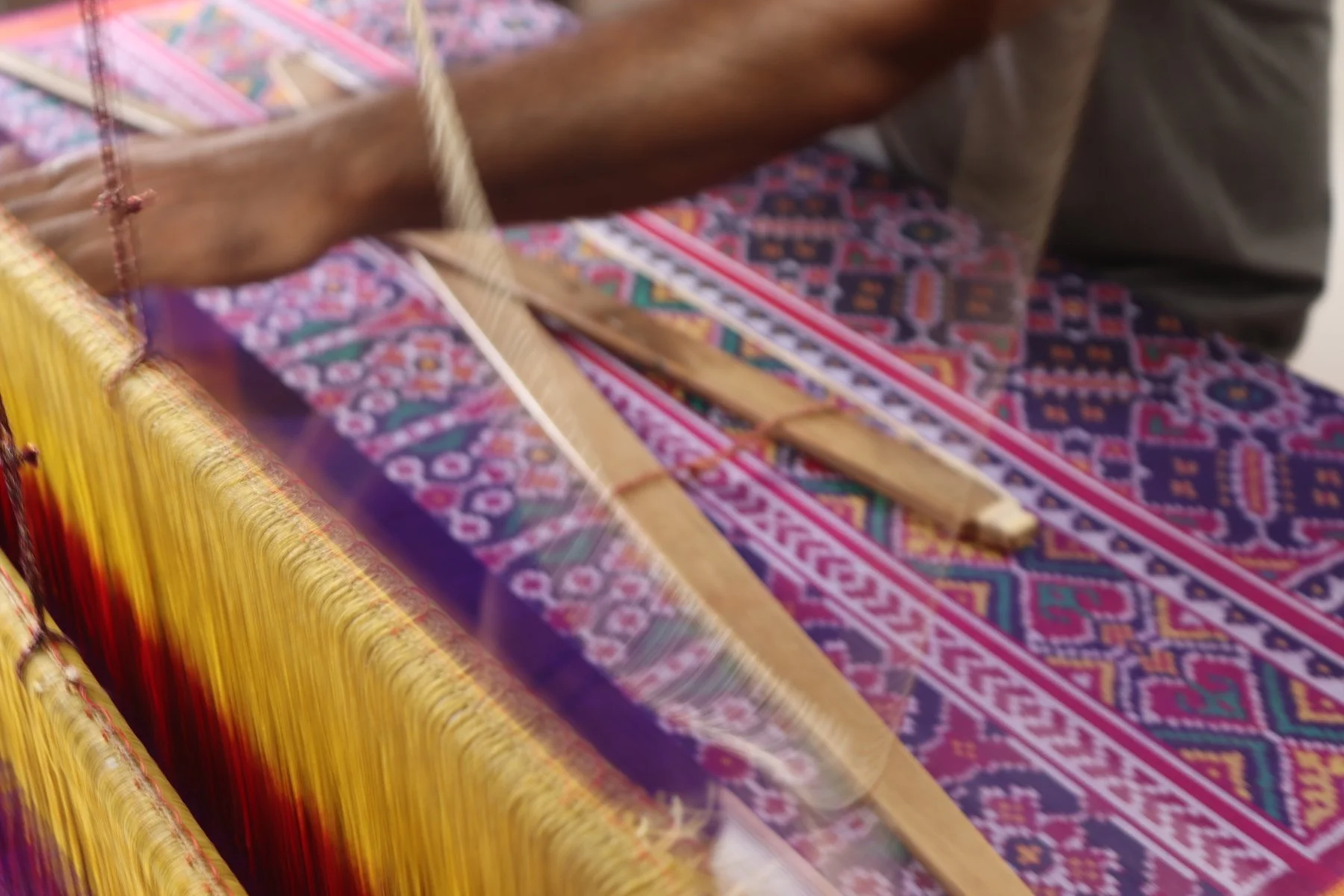
Not all traditions have flourished along with the times. Kharad rug weaving is one such craft tradition which is now practised only by two families. The use of camel motifs in rugs and patola ikat weaving patterns seen in sarees is reminiscent of Uzbek Ikat fabrics—a connection that we found based only on the aesthetic echoes found in desert lore.
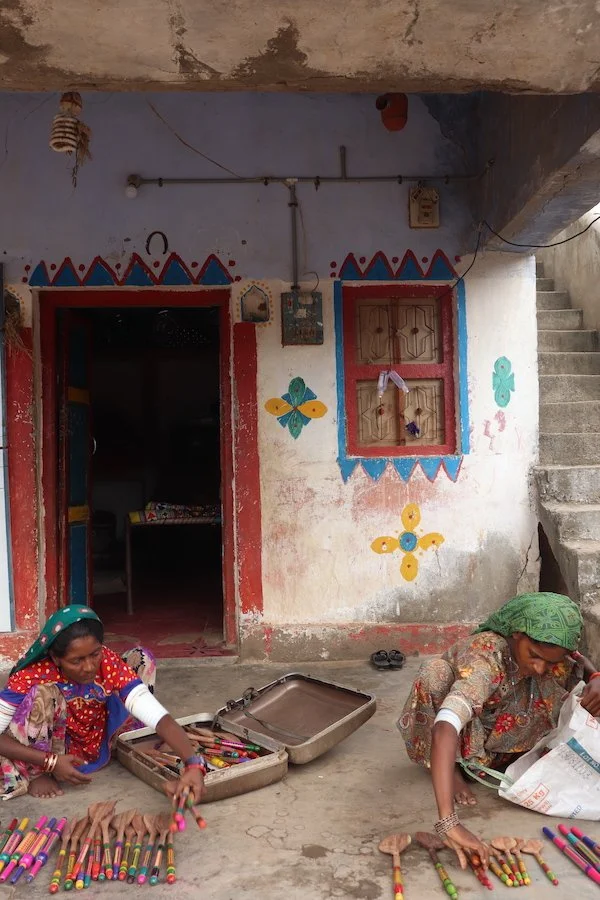
As our journey progressed, we slowly discovered that Kutch’s artisanal heritage extends beyond its expansive textile riches. The lacquer art shown to us by the kind and generous semi-nomadic Wada families of Nirona village had us admiring their unique colours and eclectic patterns with unending passion. From simple spoons, ladles and rolling pins to toys and decorative items, these lacquer artefacts are created with beautiful renditions of criss-crossed or wave-like patterns that won our hearts the moment we laid our eyes on them.
Each community and its sub-group in this arid landscape boasts of their own communal myths, history and stories, which have shaped their unique identities and artistic oeuvre. This has been a vital source of resurrection for the local economy fraught with natural disasters like draught and earthquakes. Through the work of organizations like Shrujan, Kutch has seen its transformation into a treasure hold of diverse craft traditions. Founded by Chanda Shroff in 1969, this not-for-profit initiative has given hundreds of craftswomen the chance to achieve dignified livelihoods while keeping the incredible craft traditions of Kutch thriving in a global market. Another fascinating aspect of their work here is their huge well-researched archives, bringing the much-needed work of textile documentation to an excellent stage.
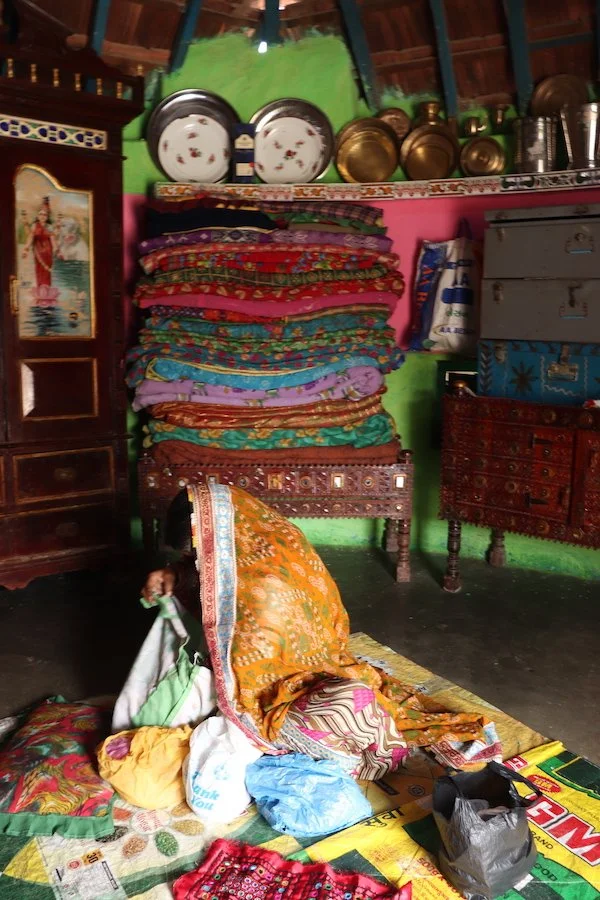
Our final stop brought us to the rounded huts of Khavda, Bhirandiyara and Hodka village where our love for sustainable mud houses with picturesque walls was satiated. The quilting and patchwork of the Marwara community was another colourful extravaganza. The exquisite beadwork, leather crafts, embroideries and a never-ending list of artisanal handicrafts offered an aesthetic decadence that is hard to forget and even harder to find somewhere else. We couldn’t help but again find traces of Berber aesthetic in the dots and lines of the pottery found in Khavda village shown to us by Abdul ji who has proudly carried a centuries-old family tradition. Even the custom of face tattoos among the Rabari women bore a striking resemblance to the Amazigh.
Could there be a link between desert cultures across the oceans and beyond the borders? Is the need for artistic identifying markings on the bodies, clothing and households of these diverse communities only a series of serendipitous happenstances or evidence of an underlying universal desert composition? The synergies in tribal aesthetics are indeed fascinating!
Our journey was facilitated by the exceptionally knowledgeable Sian Warren of South Asia Uncovered, who helped us discover the magic and mystery of Kutch through a curated itinerary, tailored for our desire to explore the textile and craft heritage. Together, we witnessed artisanal gems from the kaala cotton and indigo fermenting to the pastel towns and flamingo colonies. This was truly an experience that let us bond with the people behind the colours of Kutch. It would now follow us forever, anointing our dreams and desires.
Our travels were made possible by South Asia Uncovered, who curated an off-beat Bundelkhand experience for us. With over a decade of experience, they curate memorable journeys based on their expansive knowledge and expertise, enabling travellers to explore at their desired pace.