
Can architecture narrate the story of a country?
Uzbekistan’s architecture bears a dramatic semblance to the fantasies evoked by Marco Polo in Italo Calvinos’ novel, ‘Invisible Cities’. An architectural sojourn here is full of peaks, lows, and visual richness, highlighting how Uzbekistan has evolved as a vibrant abode of diverse cultures. Through the reigns of Genghis Khan, Babur, and Timur to the Soviets, it has witnessed a tumultuous past that gives itself away in the turquoise domes and blue mosaic façades of Samarkand and the bare mud-coloured fabric and the breezy caravan serais of Bukhara that stand in harmony with the massive Soviet Brutalist buildings and ornate Modernist metro stations of Tashkent.
A Blue Legacy in Samarkand
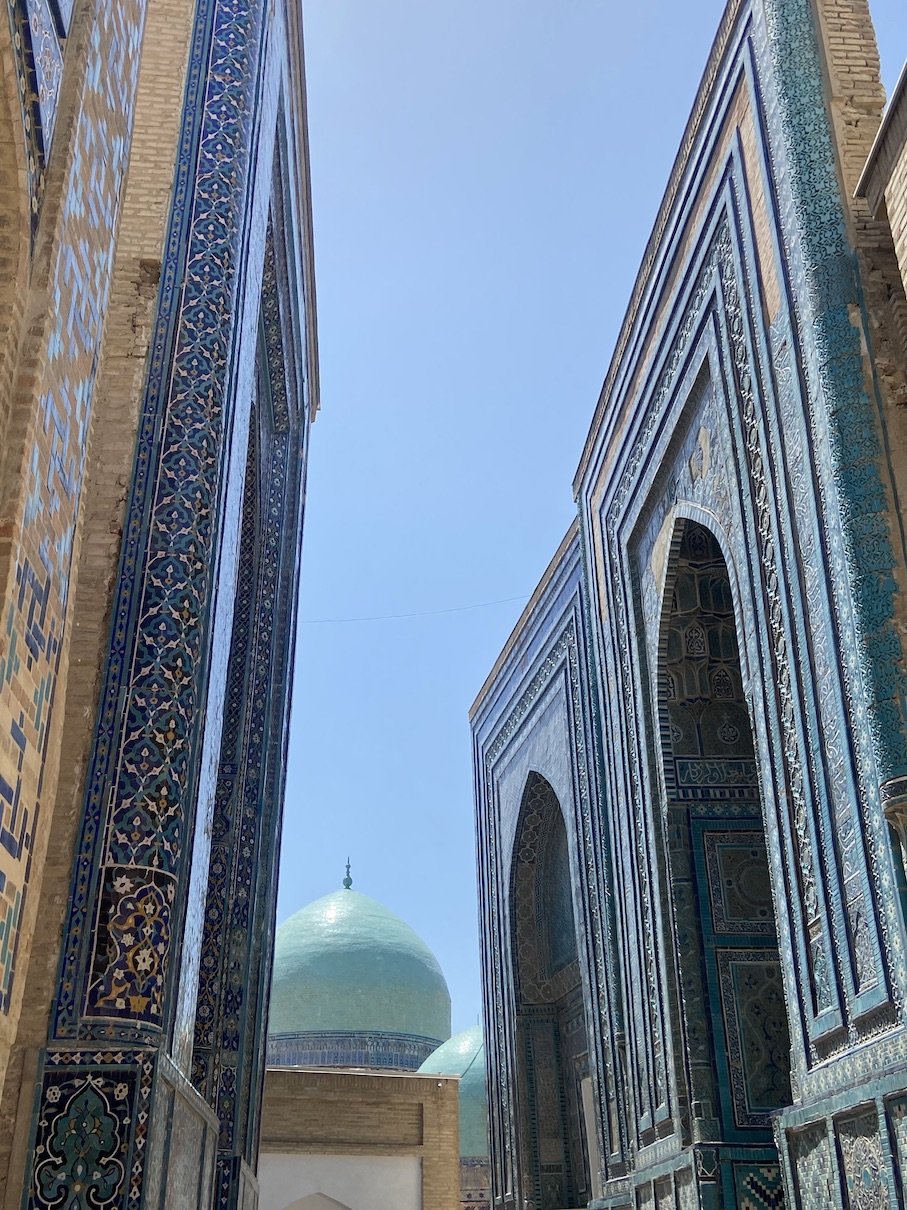
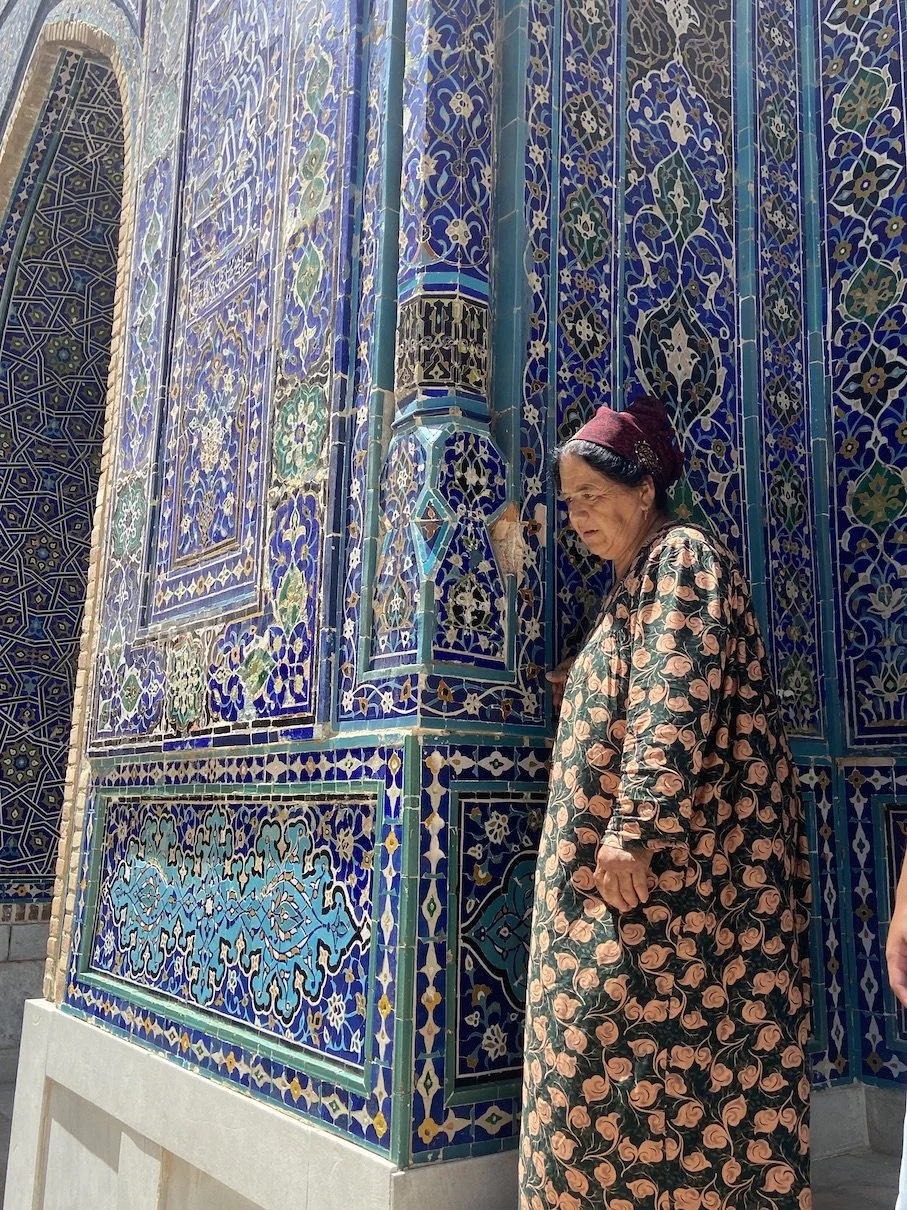
Travelling through Samarkand is like beholding a drama unravelling in time and feels like walking across a living museum. While roaming around the town, one is swiftly enveloped by a surprising blue burst of colours. The vastness of majestic, ornate façades seem to merge into the sky while reflecting the light of the Sun glowing above. As one wanders along, gazing at the gigantic turquoise blue domes and façades, covered with mosaic tilework with huge gateways hollowed out, they are reminded of their small and finite nature in the infinite universe. The shades of blue elegantly complement the use of green, gold, and sage — all intricately coming together through geometric, floral, and calligraphic motifs, and tessellated patterns against the earthiness of the sandstone. This warm, light, and intriguing colour palette and the extensive ornamentation remain etched in one’s memory of this place. These are typical of the Timurid style and Islamic art and architecture seen in the rest of Samarkand and elsewhere in Central Asia.
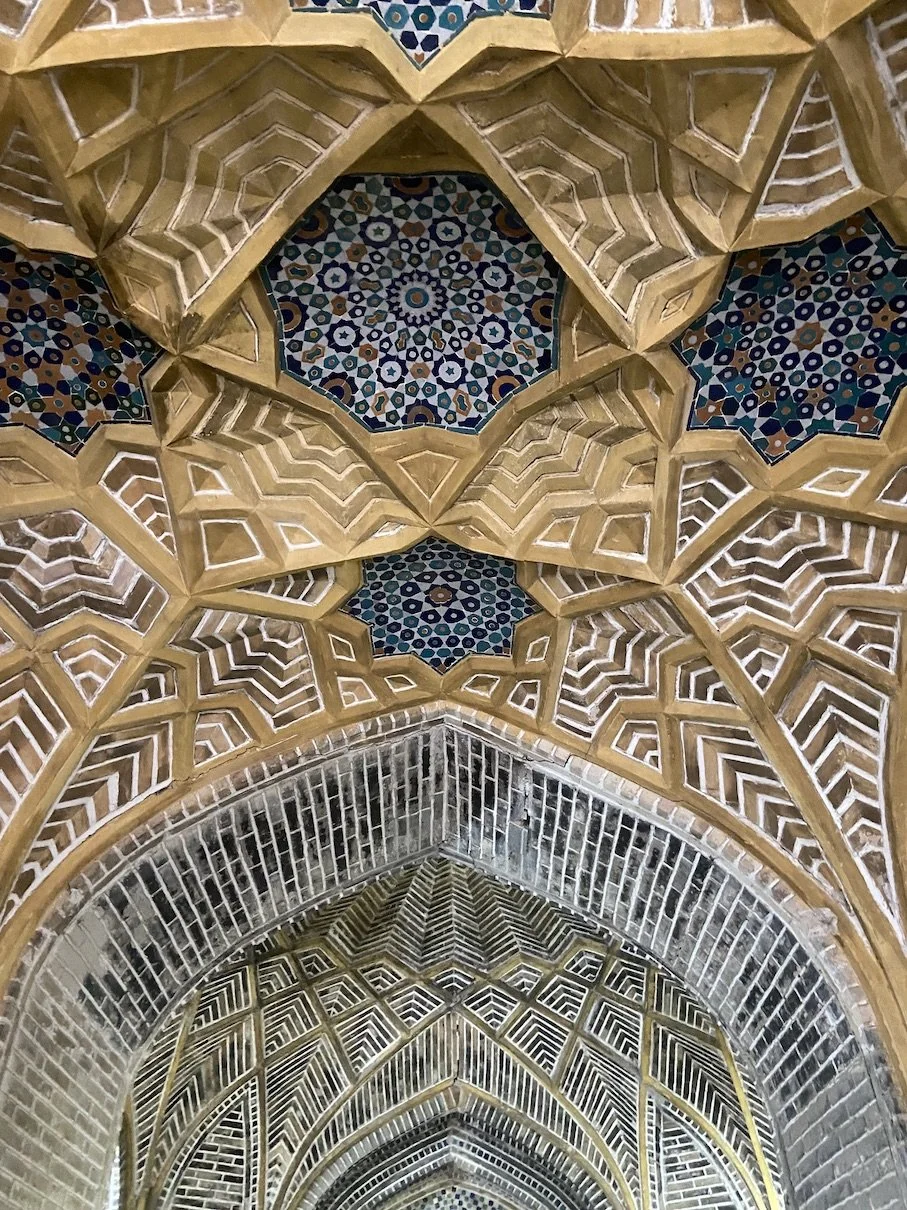
The Shah-i-Zinda and Registan with their magnificent series of mosques, complex of madrassas, and mausolea, dating from the 11th to the 19th century are iconic places. Here architectural glory and material extravagance is evident. One can witness a rare kind of harmony while standing under the breathtaking muqarnas and huge gateway portals that open into courtyards, connecting to the mausolea, mosques, and tombs. The union achieved between the material and spiritual worlds through the built form represents a superior quality of artisanship and meticulous planning that manifested at such a large scale.
Throughout many regions in Uzbekistan, ceramic crafts and the usage of blue colour are popular. Thus, it is impossible to evade the sacred associations that people in these lands have conjured with the earth, sun, and sky through aesthetics. In Islamic tradition, the use of blue colour (al-azraq) often symbolises the inaccessible depths of the universe, and turquoise is believed to possess metaphysical qualities. Perhaps, these spiritual links led to the fascinating proliferation of blue, green, gold, and sage colours in Samarkand’s buildings.
Samarkand's splendour also enchanted the Arab traveller, Ibn Battuta, who described it as ‘one of the greatest and finest of cities, and most perfect of them in beauty’. Its markets that sell samsas, nons (local bread), and the signature Uzbek dish, plov (pulao) bear striking similarities with Middle Eastern and Asian cultures — reminiscent of shared histories that shaped today’s divided world. Here, the chirping of birds meets the music of folk singers in the air, the bazaars bustling with sellers of handwoven textiles and antiques — all make for a delightful experience that is no less than oscillating back and forth in time.
Bare Mud Aesthetics of Bukhara
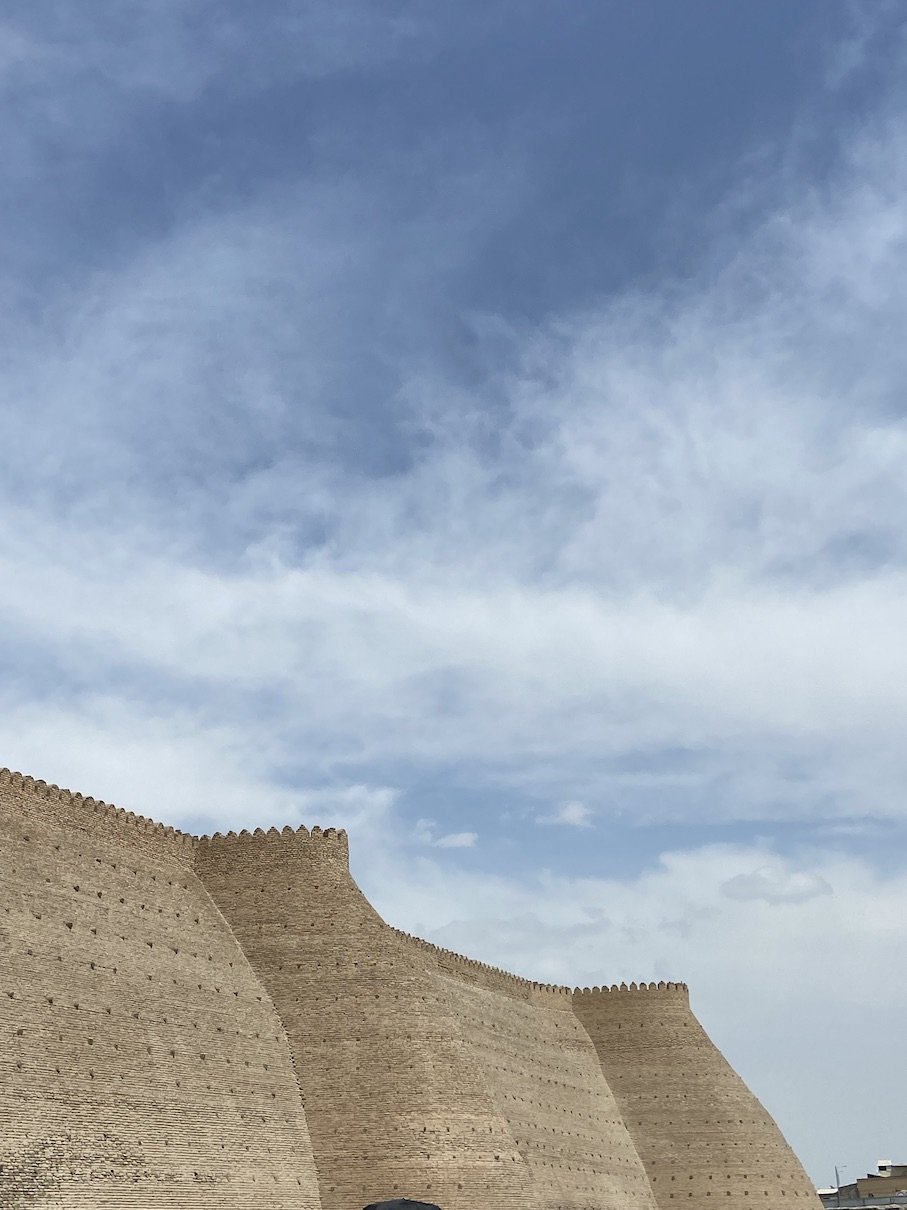
In Bukhara, the mud-like, homogeneous aesthetics, along with occasional hints of blue, elicit a nostalgia for the past — a time when traders and merchants hauled themselves at Serais through neverending routes in their caravans. The visual language here is an extension of the surrounding desert tones and has been further adopted in many modern structures too. It is this spectacular evenness and inherited reverence for natural, local colours and textures that lend Bukhara its distinct identity.
A historic economic and cultural centre, Bukhara was restored after the town was bombed in 1920 by Bolshevik troops. Among its extant structures are hammams (bathhouses), and caravanserais. These serais (resting places) were complex institutions and centres of wholesale trade, serving as premises for travellers, tabibs (doctors), shroffs (money-exchangers), and money-lenders, with the best brick serais being situated in the city centre near bazaars. They were typically designed with rectilinear layouts that comprised a central courtyard surrounded by arches, balconies, and cells.
The Ark of Bukhara, an iconic fortress stands out with its slant and curvilinear fortification (a departure from the common geometric styles observed usually) and is a gallery space for archaeological and other exhibits like the Emirs’ attire that help visualise the lavish everyday lives of its late royal inhabitants and the wealth that flowed into this region.
Extravagance of Sitorai Mohi Hosa
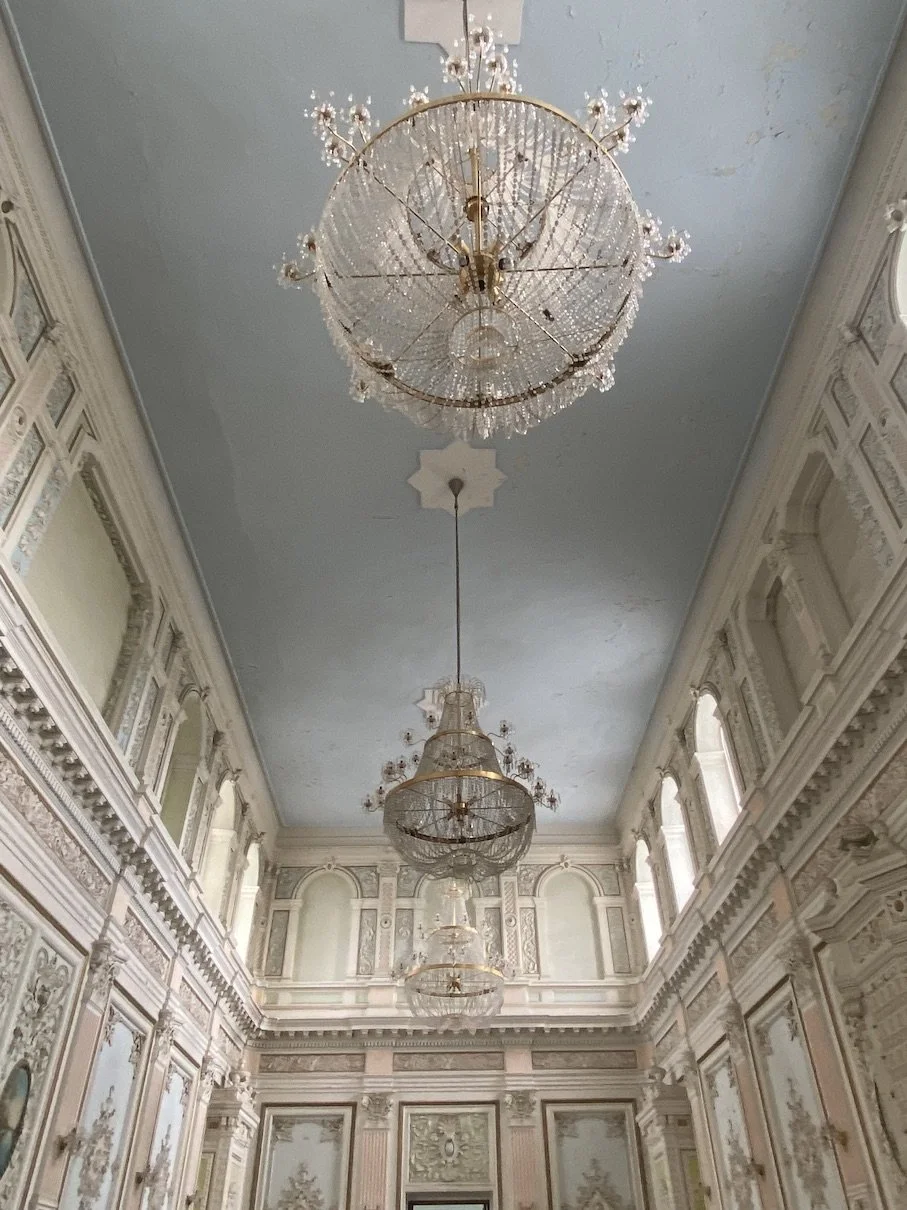
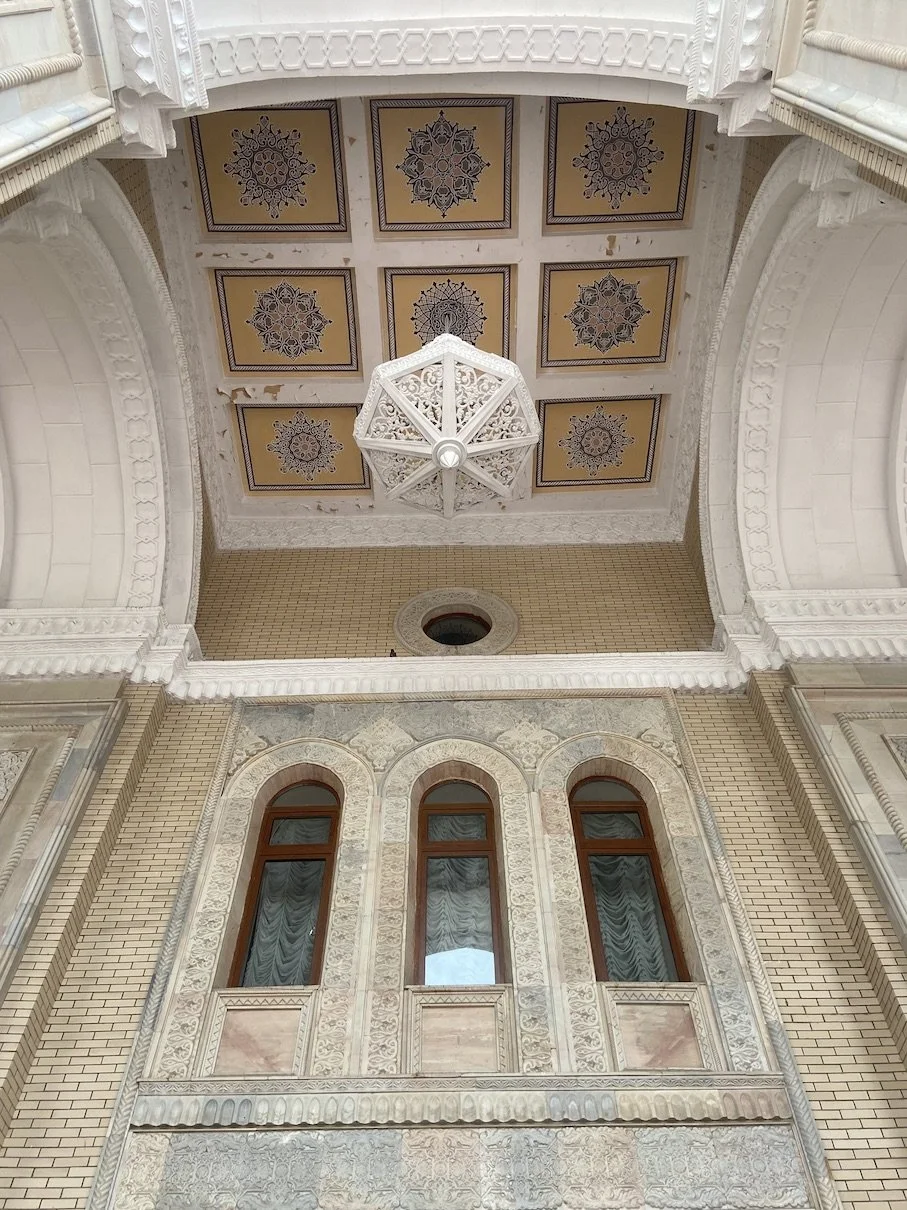
Located on Bukhara’s outskirts is the Sitorai Mohi Hosa, the 19th-century summer palace of the last Emir of Bukhara whose overwhelming aesthetics often leave the onlooker perplexed. Its complex comprises three buildings, surrounded by courtyards and a rose garden, where peacocks linger around in the spring season. A blend of European and Eastern architectural elements, the palace can be distinguished by its white and powder blue façades, and vivid interiors — a potpourri of colours, textures, and patterns. It is an outcome of the painstaking efforts of Bukharan builders, Russian engineers, and a few of Emir Alim’s aesthetic fetishes. Extravagantly designed ceilings and mirrors, the use of six-pointed stars, horseshoe arches, and onion domes reflect the ‘modern-meets-medieval’ design style and Emir’s cross-cultural lifestyle. The grand White Hall, decorated with a huge Polish chandelier, English door handles, Russian furniture, and Venetian mirrors, speaks of the affluence enjoyed by his family before he was chased into exile in Afghanistan.
Quintessential Tashkent
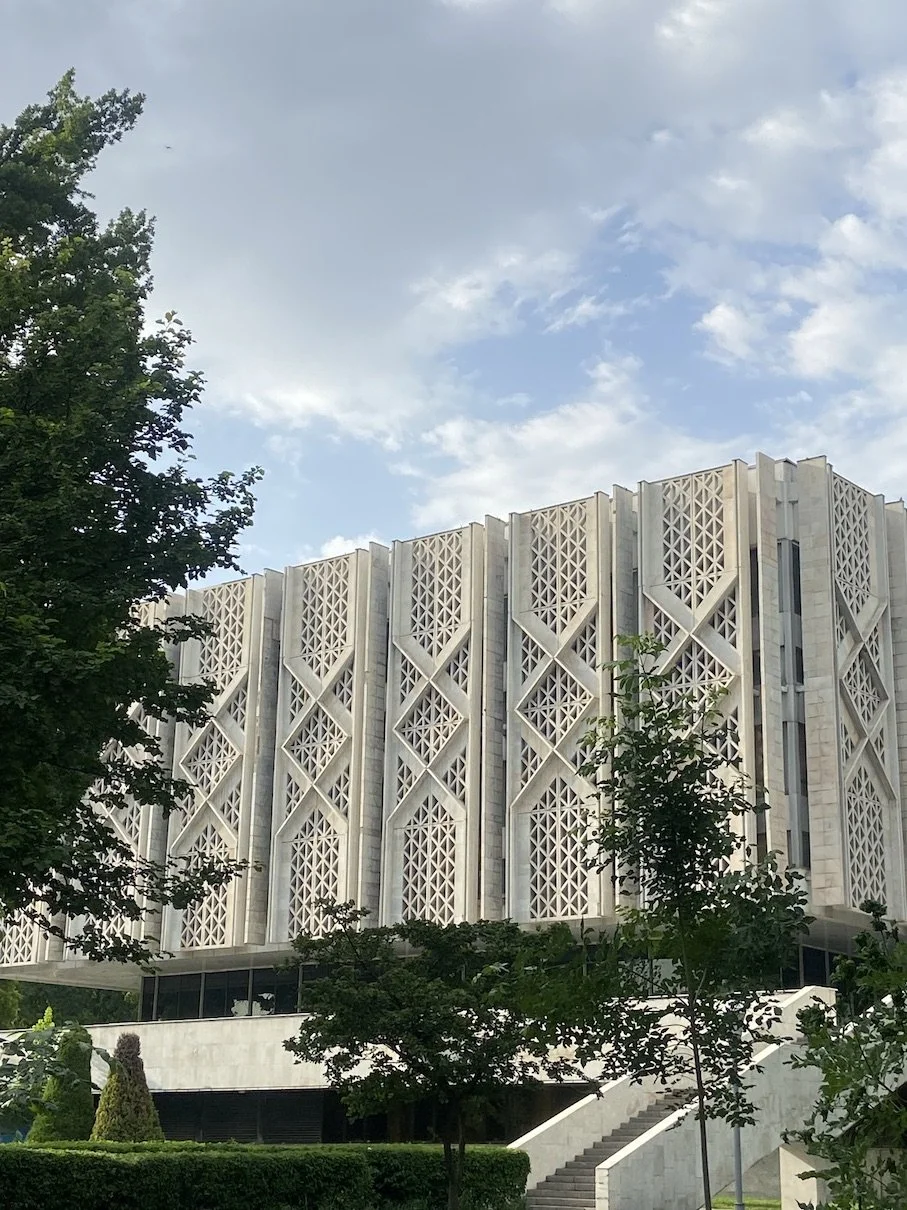
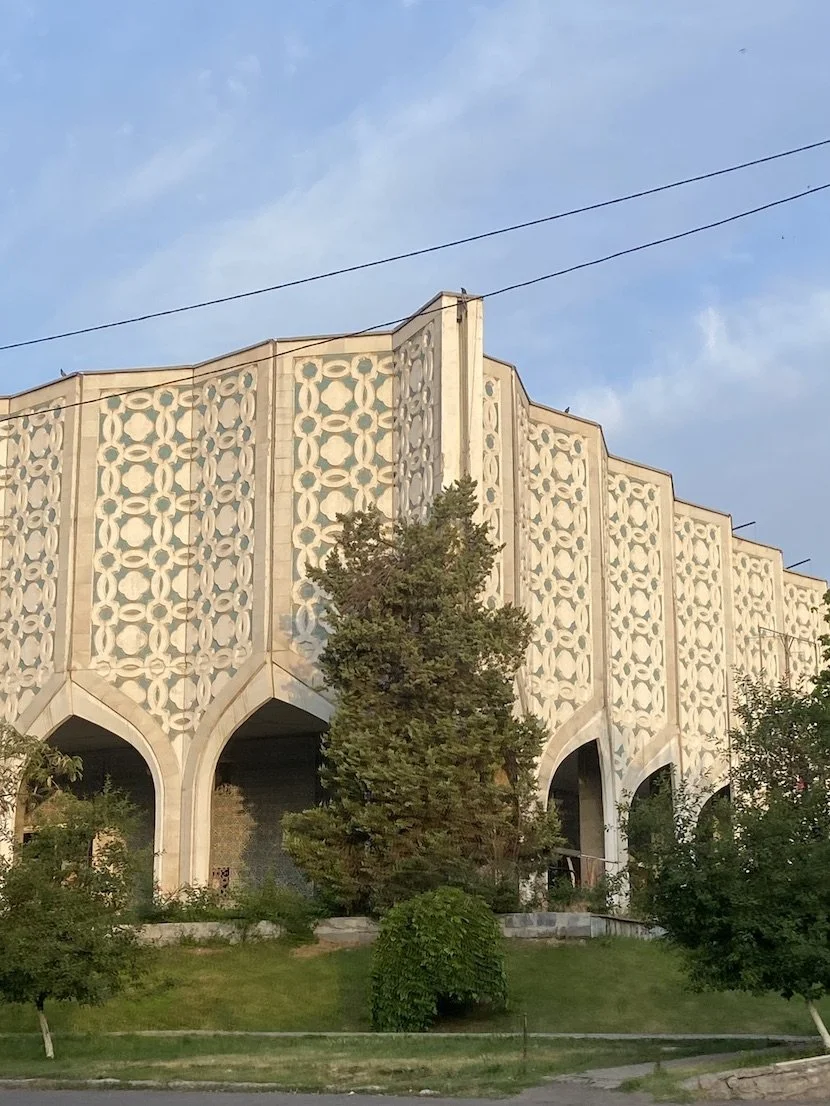
Uzbekistan’s capital city, Tashkent has an idealistic vibe and offers glimpses into Brutalism. A design movement that surfaced in the U.K. in the 1950s during post-war construction projects, it was rooted in the principles of functionality and mass production. However, it was interpreted by the Soviets, here in the 1970s, keeping in mind the local context and culture. The hostility, roughness, and massiveness of typical Brutalist design were thus neutralised with bright, ethereal, and geometric Persian and Islamic elements. Buildings designed in the Soviet Brutalist style like the colossal Hotel Uzbekistan and the State Museum of History whose impressive façades borrow from the designs of the Persian jaalis (screens) are indicative of how Brutalist features acquired a local, Eastern touch through architectural experimentation. The blues from Samarkand have found their way into Tashkent too, through the Chorsu Bazaar, its largest farmers’ market. Surmounted by a giant turquoise dome, it is a clear example of the union of solemn, monolithic modern features (seen in the heavy, concrete base) with decorative Islamic style (seen in the dome).
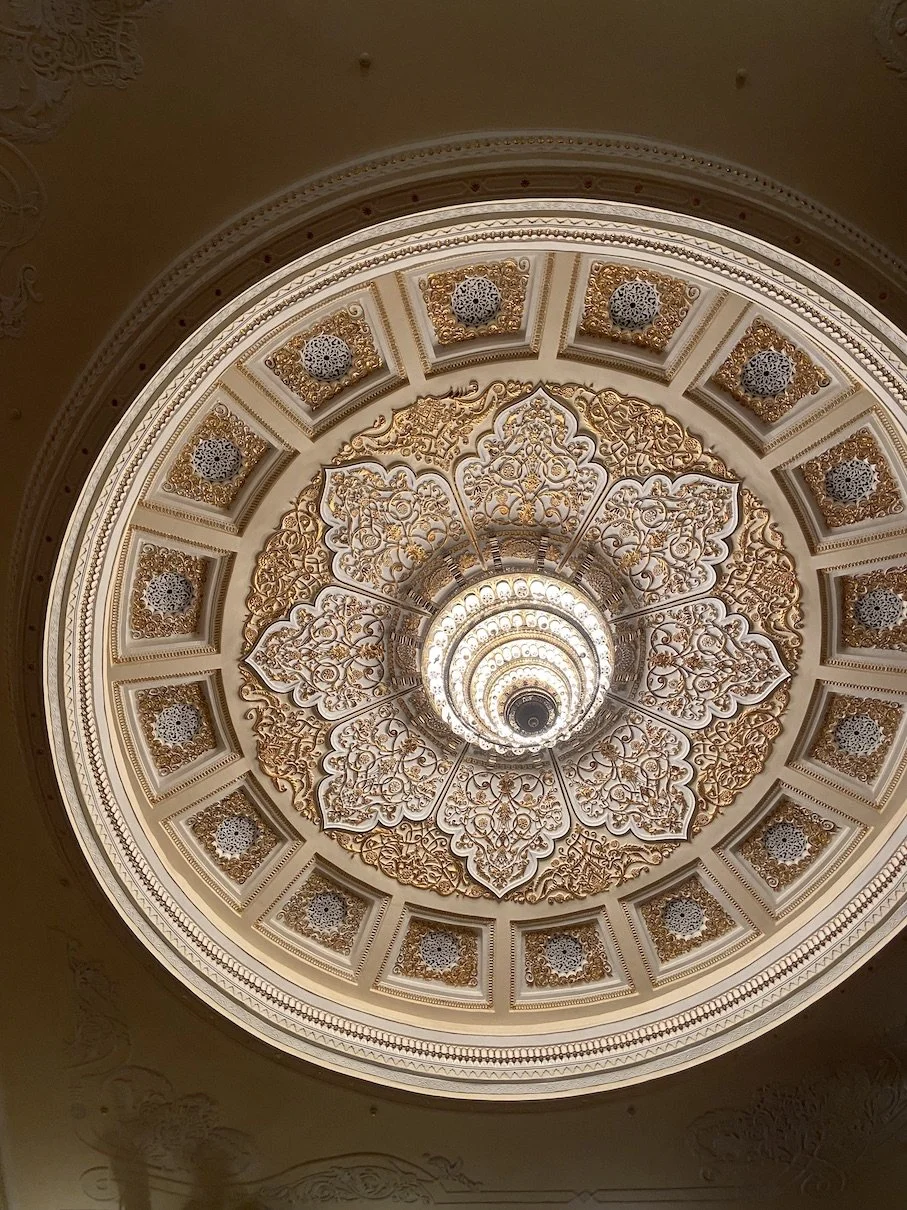
Tashkent’s Alisher Navoi Theatre (National Opera Theatre) holds one’s imagination captive with its meticulously designed façades and interiors. The foyers with plush carpets and the stucco, marble, and murals illustrating Navoi’s poetry, are a source of artistic inspiration for the audience who come to watch the thought-provoking ballet performances (a mix of Uzbek and European).
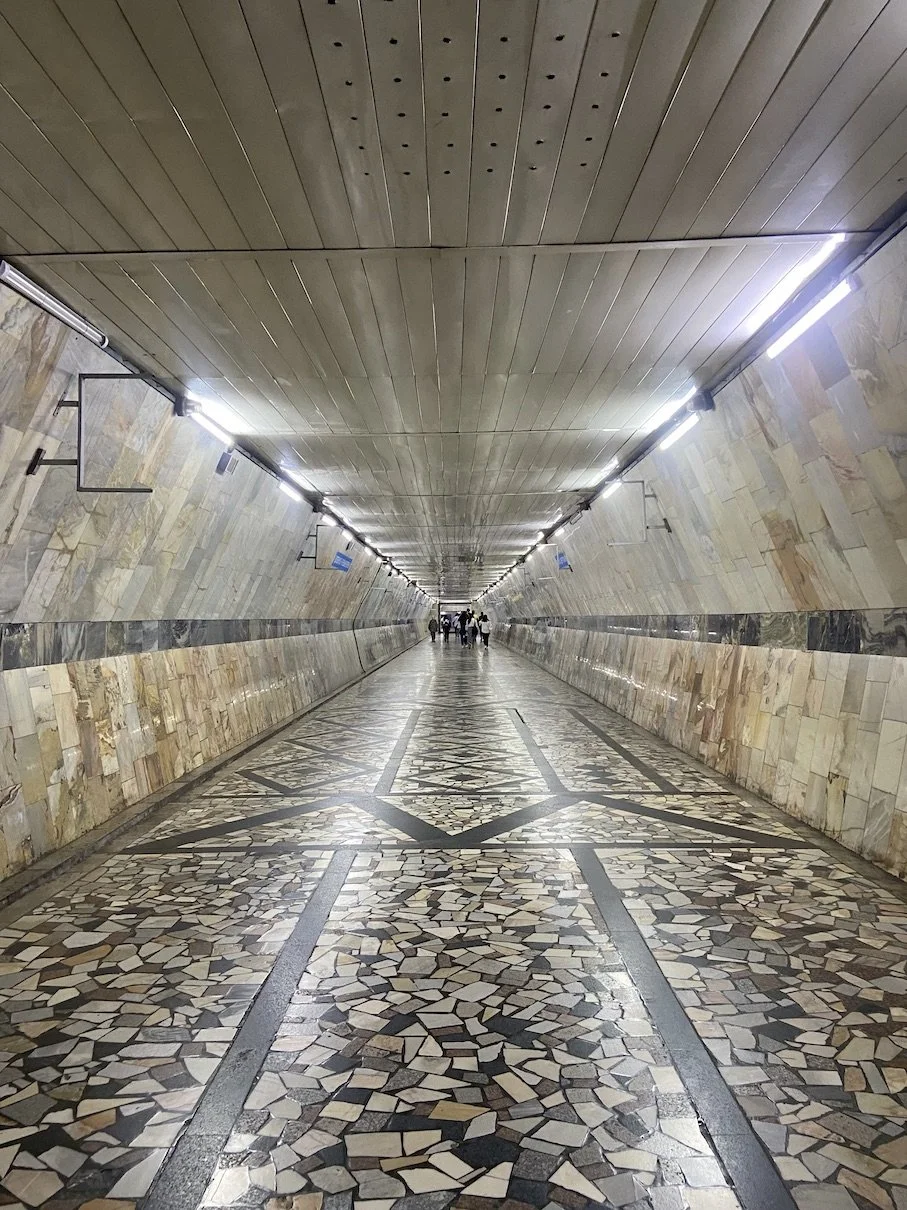
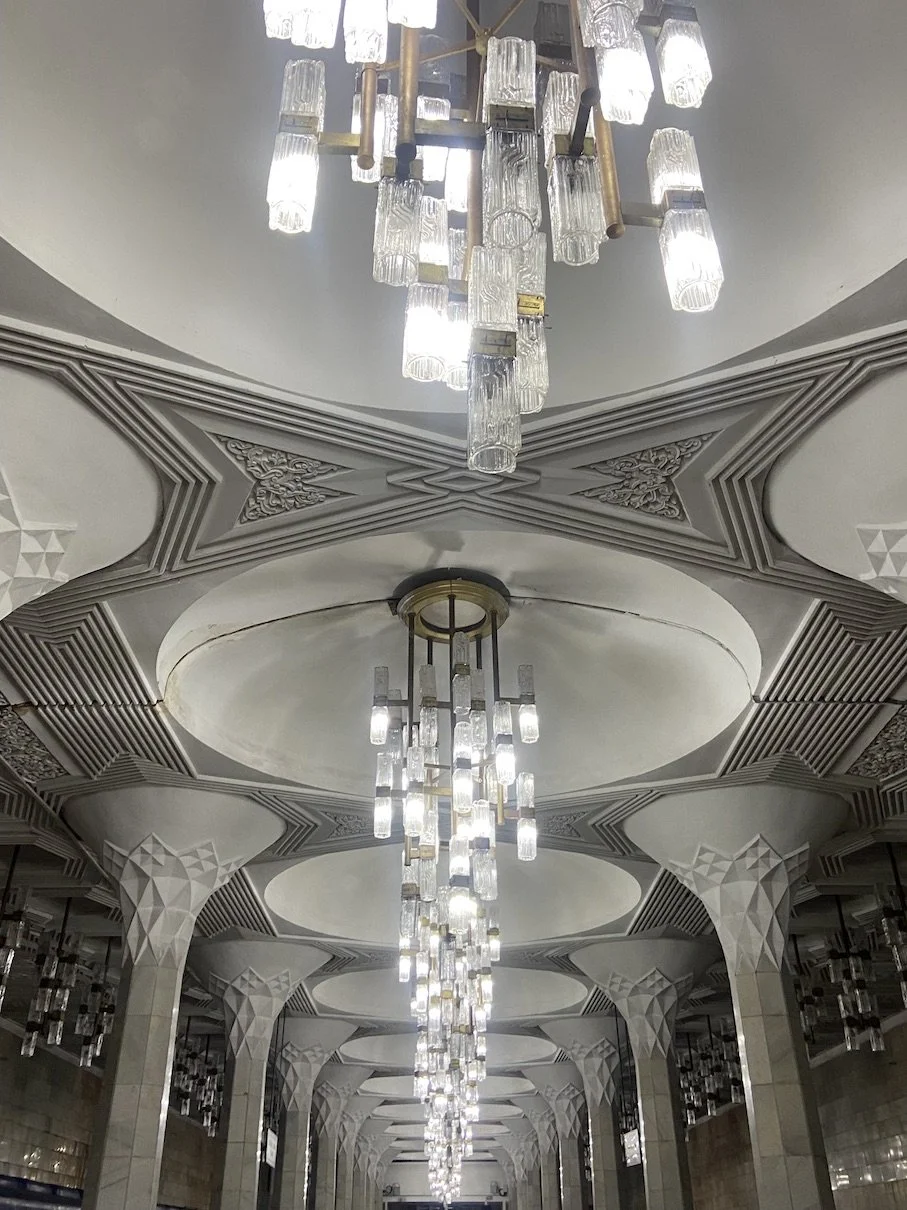
Tashkent's underground metro system stands out with its dazzling aesthetics. Ceramic murals, intricately designed ceilings, chandeliers, and elaborate columns in its stations add an element of wonder and liveliness to these mundane transit points. Designed in the Soviet era by a team of architects, artists, and designers, these artworks are conceptualised based on themes, some of which are Timur’s greatness and the Soviet cosmonauts. Their grandeur is an homage to the country’s evolution. Many beautiful prefabricated buildings can be seen in Tashkent —an indirect contrast to its literal, monolithic meaning —‘The Stone City’, making it a living paradox. Post the 1966 earthquake, it witnessed an upsurge in innovation with apartment blocks being constructed for sheltering the survivors. Today, its big boulevards, plazas, streets shaded with trees, fountains, and public parks, evoke the vision of its planners — creating a model, accommodative Soviet city.
Window to Many Worlds
Uzbek architecture illustrates how cities become laboratories for experimentation and act as a medium to connect with the masses. It constantly reinforces how the architecture of a place is a window for unravelling its history. It shelters, surprises, creates a sense of mystery, and lets one speculate. Buildings are home to dreams, aspirations, fears, and achievements and are instrumental in shaping futures. In an ever-changing world, they explicitly lend a place specificity and perceptibility. Architectural aesthetics are a language in themselves for they allow the visions of its administrators to be manifest — letting them establish a lucid set of images, forms, and functions for a large population to identify with.