
Food connecting the world
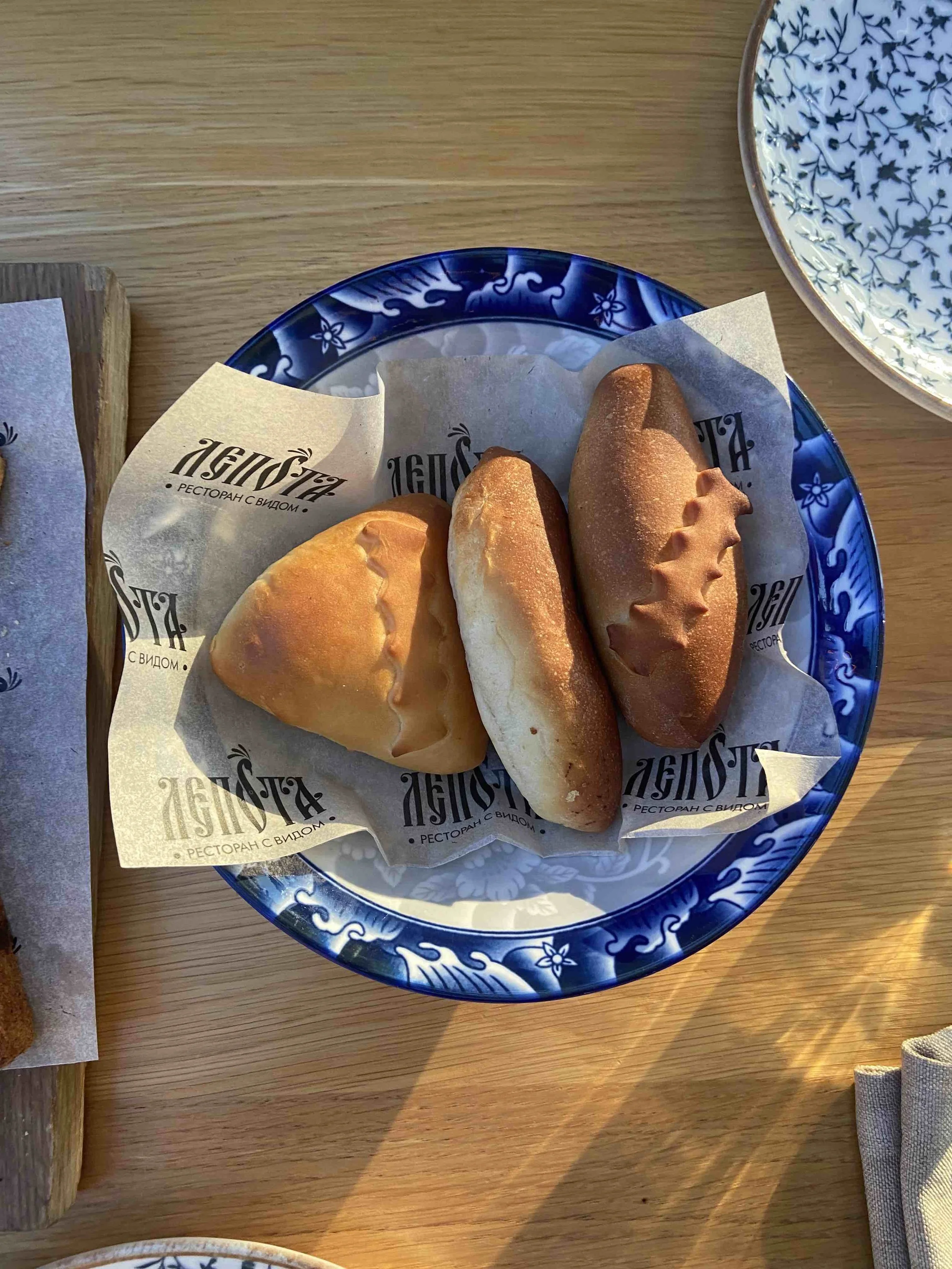
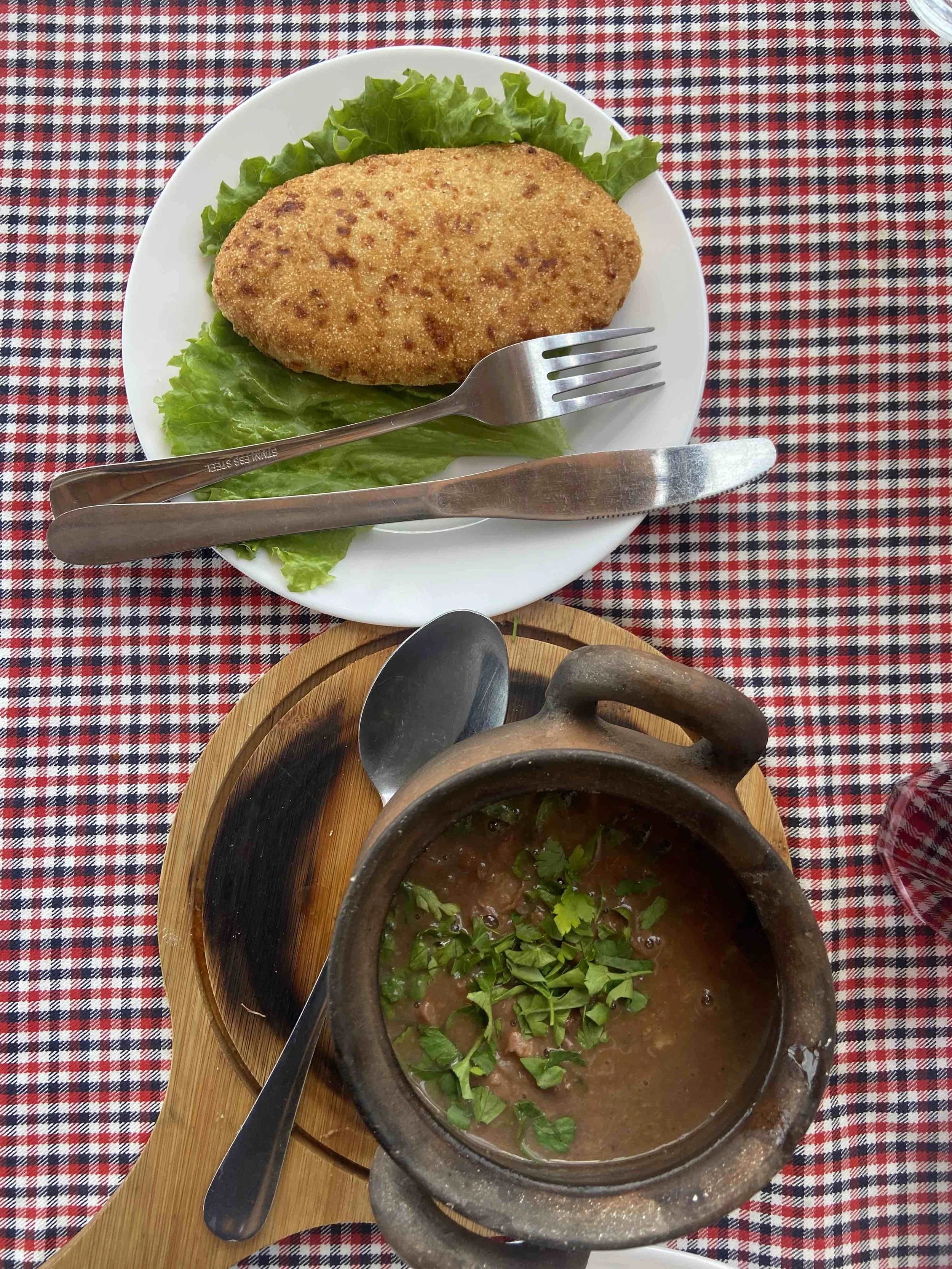
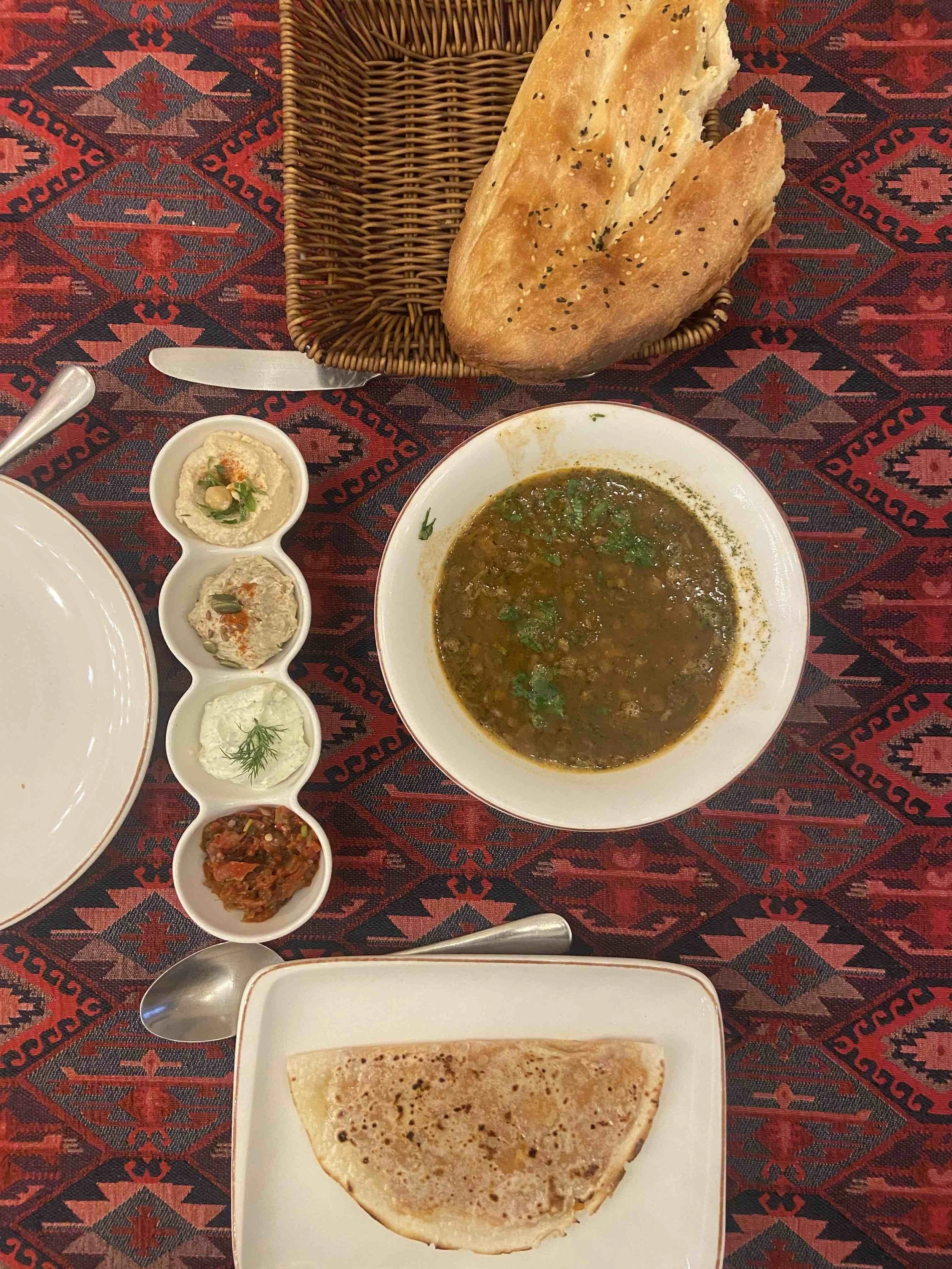
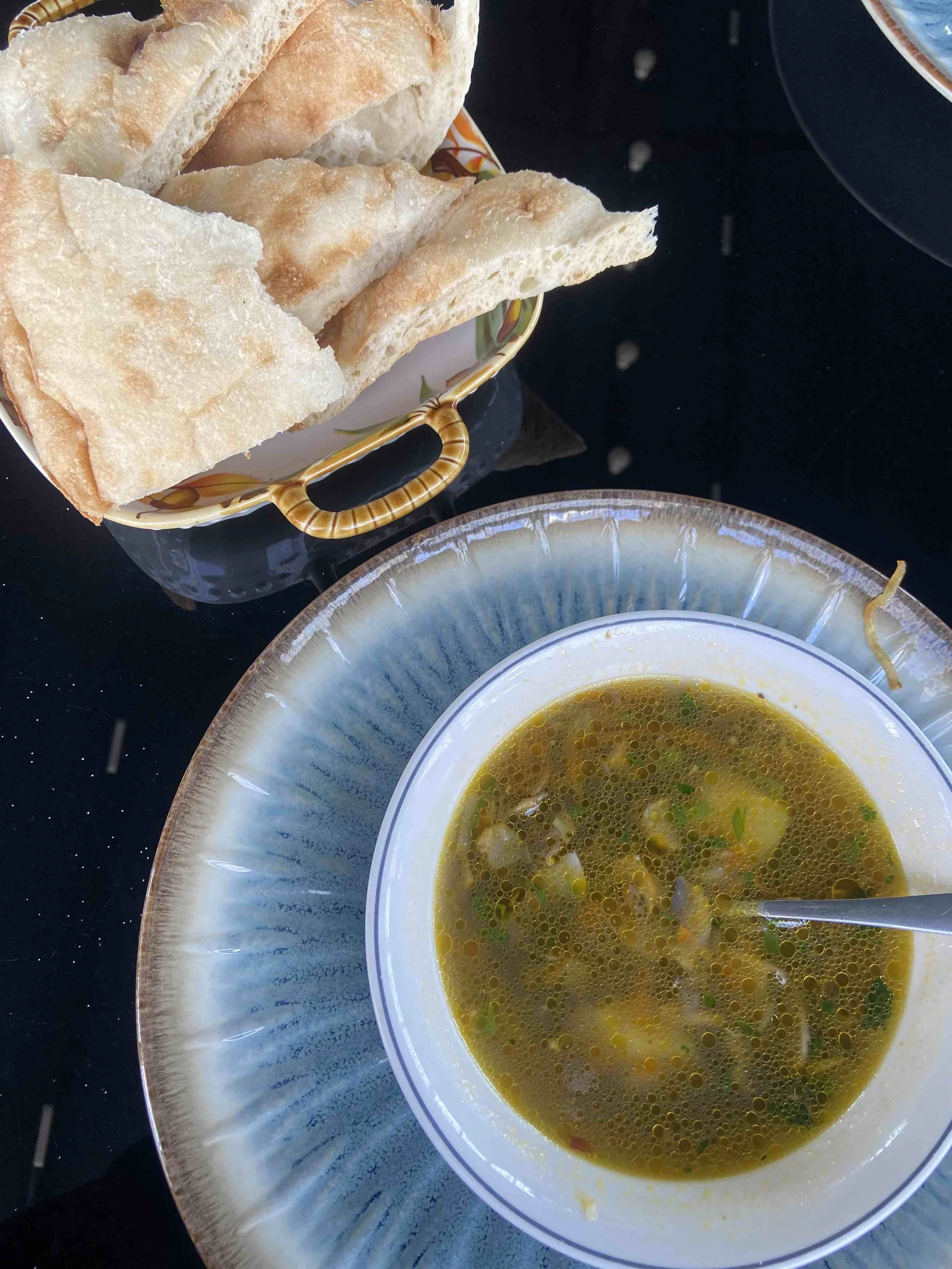
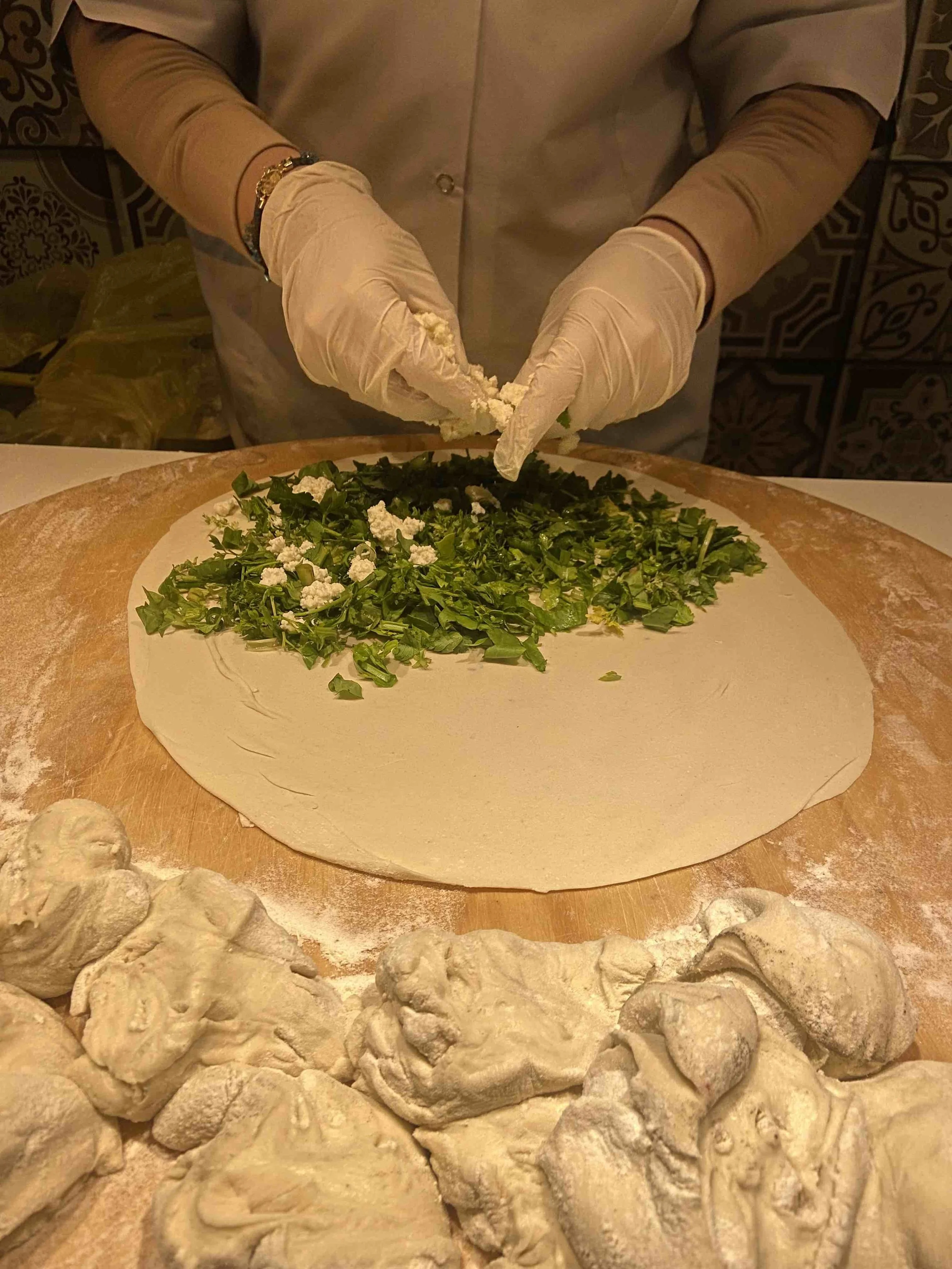
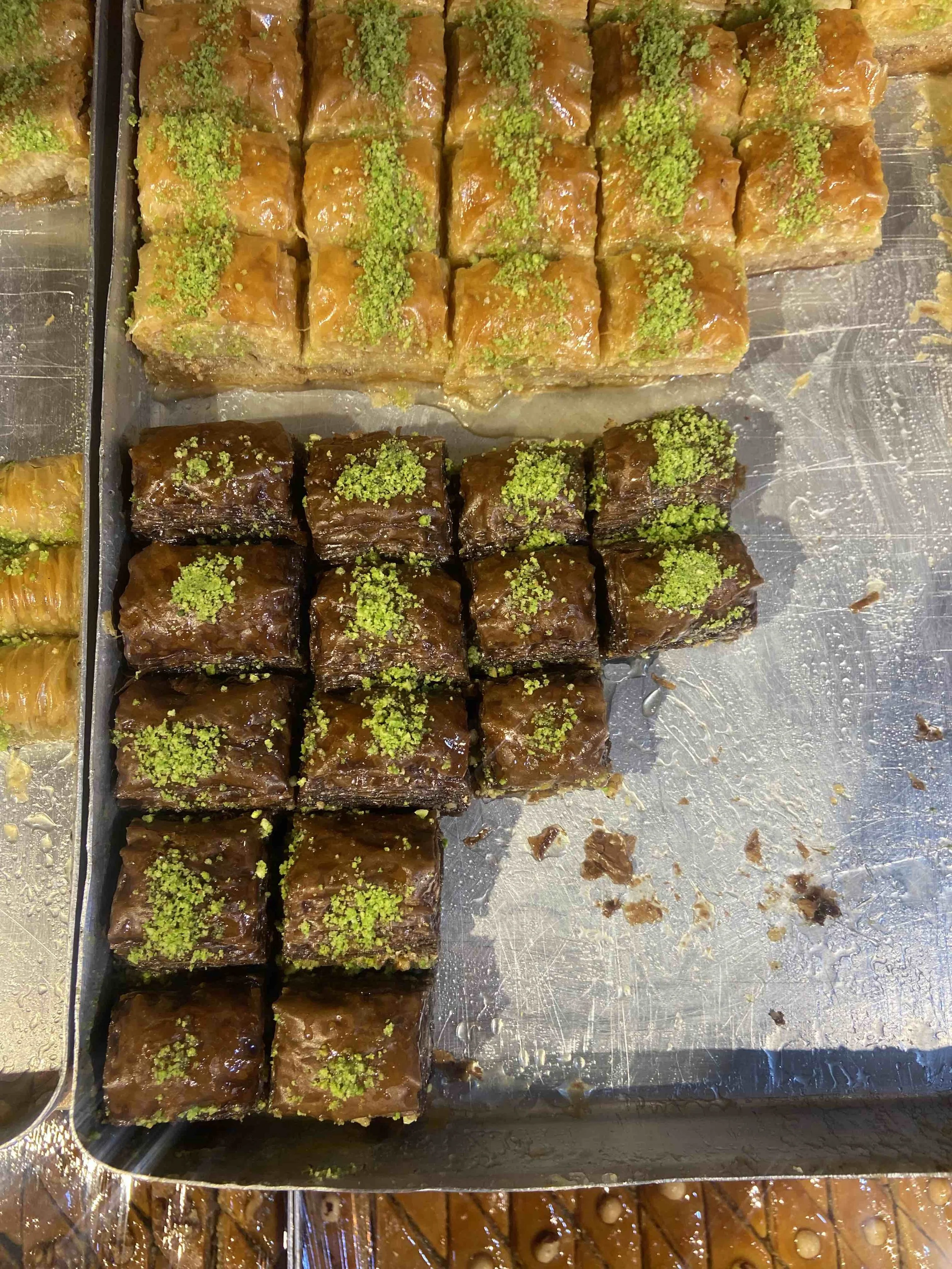
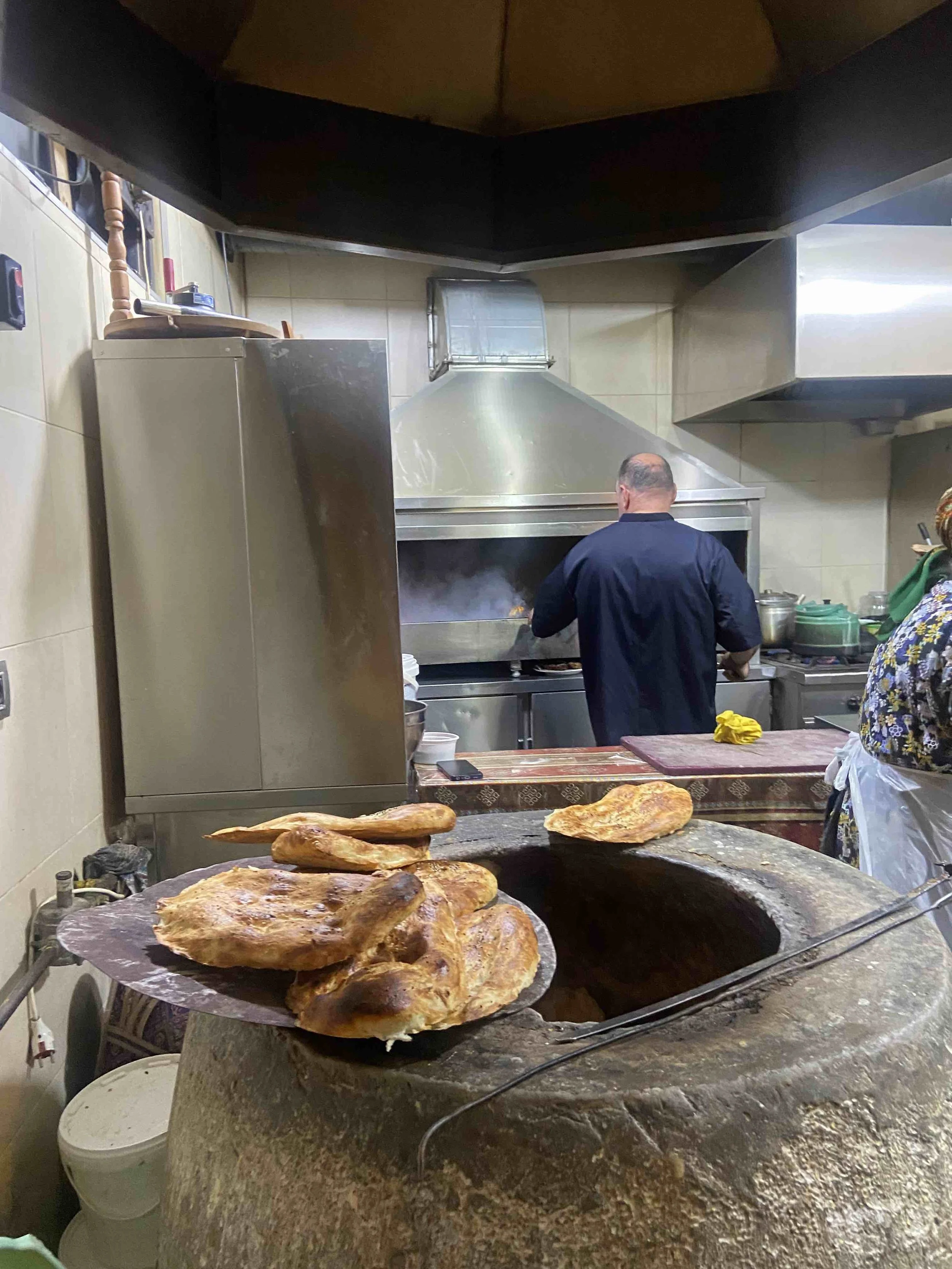
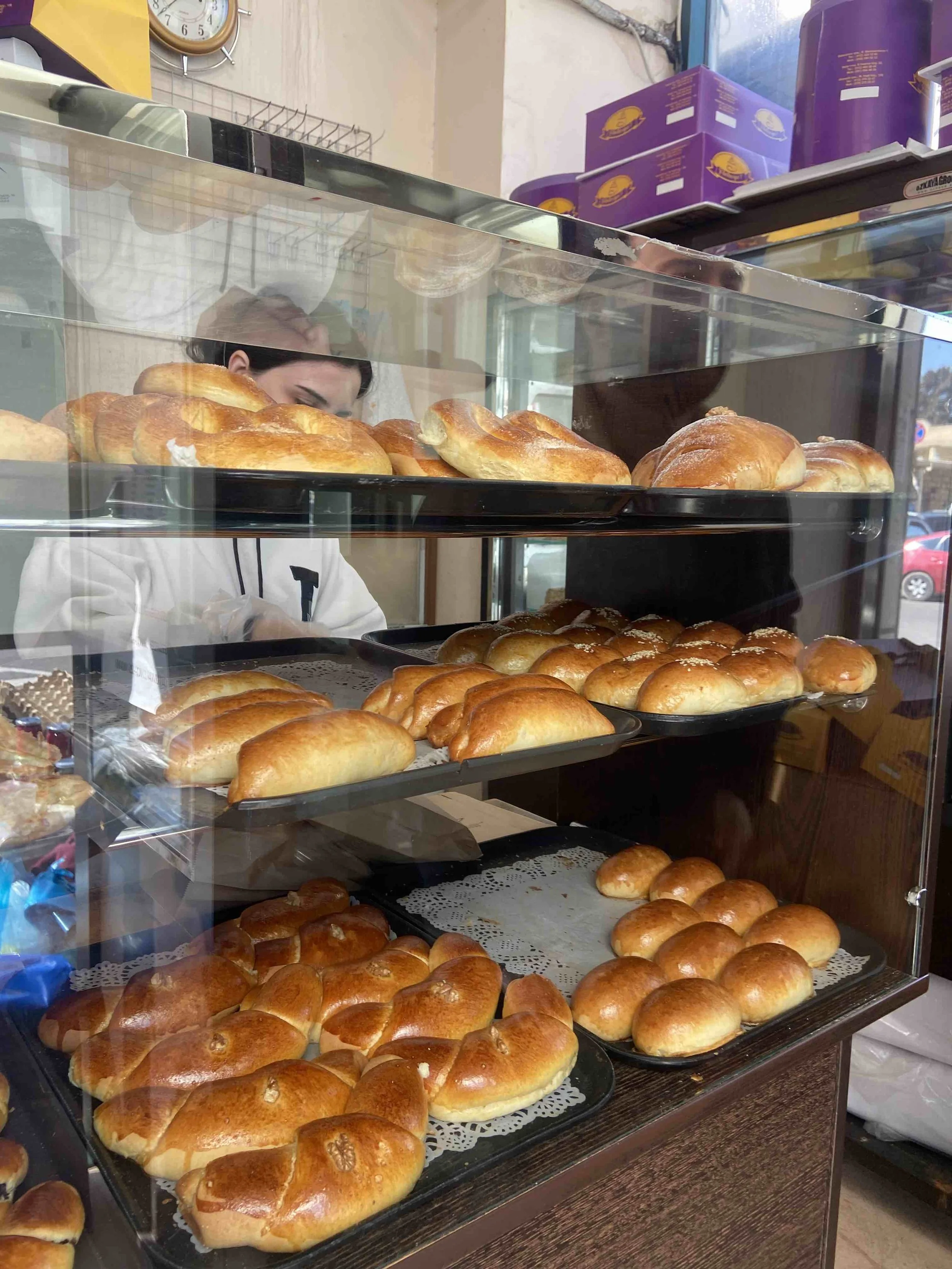
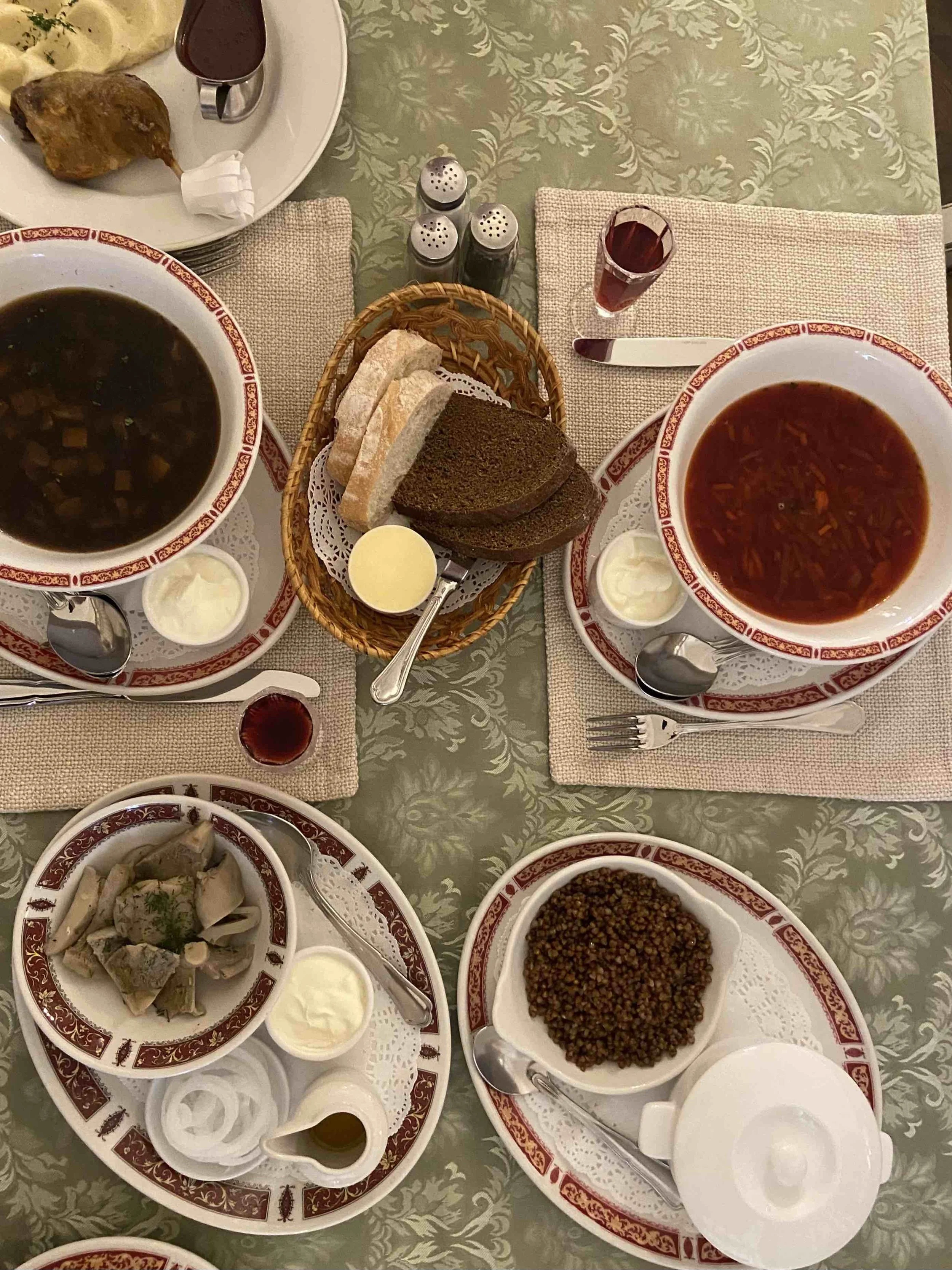
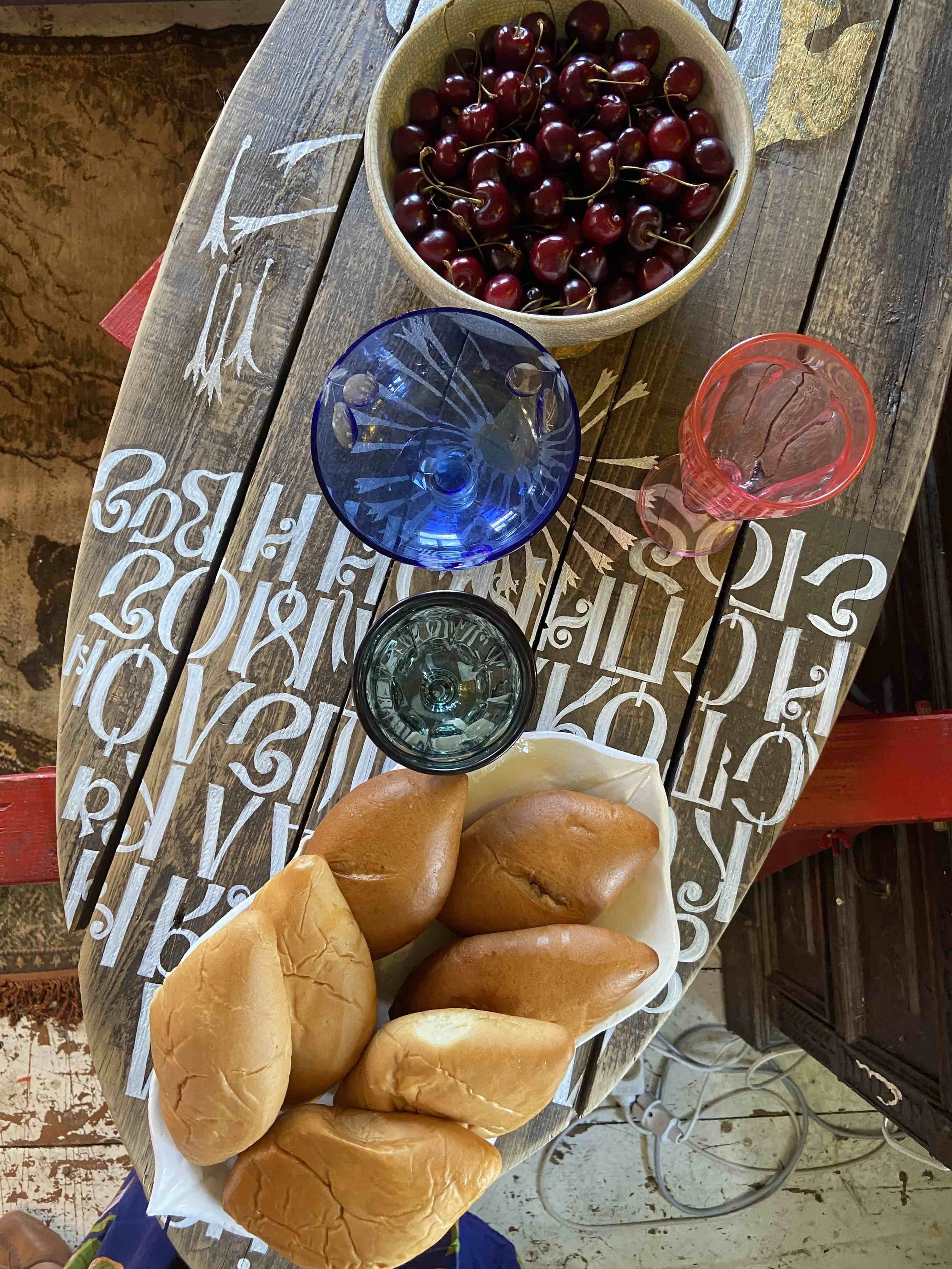
Food crafts our identities. The simple act of eating can forge relationships and bring communities together. Food defines our histories - the countless journeys our ancestors made through lands familiar and unfamiliar. Our cultures and practices of food and eating tell stories of our collective past while also upholding diversity. Food cultures are ever-expanding, ever-adapting tales of the human race. Therefore, food plays a very important role in understanding social and cultural anthropology.
Food can also act as cultural signifiers. When we say Caucasus, we are immediately drawn to the smell of freshly baked loaves of bread. The Mediterranean foodscape takes us to orchards of lemons and olives while Asia soothes our mind with the imagery of steaming cups of tea. Food is as much a vehicle of nostalgia as any other element of material culture; in fact, the two come together in creating valuable narratives about human history and the intersection of diverse communities from across the globe. Tea would make less sense without the accompaniment of fine porcelain in China or the humble stainless steel “glass” in India. Olives rule the sentiment of Levantine cultures where farmers hold their olive produce more precious than any other cultural signifier. In Bhutan, one has to broaden the culinary taste bud to accommodate the spiciness of their food and accept the beauty of salty, buttery tea. Italians wouldn’t perhaps forgive you if you happen to be antagonized by the delicate flavors of agrumato.
Food is, at the end of the day, a tribute to human relationship and accepting the innate distinctiveness of humankind. Whether through trade, travel or forced communions, food has provided respite in an oft complex world and sustained people at times of conflict.
THE CAUCASIAN AROMA OF BREAD
You smell of dreams
You've wrapped yourself up
In a warm world.
You're as tasty as hot bread,
And you're as lazy as a mugham Performed in summer.
Even trees and mountains
Want to gather 'round
When they see you.
And I want to be a poem,
Not a poet
When I see you.
(‘My Love’, By Vagif Samadoghlu, 1983)
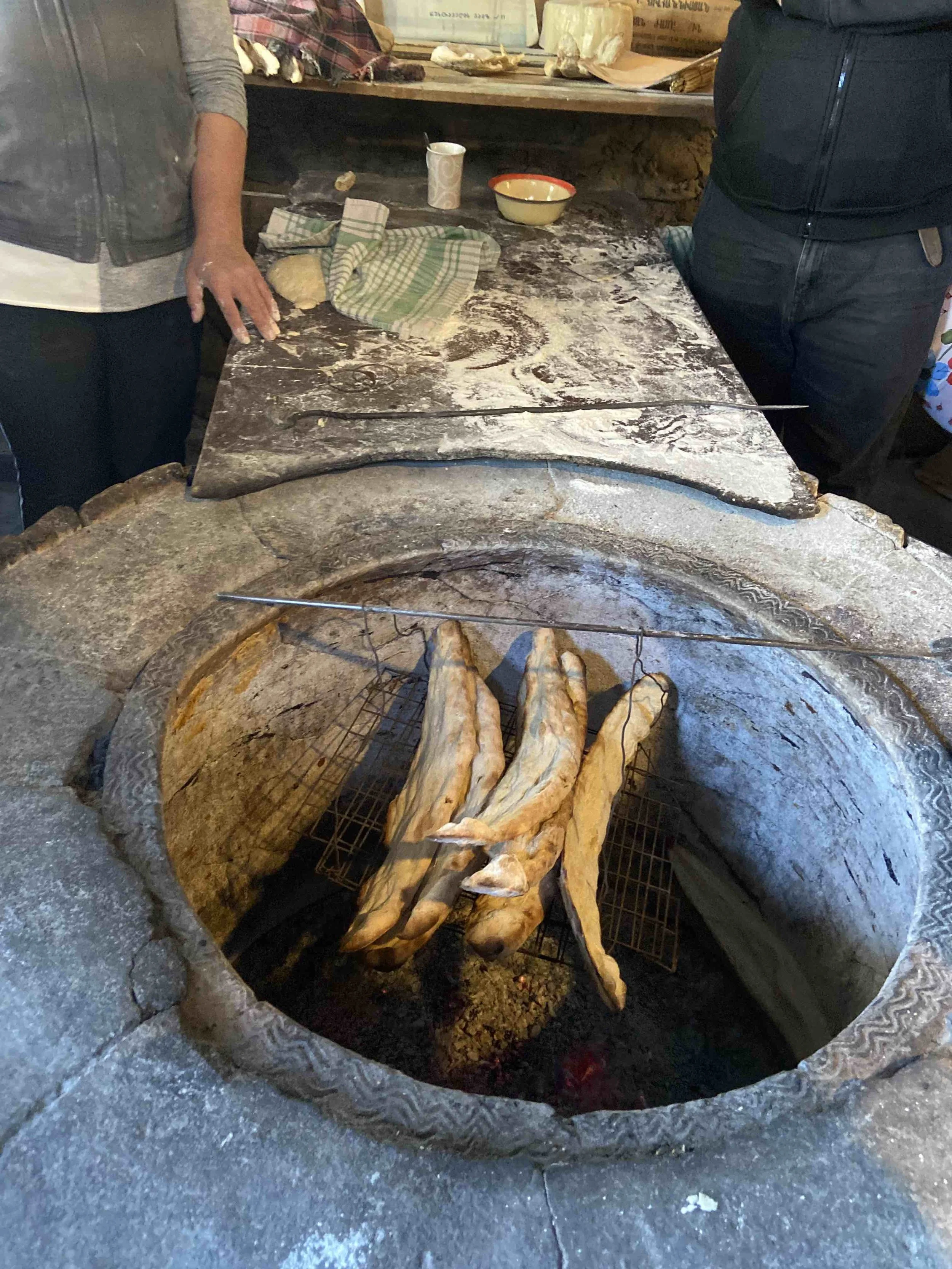
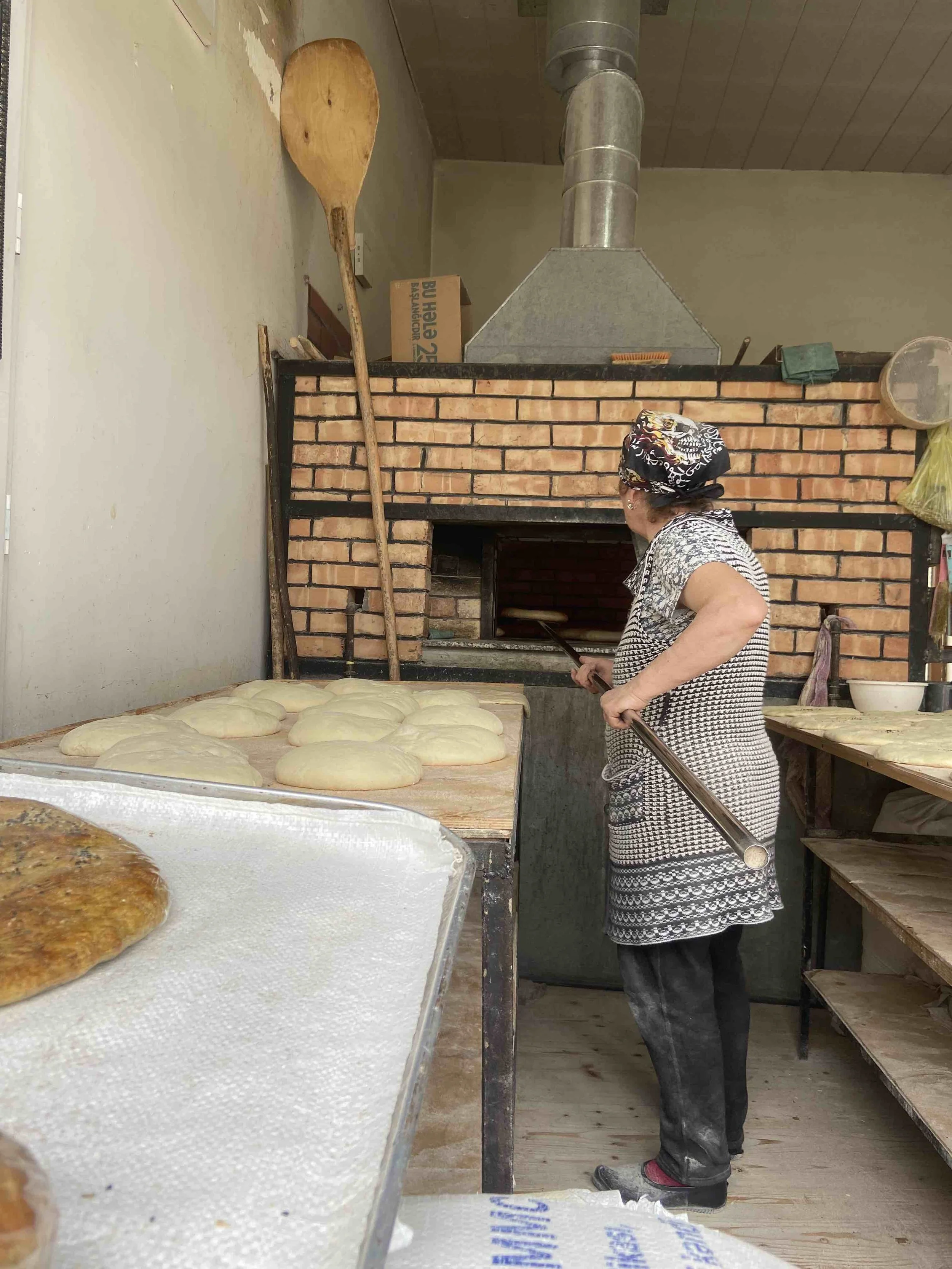
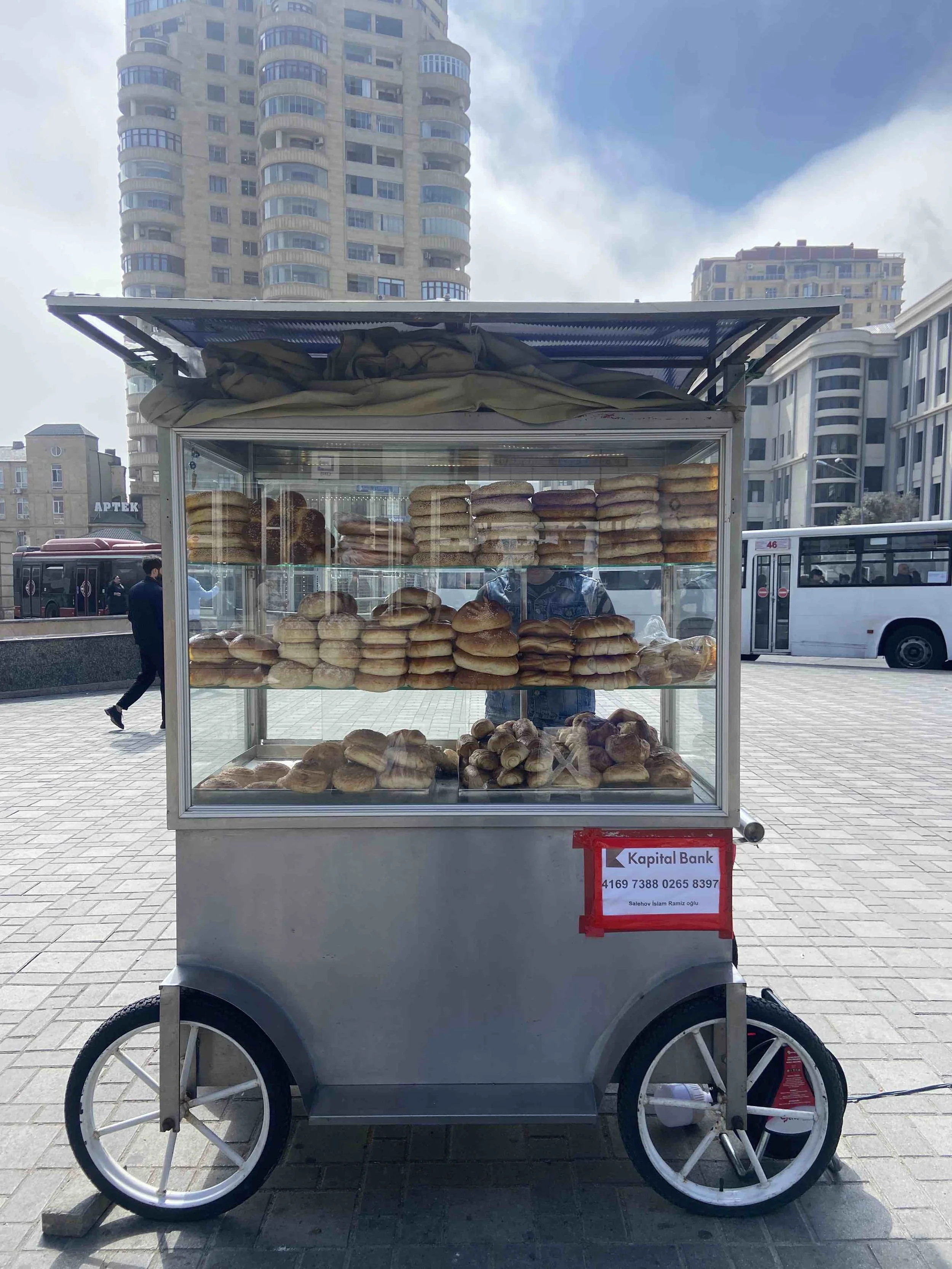
The Caucasus radiates colors and nuances of a vibrant past. Surrounded by majestic mountains and ancient seas, it has been the bed of civilisations fusing together in the crucible of culture and living traditions. Its alleyways beckon the poetry of the Silk Route and continues to fascinate us with tales of maritime trade, spice sacks, and caravanserais. The deeply spiritual love for bread in Caucasus is not unbeknownst to us, not too far off from the Mediterranean or Persian love for grains. Bread-baking is, in fact, ubiquitous in the entire region. Whether you saunter through Azerbaijan or take poetic pauses through Georgia and Russia, the heady scent of freshly-baked bread with overwhelm you.
Symbol of Community
The humble bread is the heart of the kitchen. The sticky, unleavened dough is the heart of the humble Caucasian bread.
In Azerbaijan, bread is considered sacred - a symbol of prosperity and hospitality. It is not uncommon to chance upon a person touch their forehead with bread, deifying it, or kissing it out of respect. An Azerbaijani folk saying goes like: “You shouldn’t step on bread, a piece of bread may help you over the mountain!” - highlighting its importance in Azeri diet. Bread is about friendship and community, and hearkens to a history of oven-warm loaves feeding traders and travelers along the Silk Route of yore, accompanied by yogurts and local cheese, meat and fresh salads. In fact, herbs continue to be an important part of Azeri cuisine, seasoning soups and salads commonly served with bread - garlic chives, dill, cilantro, mint, parsley and basil. Herbs also become an intricate part of the kneading process of the dough if you were to deepen the taste of bread.
Similarly, in Georgian cuisine, the bread centres the meal carefully laid out with pickled greens, cheese slices, herbs, meat and stew. One of the early signs of conflict during their independence movement from Soviet rule was the shortage of bread. With the disruption of infrastructure and collapse of power lines, bakeries shut down, breadlines grew longer and bread, more expensive. The simple dedaspuri (meaning “mother’s bread”) evokes the sentiment of those times for many Georgians who look back to the days of crisis with nostalgia. That it united people to share limited resources, made friends out of each other, and gathered neighbours into a single house for shared cooking and eating remain a highlight for Georgians.
Georgia’s Decadent Bread
Georgia has enjoyed an interesting geopolitical location as the crossing point of several civilizations, creating intersections of different kinds of people who spiced the region’s cultural mores with their individual characteristics. The land has witnessed a historical journey of fusion and fluidity, experimentation and expansion of the tastebud, that leaves us today with a rather cosmopolitan ease with culinary diversity or even the absence of a stoic conformity to recipes and ways of cooking. This makes Georgia’s food, including the khachapuri, delightfully resilient.
During the country’s period of scarcity following their independence from Soviet rule in 1991, Georgian women would make the dish using simple oil and perhaps without cheese. Instead of meet and onions and other spices and condiments, the bread stuffing would consist of any available ingredients such as salt and pasta. A Hadith by Prophet Mohammad goes like this - “If bread and meat are brought to the table for you, first take the bread and take away your hunger with it, and then eat the meat,” proving that culinary decadence cannot be reduced to a stereotype. And that the classification of what stands as decadent for a food item can range from its ingredients, technique, diversity, cultural context, and the story of its origin.
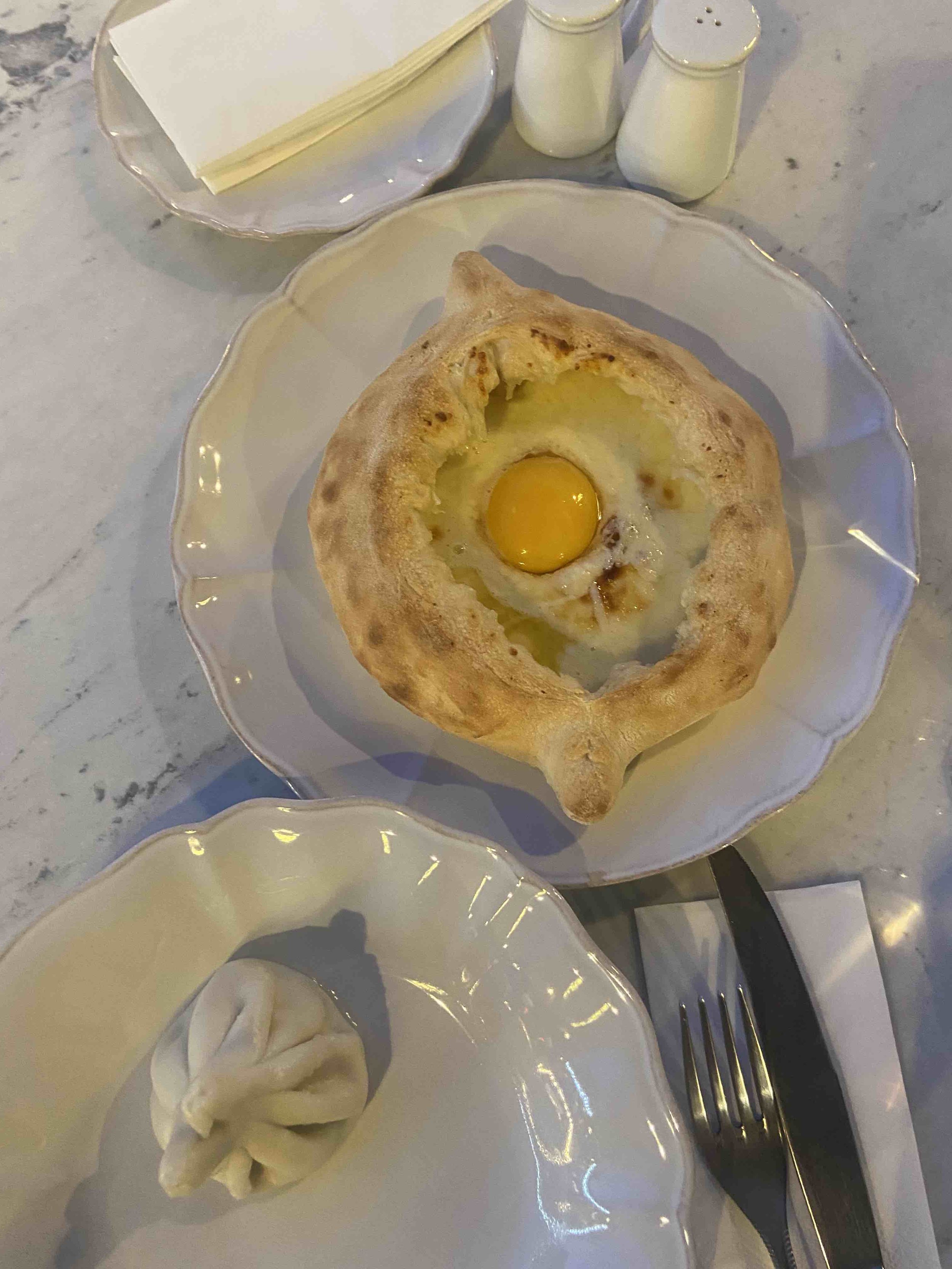
It is said that there are as many varieties of the khachapuri as there are kitchens in Georgia. This cheesy stuffed bread goes back to as early as the 12th century although one cannot be sure. And like almost all traditional food, this delicious bread is a celebration of women’s lived history of cooking, feeding and keeping their families and communities together. In Georgia, the story goes that women welcomed sailors from the sea with warm khachapuri. The khachapuri dough can itself be quite varied - there are varieties which are chewier than others, and those made with or without leavening. Flavours depend on the alchemical prowess of the baker, and one can easily discover unusual variations in the plethora of eateries that decorate the streets. Or, if one’s lucky, they can simply step into the comforts of a Georgian home to partake of this delicious creation from the hands of a Georgian grandmother.
Bringing people together
It can be understood thus far that bread (culture) can be a symbol of both excess and austerity. At different points in time, the bread satiated the hunger of common people while forging unity and togetherness.
One has to look back in history to understand how crisis shapes a people - in ancient Russia, people were preoccupied with survival and it was difficult to discern where the next meal would come from. When the Russian author A. Solzhenitsyn said, “You had to eat with all your mind on the food...and how good it tasted, that black bread!” he meant it. The rzhanovi kheb or the black bread is, therefore, a testament of paucity and resilience of the common people. It shows us how nourishment can be sufficient in itself, that food can be celebrated in its simple basics because it offers khlyeb-sol to people - warmth and hospitality. Or that food, cuisines and the idiosyncratic manner of eating can reflect the inherent philosophy of a people - in this case, it stands as a symbol of the Russian people’s inclination towards philosophical realism. Furthermore, there is an interesting connection between the black bread and the peasantry class of Russia. While black bread is considered more nutritious than its white counterpart, it is said to have been the backbone of the peasants as well as the source of strength for the Russian army. It is said that “(i)n times of famine, Russians starved because they could not replace black bread in their diets with the abundant meat and fish resources of their countryside.”
The ubiquitous black bread is, of course, not without its decadent variations. The famed Borodinsky bread is a densely sweet black bread that is baked with salt and sugar, spices and coriander seeds, and sweetened with beet sugar molasses. The Russian table or kitchen of yore would have families huddling around the stove, discussing politics or the meaning of life. Imagine partaking in one such conversation with a slice of the rich Borodinsky loaf, smeared with butter, with a flavour blast of coriander and molasses in your mouth. An uncanny combination we would think, but that is just the spirit of this culture’s cuisine.
Occupying Rituals and Customs
Food also becomes an intrinsic part of people’s cultural mores. Rituals and customs often revolve around specific varieties of food or presented in a way that elevates its significance. The karavai bread of Russia is an important part of Russian weddings and symbolise fertility and prosperity. In its origin, this loaf was a simple and plain form of bread that eventually became more plaited and decorated with dough ornaments. Pagans attached mystical meaning to these decorations; for instance, arrow-wood branches and berries meant love and happiness. This bread is also offered or had with salt, which adds to the longstanding practice of having bread with salt in Russia - a ritual signifying friendship and community bonding, overriding betrayal. Quite understandable for a region and culture where salt was scarce and expensive. It is common for a newly wed couple to break a bread, dip in salt, and feed each other during Russian weddings.
Bread and salt is, on the whole, an important part of Caucasian (food) culture. In Azerbaijan, the saying “honest bread” quite literally goes for the ritual of offering bread and salt, which stands for loyalty and camaraderie. The Caucasian food history, one could very well say, lies in its interesting juxtaposition of tradition and modernity without sounding obvious. It is born of love, the complex human residues of instinct and survival, and an eternal relationship with transforming surroundings that take cue from climatic variables. Much like the aashiq bards who once traversed its challenging terrains, the contemporary food anthropologist could come face to face with the region’s elusive past at every meal. Where hunger and satiation co-exist, and grain-filled cuisines lure you to more decadent palettes of cheese, wine and legumes.
PICKING OLIVES AND LEMONS IN THE MEDITERRANEAN
“Listen to me, the poets laureate
move only among plants
with rare names: boxwood, privet and acanthus.
But I like roads that lead to grassy
ditches where boys
scoop up a few starved
eels out of half-dry puddles:
paths that run along the banks
come down among the tufted canes
and end in orchards, among the lemon trees.”
(‘The Lemons’ by Eugenio Montale, translated by Jonathan Galassi)
One only has to explore the Mediterranean’s soul to be greeted by the pastel palette of lemons and olives. They decorate the countrysides of Italy and Lebanon, among others, infusing the air with the refreshing summer scent of citrus and nostalgia.
Lemons dot the landscape of Europe, primarily Italy and Spain, as well as the Levantine world. Originating in Southeast Asia, the citrus travelled centuries ago to reach Mediterranean cuisine where it sparked a culinary tradition sprinkled by its magic. Women found ways of incorporating its acidity in a culinary tradition dominated by wheat and cheese, and nurtured by the languorous olive. That lemons dance with olive oil is evident in Mediterranean food; they became the binding force for gluten, oil and milky fats.
Where the Lemons Bloom
The lemon adds tartness to an Arab household. Ever since lemon farms took over the Lebanese countrysides in the 1960s, this fruit has taken over the nuances of middle eastern cooking. Today, one cannot imagine the cultures of this region go without lemons to occupy the rich food that decorate their dining tables and community feasts. In Lebanese households, the lemon is consumed every single day. In the Mediterranean and Middle Eastern cuisines, the lemon carries symbolic weight too. Because its tangy flavours balance the richness of spices, the lemon was considered to be symbol of balance and harmony in these cultures. It cleanses and heals a flared gut which further elevated its status in these cultures, prompting its inclusion in purification rituals and customs of the region.
The story of Italian lemons is straight out of a fairytale. In Southern Italy, lemons bear names that sound like historical epics, legendary tales or long-lost lovers. In a country that decided to call a lemon-flavoured liquor, ‘limoncello’, we can blame it on the beauty of the language. The Femminello grows commonly in Sicily. These medium-sized, hearty lemons grow throughout the year, hence actually harvested up to four times a year. Each harvest has a different name – the spring harvest is called Bianchetto; the summer one as Verdello; the autumnal crop is Primofiore; and the winter batch, Limone.
Colouring the Landscape with Peace
“The olive tree is the color of peace, if peace needed
A color. No one says to the olive tree: How beautiful you are!
But: How noble and how splendid! And she,
She who teaches soldiers to lay down their rifles
And re-educates them in tenderness and humility: Go home
And light your lamps with my oil!”
(‘The Second Olive’ Tree by Mahmoud Darwish, translated by Marilyn Hacker)
Olive trees are as common as lemons in this part of the world - whether you frolic through the olive orchards of Italy or indulge in the heady flavours of Lebanon’s produce, this fruit is a reflection of the people’s connect to their homelands.
Unlike the common perception that the arid lands of eastern Mediterranean lands would not lead to good produce, Lebanon has been the site of excellent olive production for decades now, surviving and thriving through historical conflicts and wars. Here, the dominant olive variety that grows in plenty is called Souri, also largely grown in other countries of the Middle East. Some of the other varieties include the Baladi, Ayrouni, Shami, Shetawi and Smoukmouki - sounding like the names of fantastical characters from folktales. Remember the enigmatic Fayrouz crooning about her homeland, her lyrics painting the 1970s Arab landscape with imageries of jasmines and and olive trees? And how could one not, when the oldest olive trees belong to Lebanon - a cluster of 16 olive trees called “The Sister Trees of Noah”, located in the (northern Lebanese) town of Bchaaleh.
Crafting the Agrumato
Agrumato is a way of understanding the spirit of olive and lemon coexisting in poesy - it is a technique of making lemon-flavoured olive oil in which the lemons are crushed whole, along with the olives, in the mill. This releases the essential oils from the lemon rinds that create the riot of flavours, a harmonious blend of two of nature’s best gifts to the Mediterranean. Seen culturally, the Agrumato stands for a longstanding history of two humble fruits that define the people of the Mediterranean. It is common for people of this part of the world to infuse olive oil with lemon zest or freshly squeezed lemon juice for dressing a humble salad. The trick is to have one part lemon in two parts olive oil, as any Lebanese grandmother would tell you.
That a humble citrus fruit from lands across the seas could invade the sensory preferences of an altogether different group of people serves as a humble reminder of the magic of ancient trade and cultural exchange.



SIPPING THE SPIRITUAL IN BHUTAN AND SRI LANKA
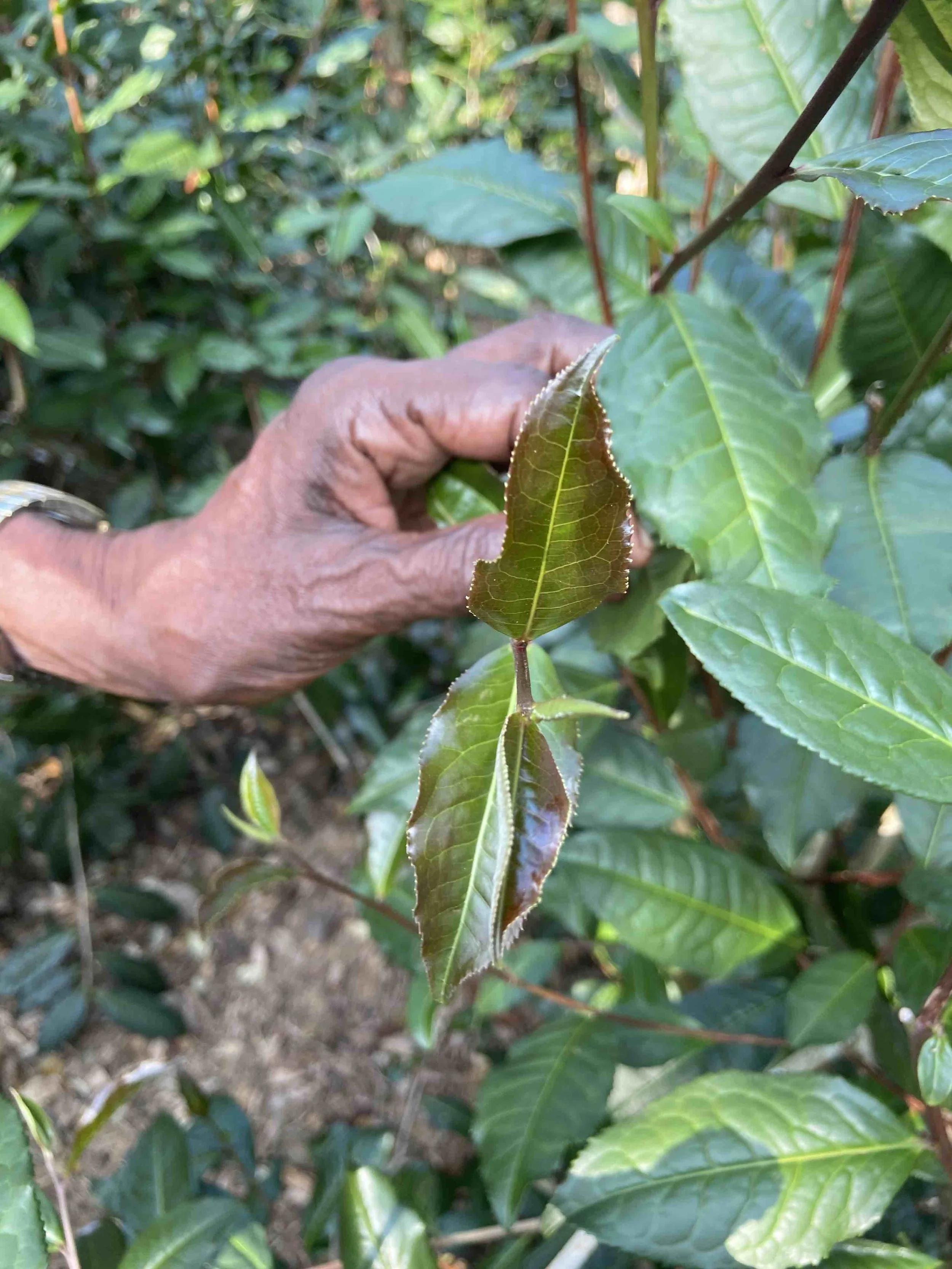
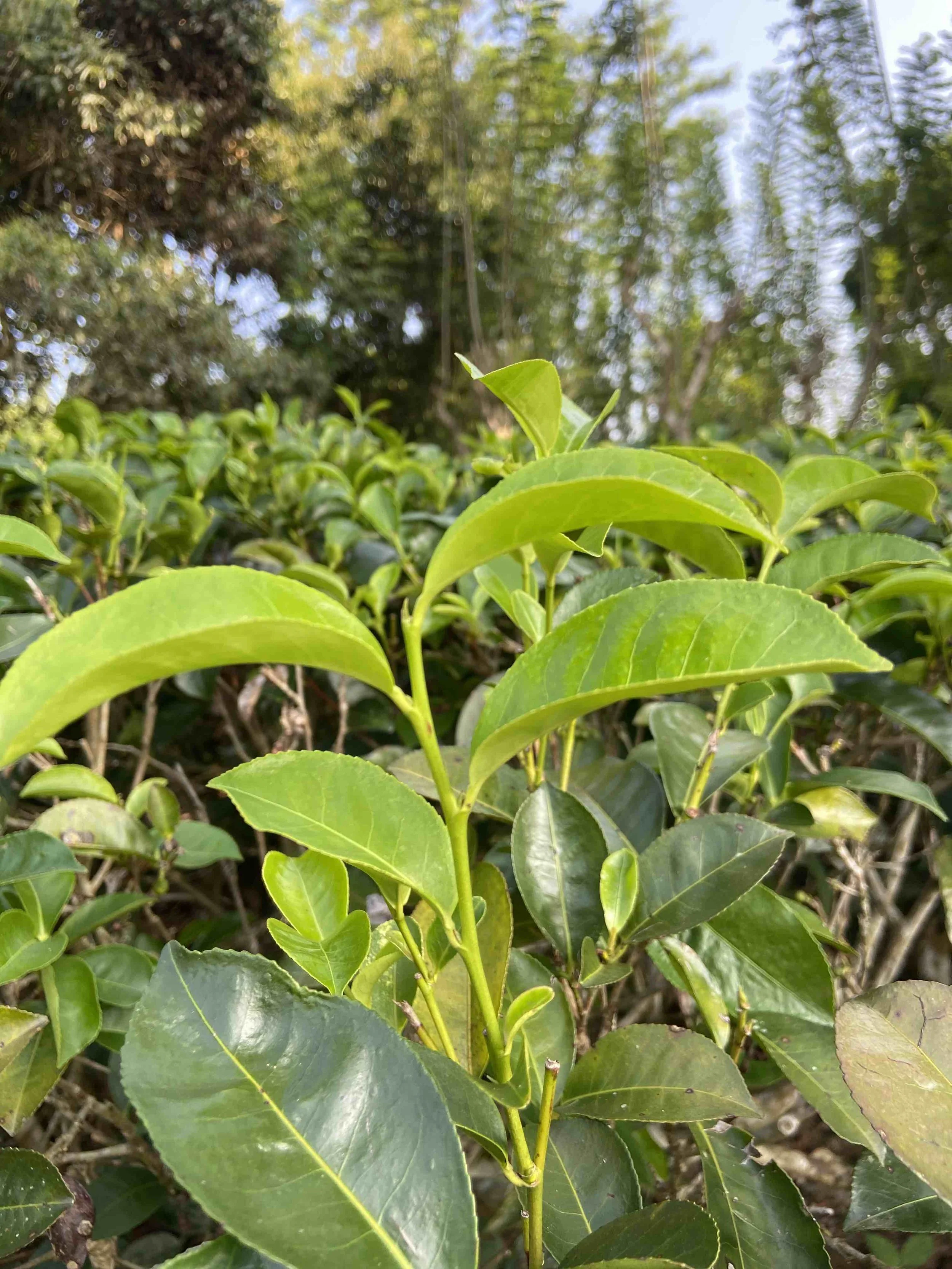
In Asia, tea has been an integral part of its myriad cultures. In sickness and in health, tea has forged relationships and provided respite from the climatic ravages of tropical geography. Socially, tea has built communities and offered solace to those weary from life’s mucky terrains.
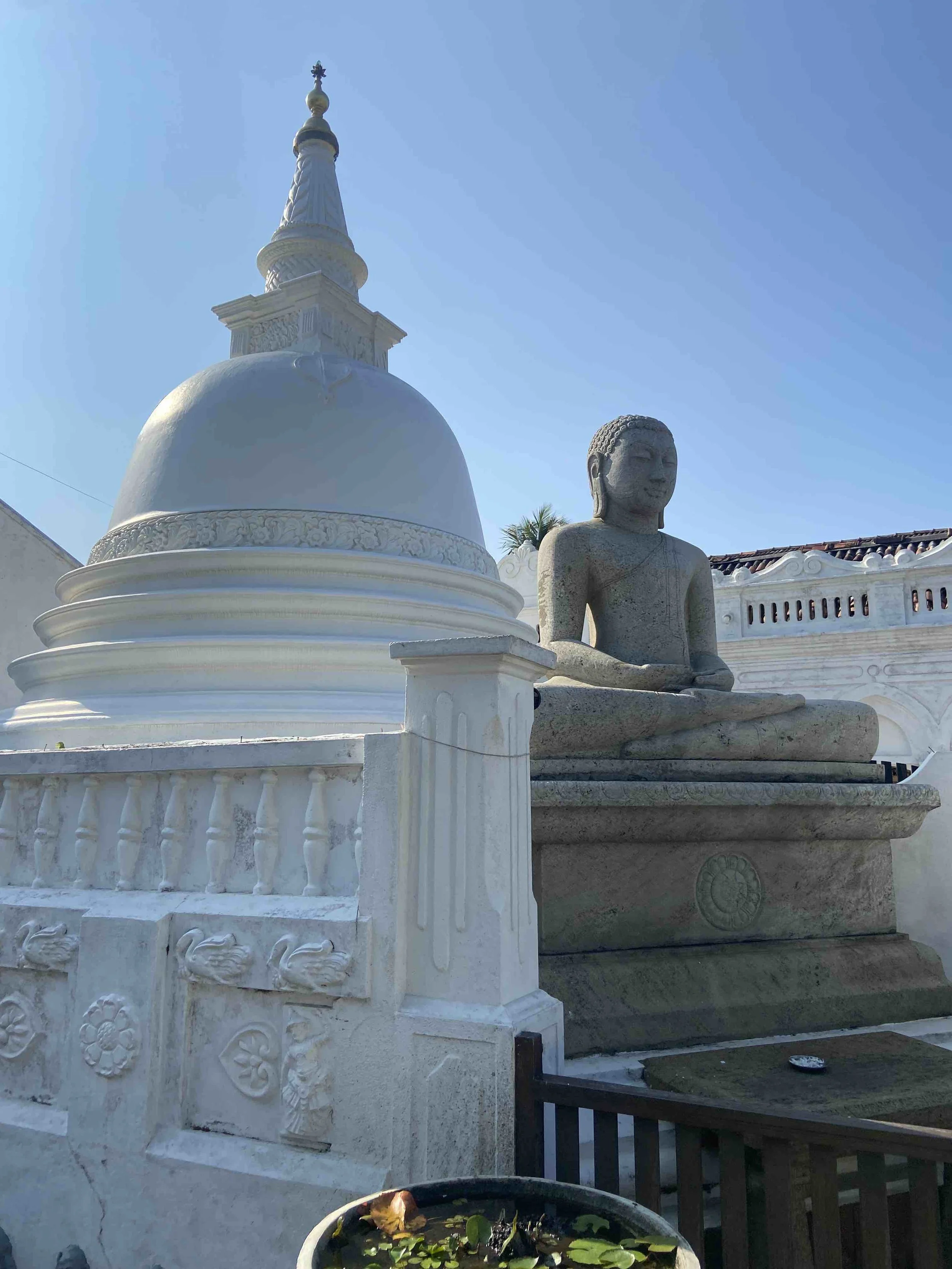
Tea first appeared in ancient China and intrinsically bonded with water. It was an austere drink prepared by boiling tea leaves in boiling water, retaining the leaves’ bitter astringency and medicinal properties. It was consumed as a herbal elixir that would cleanse your body and mind off unwanted fatigue. From China, tea is said to have travelled to Japan via a wandering Buddhist mendicant, became associated with Zen, and was exalted by spiritual mendicants who claimed that the drink could heighten spiritual experience. Tea also spread outside of the monastery to secular walls and became an integral part of the life of rulers and feudal lords.
This humble beverage is yet another example of how distinct communities, cultures and regions can be united by the spirit of what we eat and drink. From Bhutan to Sri Lanka, common people share warmth and respite with tea, using ingredients and techniques specific to each geography.
Buddhism and Tea
“Drink your tea slowly and reverently, as if it is the axis
on which the world earth revolves
– slowly, evenly, without
rushing toward the future; Live the actual moment. Only this moment is life.” (Thich Nhat Hahn)
That tea emerged from such religio-spiritual discourses in the Asian world is interesting, and reminds us of the significance wine holds within Christianity. It is perhaps a larger commentary on the association food and drinks have with community practices, if we are to see religion as one in the place of an isolated, individualistic pursuit. Tea features as yet another building block of society, instilling good health and spirit, serenity and sobriety, for a religious practice that upholds the values of simplicity, productivity, tranquil alertness, mindfulness, and slow living. Buddhism’s conversations around tea are essentially about common people, community building and social conventions.
The Buddhist way of life is all about the mundane, or rather, elevating the mundane to the spiritual. Take, for instance, the tea cup in which tea is served - its roundedness a perfect measure of your involvement in a tea ceremony, its structure perfect for you to hold on to the drink in all earnestness. Another example is the patient preparation of the Bhutanese suja - the salty, buttery tea akin to a broth. is as important as the serving of the drink to guests and participants. One has to be fully present, and mix
all ingredients in the right proportion, before boiling them in the perfect temperature. In the early days, the butter used for suja was churned with wooden sticks, making the process even more time consuming and laborious. Therefore, tea in Asia becomes the perfect metaphor of Buddhist way of life, and Buddhism the perfect philosophical vehicle for this drink to sustain the community. As Peter G W Keen rightly puts it, “At one level, the association of Buddhism and tea seems natural and obvious. The ethos and practices of its many schools and their impact on modern modes of yoga, Zen, meditation, nutrition and daily living conjure up images associated with tea: calm, cleansing, meditative and ceremonial. Somehow, the link doesn’t quite seem the same for other beverages: seek karma with a languorous double latte caffeine jolt, a contemplative soda sugar boost or a double rye on the rocks...”
People’s Drink
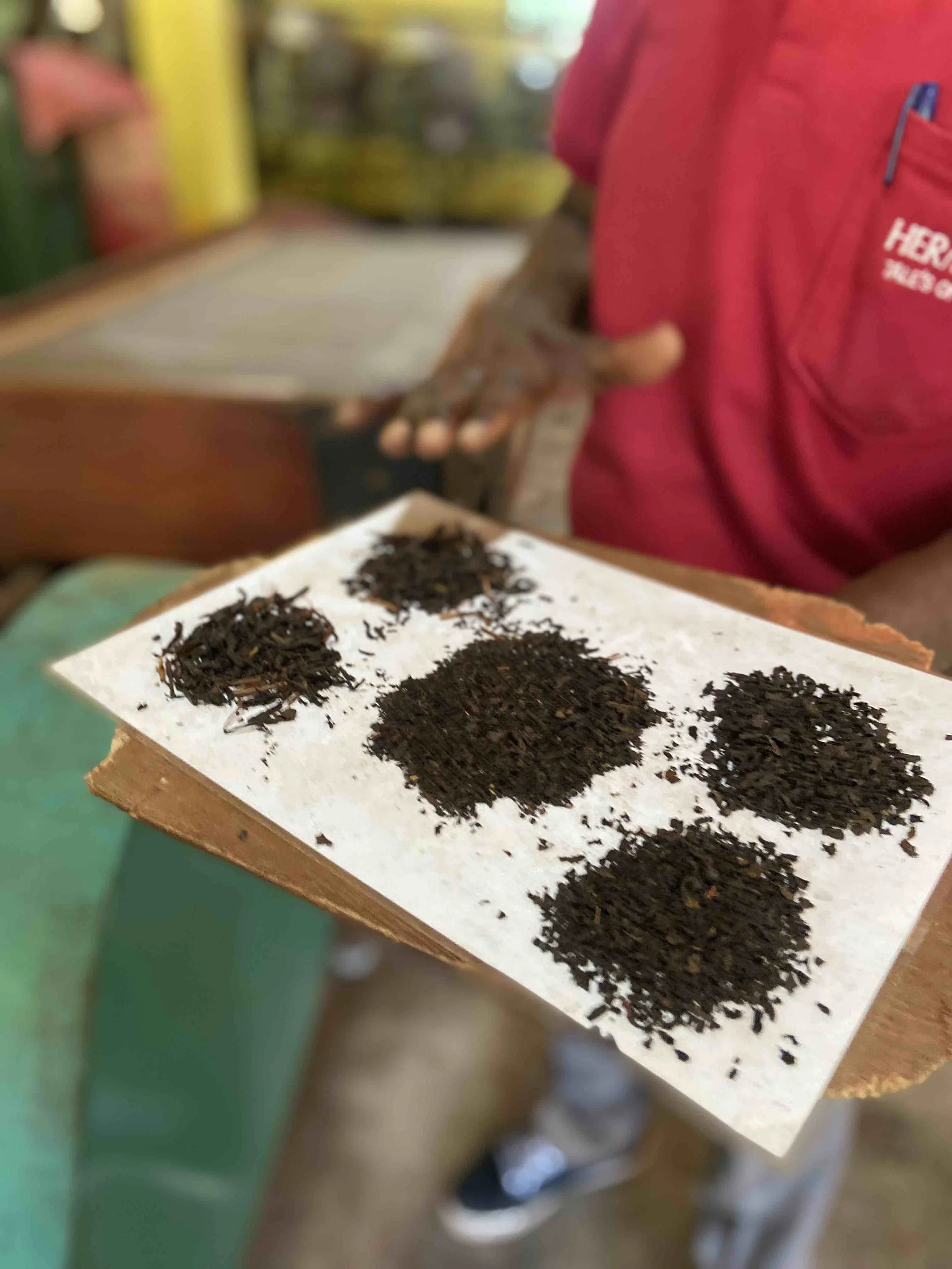
Sri Lanka’s tea story is different from Bhutan, where it takes over the everyday life of common people. People here bond over steaming cups of tea at any given point in time - an average Sri Lankan consumes not less than 3-5 cups of tea a day. The Sri Lankan tea story is very similar to India’s - the neighbouring country where tea is sold in every corner of every state. Rags-to-riches stories of tea stallers abound, which really proves how tea is the poor man’s’ drink in both these countries. The energy of tea culture is evidently different from Bhutan’s - Sri Lankans much prefer the “kahata” black tea, sweetened, whether in water or milk, while the Bhutanese go for the buttery, salty variety - yet it is fascination to observe how a common beverage could unite cultures across geographical dissimilarities and vastly opposite climates.
Tea arrived in Sri Lanka during the colonial era (19th century) as a form of cash crop meant to aid economic growth. Ceylon tea acquired global fame; what defines the tea culture of the country today, however, expands far beyond its colonial past - tea is a heartwarming, defining aspect of the Sri Lankan identity, a drink that celebrates its common people and rich sociocultural fabric.
The story of tea is a story of their people, a narrative well established by Buddhism’s quiet backbone that celebrates the resilience of common people and their lives entrenched in the everyday. This tea story leaves behind the fine porcelain confines of teaware, and hugs the rugged realities of people who oil the wheels of the economy and keep the countries running. For whether you are serving in the high altitudes of a monastery or serving in the crowded alleys of island life, tea provides that much-need respite from exhaustion and monotony, infusing in people strength and rejuvenation. The Buddhist dictates of humility and respect truimph for those brief (or extended) moments of shared camarederie as well as work ethic. Tea becomes an aid for relationships old and new, and diffusing boundaries between people here and there