
In conversation with Denis Bruna, chief curator at the Fashion and Textile Department of the Musée des Arts décoratifs, Paris.
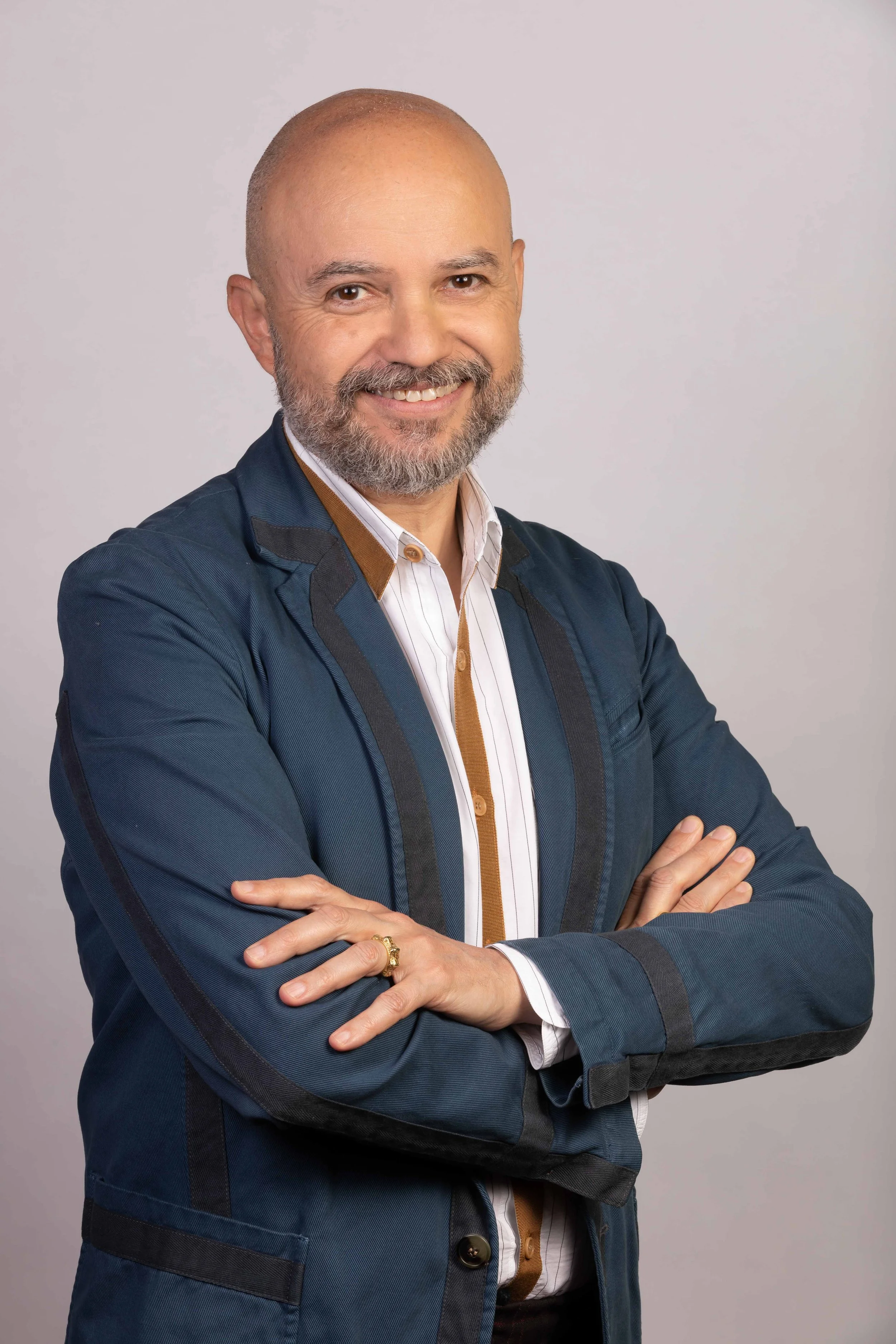
His research has covered themes like representations of the body, medieval art history, fashion and costume. He has curated the 2012 exhibition Fashioning Fashion: Two Centuries of European Fashion 1700–1915 and the 2013 La Mécanique des dessous, une histoire indiscrète de la silhouette.
1. You have a decade-long experience working with a museum as a curator and have been a professor for even longer. How has the field of 'Exhibition and Education' (within Fashion and Identity) evolved over the last few years? What importance do cultural exhibitions play in today's shifting global identity?
Denis Bruna: Exhibitions on fashion, or the history of fashion, are becoming more and more common as they attract an ever-increasing audience, public and private institutions—even museums that do not keep fashion collections are holding these exhibitions. When I arrived at the Musée des Arts Décoratifs as a curator of the Fashion and Textile department in 2011, I proposed research and exhibition topics, where phenomena like fashion and clothing are placed in social contexts. I am not tempted to do a monographic exhibition on a major fashion designer. So, I proposed subjects on the history of the silhouette, clothes that caused a scandal and how people have walked with shoes through the centuries and across cultures. At the moment, I am preparing an exhibition that will open in April 2023 on the arrangement of hair and body hair in the construction of appearances in Europe from the 15th century to the present day. Fashion and clothing are documents of history; this is essential for me.
I am also a professor of fashion and clothing history at the Ecole du Louvre in Paris. Many students take this course. I want to show that the history of fashion is a scientific discipline; we have to get rid of the idea that fashion is futile. The students learn the history of fashion from Antiquity to the present day over three years. They learn about particular themes in fashion, how to recognise a fabric, how to describe a costume and more.
4. France and India share a history of exchange in their visual and material works, especially in textiles. Is there any particular Indian craft and region that you are inspired by, or that fascinates you? We would love to know your take on Indian textiles at large.
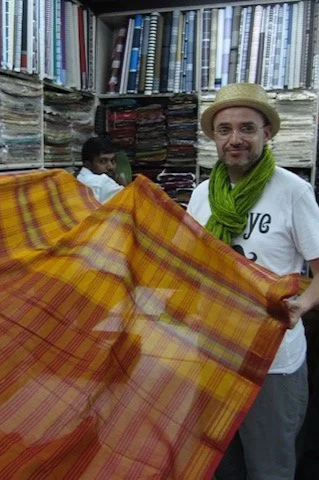
DB: Long before Indian textiles, it is the whole of India that fascinates me. Let me tell you that I am in love with India. Every time I go there, I feel good; when I come back, I miss India. Otherwise, to answer your question, I love kanthas, tie and dye, and probably even more so the printed cotton from the Jaipur region! I live in Paris, but I am originally from Provence where we also have a tradition of printed cotton fabrics that are still called 'indiennes'. I love Indian kalamkari, for their colours, the delicacy of the patterns and the beauty of the imperfection of the printing. Each time, I am amazed.
5. The Indian design industry has evolved hugely in the last decade and is quite relevant in global fashion with contemporary takes on traditional Indian textiles. Have you come across any particular design that can do justice to textile tradition and yet innovate?
DB: I don't have any particular designer names that come to mind. However, I regularly look at Indian fashion magazines and websites on contemporary Indian fashion. What I often see and love is the contemporary reinterpretation of traditional clothes and fabrics. For example, in men's fashion, I often see kurta, both the tunic and the trousers. I find this traditional garment very elegant. Many of these kurtas, reinterpreted in their shapes and fabrics by fashion designers are particularly beautiful. India, in all its diversity, has a long tradition of clothing and textiles and I am personally happy to see that this tradition is not being forgotten.
6. Lastly, what are your thoughts on the global exchange of textile knowledge today? There are many designers from Mexico, Morocco, India, France and Japan who continue to innovate. There are also many textile-driven travel trips and sourcing agents who are connecting the world of artisans How do you think this reflects on today's culture in terms of the modern identity?
DB: Textile art and techniques have always travelled. There have been exchanges of know-how for many centuries. The silks that were the glory of Lyon in the 18th century came from Italy, and before Italy from China. We spoke earlier about the cotton printed in India that was admired in France and Europe in the 17th century. Moreover, the history of fabrics is also a history of ever-improving techniques. In my opinion, as a historian, we do not have enough distance to say how this is reflected in today's culture in terms of modern identity. What interests me most is that traditional fabrics, whatever their origin, are used as a basis for contemporary creation.