
Textile Travel Through Rural Punjab, India
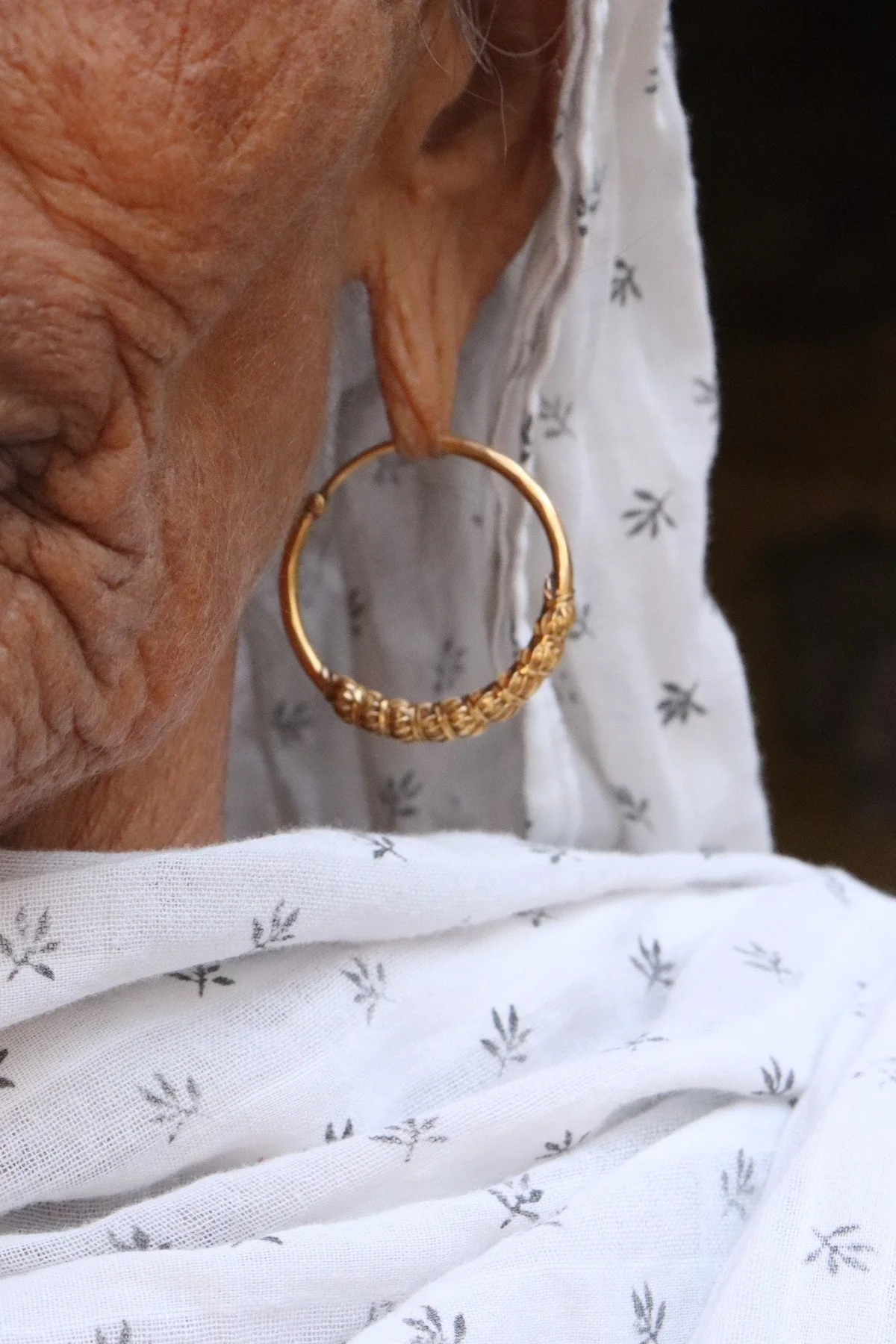
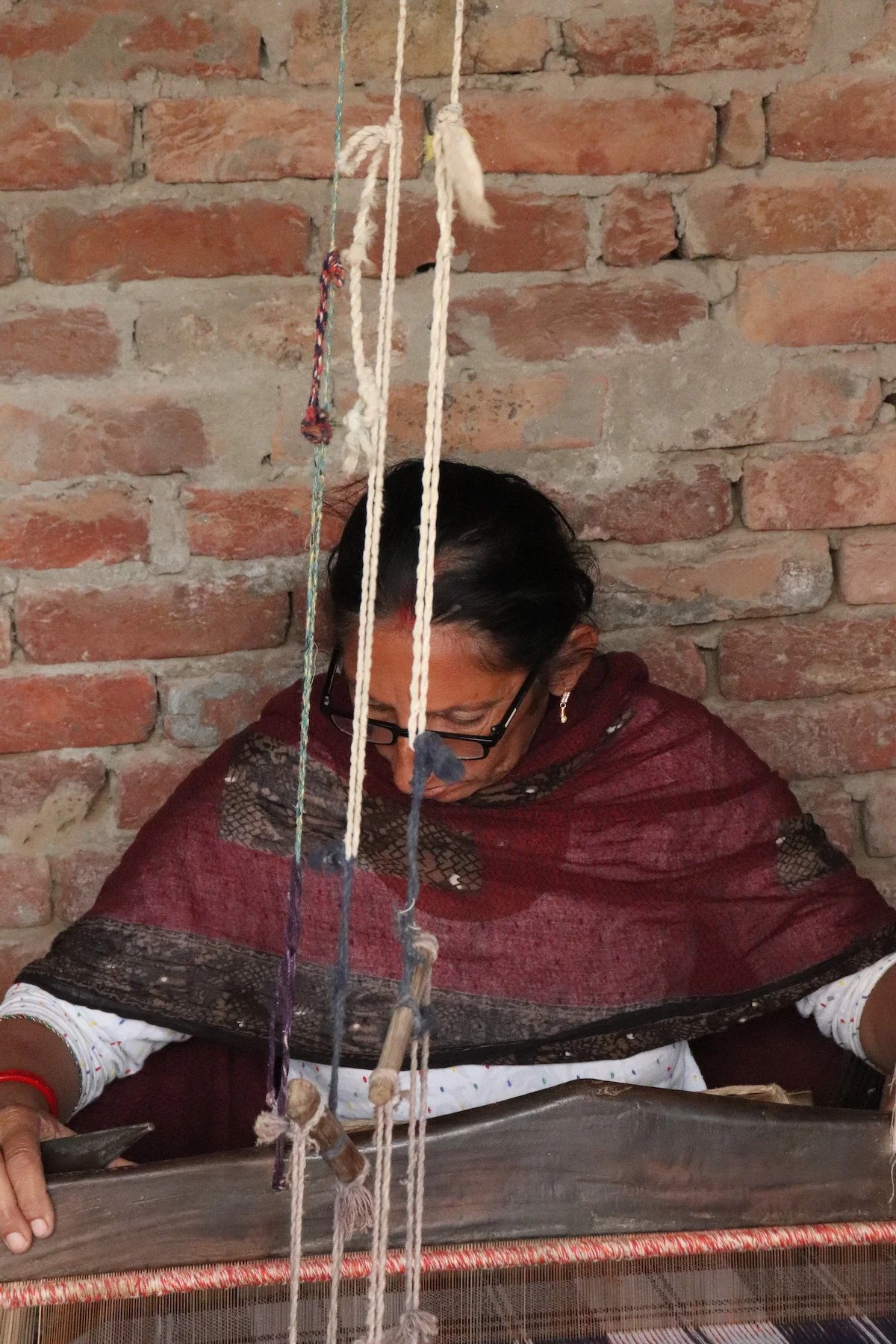
Weaving the language of ancient soil
In the land of five rivers—
Come along to tread lightly
Across the threads of tradition.
Discover the fables and fabrics—
Embroidered deep in the hearts
Of the people and the place.
Experience the material poetries of Punjab.
Our textile journey starts in Chandigarh, the dream of celebrated French architect Le Corbusier. Inspired by Prime Minister Nehru’s vision of a ‘new India’, Chandigarh represented the best of 20th century urban architecture and planning, heralding the arrival of Modernism!
A Passage to Punjab
Punjab is famed for its cultural impact on the popular imagination. This region’s everyday aesthetics is rooted in the agrarian and artisanal activities that support its rural economy. Our quest documents Punjab through a distinct lens to capture its pursuit of a self-sufficient model of circular production.
The residential facades are the most common proliferation of the Punjabi aesthetic. We see triangles and rhombuses sandwiched between structural boundaries of gates and metal grills, speaking a unique design language. Clotheslines appear here and there, bearing floral kameezes and dupattas that dry in the sun. We look at old photo frames and albums, seeing the reflection of a simpler time. Caught in the glass frames, the women smile, their jewellery scintillating and the clothes evoking colour through black-and-white reels. Studying the images is a route to the temporal history of this region.
The design language we observed was born from an immersive and experiential travel route. Punjab’s culture is rooted in the collective psyche of the community, creating meaning through motifs, patterns and layouts that may hold symbols and secrets to a people’s history.
Rituals and Reiterations
Craft knowledge is borrowed from the conversations of women and passed down from one generation to another in the form of memory. Meaningful engagements bring us closer to a people’s tradition, reminding us of tactile practices inherited through word of mouth. The material history passed down through memory is like spoken language, preserved simply by the human tendency to repeat.
It is the same for food culture and other everyday rituals that have evolved over centuries of human performativity. A floral butti or the curve of a valliyan are design legacies inherited from the soil. Generations before us interacted closely with their natural surroundings, conserved an intimate human-nature relationship, and grew food by deducing the alchemy of the elements.
This is why a road trip is an ideal format for ethnographic travel. We get ample opportunities to pause as we wish, to step down and take a short walk down the alleys that look interesting in the middle of a town, or watch farmers at work. Pauses, like the gaps between stitches or between the warp and the weft, allow for ideas to bear fruit. Pauses and empty sites define the anatomy of craft-making. They make stories, possible; and travel, immersive.
First Stop: Reaching Ropar For Phulkari
The ‘modernity’ of urban Chandigarh begins to fade as we catch the Ropar–Chandigarh Road to NH 5, and ride onwards to Rupnagar. The air in rural Punjab smells of green fields dotted with turbaned men and women in colourful clothes tending to their farms and cattle. In the bucolic vistas of Boor Majra, a pind (village) outside of Chandigarh, we arrive to meet and interact with the women of a Phulkari Collective, led by Sukhdev Kaur.
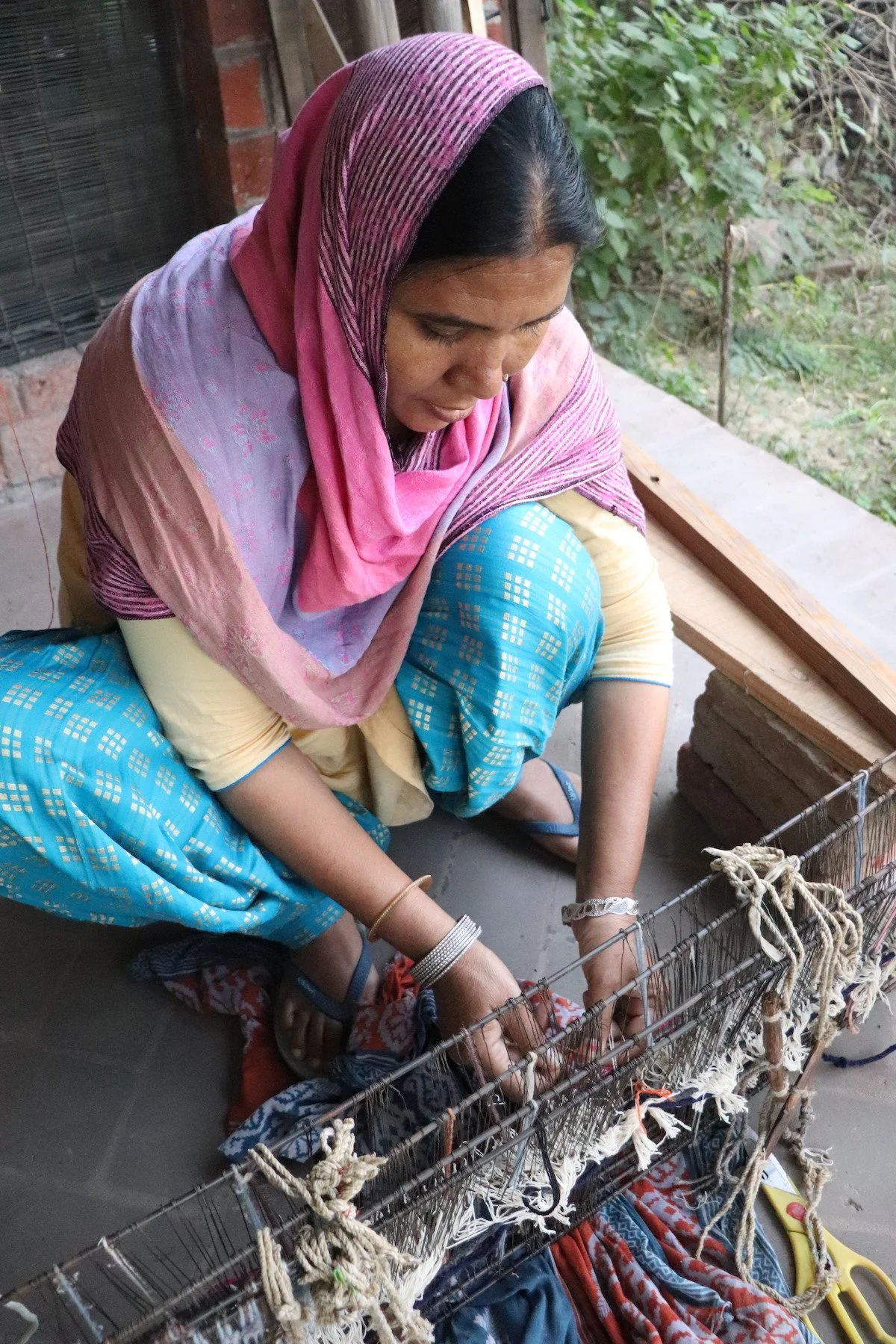
This self-help group of housewives gathers after sending their children to school while their husbands are off to farms. They work on the long stitch geometrical embroidery on silk or cotton base fabric till lunch, utilizing their spare time to create a side income. The ladies exhibit exceptional artistry as they devise the vibrant palette of a phulkari dupatta amidst conversations, songs and laughter. Sukhdev Kaur’s effort is indeed a testament to how Punjab’s textiles have become a canvas for the spirit and resilience of women. This work-model functions without any organizational force but as a homegrown and organic pursuit of craft-making.
Around 3 hours away from the small-town Rupnagar’s dusty lanes, filled with freshly minted cement houses and peach walls, is Sangrur.
Second Stop: Sojourning to Sangrur For Khes & Durrie
Deep into the countryside, bibis are curious and amused at us, misty-eyed city-dwellers, as we take in the quiet and beauty of our surroundings.
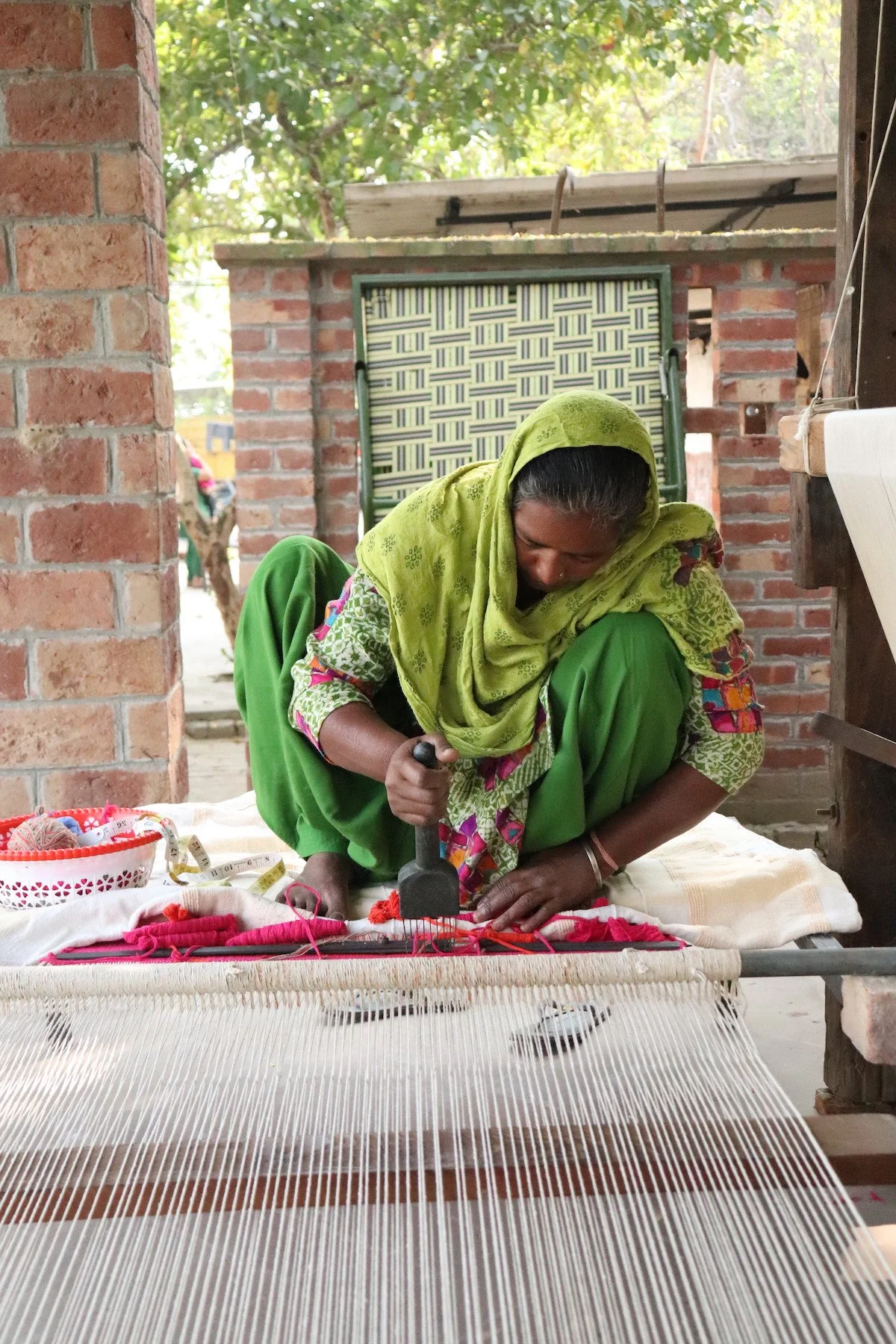
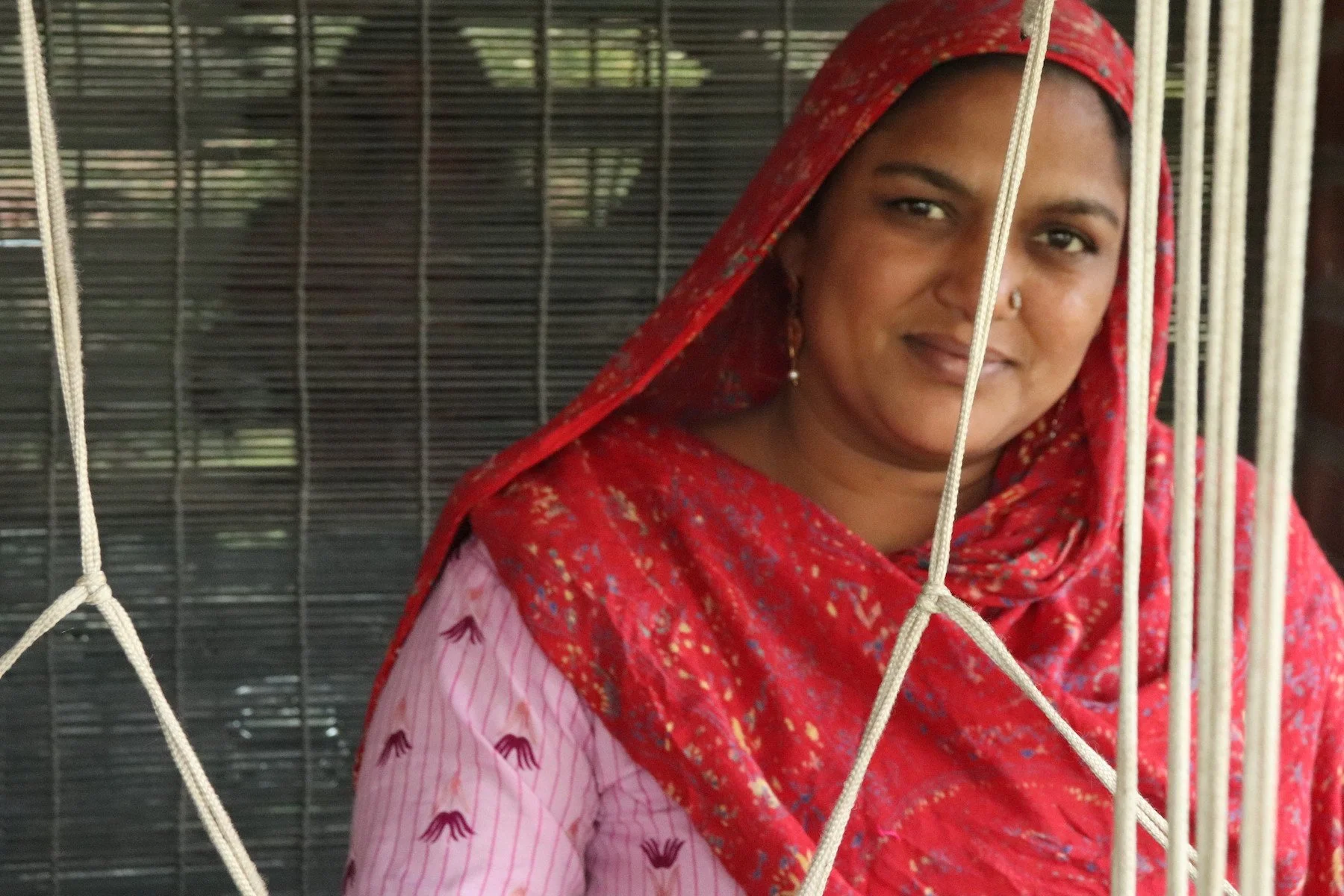
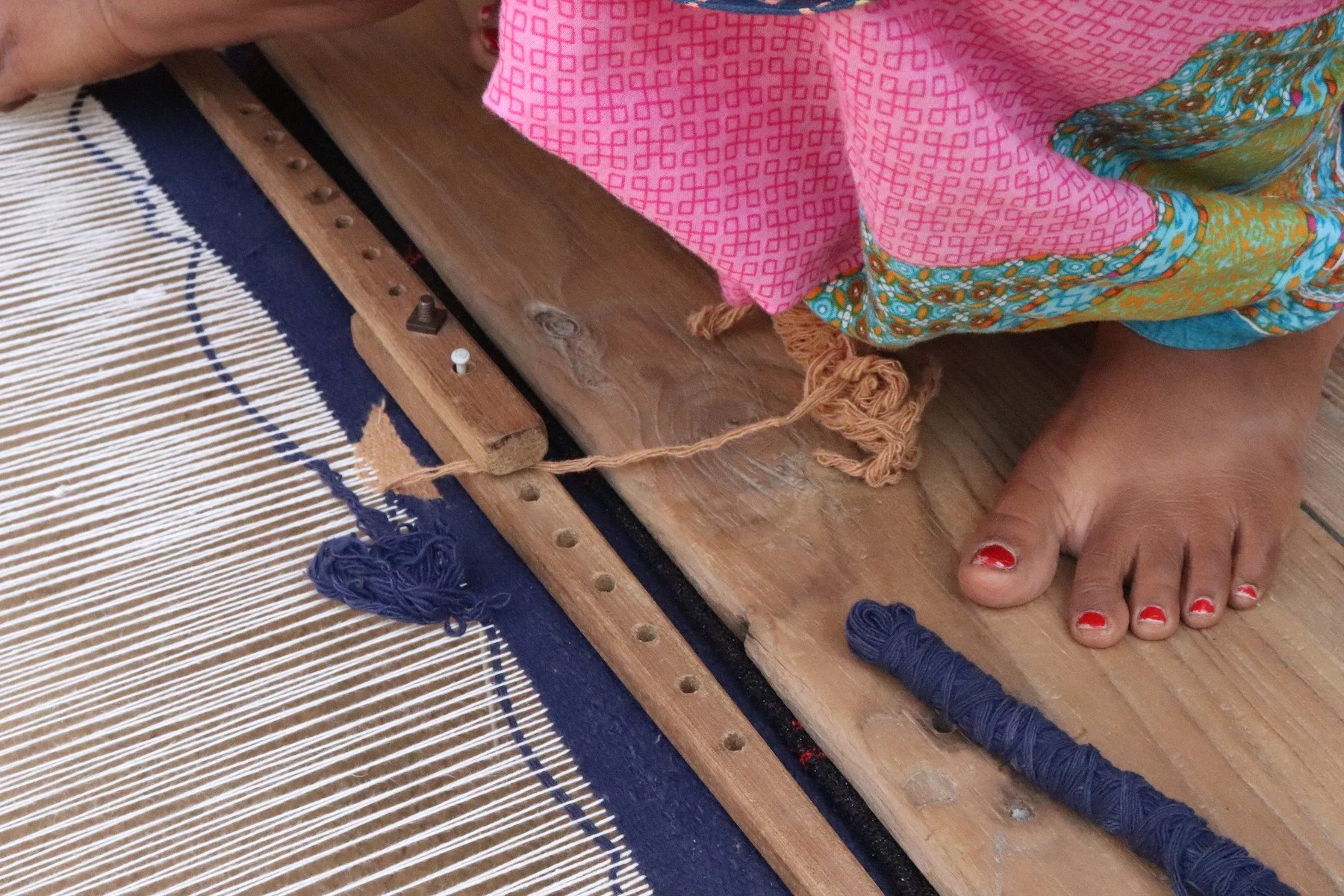
At Sangrur, we visit Balwaar, a craft organisation dedicated to reviving khes and durrie. Our host and founder, artist Kiran Grewal has created a platform for rural women to merge traditional techniques with modernised aesthetics for a global market in her homely atelier. Balwaar’s work is an extension of the place and its people, their identity and craft inheritance. It provides local women with an opportunity to become financially independent and create an alternative source of income for families depending solely on agriculture.
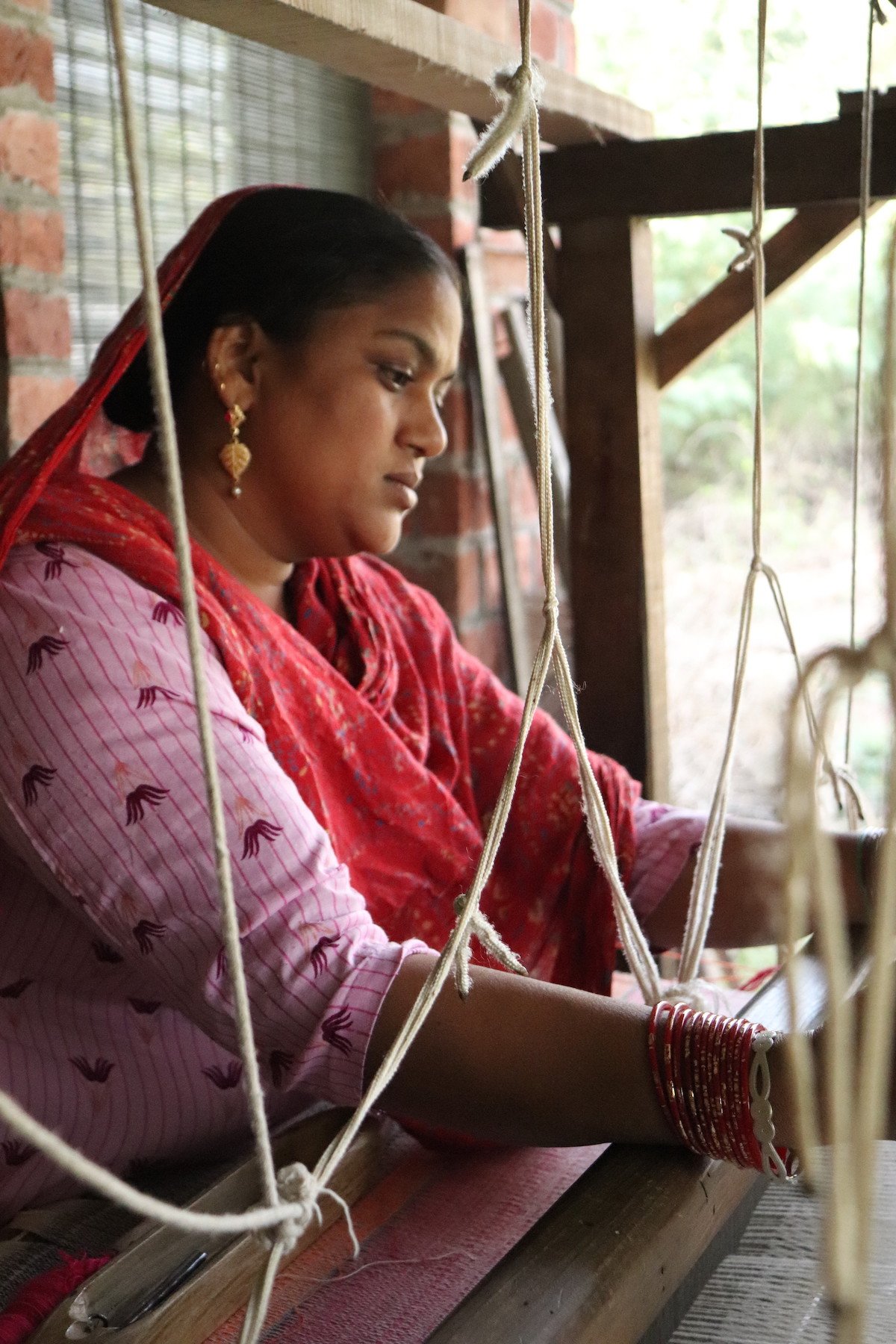
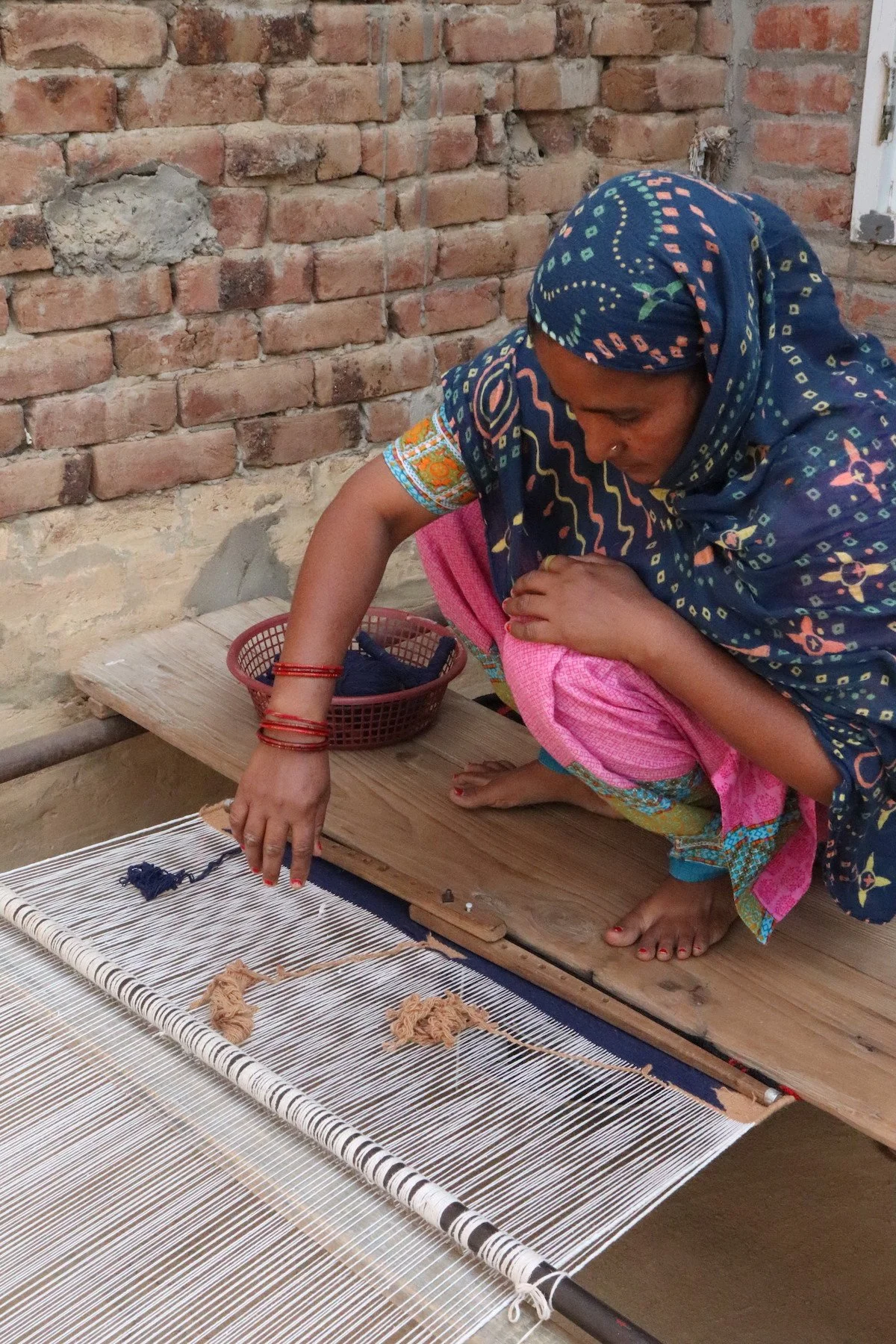
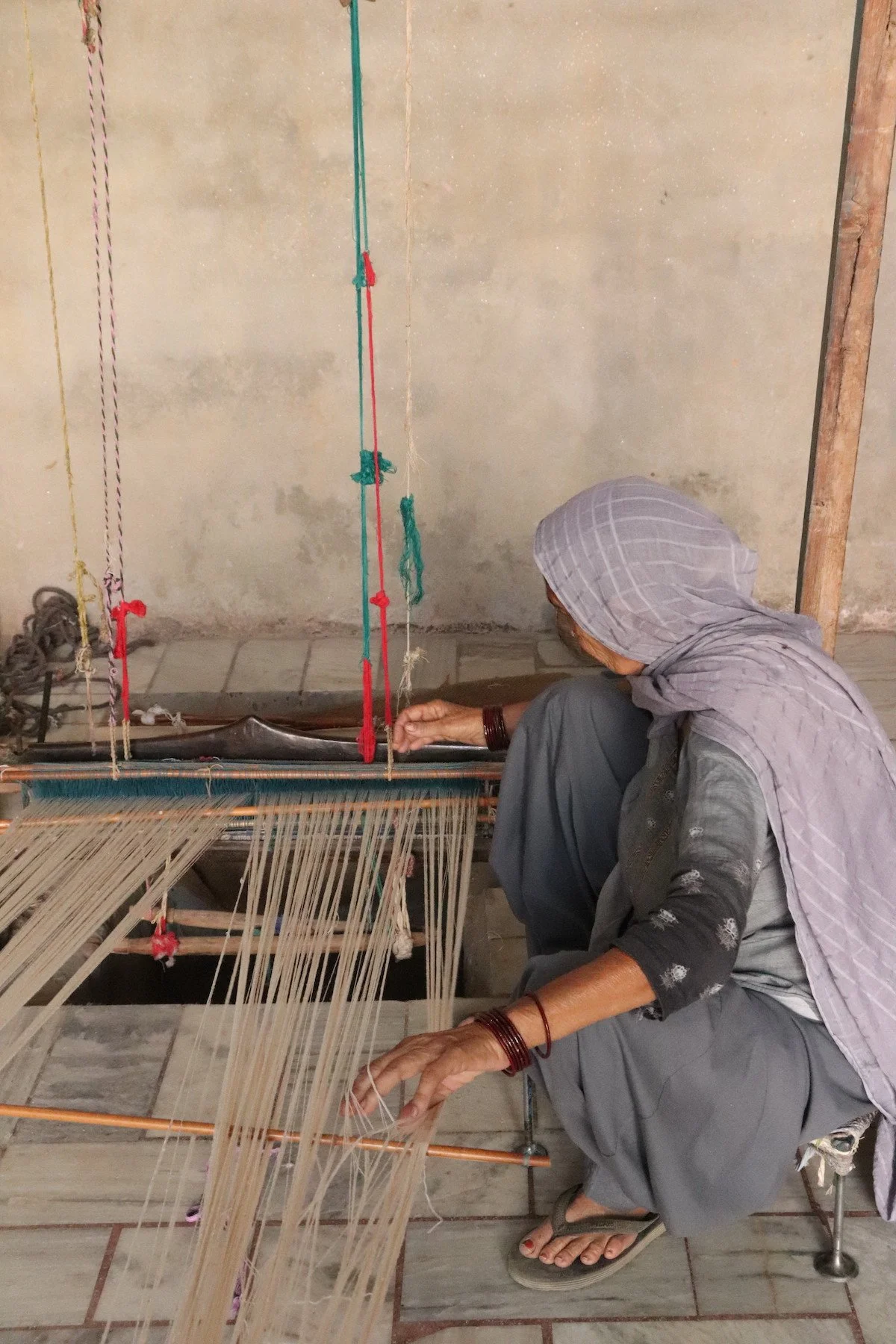
Khes, a ubiquitous textile tradition in Punjabi households, is traditionally woven by women during their free time. The thicker varieties are drape shawls during winter, while the thinner kinds are used as bed coverings. Their traditional geometric or grid style patterns are woven on a pit loom. The flat bed panja dhurries are handwoven to be used as floor rugs or bedspreads with triangle or chequered patterns. In olden times, khes and dhurrie used to be included in the wedding trousseaus for daughters. Although this customary practice is now rare, women of Balwar keep this art form alive. Mesmerized—we witness the deft hands and confident smiles behind Punjab’s weaving heritage.
Near Gangsar Jaito is the historical city of Bhatinda, famed for the Qila Mubarak, the oldest surviving fort in India from 1100 to 1200 AD.
Third Stop: Journey through Jaitu for Organic fabric
Qila Mubarak’s bricks can be traced back to the time of Emperor Kanishka of the Kushan dynasty. It is popularly known as the place where Razia Sultan, the first woman to control the Delhi throne, was incarcerated after her defeat. An hour away from this archaeological monument is Jaitu, where we visit Trinjan, an initiative of Kheti Virasat Mission (KVT) to empower rural livelihoods through traditional skills. Founded in 2005, KVT is reviving the weaving culture in Punjab that was waning after the liberalization reforms of the 90s.
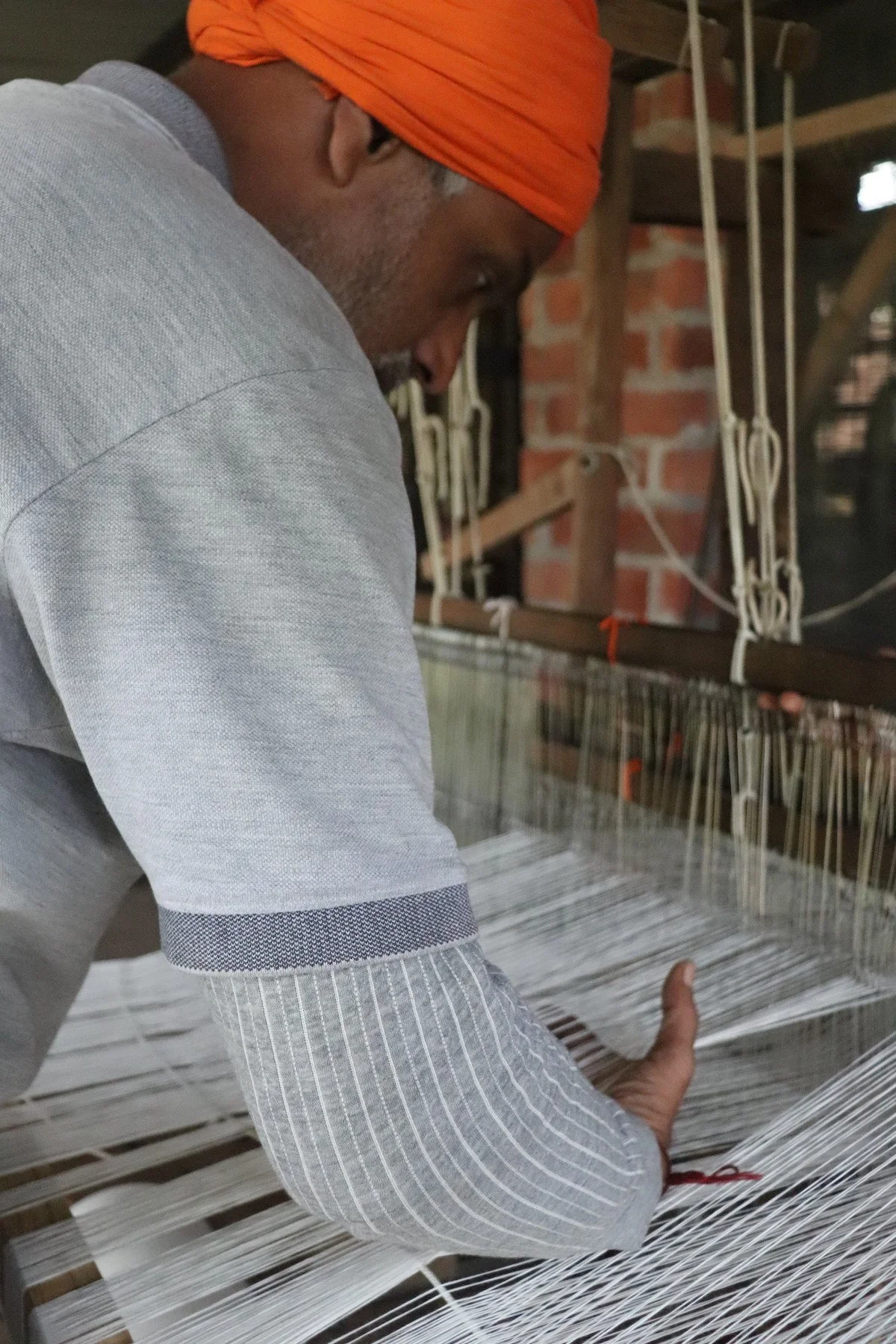
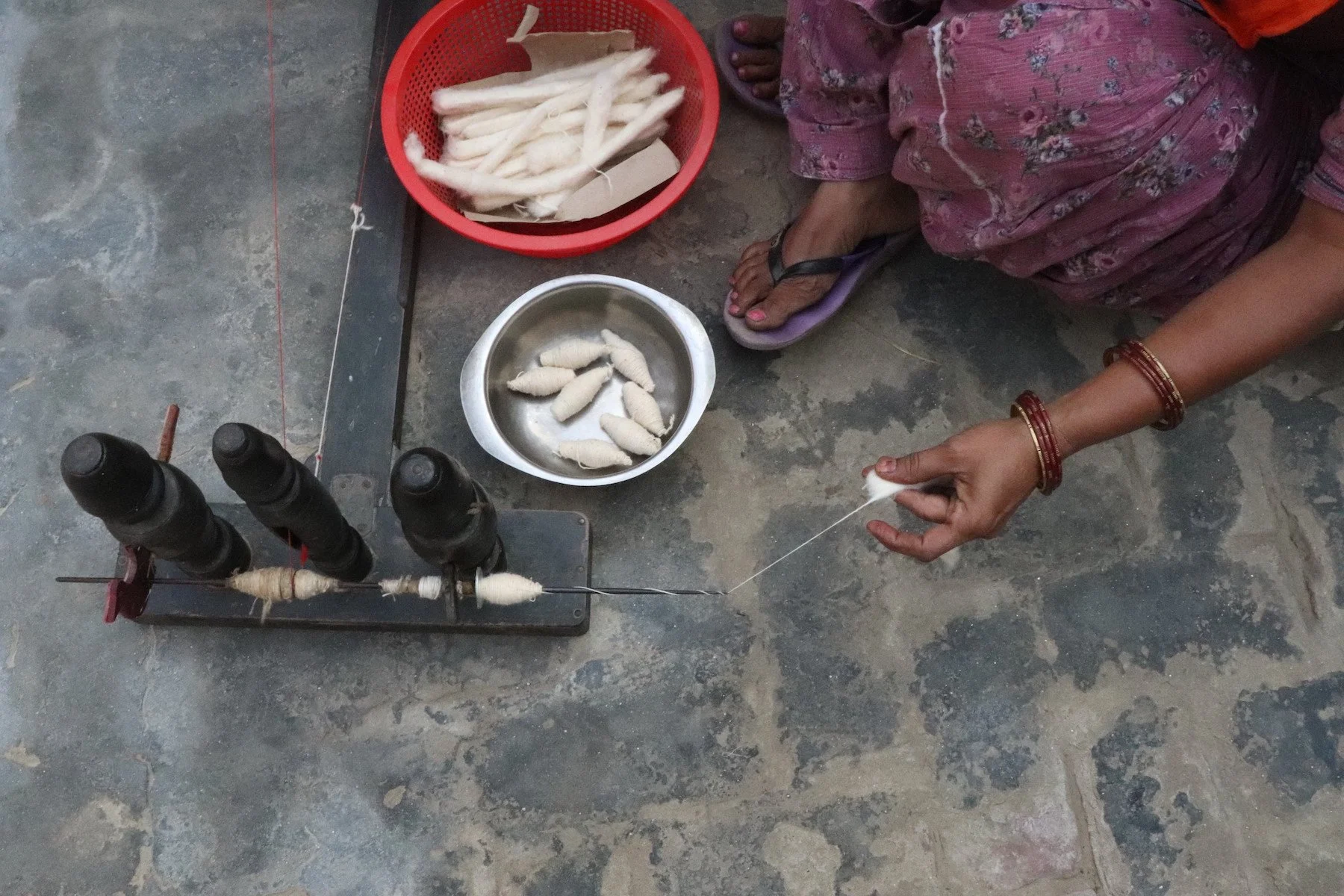
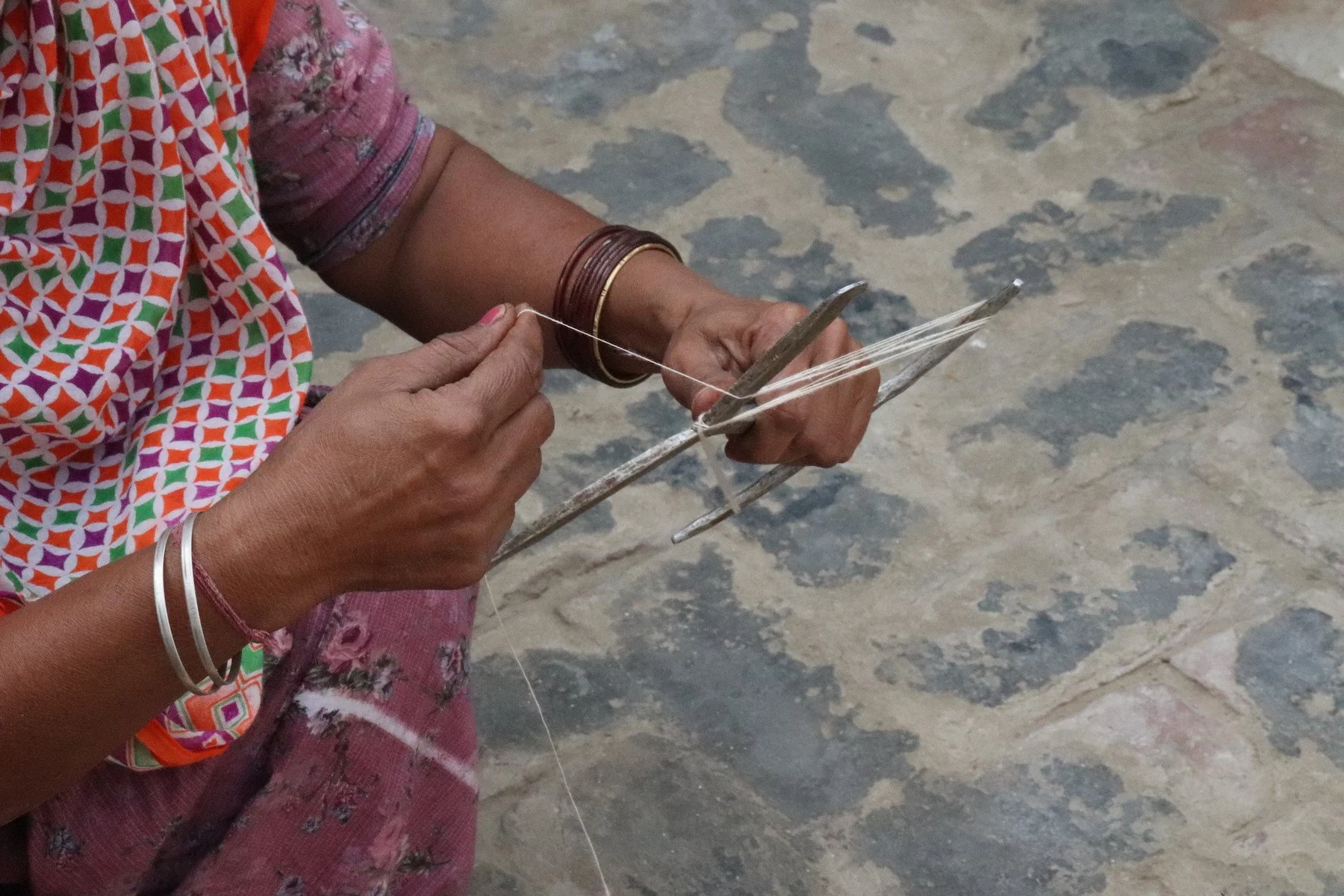
Trinjan has equipped every home in the village with a loom and facilitates a sustainable textile production method straight from the farm to fashion-ready fabric. Trinjan enables the rural artisans in Jaitu to earn a livelihood away from the perils of industrialization. Their vision harkens to the simplicity of a rural economy which is self-sufficient, circular and sustainable.
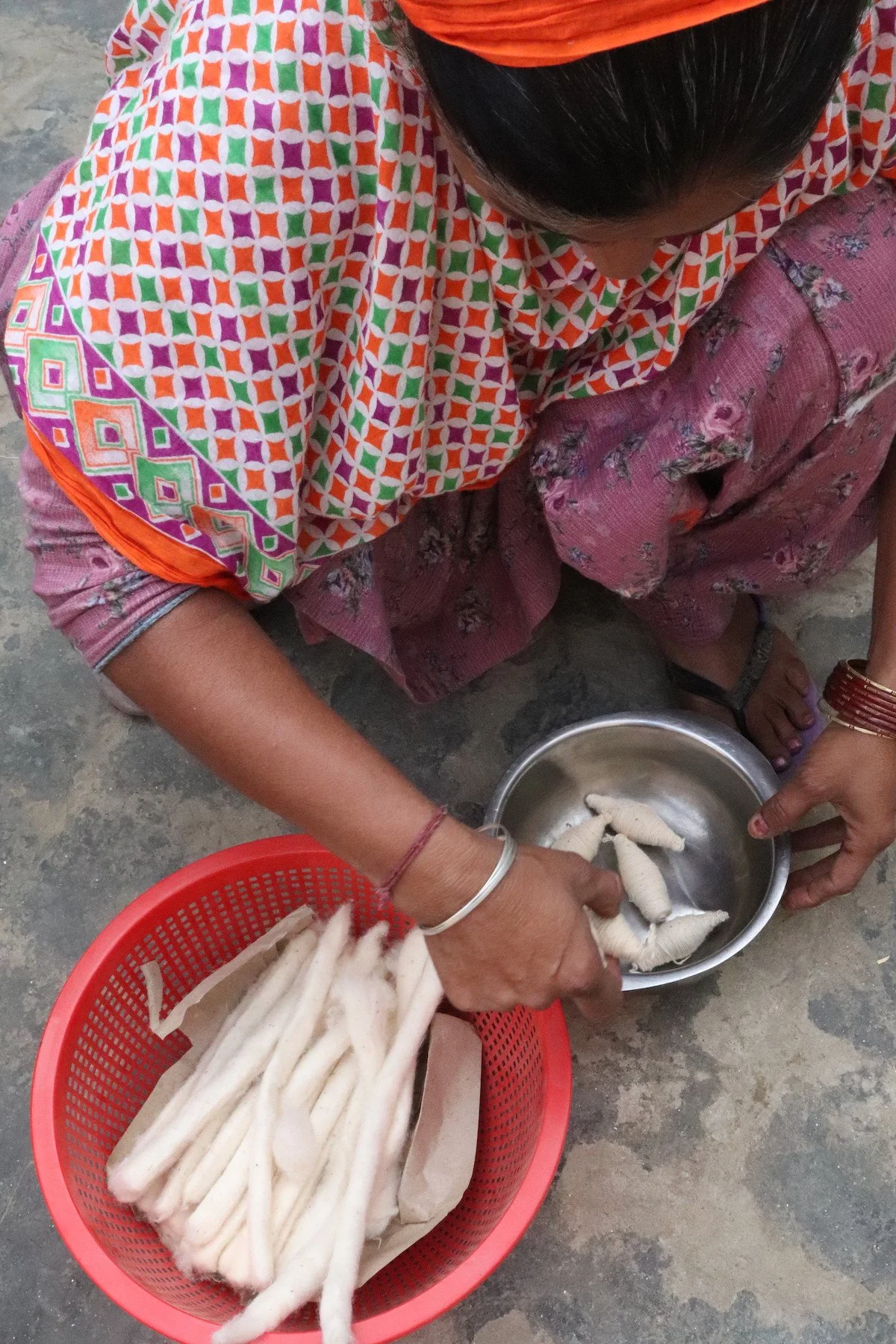
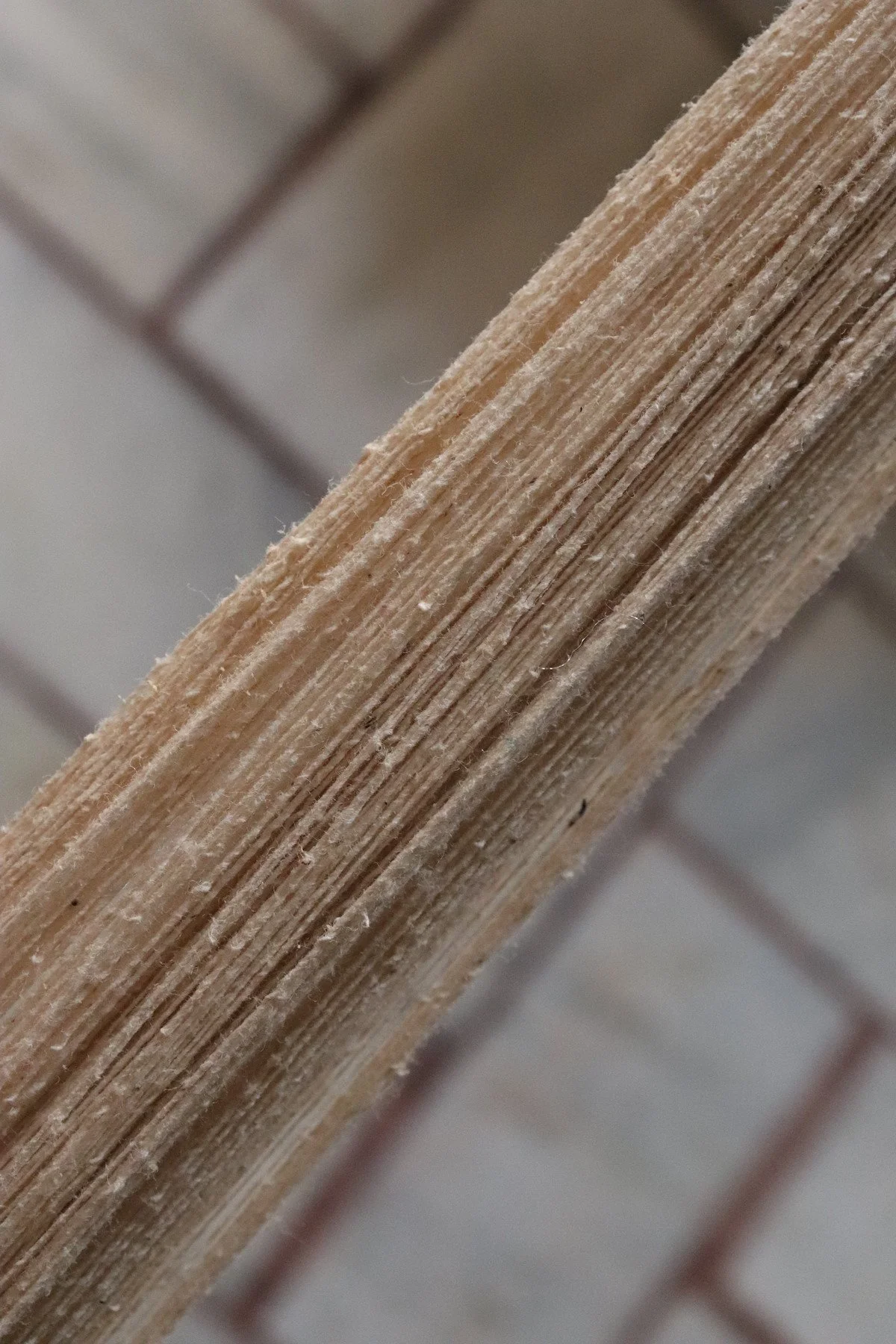
With Trinjan, women are able to initiate a glorious return of Punjab’s traditional arts through their skills in weaving, spinning and knitting. We see the women make yards of plain, undyed fabric that speak the language of textures. We hold a piece of their handiwork and breathe in the scent of the soil. Their textiles carry the imprints of a community and ensure the continuity of the exquisite textile heritage of rural Punjab.
Post-script
To bridge the gap between the traditional and the contemporary, the inherited and the innovated, we have designed our first Punjab Residency. A community of designers, textile practitioners, artisans, ethnographers and curators can explore the dynamic inspirations of rural Punjab, diving into the infinite possibilities of innovation and design thinking of this region. Our residencies offer designers and creatives from all over the world the opportunity to source fabric directly from local artisans.