
Visions of Vijayanagara
‘Once, we lived in a prosperous empire,
Where the city oozed riches—pearls, diamonds and rubies
Like ordinary flea market paraphernalia.
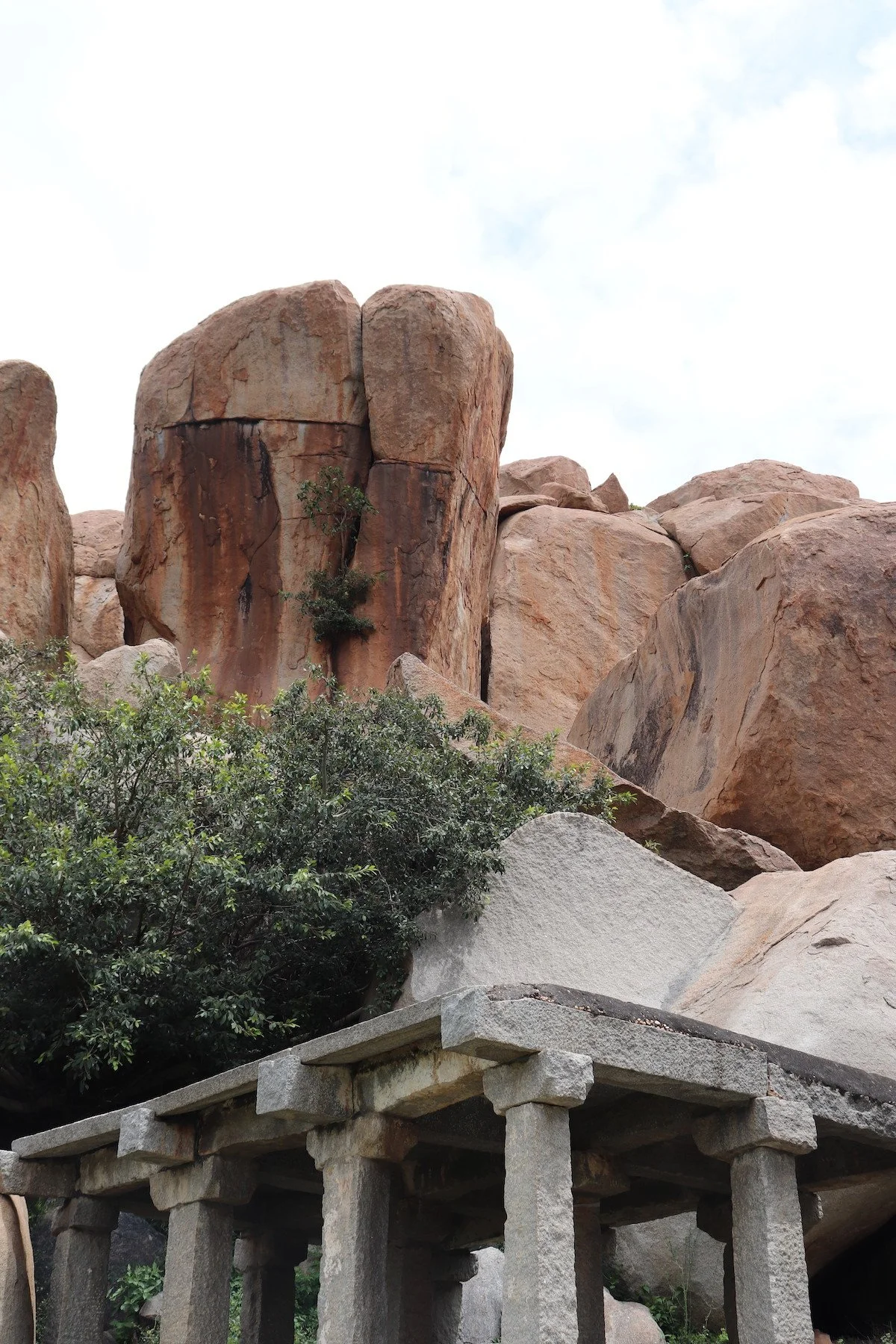
A majestic monolithic mountain on one side,
Where the Goddess meditated
A river on the other side, always flowed.
The sun shone over our city forever glorious.
Our kingdom was formidable,
But all glory is transient.’
Located on the southern bank of the Tungabhadra River, Hampi was once the capital of the Vijayanagara kingdom, attracting traders of faraway lands like Persia and Portugal. This temple town derives its name from ‘Pampa’, a local folk deity who sat in meditation in pursuit of marriage to Lord Shiva. On the other side of the river lies the village of Anegundi or ‘Kishkindha’, the birthplace of Hanuman, the monkey god.
Glory and Grandeur
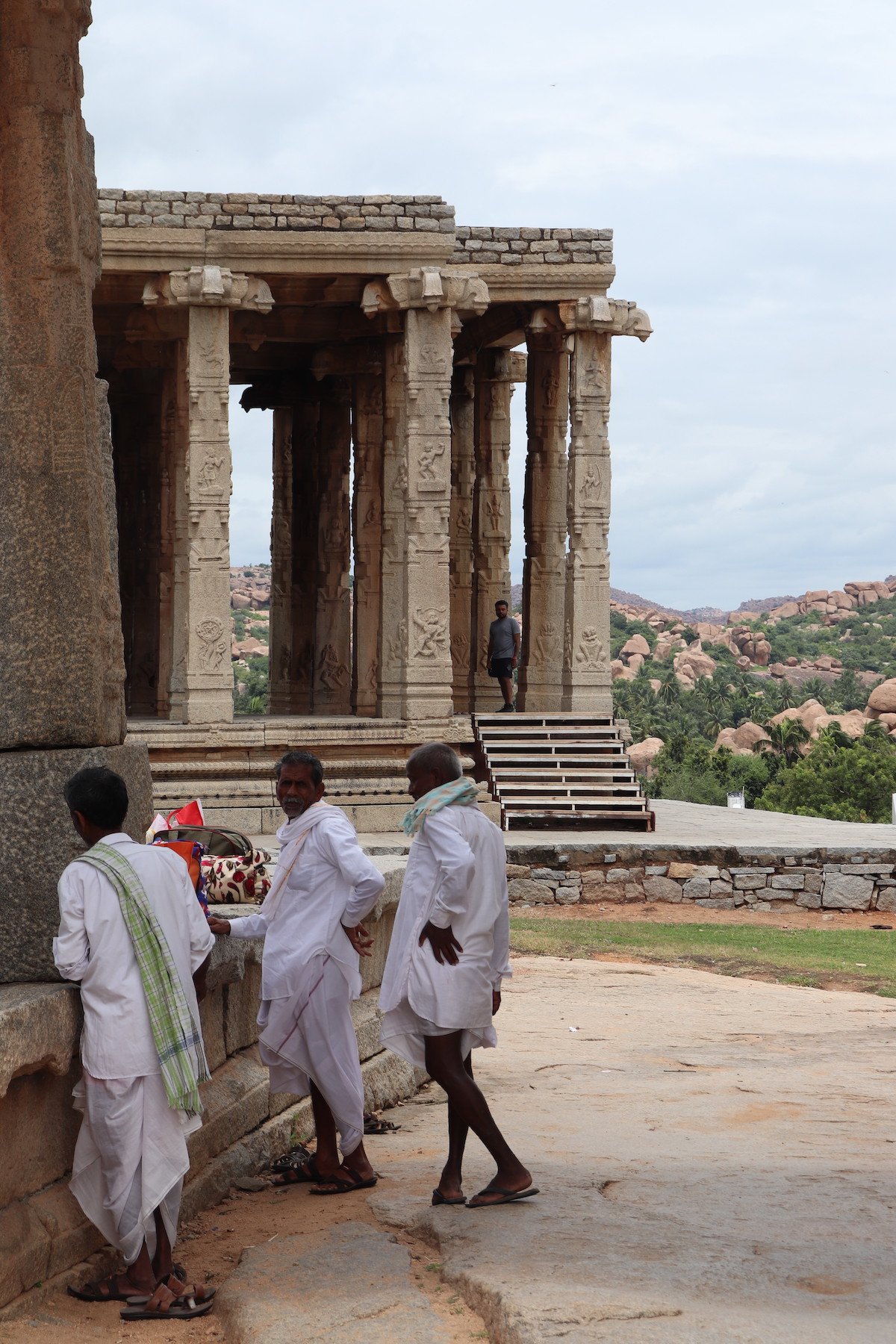
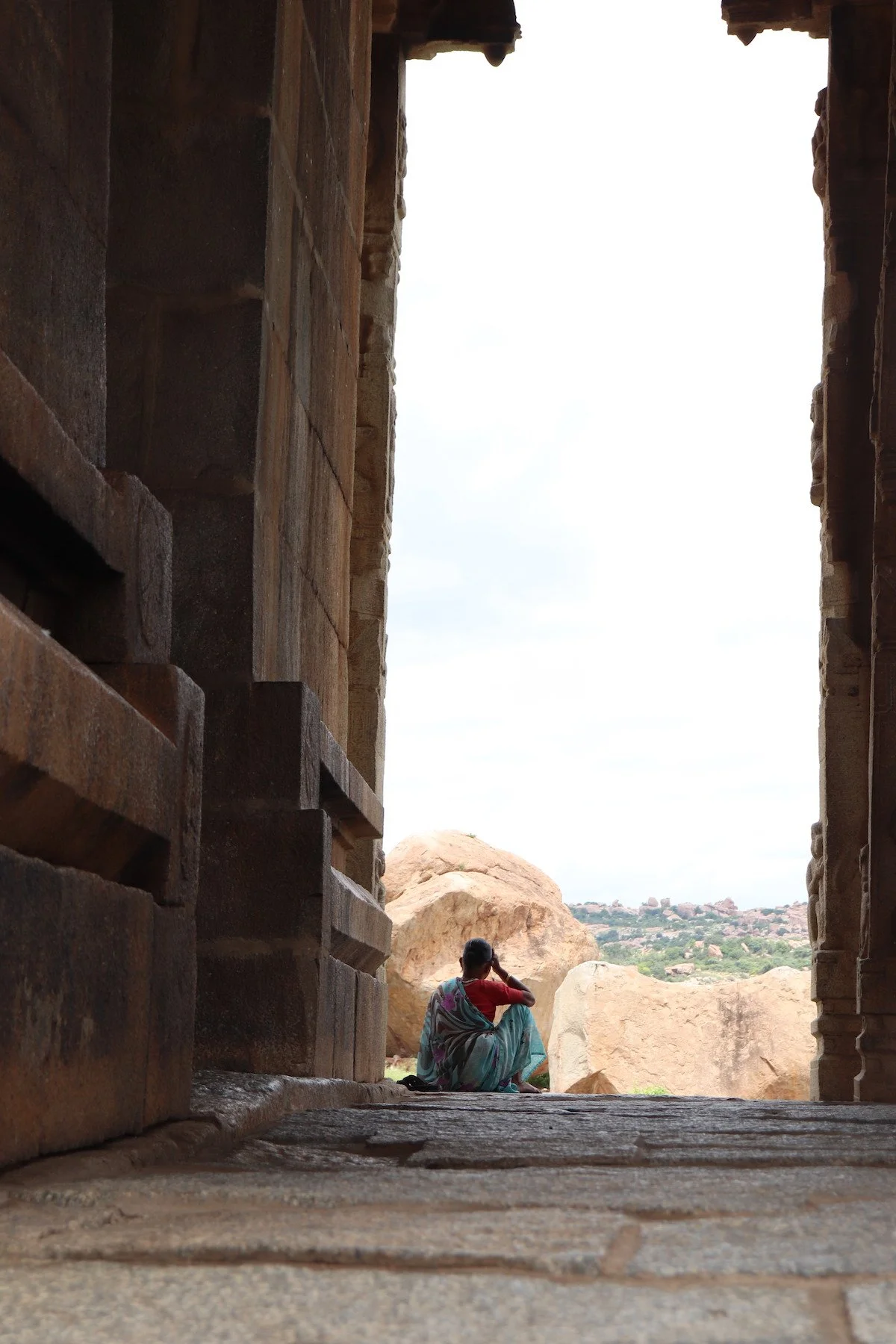
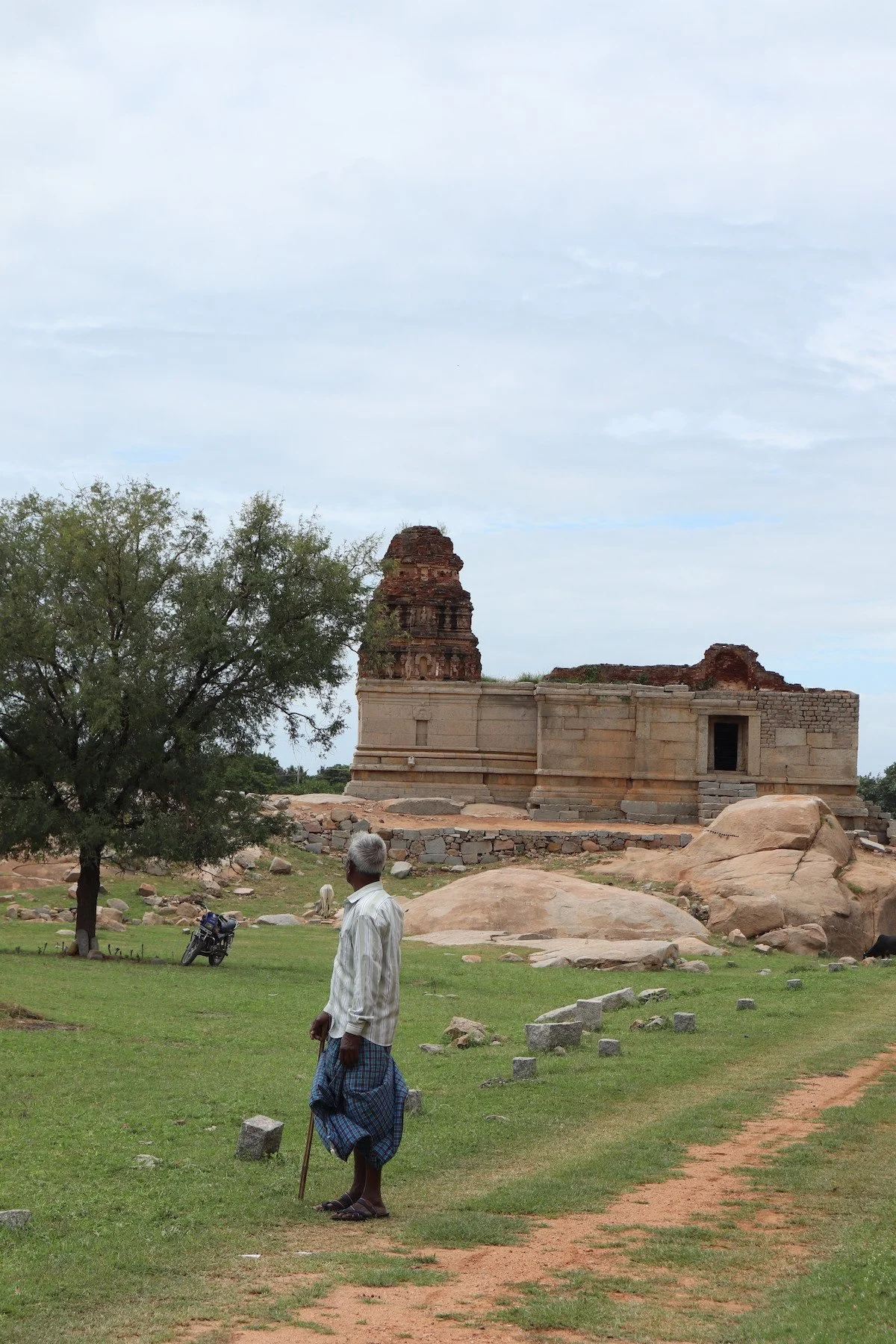
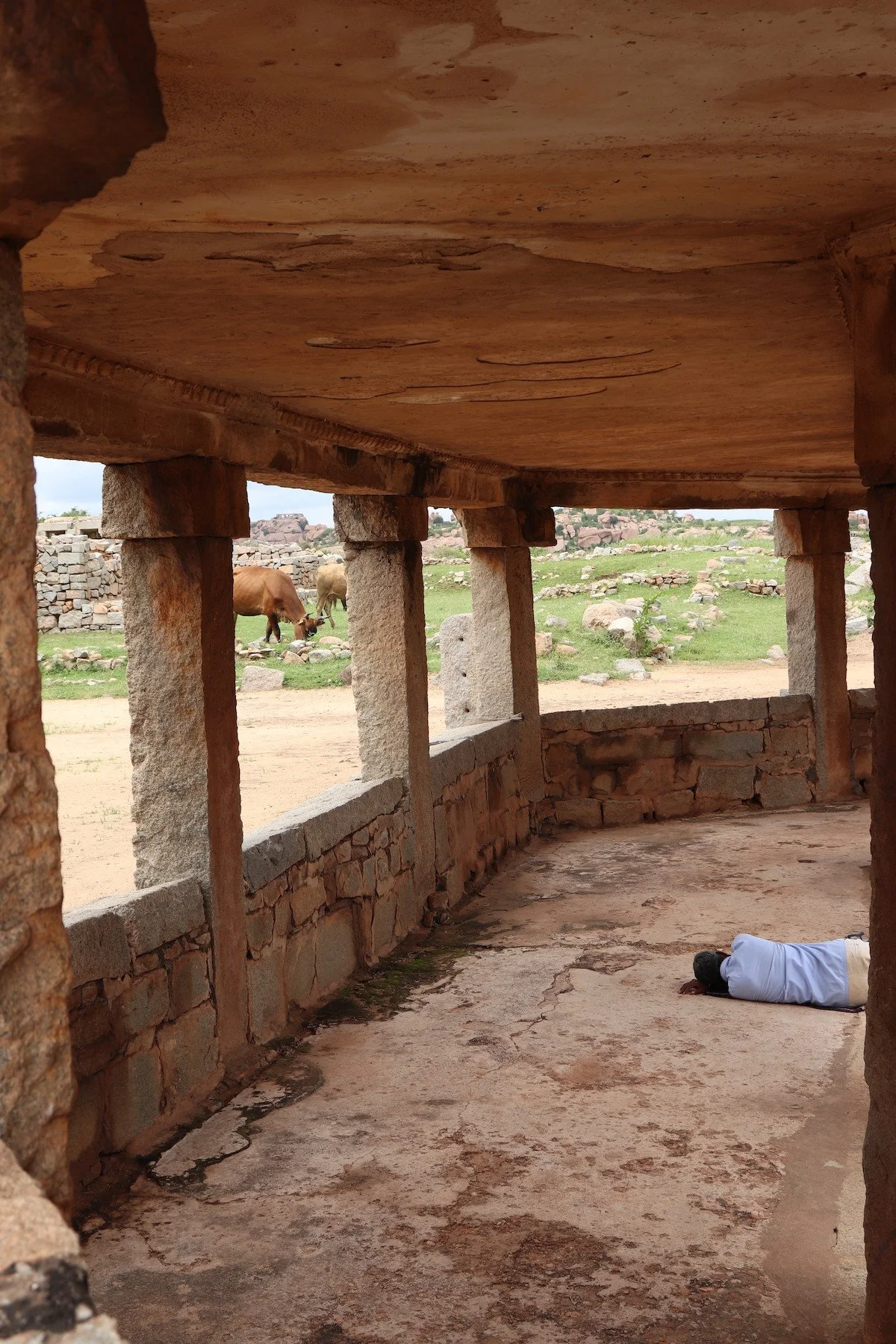
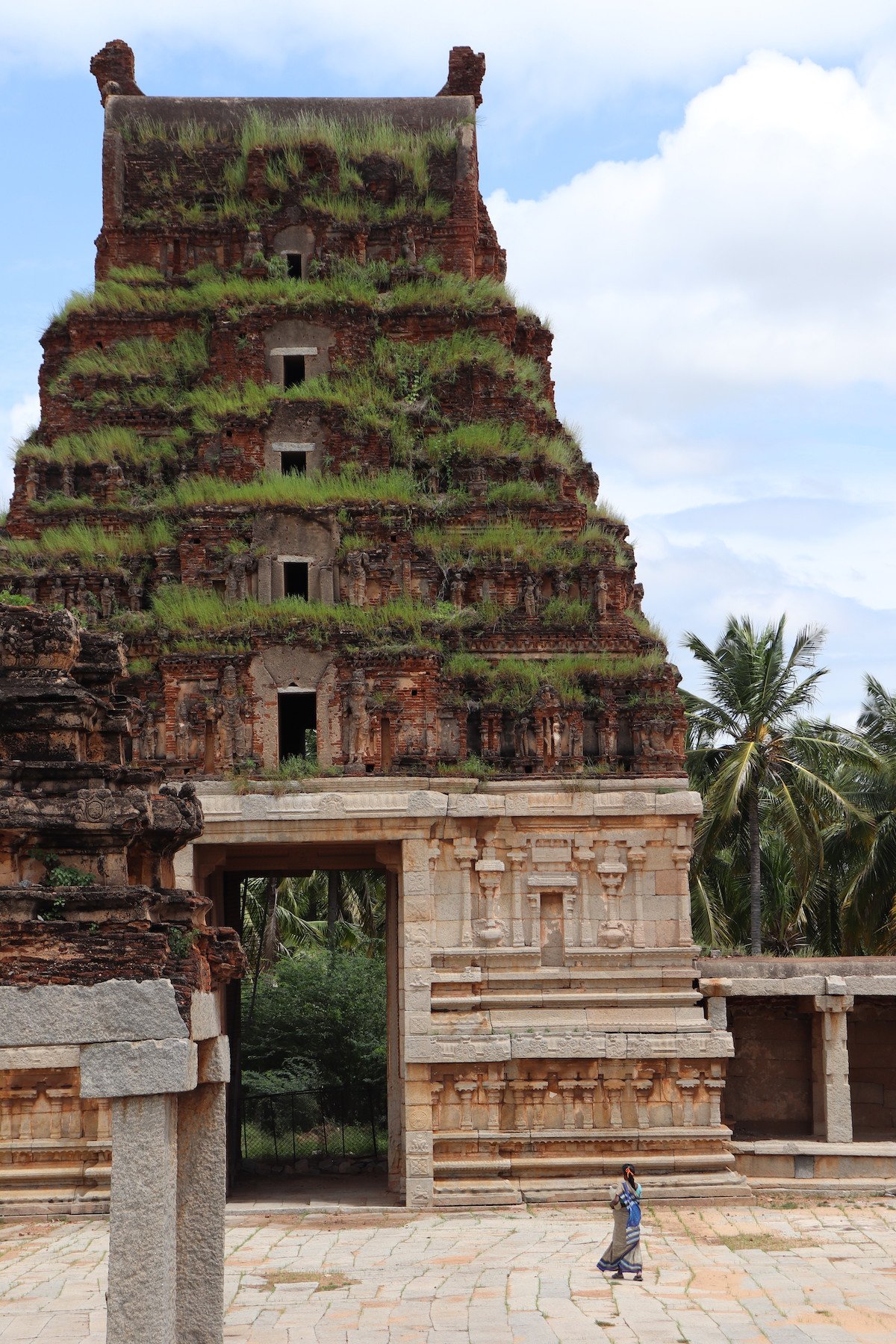
Today, walking around Hampi is like travelling through a time capsule. Amidst granite mountains, this brick and limestone town boasts the iconic stone chariot. There is a tangible presence of the great Vijayanagara of yore alongside the vast expanse of paddy, coconut and banana fields. One can feel the notes of history in every step and every alley of this town, trapped in time.
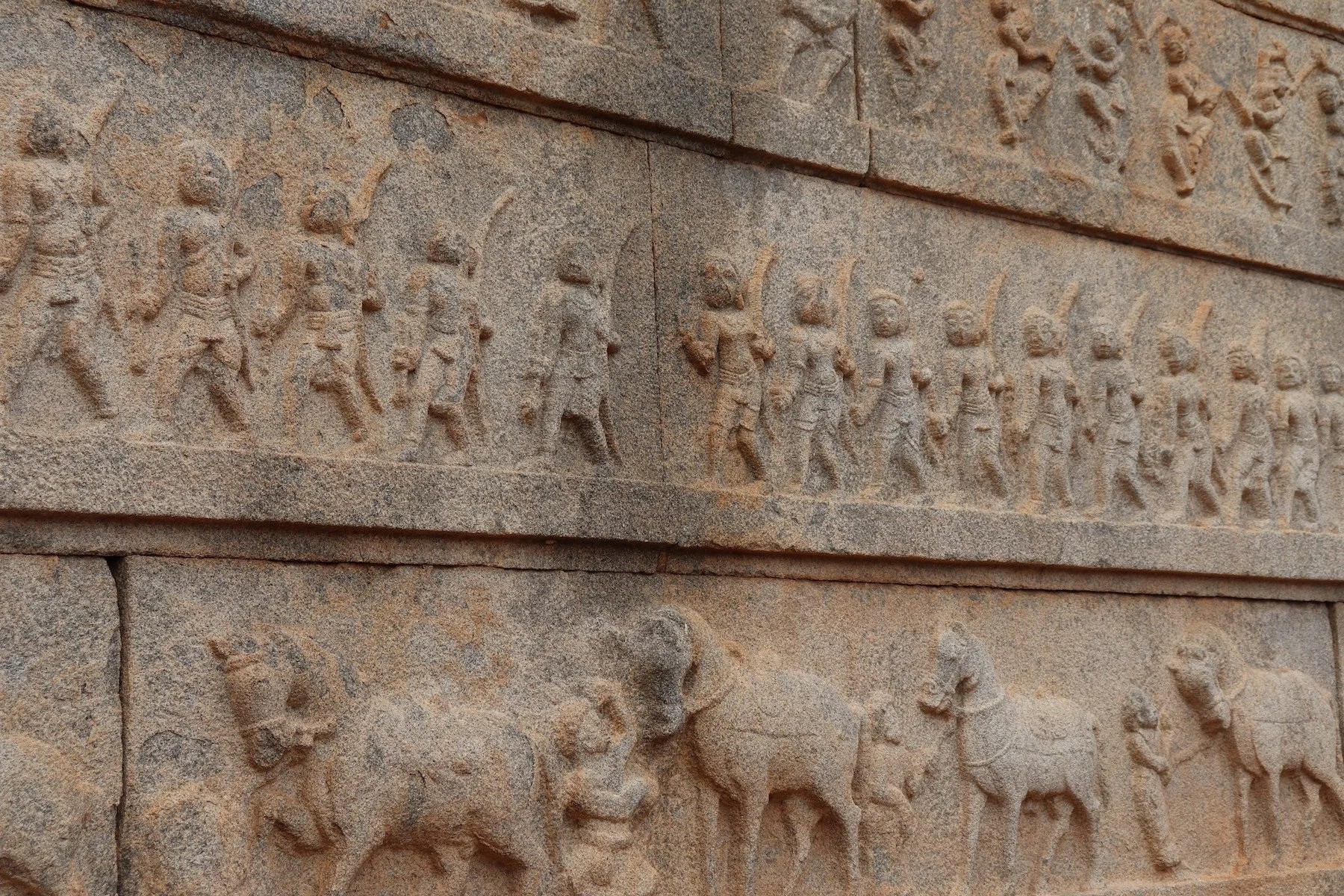
Stone engravings in Hampi depict Turkish, Persian, Arab Chinese, and European traders affirming its status as a robust commercial bastion. In the 14th century, gold and diamond were sold in the Hampi bazaar—another facet of its mercantile prowess. Once, its bustling streets were compared to Rome but have now evolved into abandoned ruins.
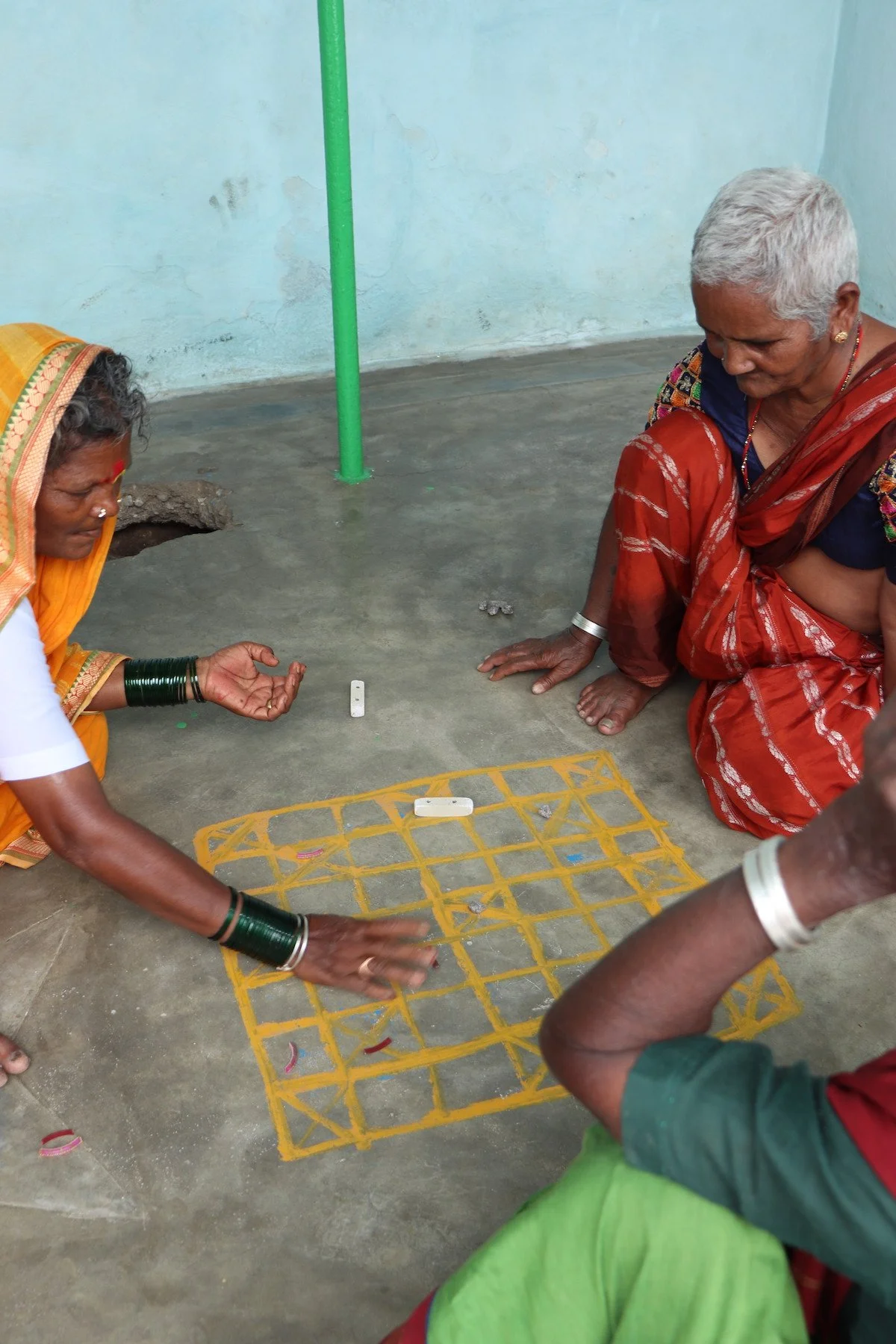
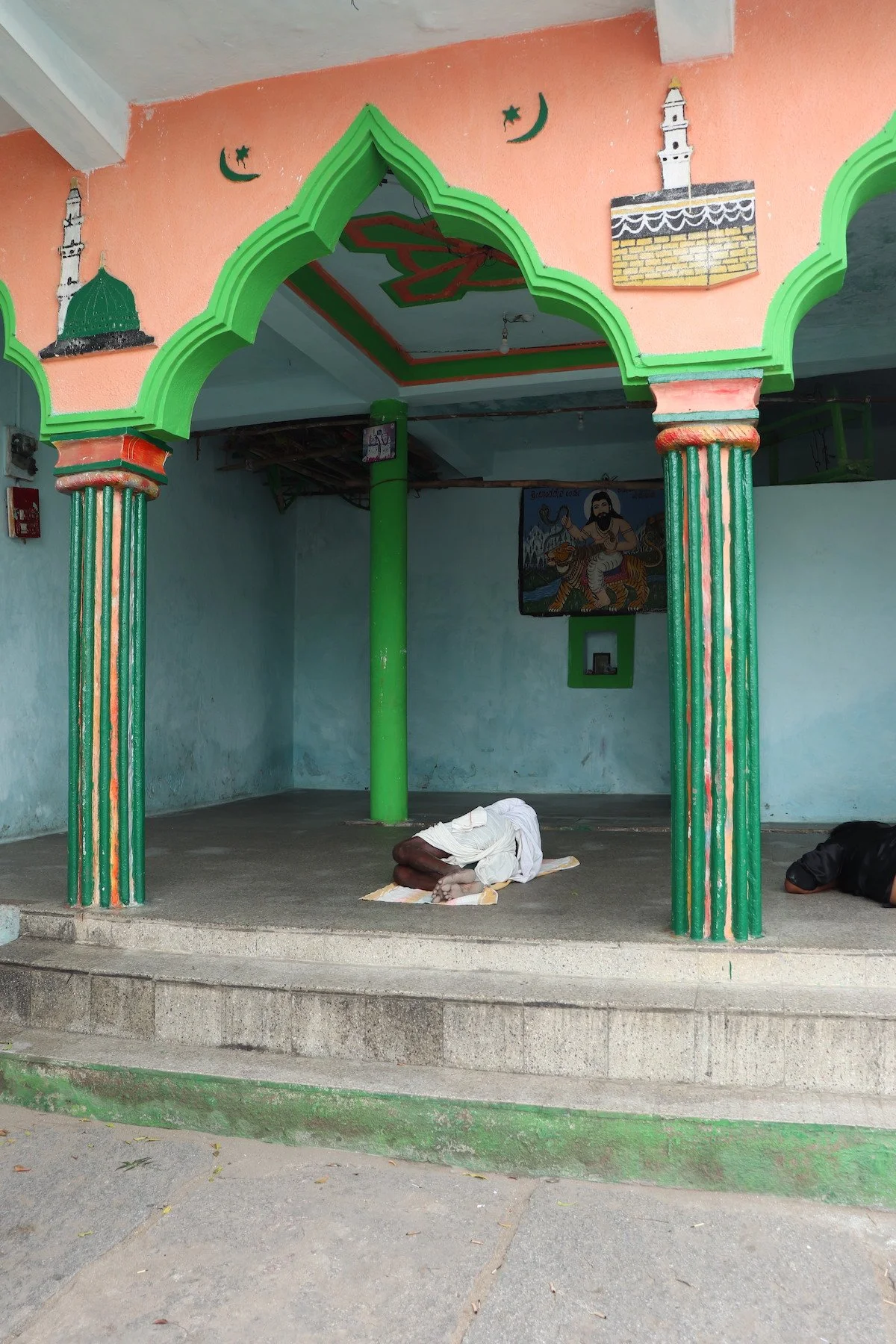
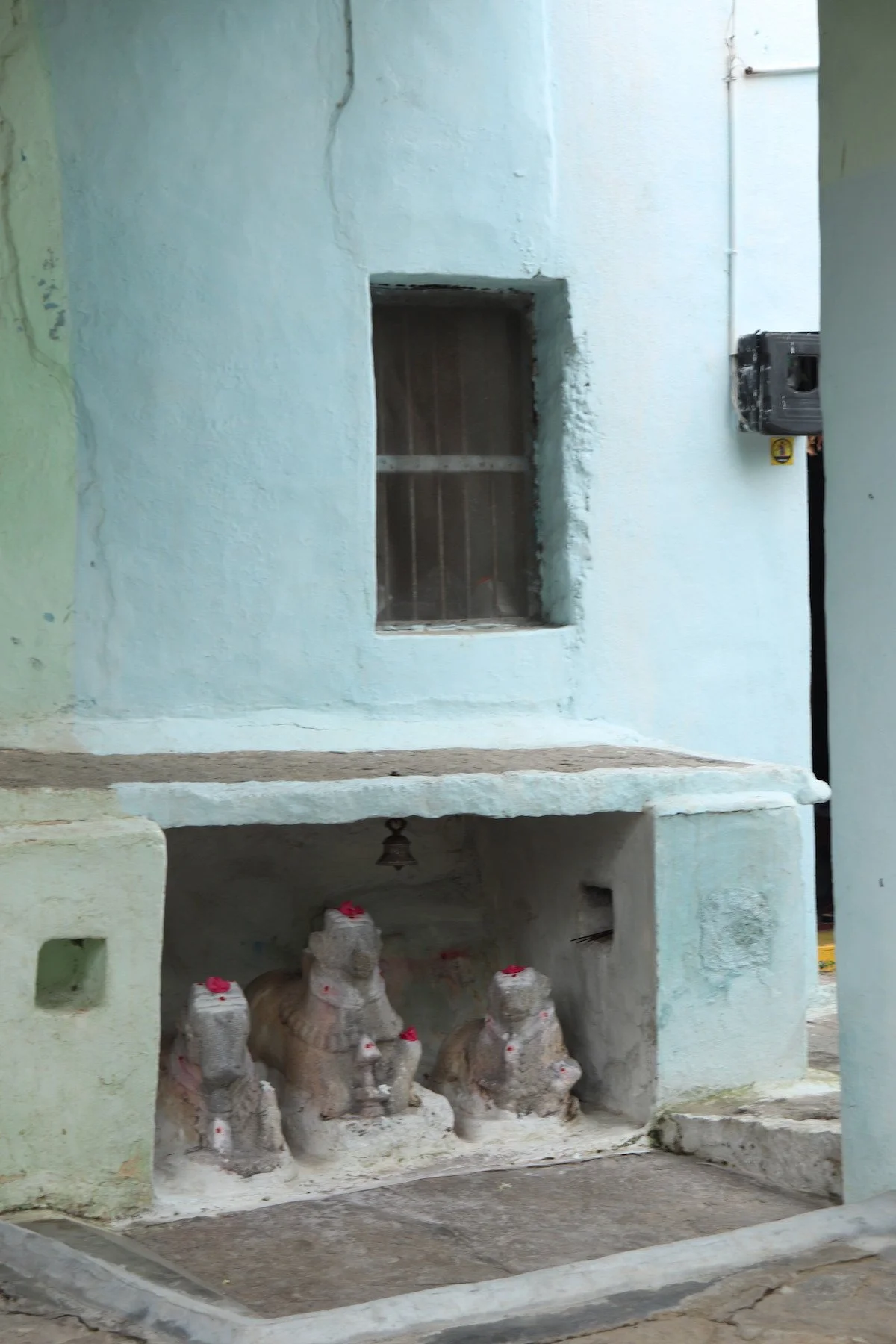
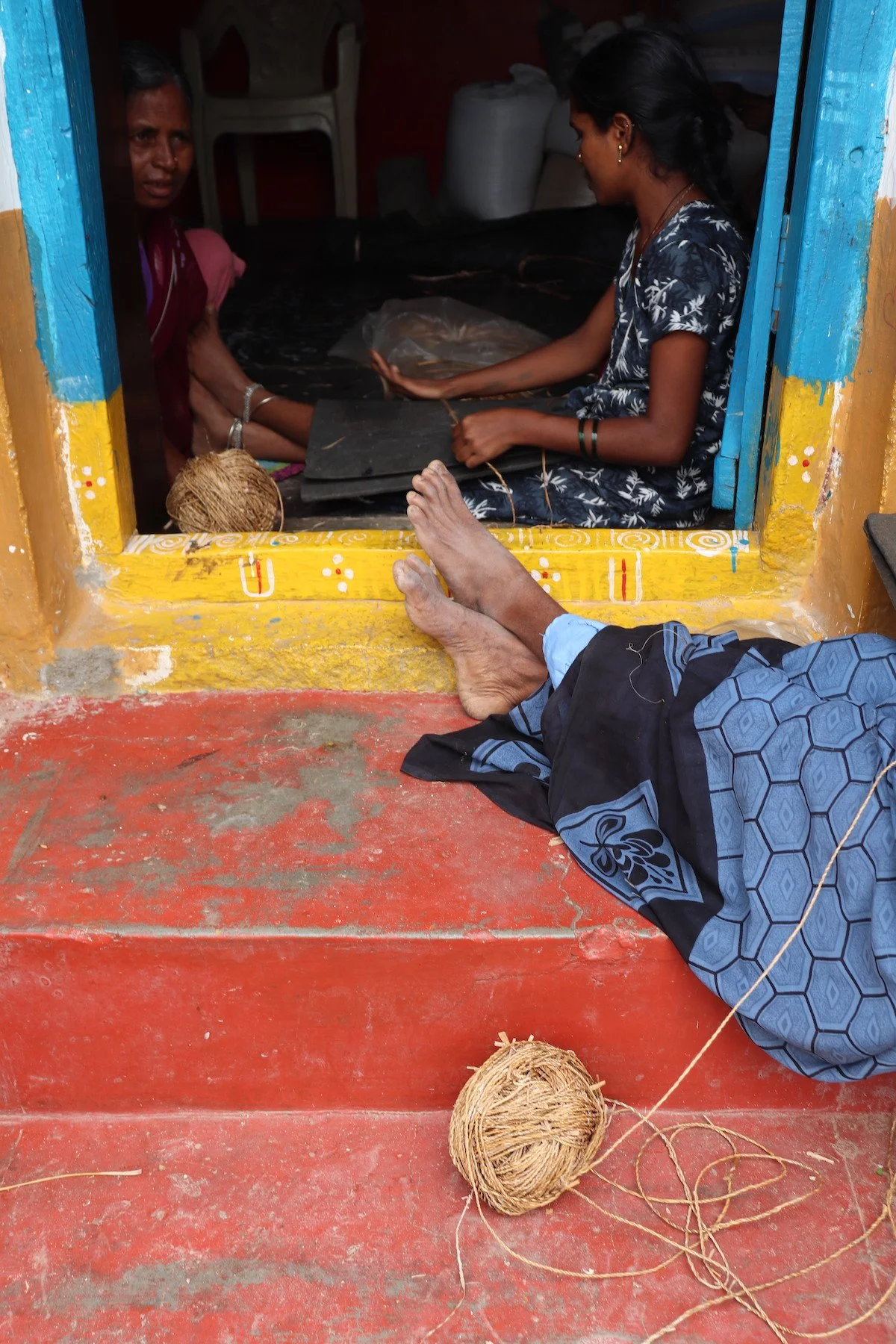
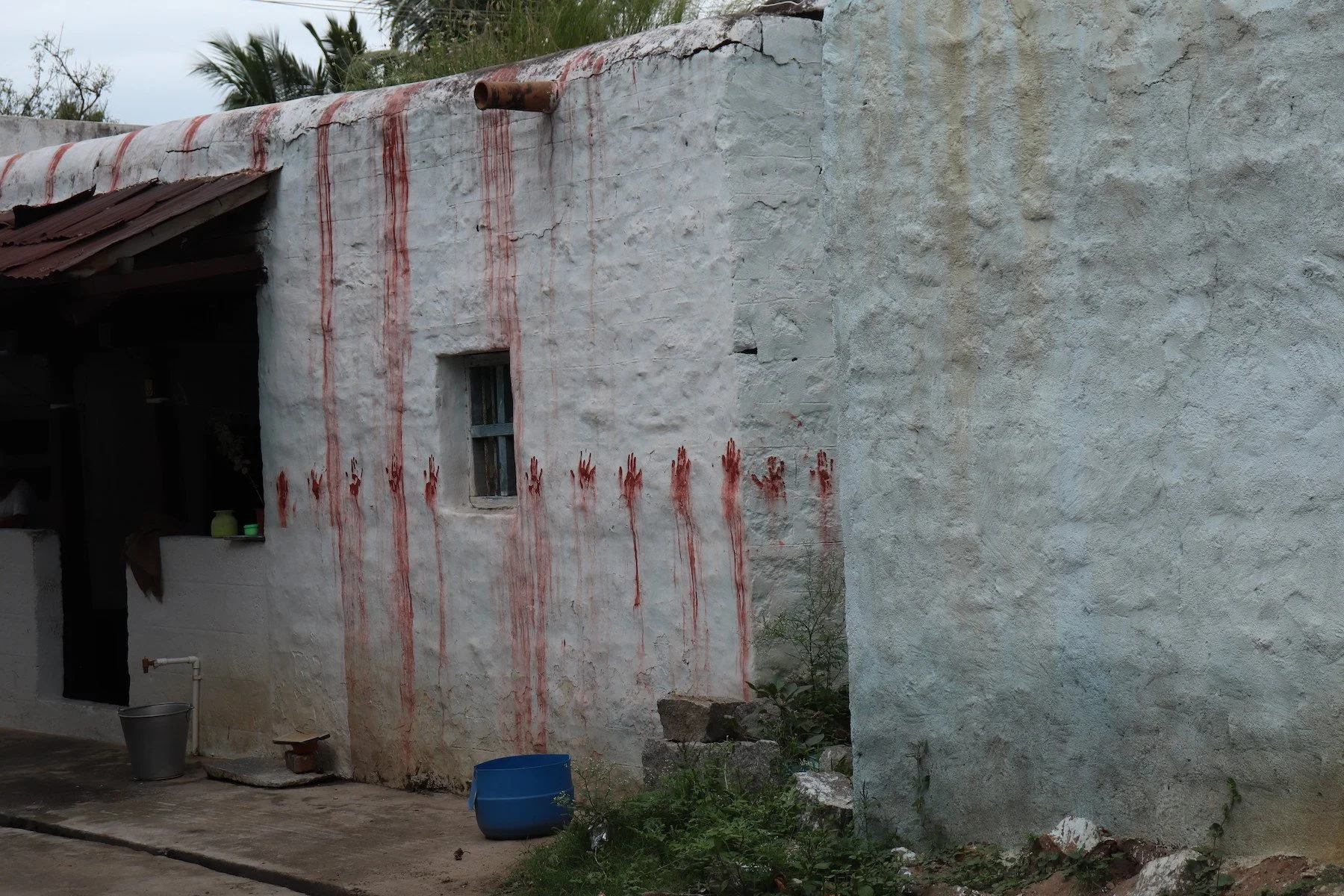
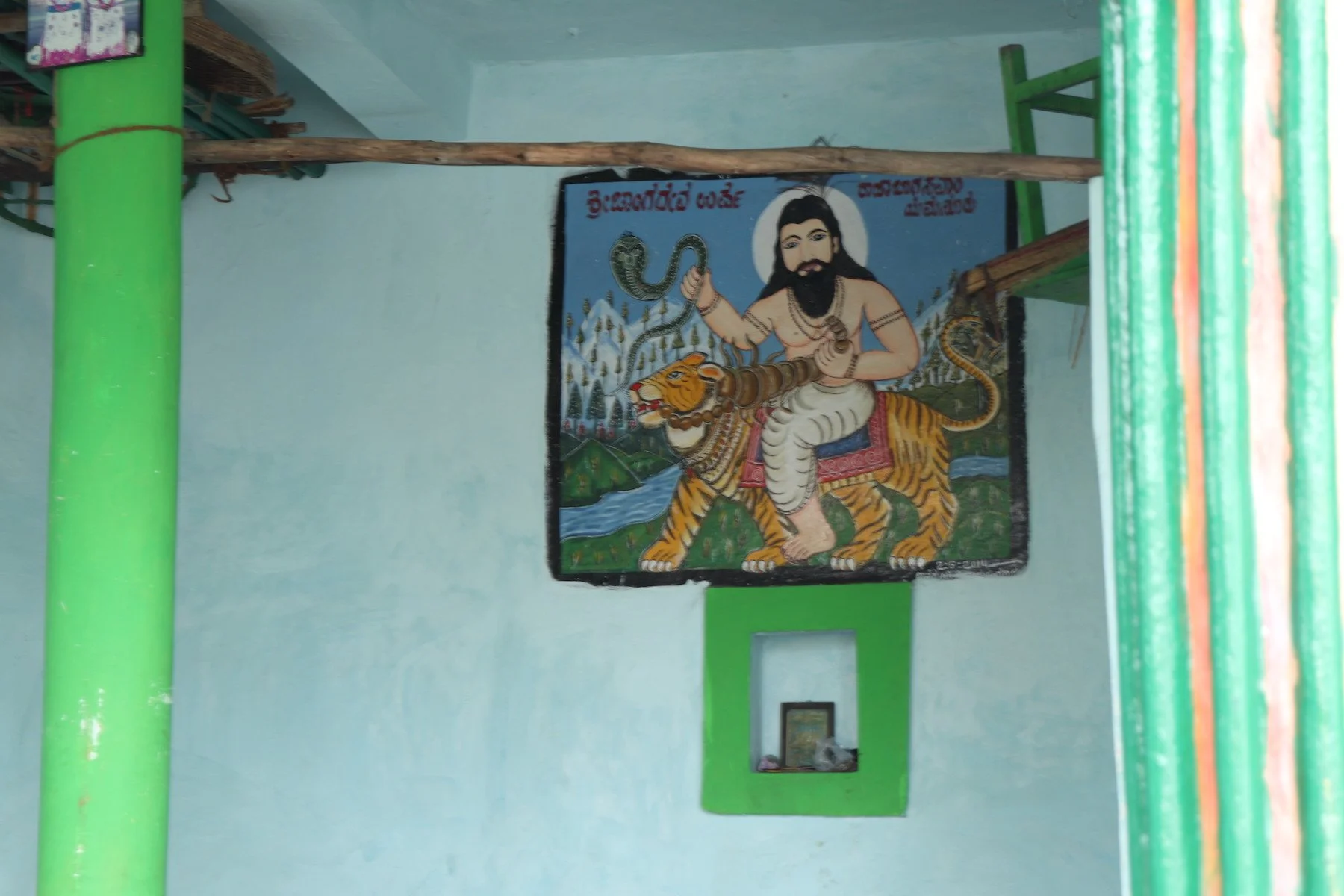
Picnics in caves and coracle rides complement the slow living in this ethereal land. The colour palette of the Vijaynagara kingdom is reflected in the temples and houses of Anegundi today. The bright blues, yellows, pinks and reds combined with the textures, patterns and symbols offer a treasure trove of visual inspiration.
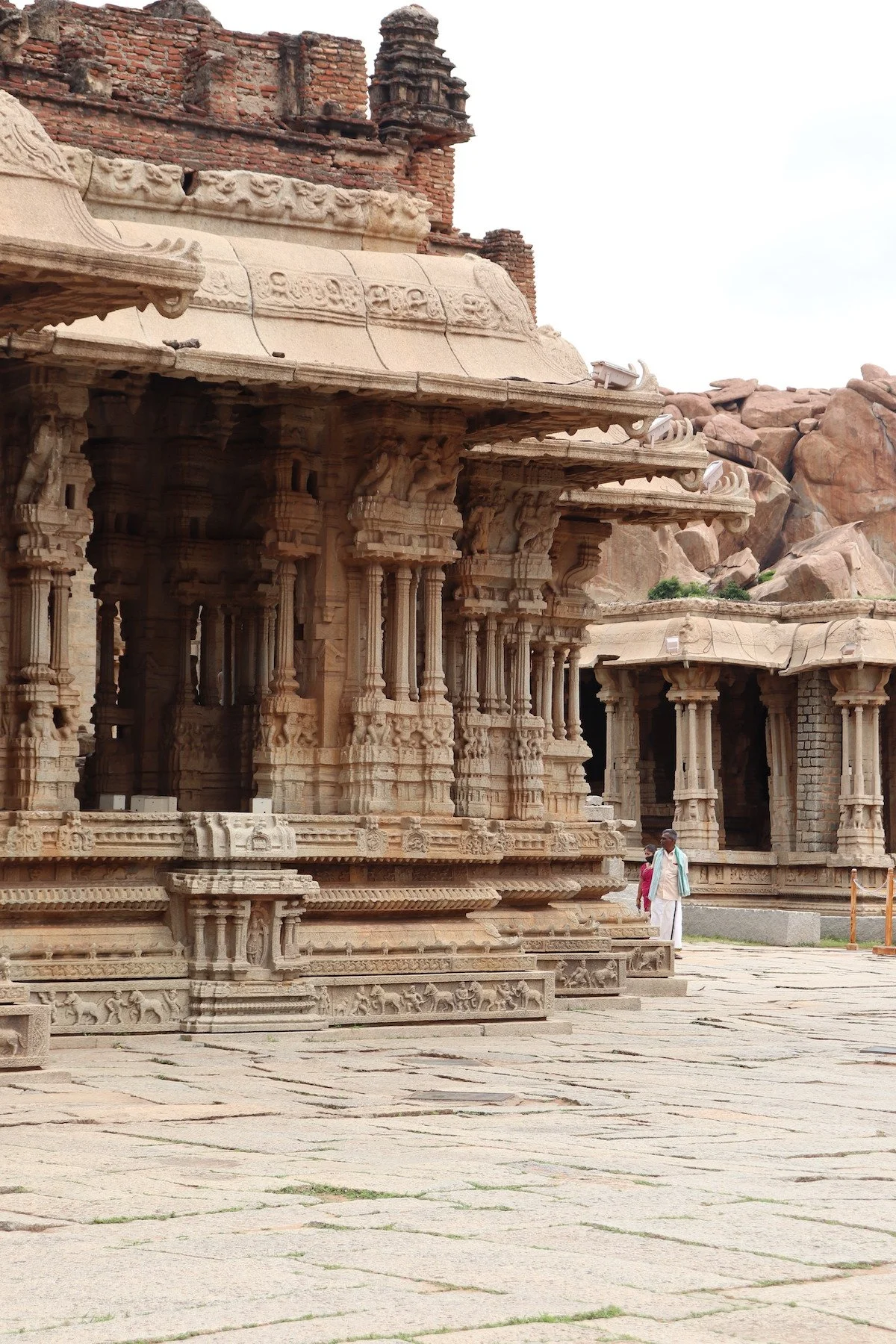
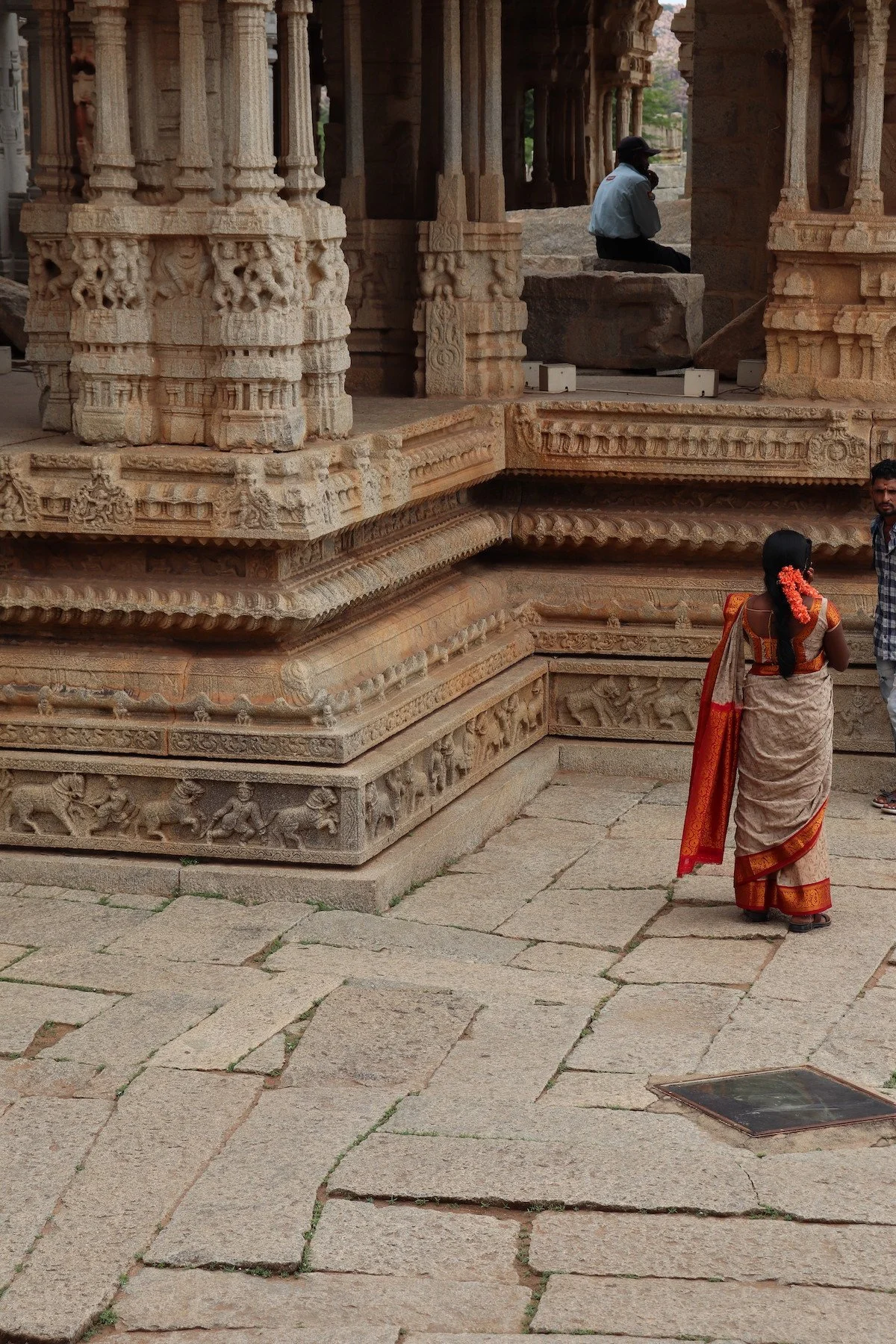
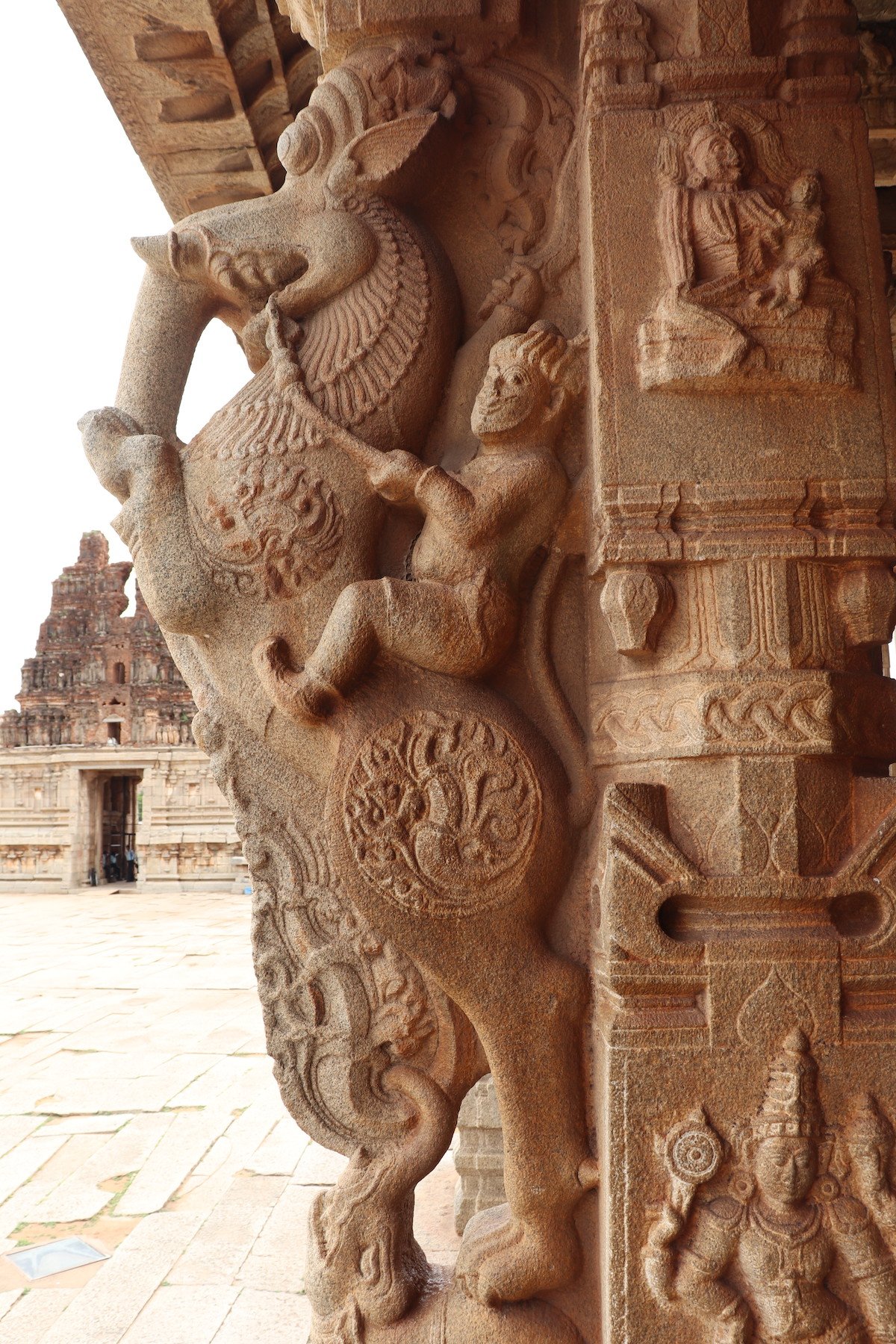
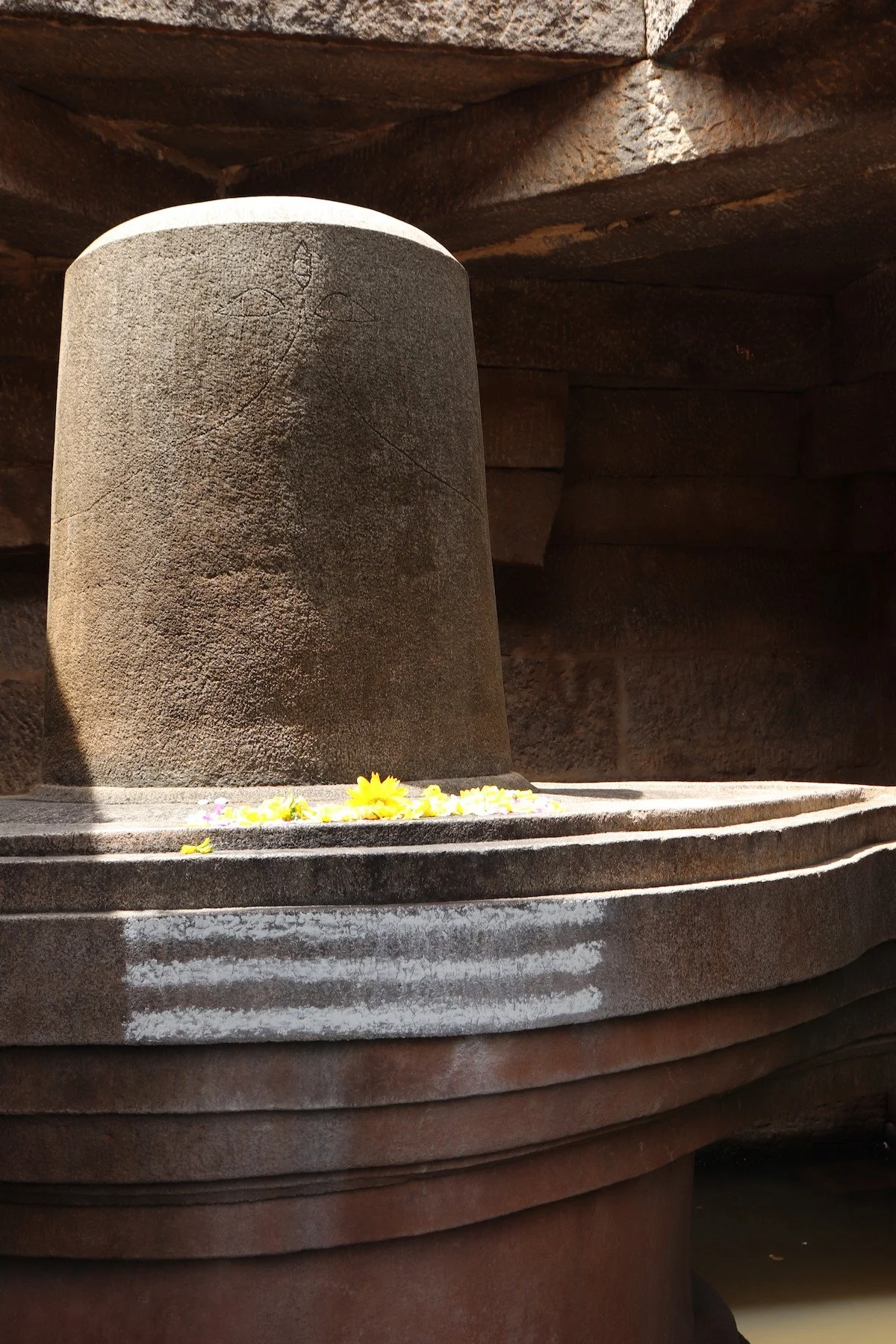
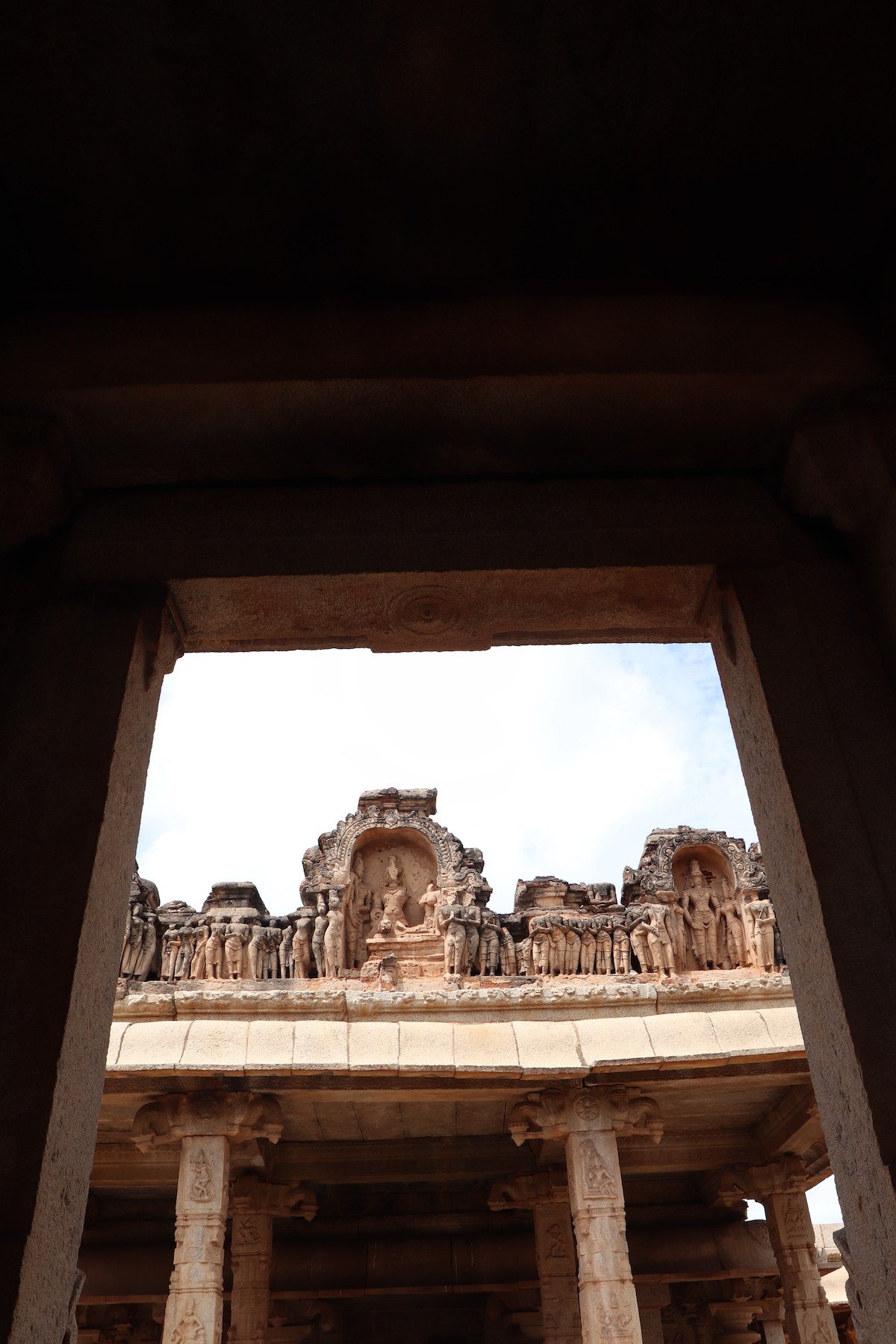
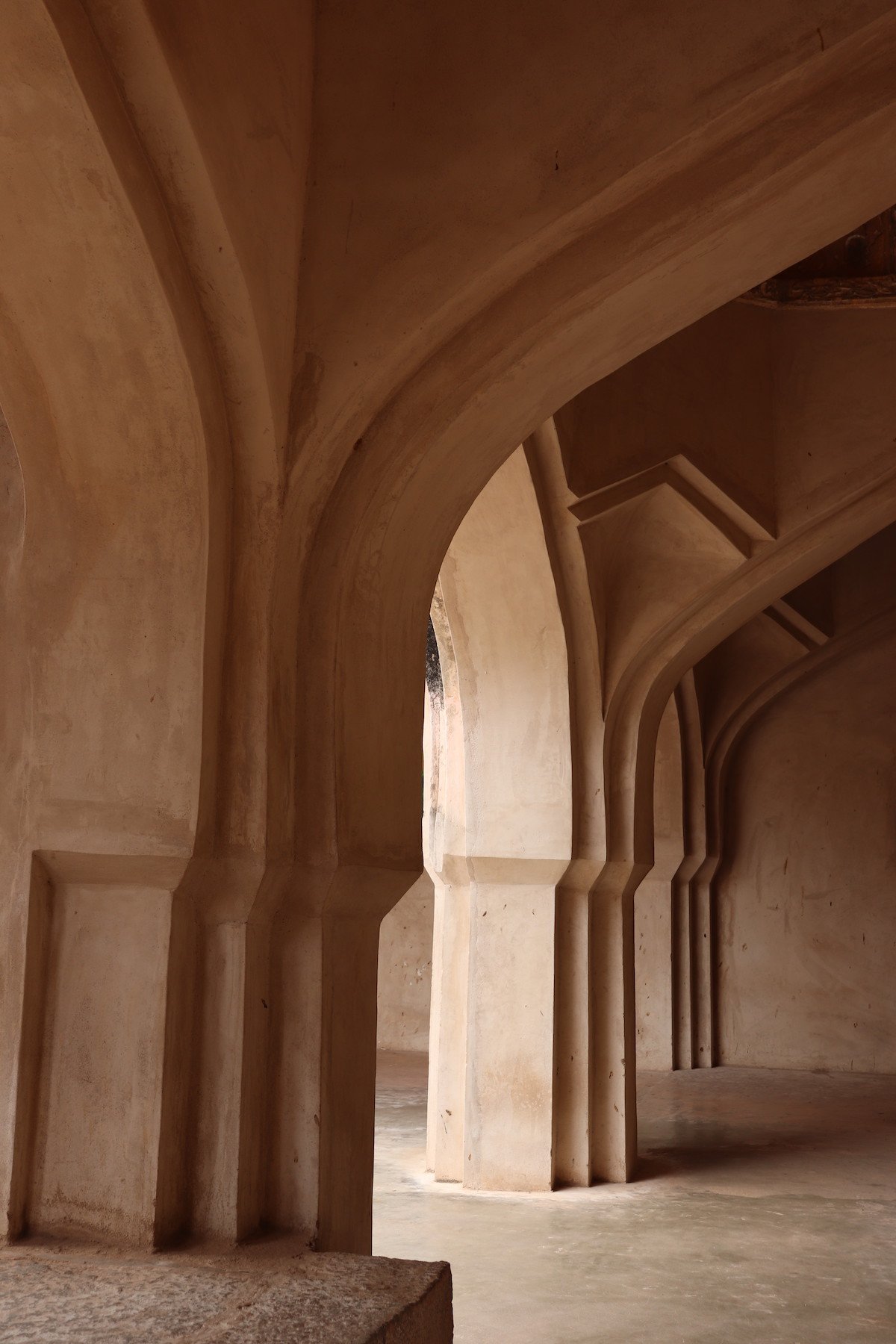
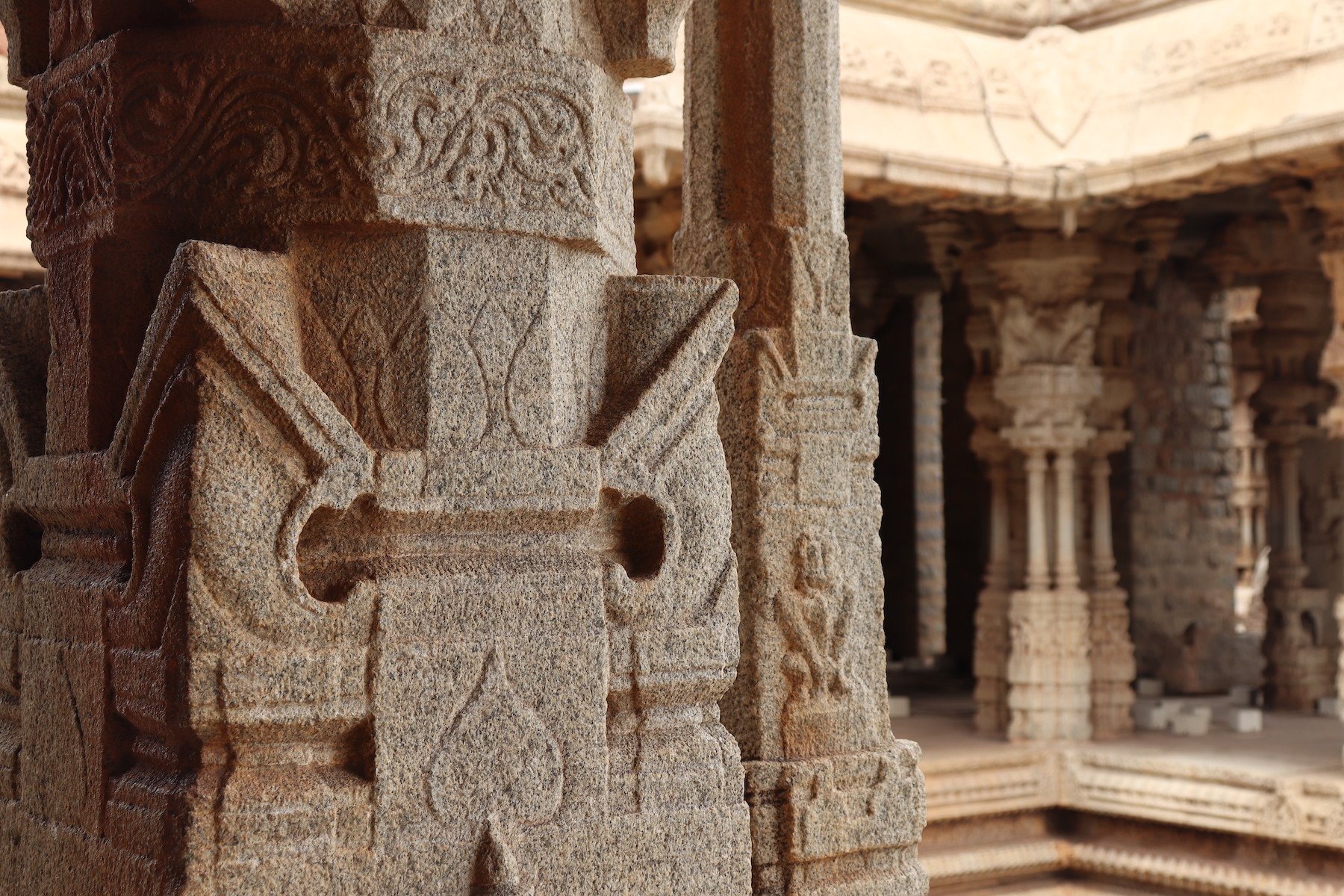
One can find images of Hanuman, Shiva, Vishnu and many other gods spread across this sleepy village. A water pavilion, called the ‘Queen’s Bath, showcases multi-lobed arched doorway and corridors with projecting balconies surrounding an interior pool. The Vithala temple dedicated to Vishnu and the Virupaksha temple honouring Lord Shiva exude the intricate details of Vijaynagara design.
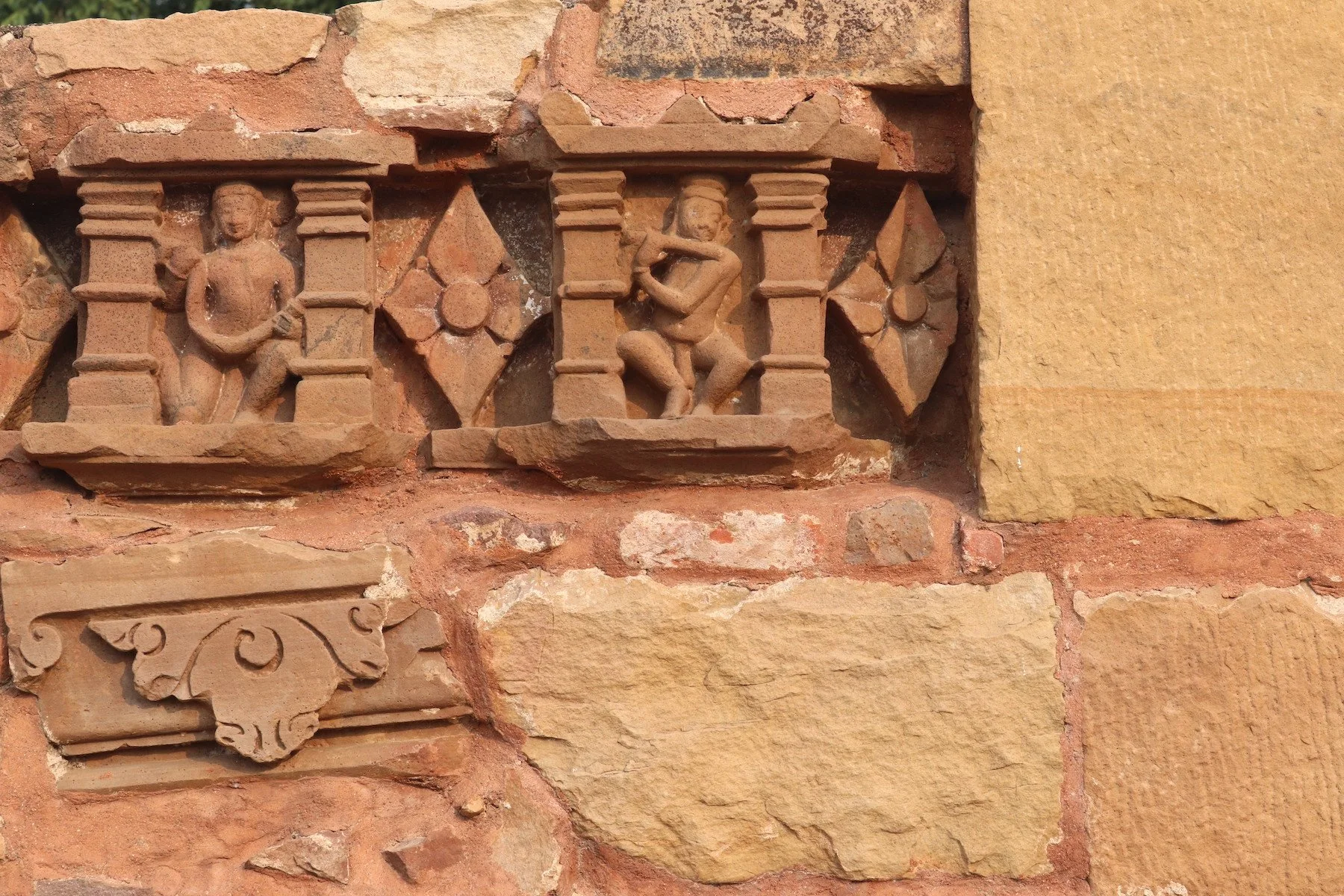
The architectural poetry of Hampi brings together Islamic and Jain elements along with classic Hindu elements. This kind of juxtaposition is unique to the Vijayanagara kingdom, and displays a beautiful combination of starkly different aesthetics.
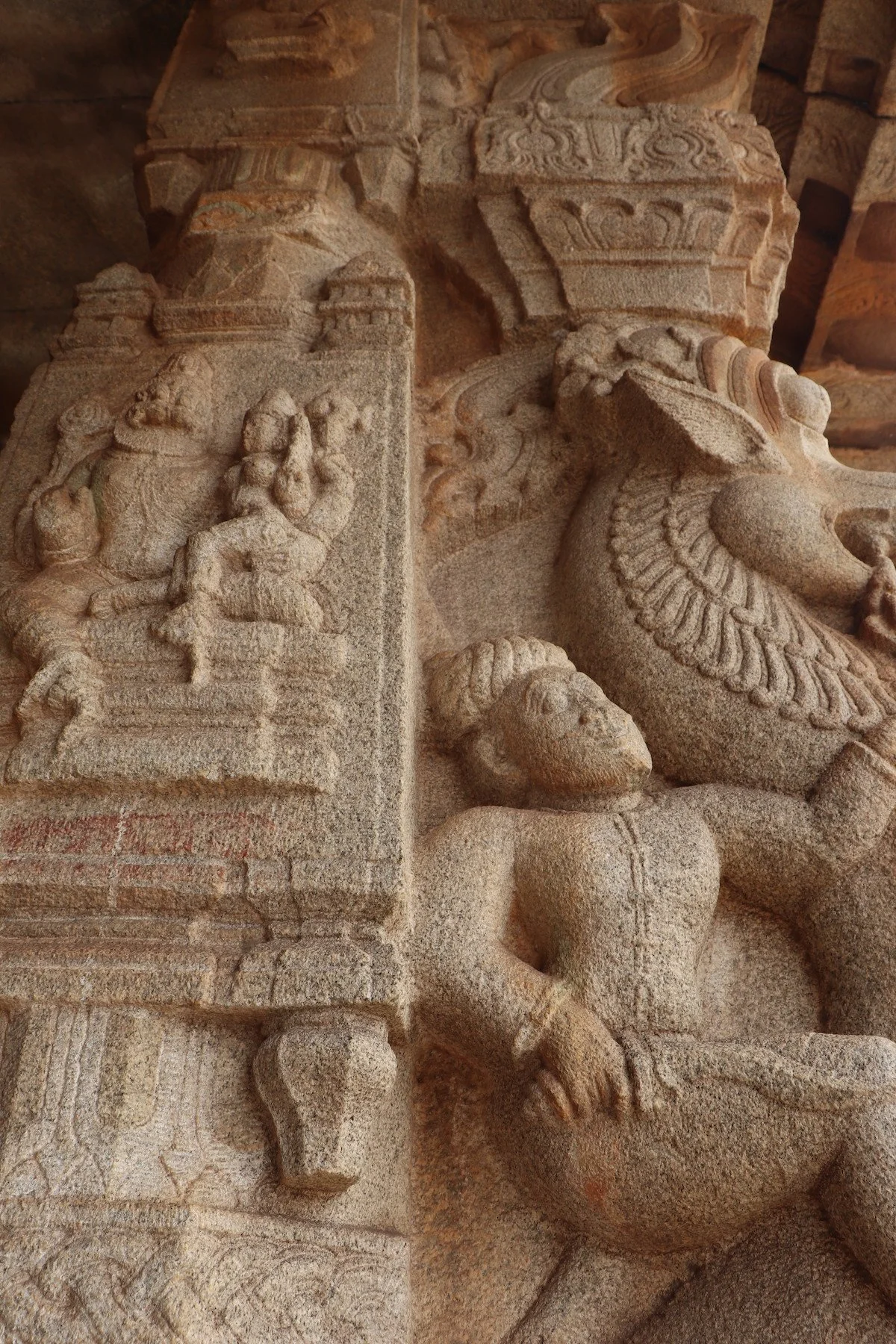
For someone specifically drawn to art and architecture, sculpture and iconography, Hampi is a window to one of the greatest empires of India and a material tradition uniquely glorious. The elephant stables of the royal court were decorated in stucco, comprising domed chambers, arched doorways and side vaults with a clear Islamic influence while the double-storey pavilion at the centre imitates the design we see in Indian temples. Another fascinating architectural detail was the large, square-shaped water reservoir (pushpakarni) located near the Mahanavami Dibba, comprising multiple steps in a semi-pyramidal structure.
Idols and Iconography
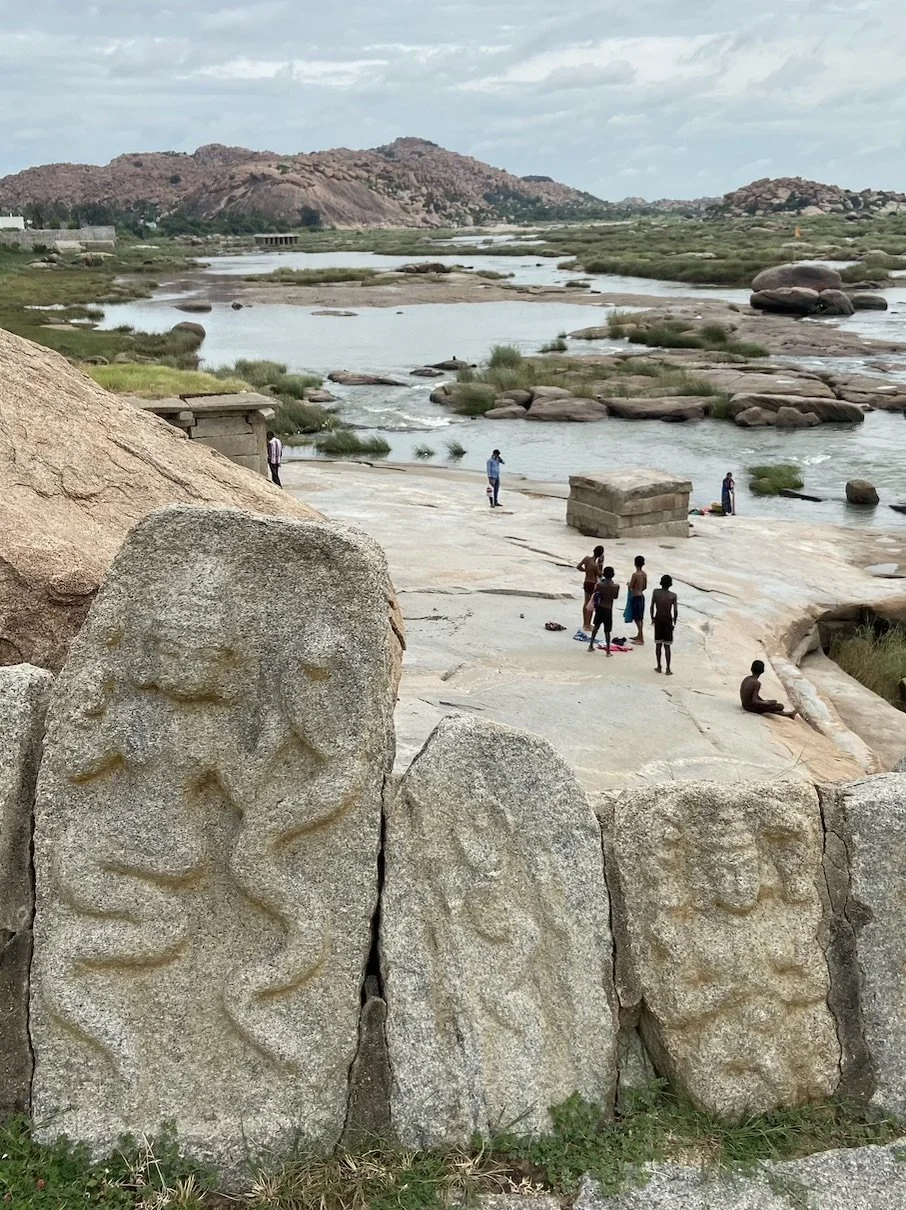
Alongside the pristine waters of the Tungabhadra River at Hampi, one can find enormous boulders, prancing Hanuman monkeys (named after the deity Hanuman) and numerous stone structures placed along the riverside. The unique vernacular architecture is a testament to the grandiosity of ancient dynasties, now transformed into relics of a distant past.
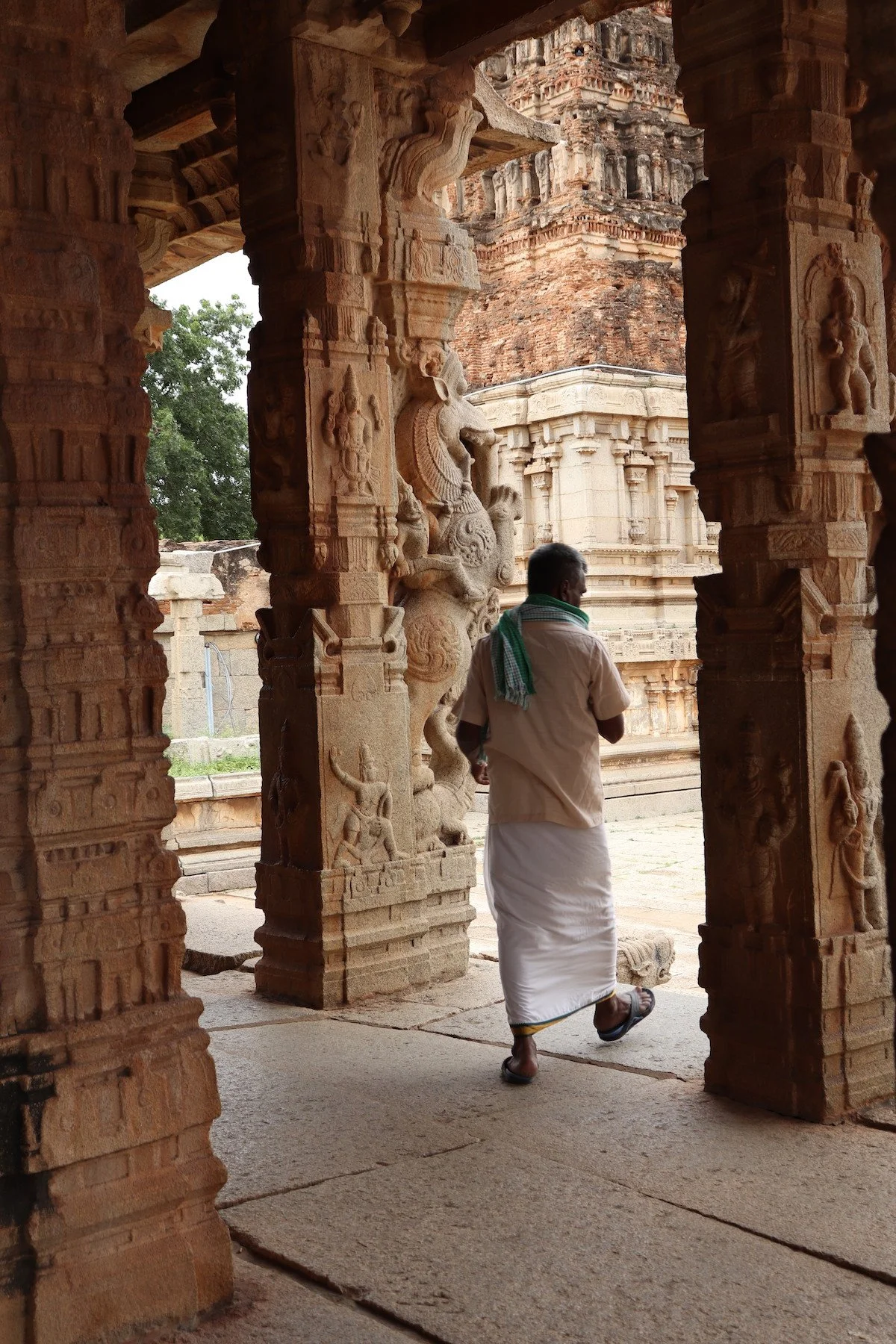
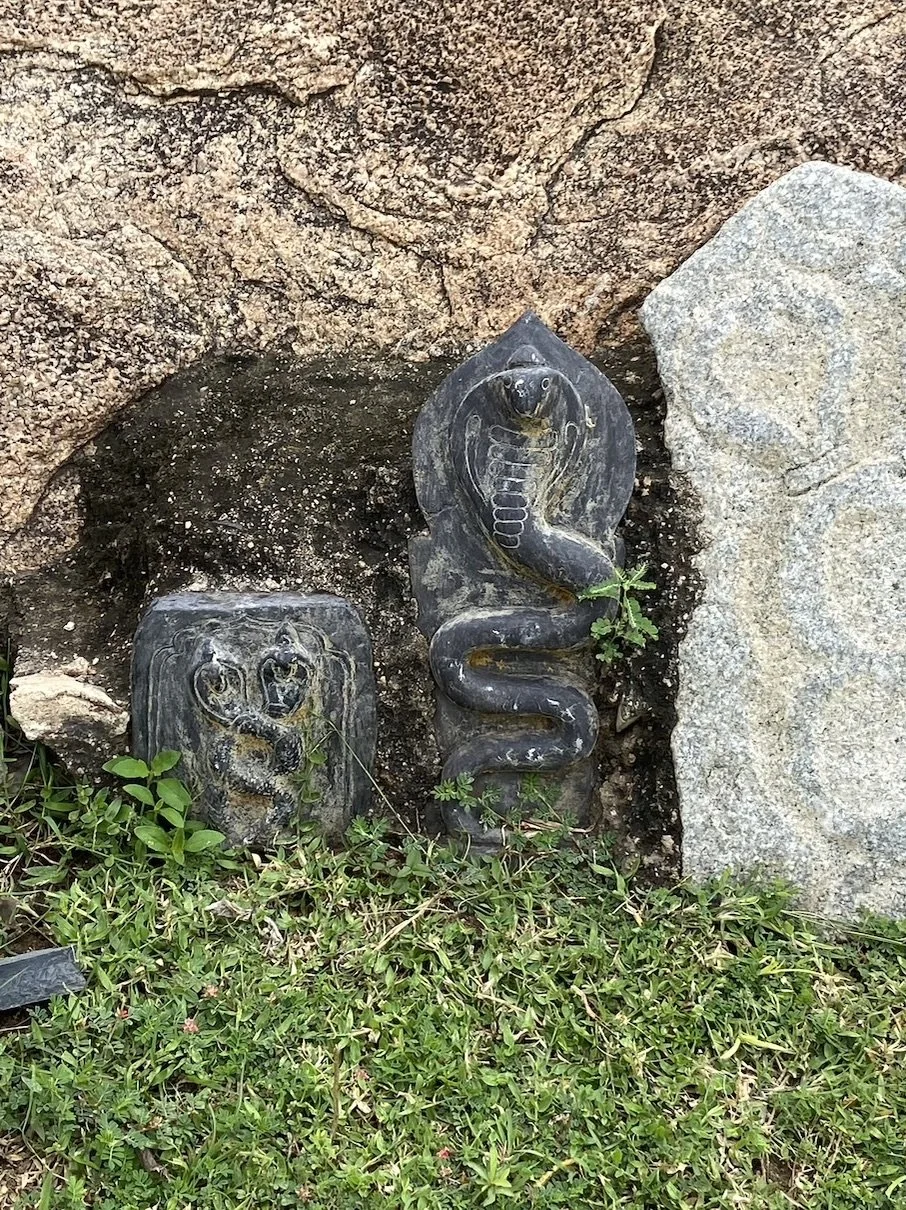
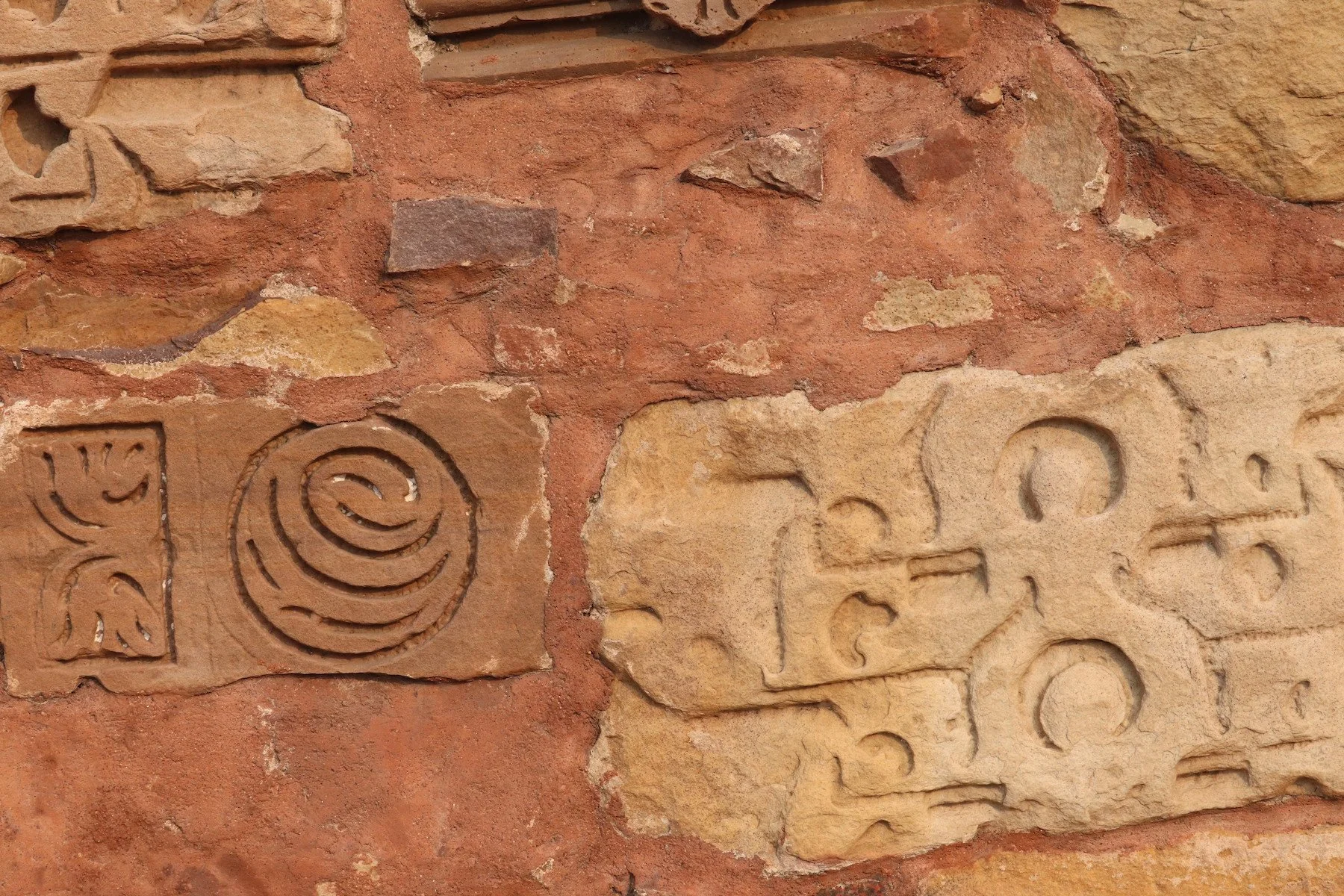
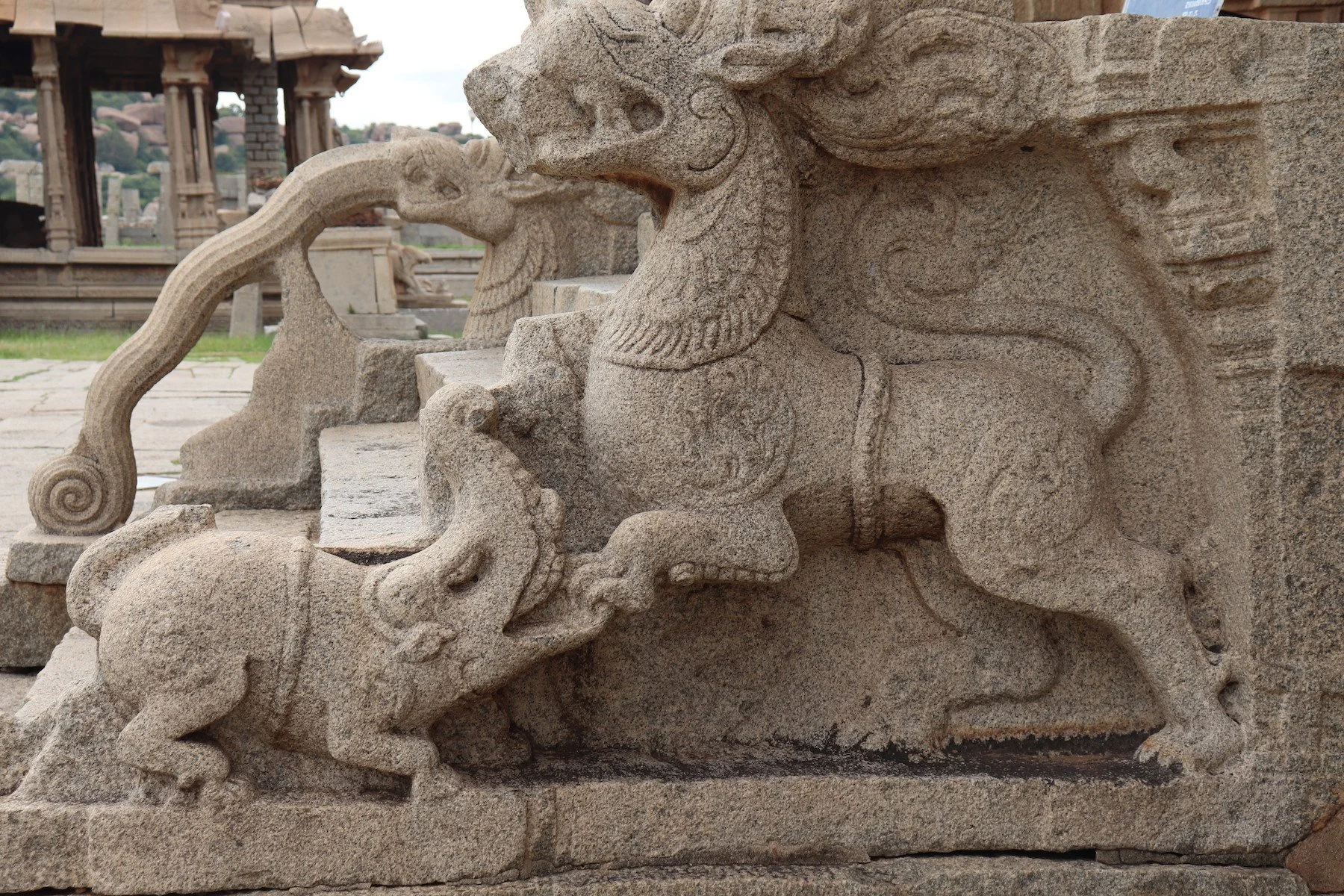
One can spot symbols that showcase two snakes carved on stone—locals call it the ‘fertility stone.’ It was once customary to have these fertility stones within homes. Like the snake motifs that commonly decorate sculptures and architectural elements from the Vijayanagara kingdom, another interesting iconography is that of yalis. Yalis are mythical creatures with a cat-like body, the head of a lion, the tusks of an elephant and the tail of a serpent. Sometimes, yalis can be seen standing on the back of a makara, another mythical creature. The graceful yali, typically found on doorways, is believed to guard temples and protect other buildings of religious or spiritual importance.
The architecture of Hampi is a tribute to the mythical and the mystical, the metaphorical and the symbolic. Hindu and Islamic artistry merge and provide insight into the syncretic culture of the empire.
Kinships in Kishkinda
To revive the roots of a long-lost legacy, an organization has dedicated itself to Hampi’s community development. The Kishkinda Trust (TKT), established at Anegundi in 1997, is “inspired by the past and focused on the future.” They have been empowering the local communities through various projects such as capacity building in the fields of architectural conservation and adaptive reuse, heritage restoration, crafts revival, sanitation management, creative and cultural industries, education through performing arts and more. TKT has worked tirelessly to boost livelihood generation and socio-economic conditions of the local populace. Their work nurtures Hampi’s future by uplifting the people of the land to reclaim their space and take pride in their collective past.
Shama Pawar, founder of Kishkinda Trust and Convener of the Anegundi-Hampi Chapter of INTACH (Indian National Trust for Art and Cultural Heritage), has dedicated 27 years to the well-being of the people in Hampi. Her work involves conserving traditional houses of Anegundi, executing rural tourism schemes and supporting the region’s natural and cultural identity.
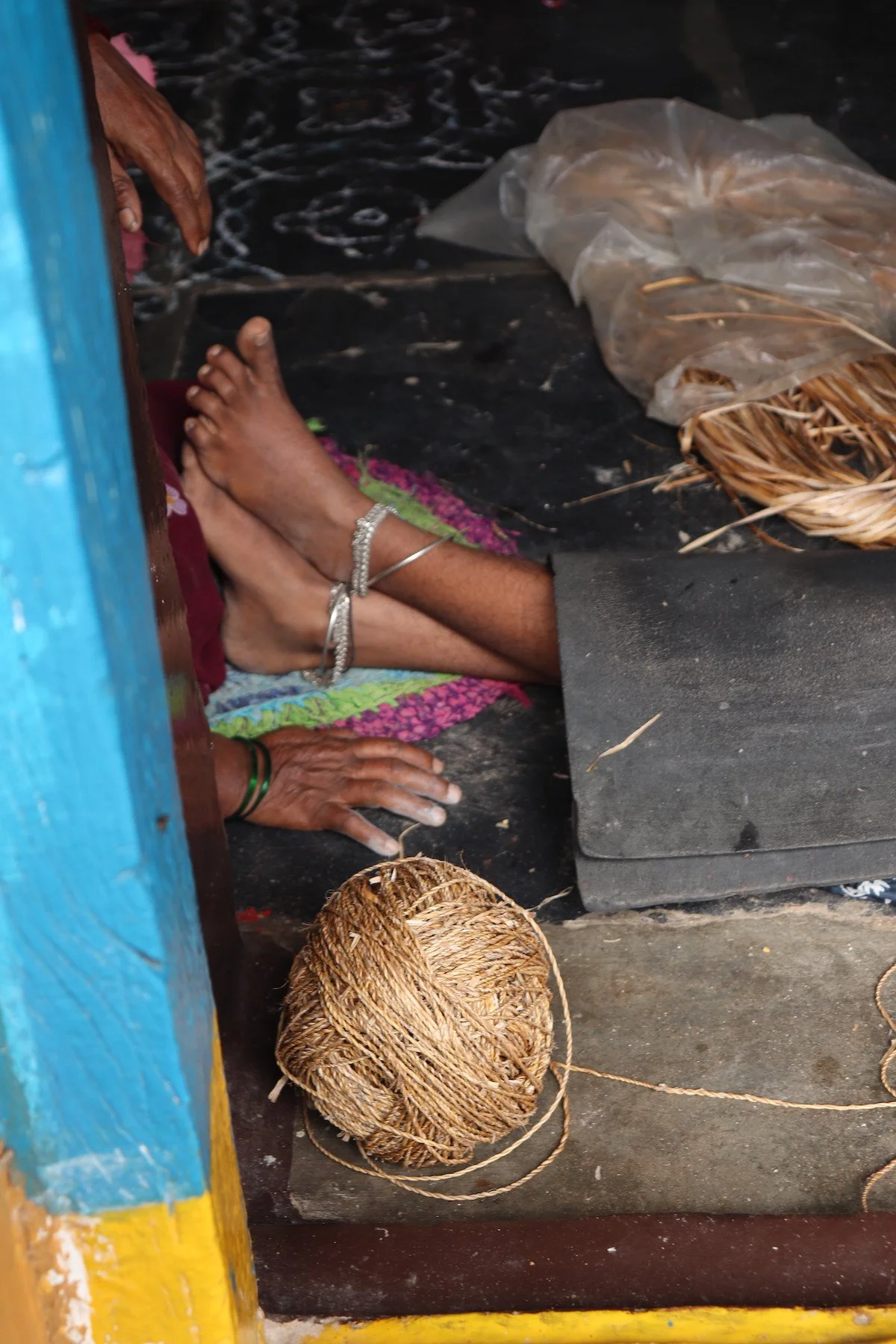
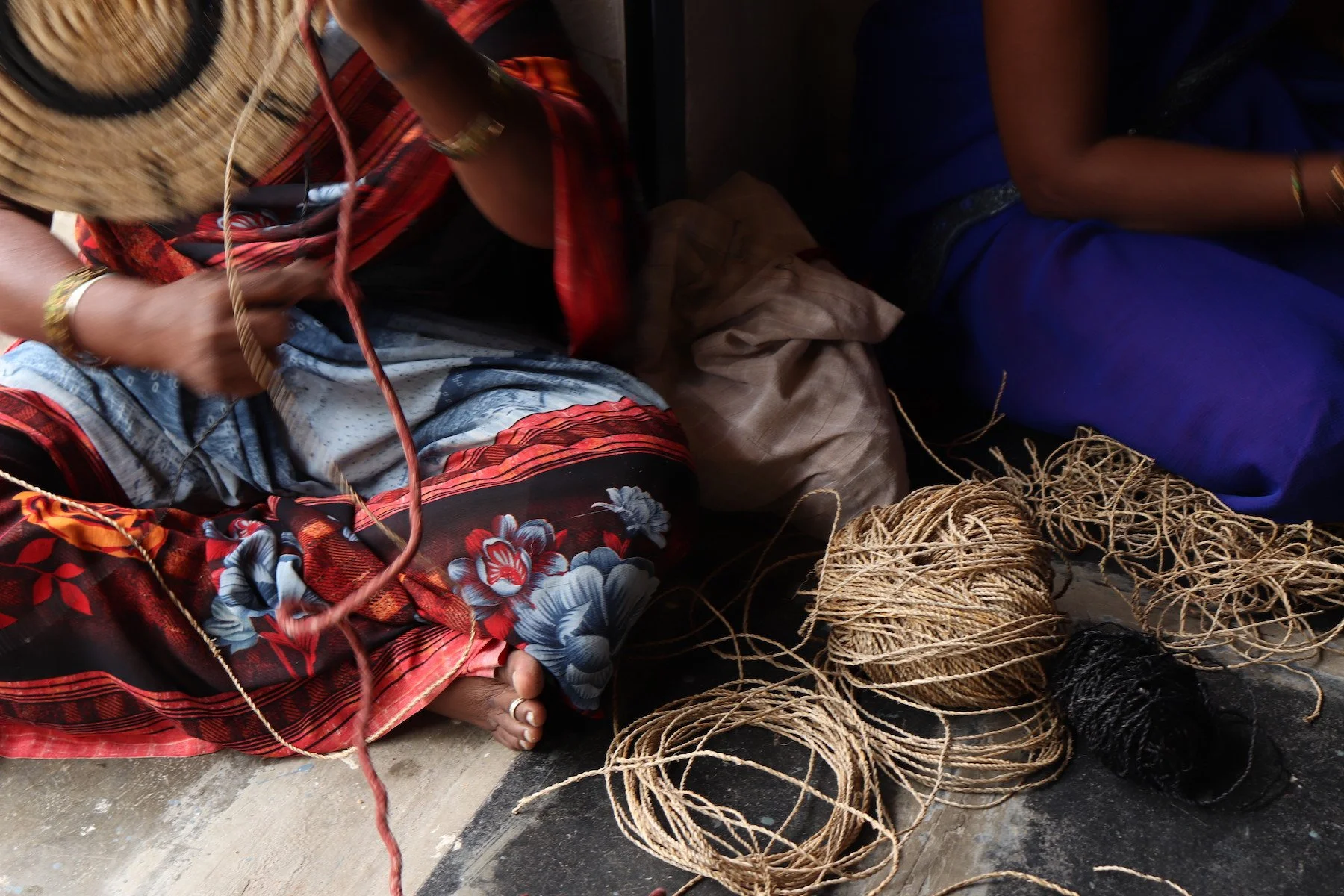
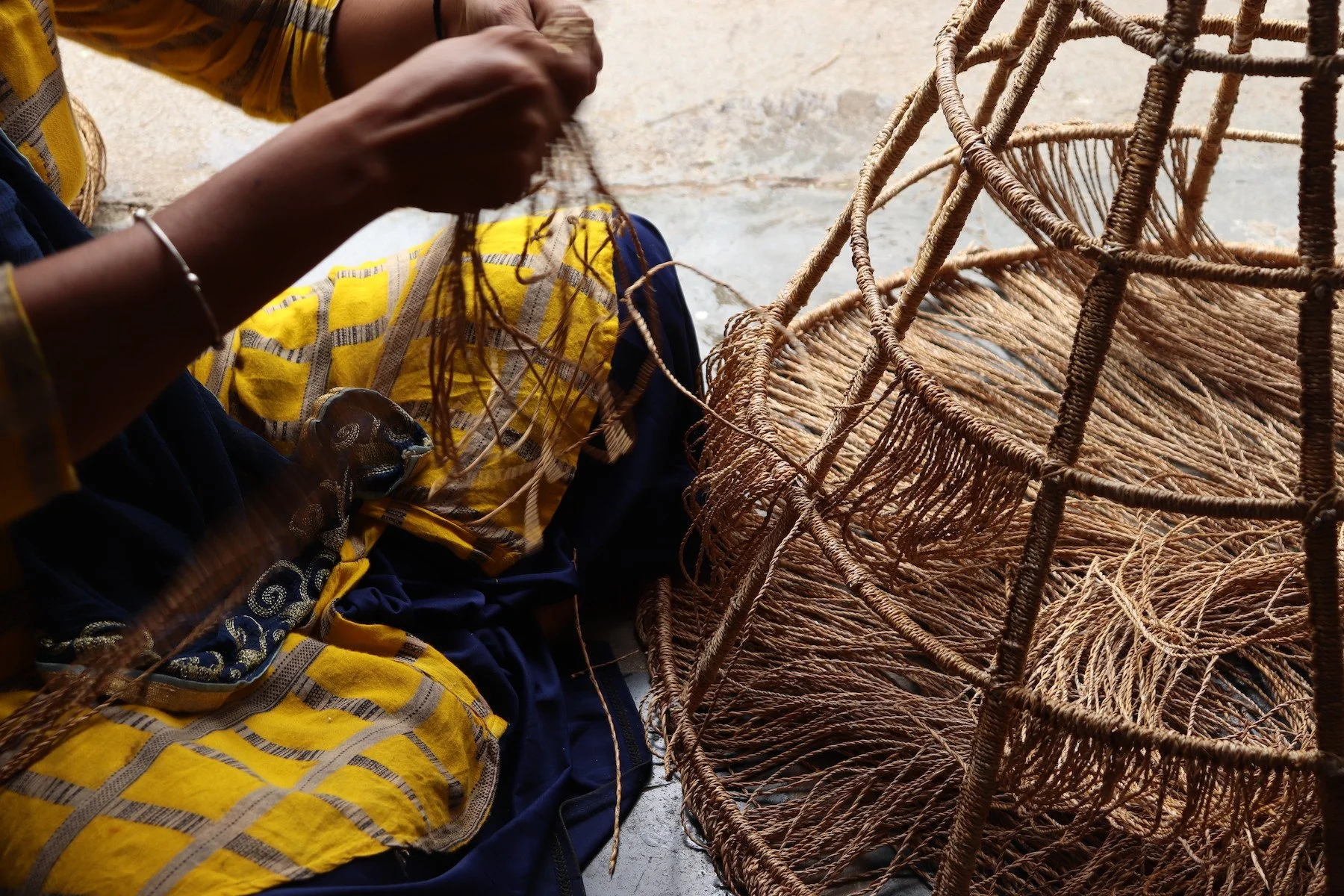
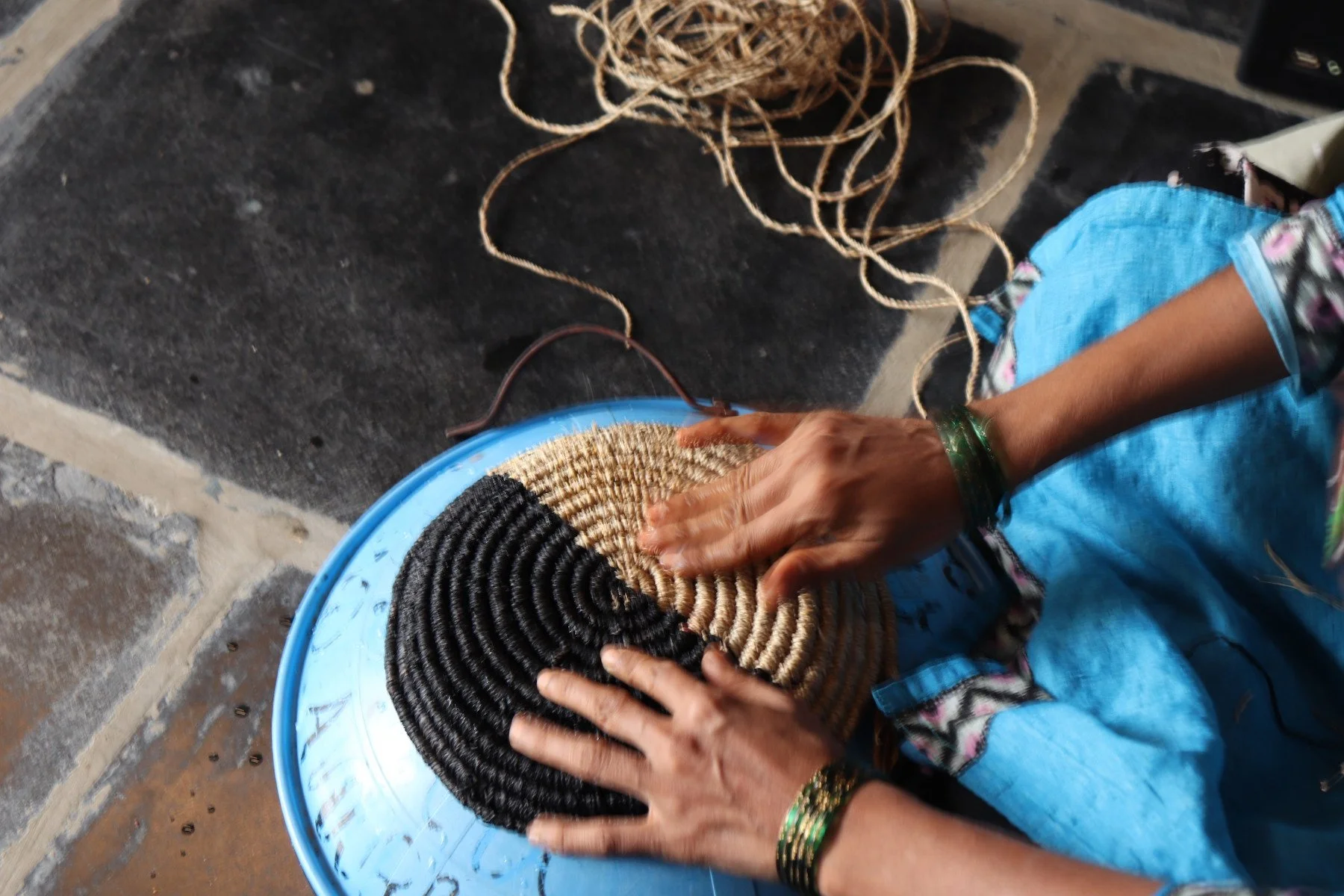
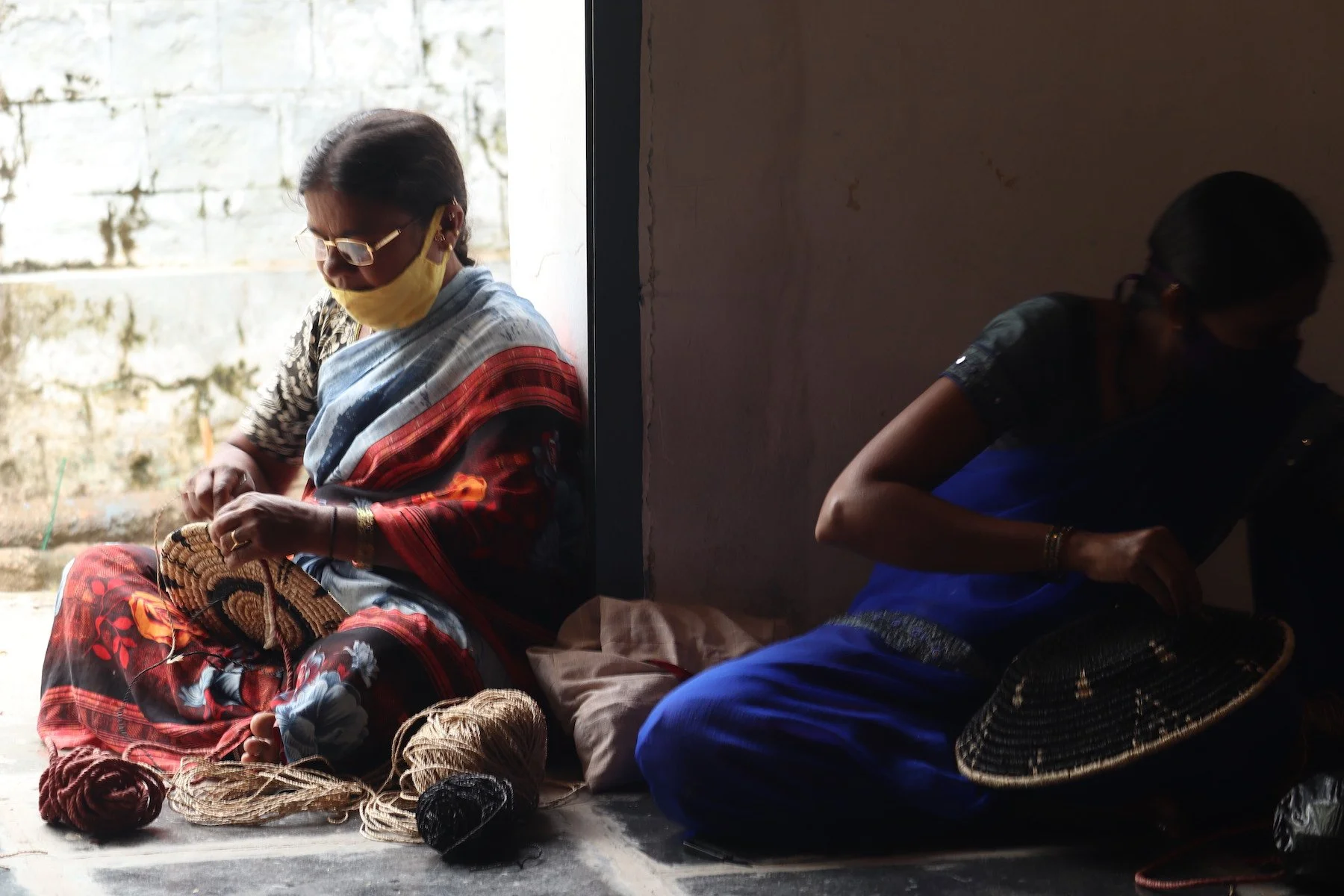
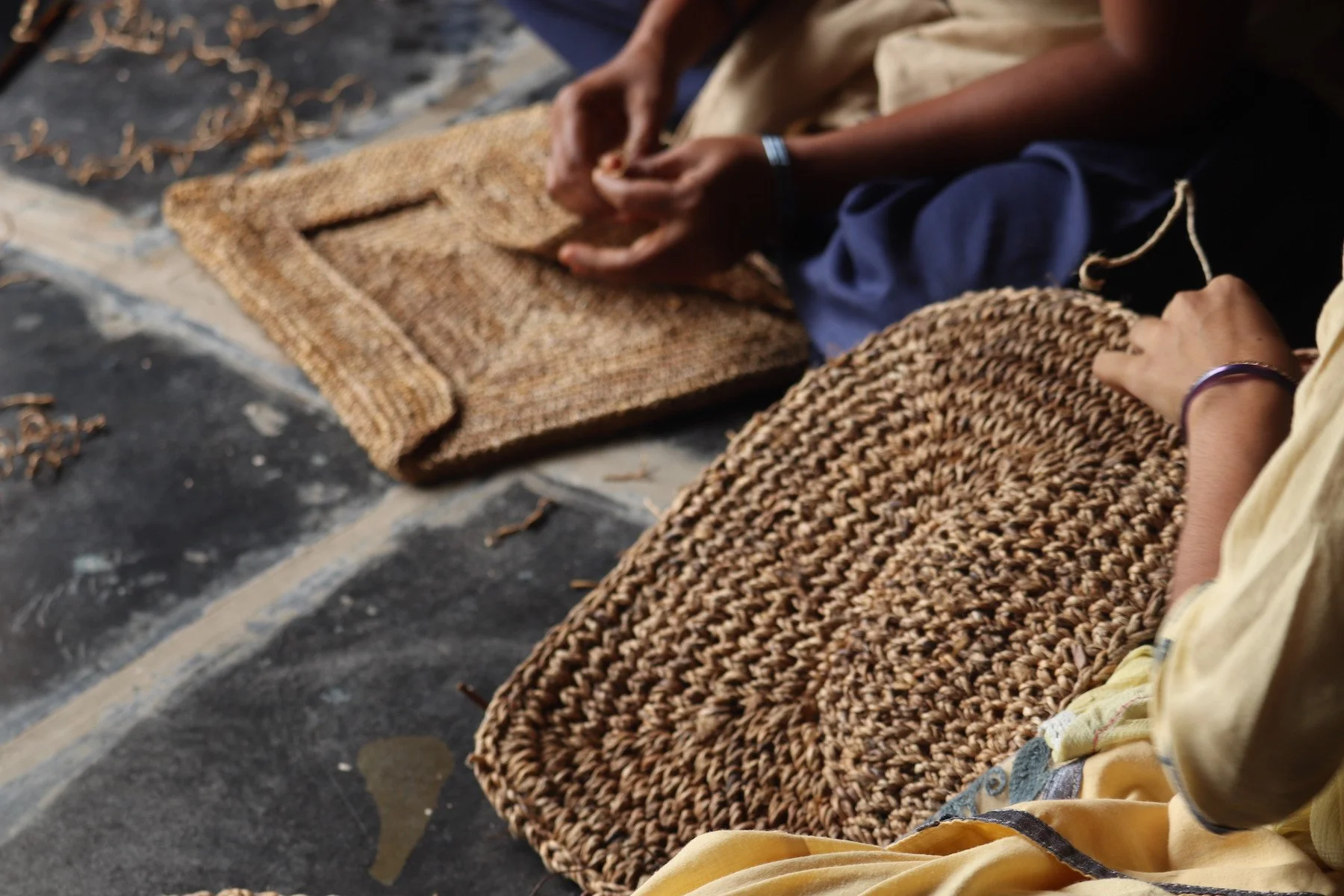
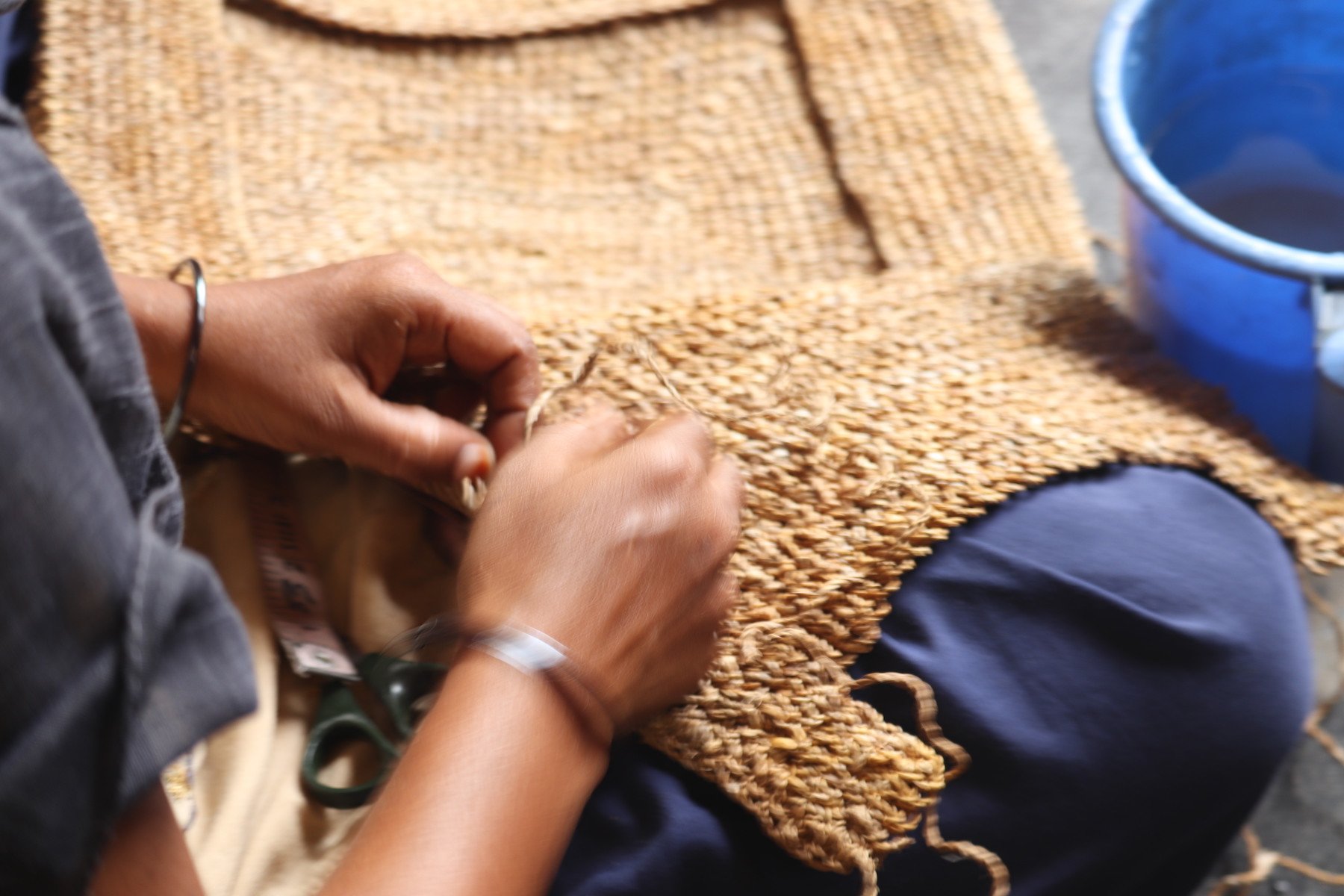
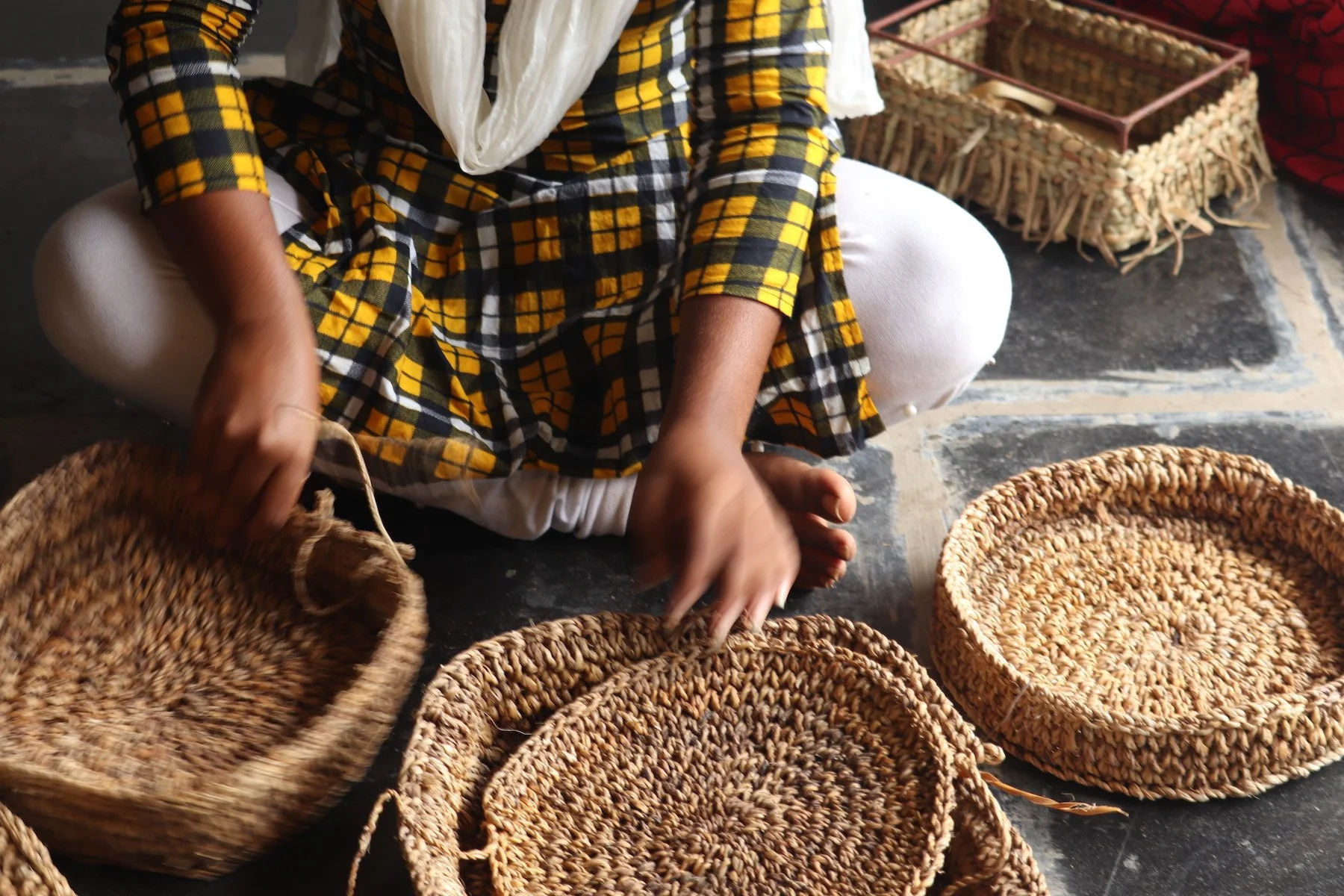
To improve the economic conditions and quality of life in the area, TKT has successfully employed methods of heritage conservation. They have also created women-led groups to uplift local crafts such as rope-making, crochet skill-building and basketry while using sustainable materials like water hyacinth and banana fibre. Initiatives like The Kishkinda Trust bridge the past and the present meaningfully to empower local communities and artisans.
On our trip to Hampi, we witnessed local women artisans of The Kishkinda Trust hard at work—an awe-inspiring sight that exemplifies the importance of cultural conservation as a social tool for community empowerment. We learnt how these women use sustainable indigenous resources to earn an independent living, create a safe space to work, share stories and learn like a family. Their laughter, experiences and enthusiasm were contagious and left a lasting impression on our minds.
Endnote:
In the multidisciplinary monograph, Anegondi: Architectural Ethnography of a Royal Village, Natalie Tobert recounts the architectural elements of a region that may seem like a ubiquitous South Indian village but is a reserve of extraordinary historical riches. More than 100 annotated drawings illustrate the unique usage of domestic and public spaces in this royal settlement. Today, one can still hear the echoes of a bygone era in lieu of gratuitous urban development by preserving the region's visual integrity and intangible heritage.
‘The bustling bazaars would often cross the mind
Of a renowned temple artist in our bygone kingdom,
Who turned nature’s presents to color pigments,
Who poured his heart and soul to bring his art alive!
Our streets filled with sounds, both foreign and familiar,
Lives flourished in the ancient empire of Vijayanagara.’