
An Ode to Chaikhana, Kahwa, and Kandurwan of Kashmir
In Kashmir, to sip a cup of tea is like coming home to oneself.
Every brew becomes a symbol of kindness and resilience.
The Legacy
Tea drinking is more than just a daily custom of people trying to relax or bond. This practice portrays how order, ease and etiquettes frequently manifest themselves in social settings. The legendary Chaikhanas or tea houses along the Silk Road were sites of cultural exchange where travellers halted, gathered and often sang songs—indicating how this mundane ritual was collectivised early on. Kashgar, one of the oldest cities in the world in present-day China, still retains an old teahouse that was featured in a scene in the film adaptation of Khaled Hosseini’s novel, The Kite Runner.
The Silk Road’s network of important trading and caravan routes that wove across the mountains and deserts linking China and the Far East, Central Asia, India, the Middle East and the Mediterranean, gave rise to the cultural extensions that Kashmir shares with other neighbouring regions today. Tea is ubiquitous in the private and public spheres of contemporary Kashmir, keeping alive the legacy of chaikhanas.
Once referred to as Iran-e-Sagheer (Little Iran) by the great Urdu poet Allama Iqbal— Kashmir is renowned for its otherworldly splendour, chinar trees, meadows, valleys, textiles and handicrafts. Yet, it is the Kashmiri variants of tea—kahwa and noon chai—that have taken over people from all walks of life. Noon chai, also known as gulabi chai or sheer chai, is a rosy-hued, pink-coloured salty tea (noon, meaning salt). It is usually preferred in the mornings and often topped with pistachios and a dollop of butter. Kahwa, on the other hand, is an exotic mix of Kashmiri green tea leaves, whole spices, nuts and saffron. Its name means 'sweetened tea' in Kashmiri and bears a striking similarity with the Turkish word for coffee, kahweh; and the Arabic word for wine, qahwah.
Kashmir offers more than what one has anticipated,
If only one had the chance to be lost in it forever.
The Ritual
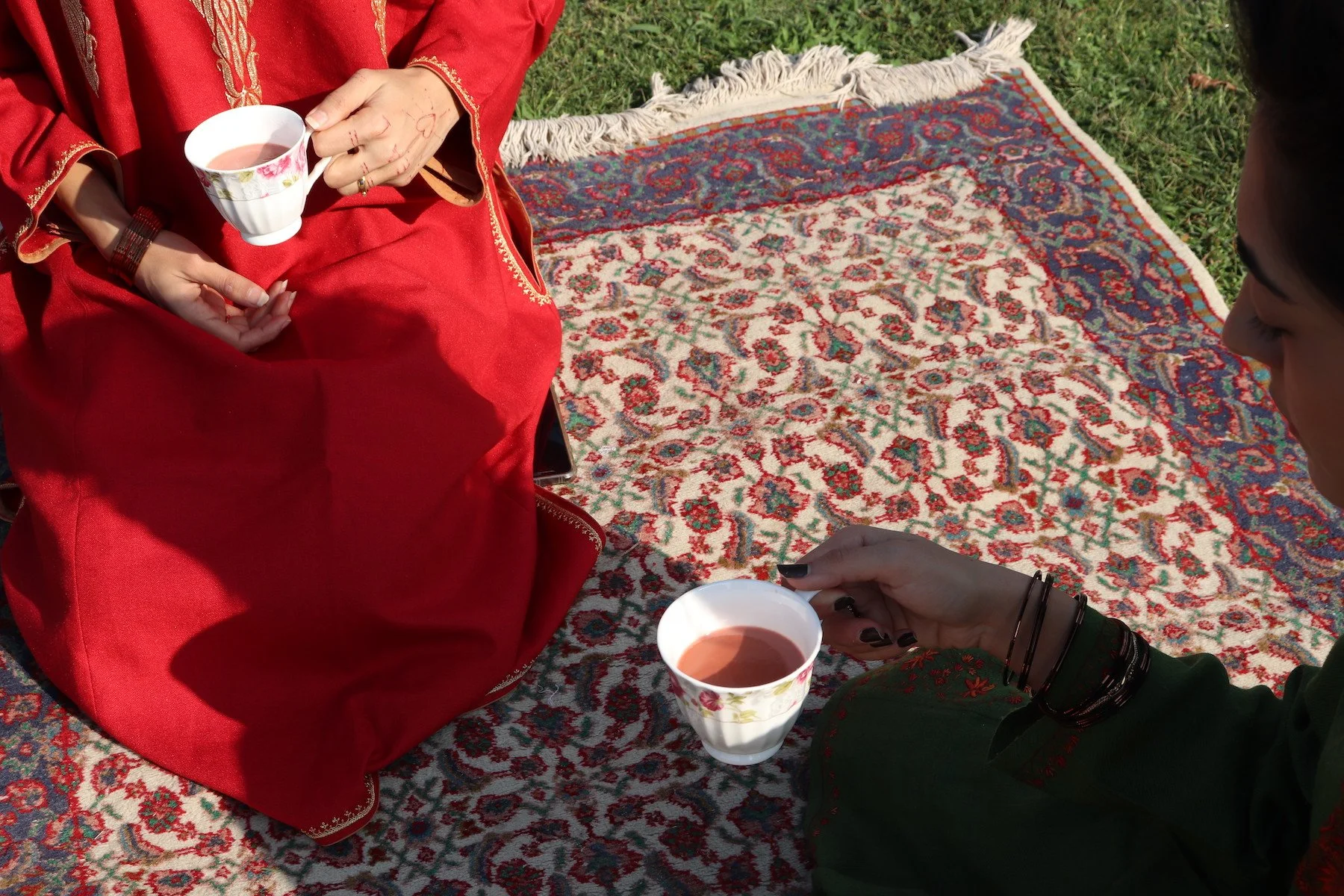
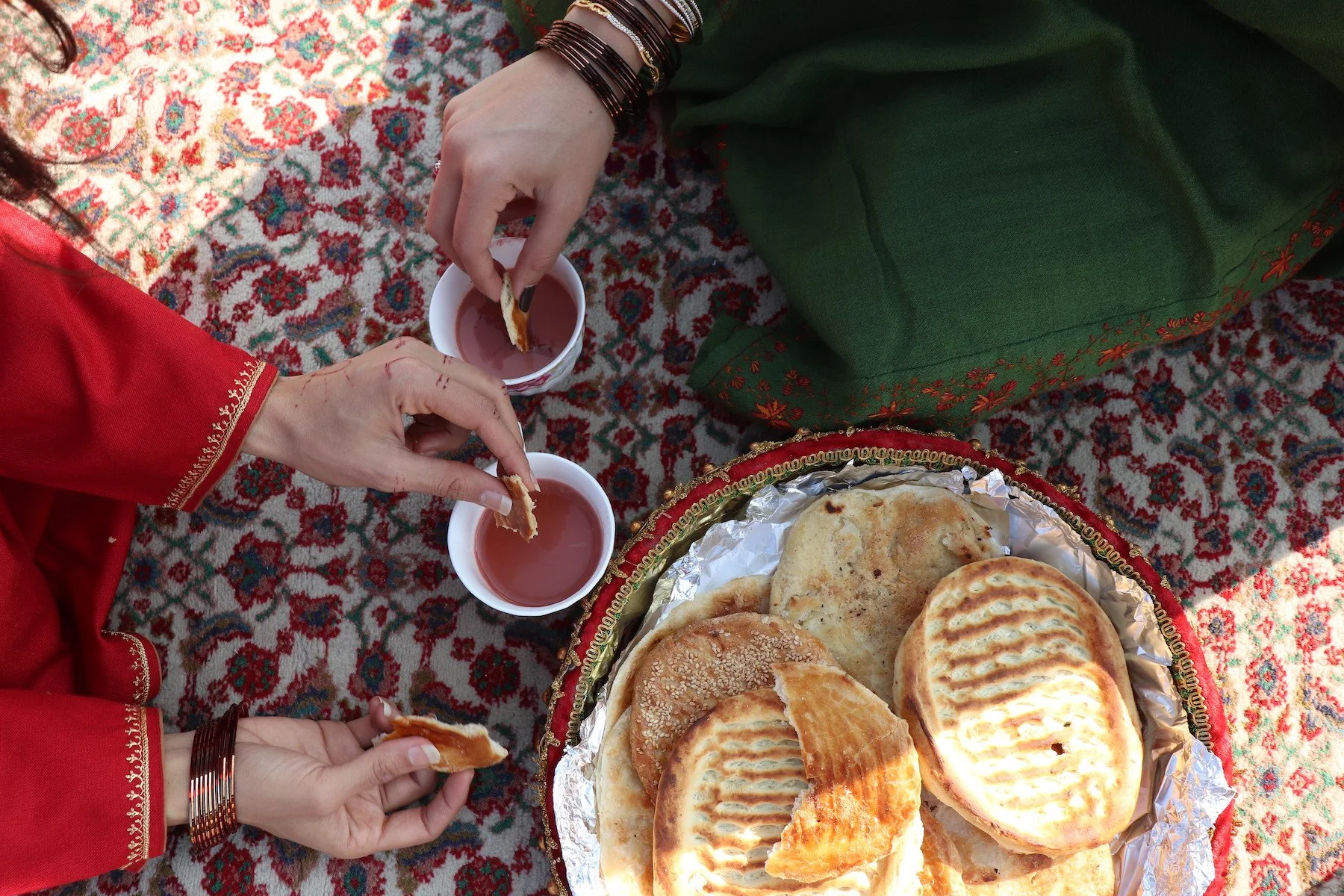
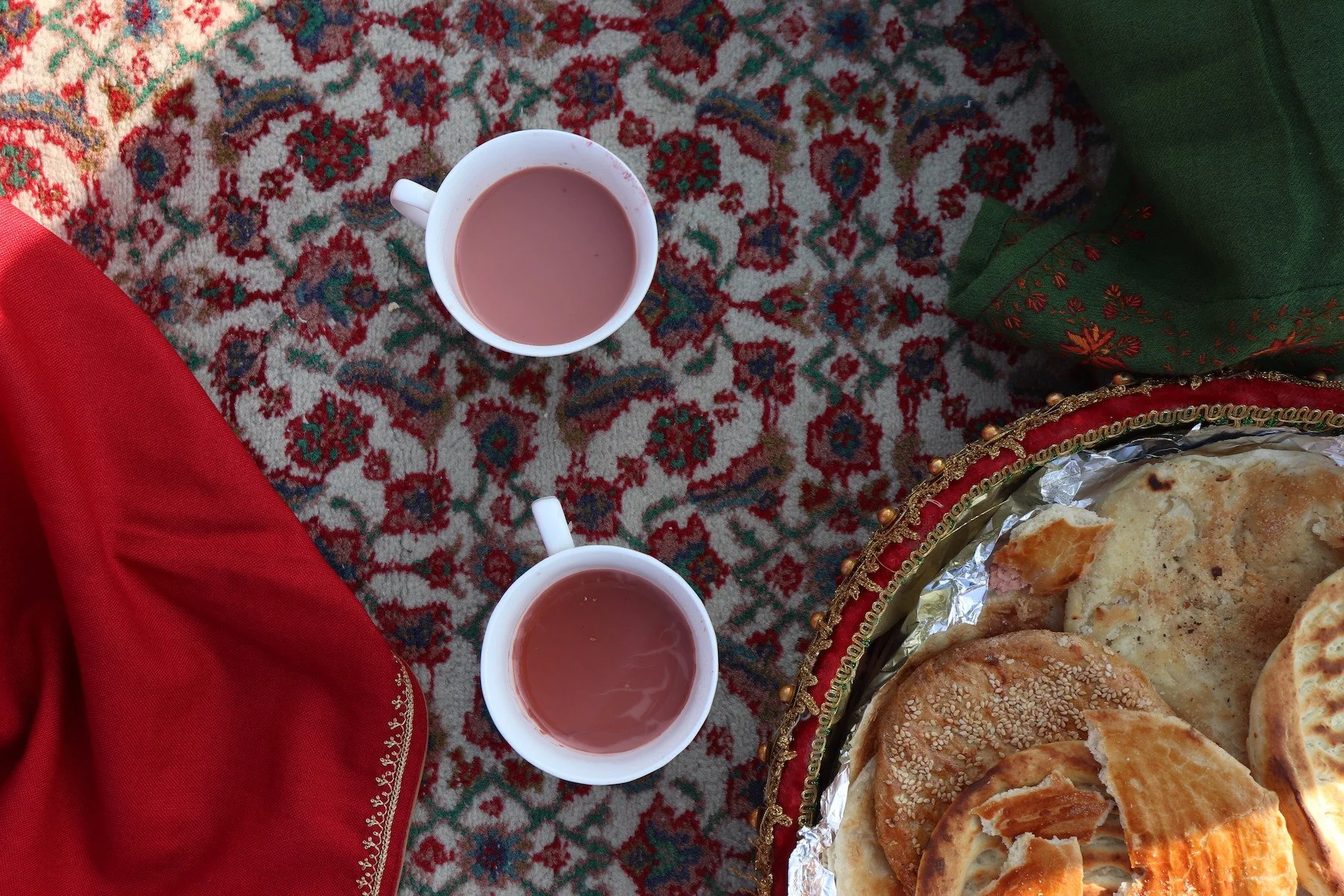
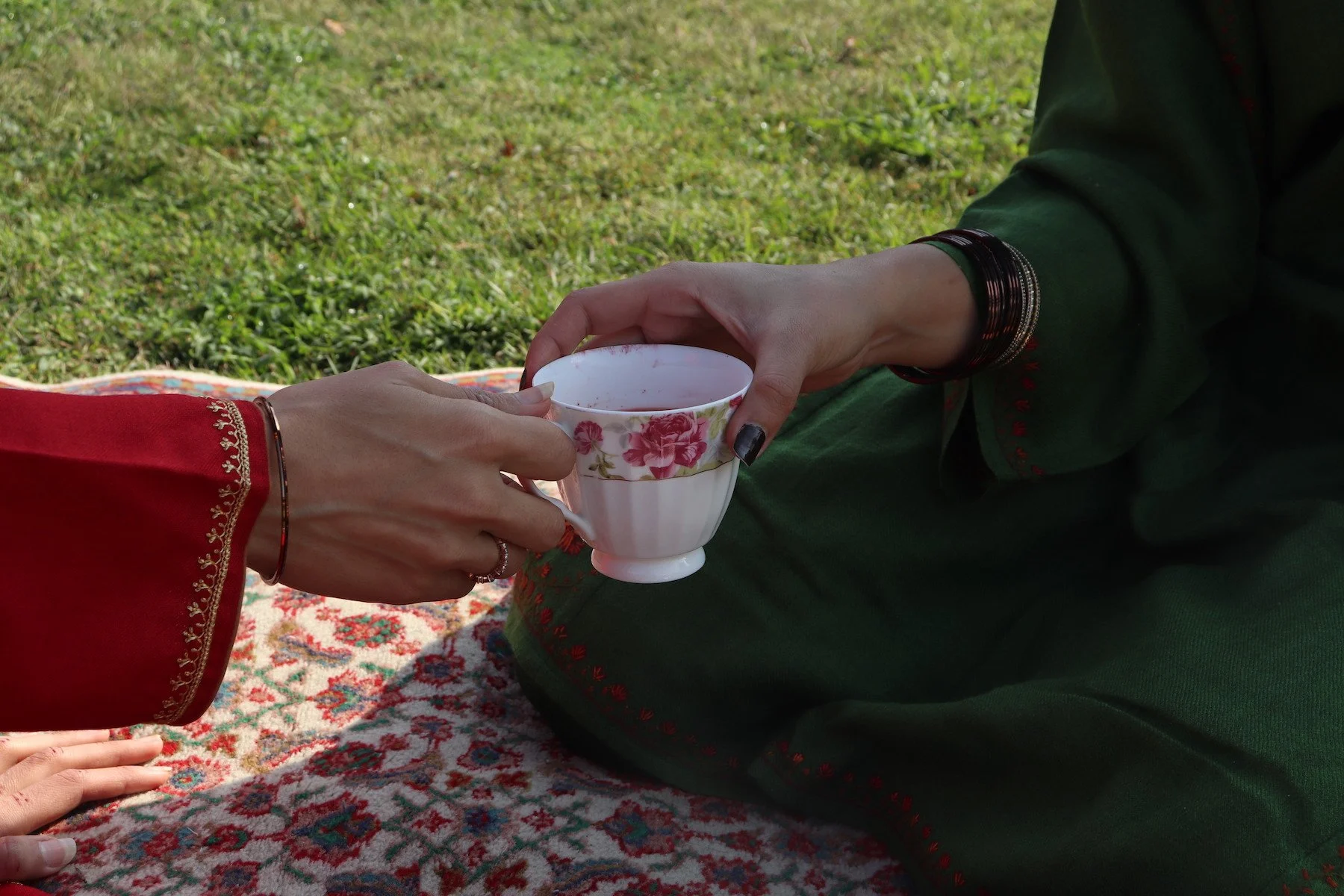
In Kashmiri households, tea-making is an elaborate process—a collective outpouring of eternal love, brewed to perfection. In many houses, a samovar, a traditional self-brewing kettle made of copper or brass, is used to brew, boil and serve tea. It consists of a fire container to place live coals, with a space around it for water to boil, in which one adds green tea leaves, salt, cardamom and cinnamon. Majestic and ornate in its appearance, this vessel is also commonly used in Russia, Turkey, Iran, Azerbaijan, Central Europe, South East Europe, Africa, Morocco and the Middle East.
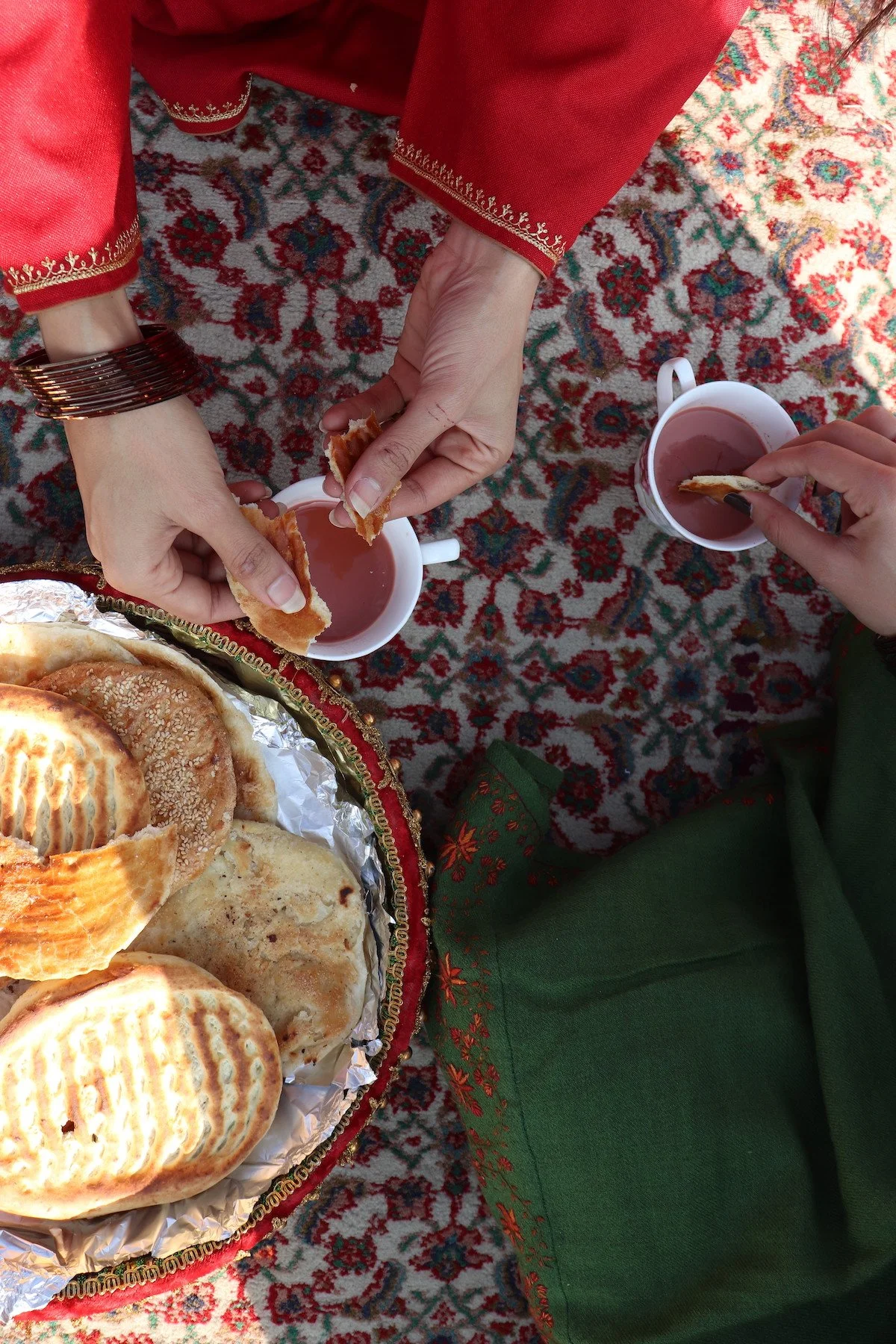
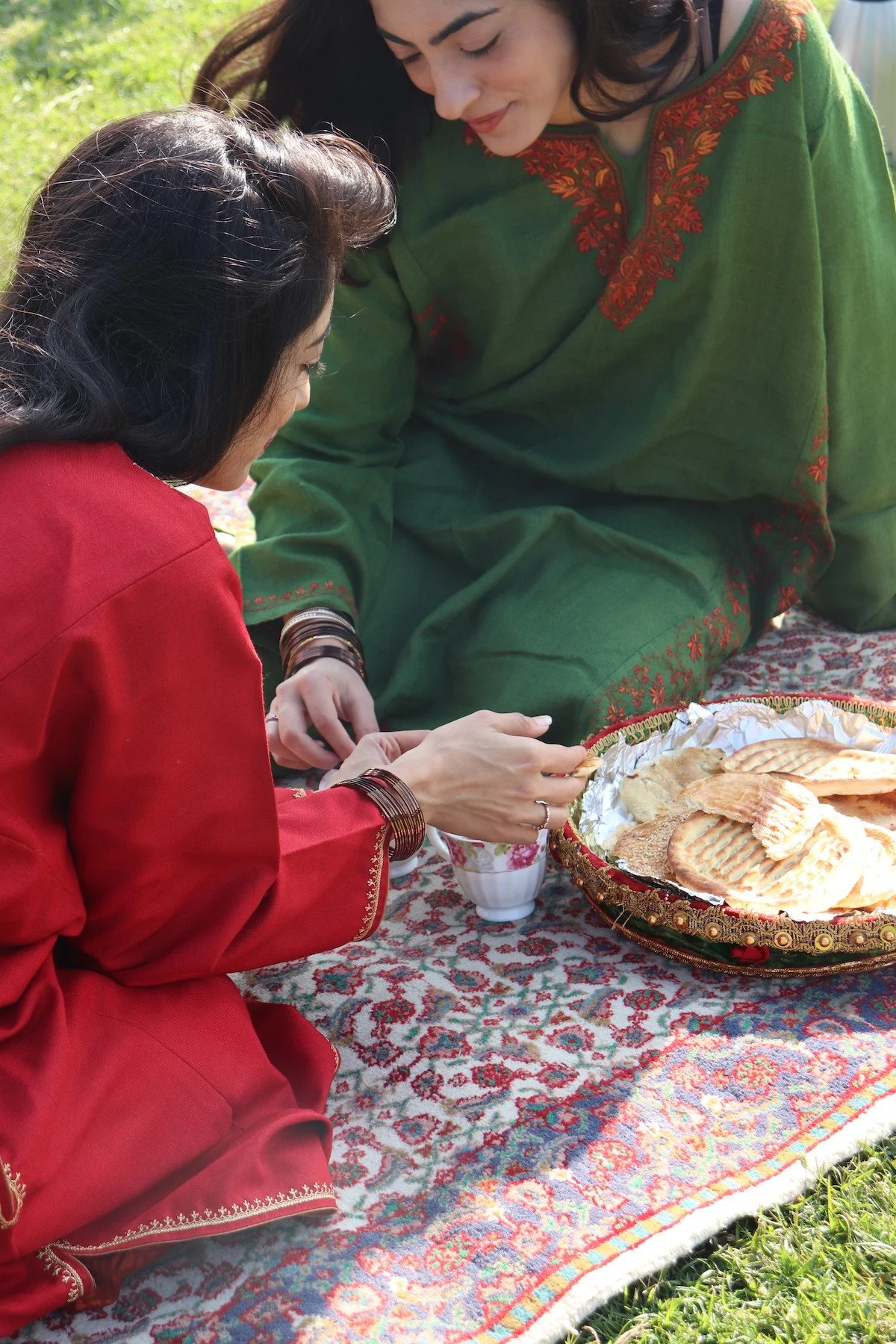
Tea-brewing skills in Kashmir are perfected over time and practice. Here, tea culture embodies a distinctive palate and is a treat for visitors and cultural connoisseurs. One can enjoy the warmth of refreshing kahwa or noon chai with an assortment of breads like crispy tchotch’e, saffron-flavoured sheermal and spicy baqarkhani, purchased from the local kandurwan (bakery). The everyday practices of Kashmiri families and their favourite kandurs (bakers) are closely interwoven. Men in families, while returning from the mosque, after offering namaz-e-fajr (the day’s first Islamic prayer), stop by kandurwans to buy hot tchotch’e, prepared in the woodfired clay tandoor. As the aromas of these breads and tea waft up to the nostrils and conversations begin to surface in streets or amidst a sunlit home—tea-time becomes intimate and invigorating.
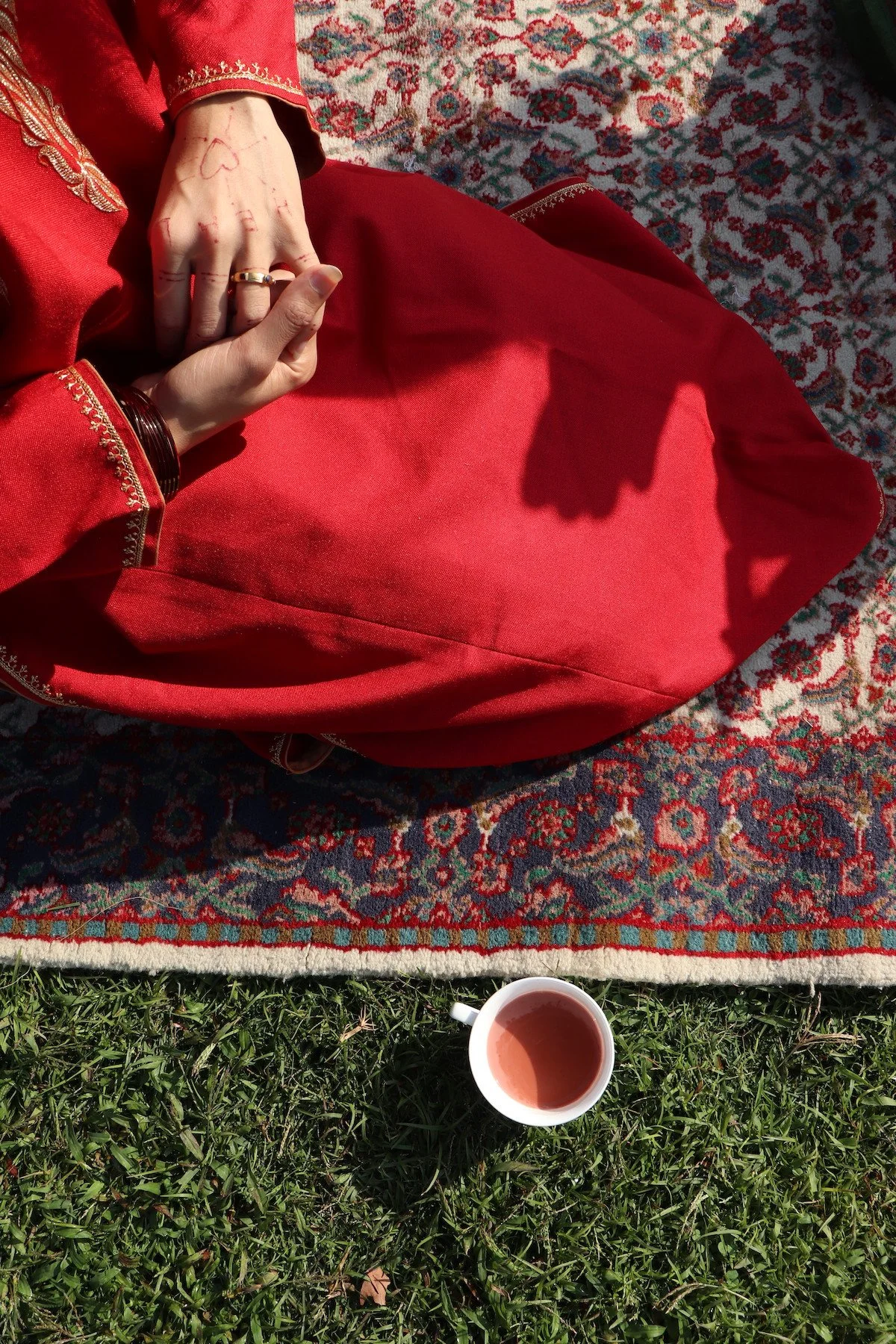
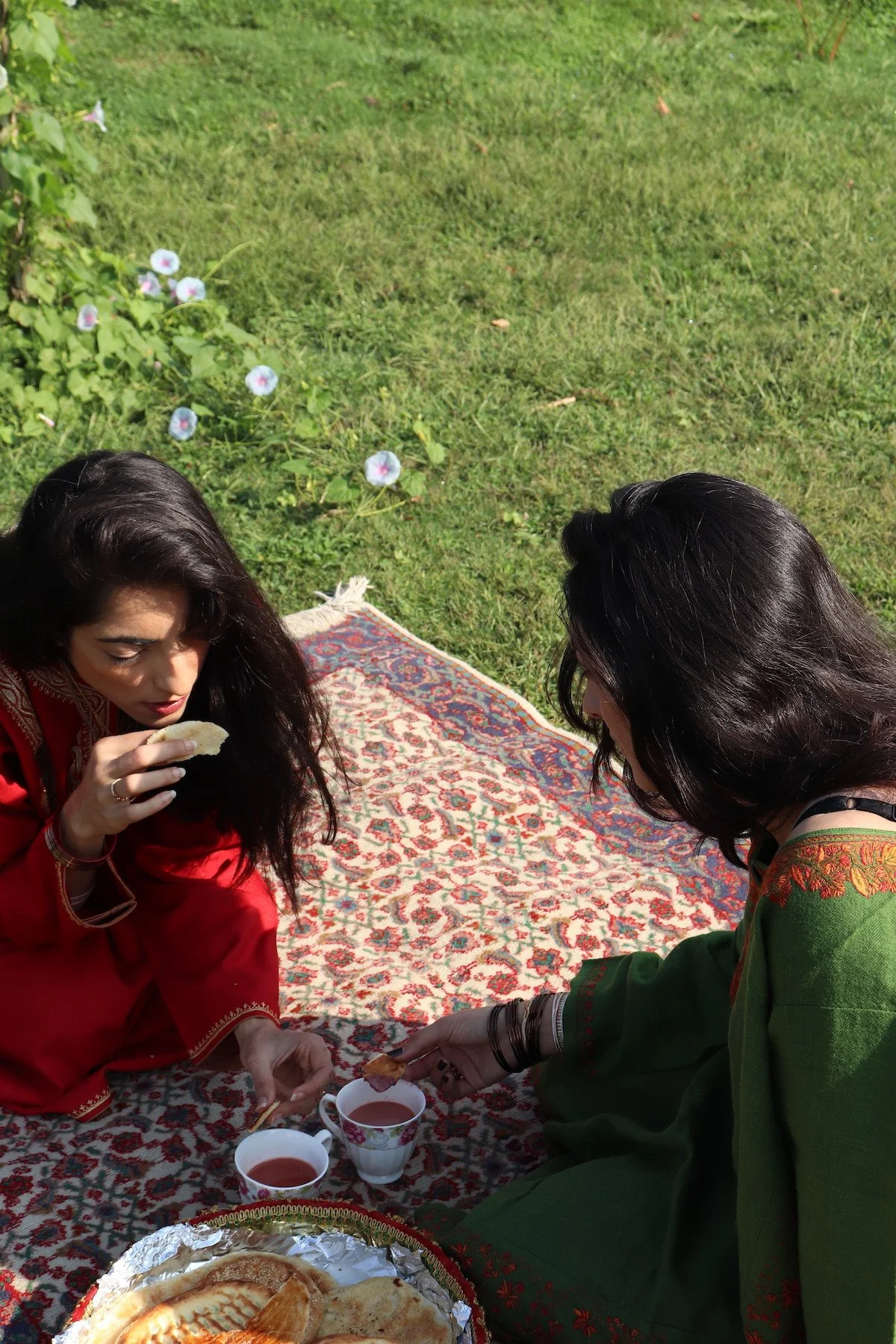
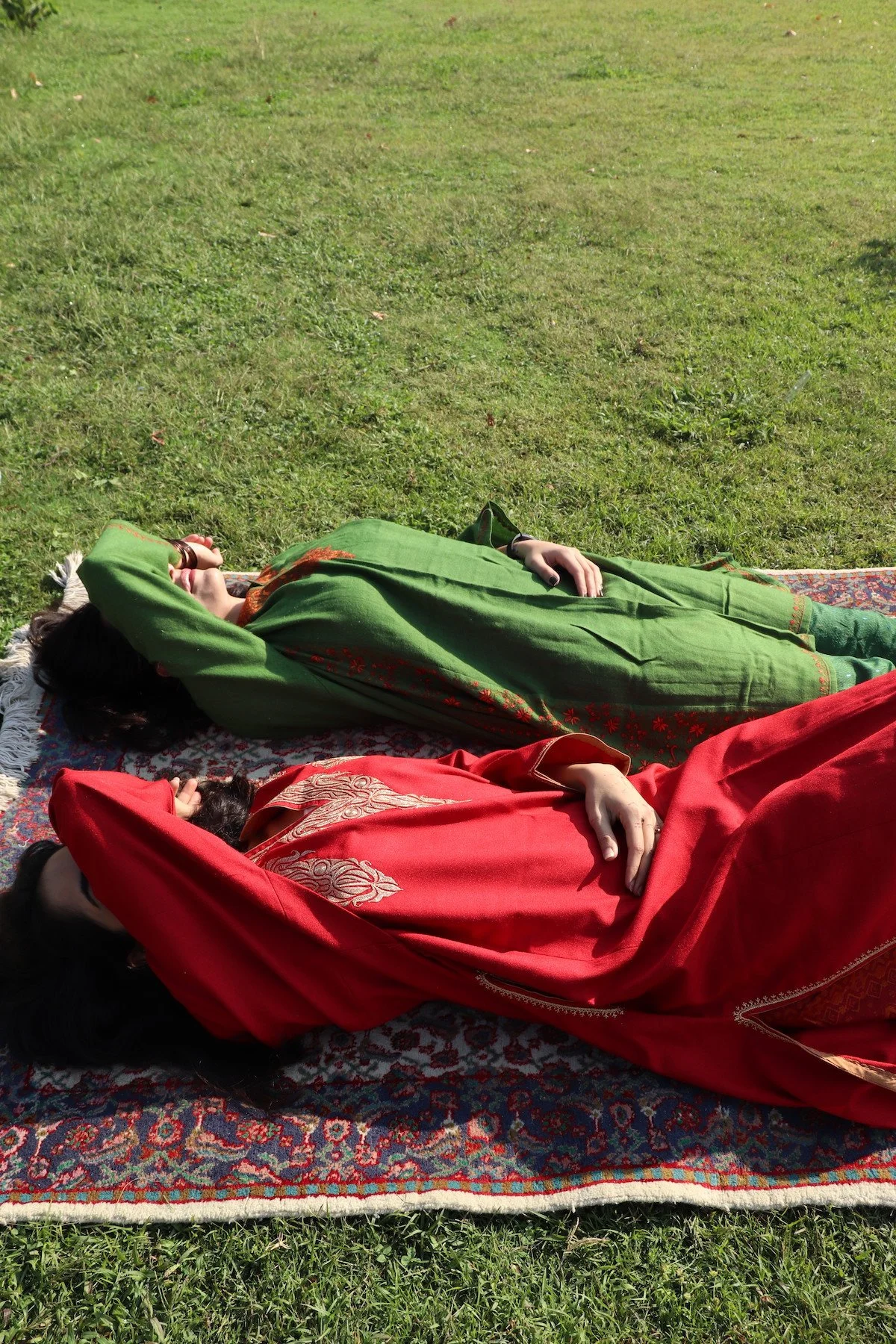
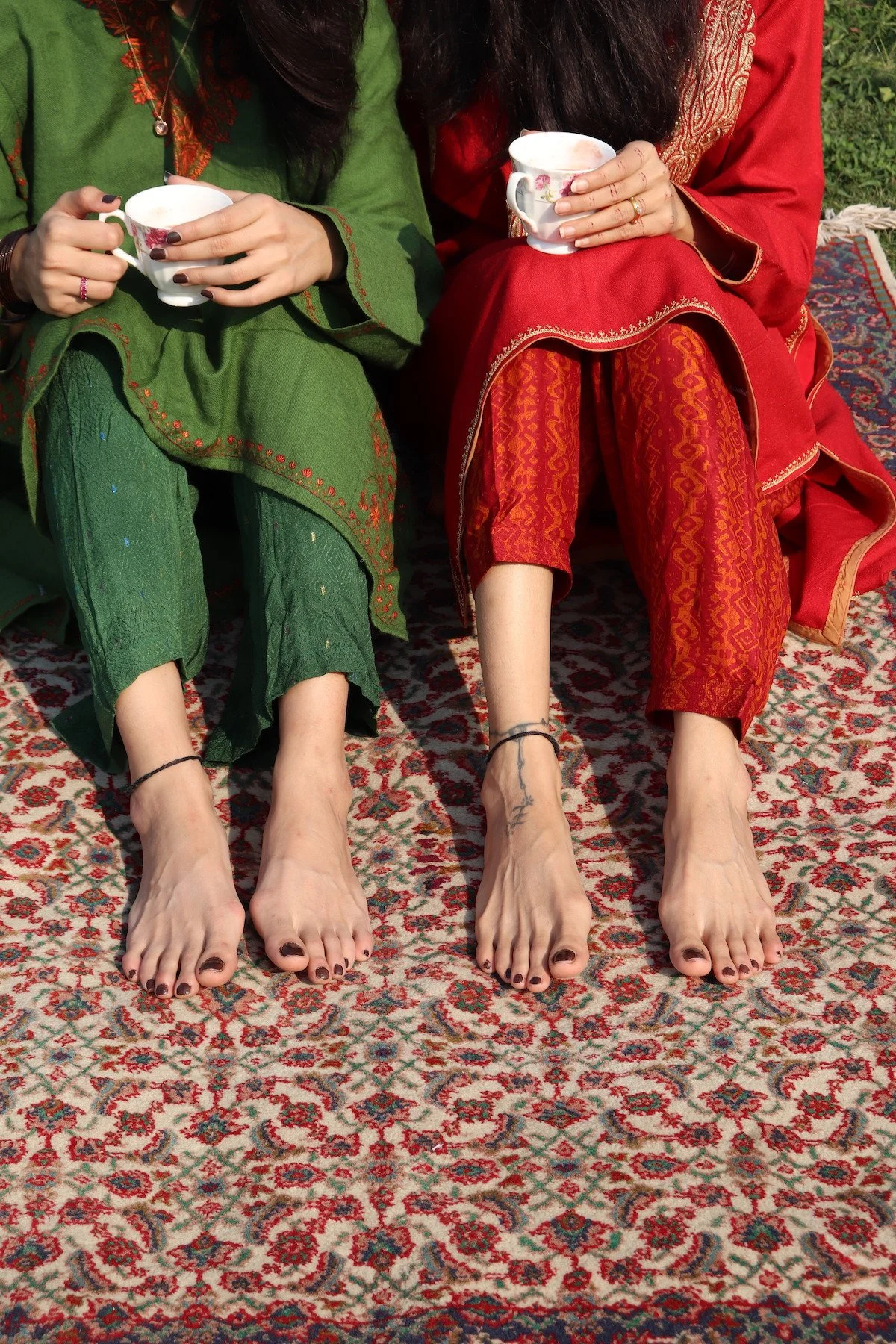
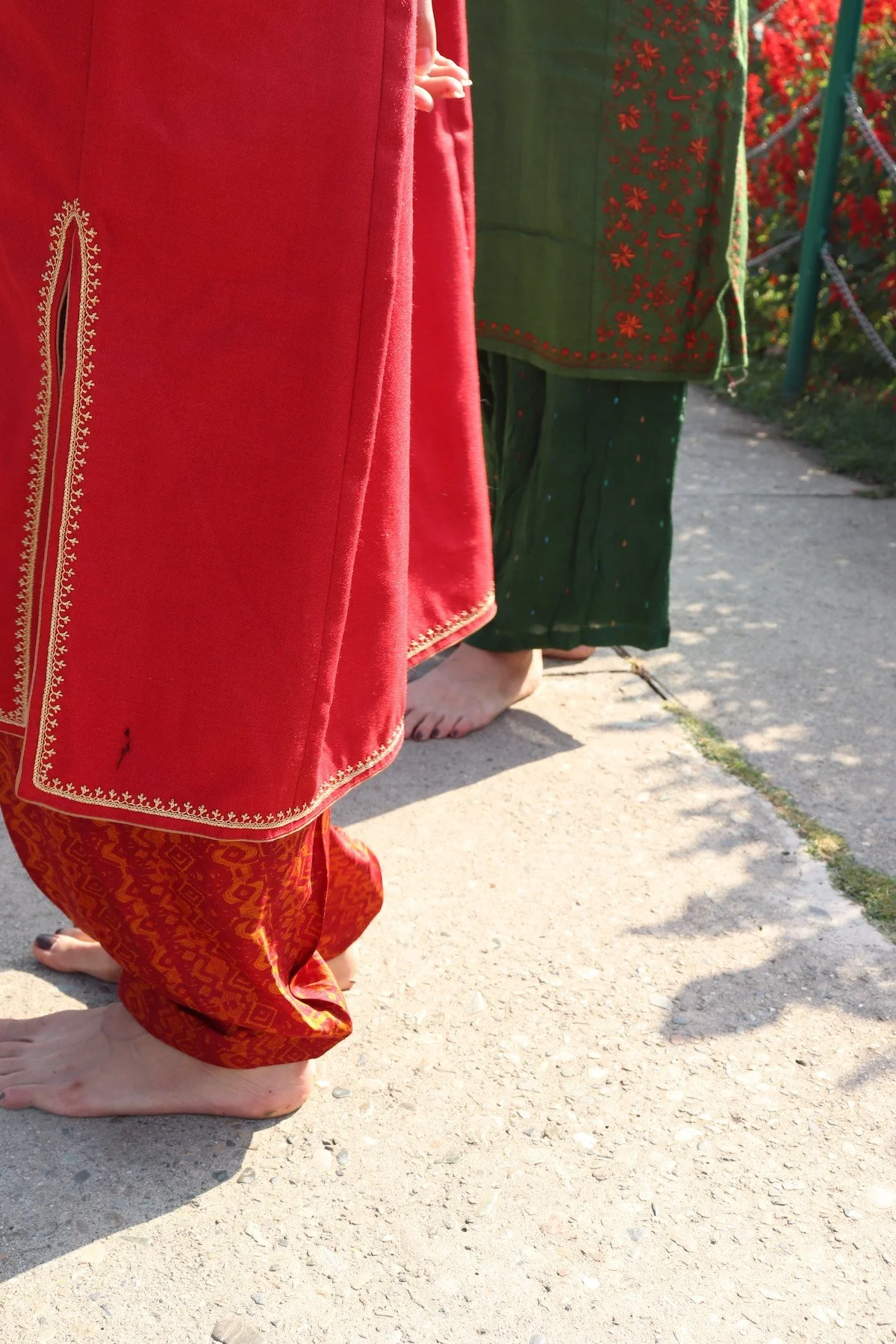
The experience of drinking tea is traditionally enjoyed while seated on carpeted floors in an artfully upholstered room. Wearing traditional pherans and sharing the latest gossip in town, one can laze around on a durrie and admire the scenic beauty of the Kashmir Valley. The specificity of materials, colours, textures, fragrances and overall aesthetics involved in Kashmir’s tea culture makes it perceptibly unique.
In a region repetitively marred by conflicts and violence, these tea rituals and breaks have become safe havens where one can pause, blur their worries, share stories and usher in hope.